

Leaf curl (Taphrina deformans): identification and ecological, chemical and biological treatments
Common name:
Leaf blister
Scientific name:
Taphrina deformans
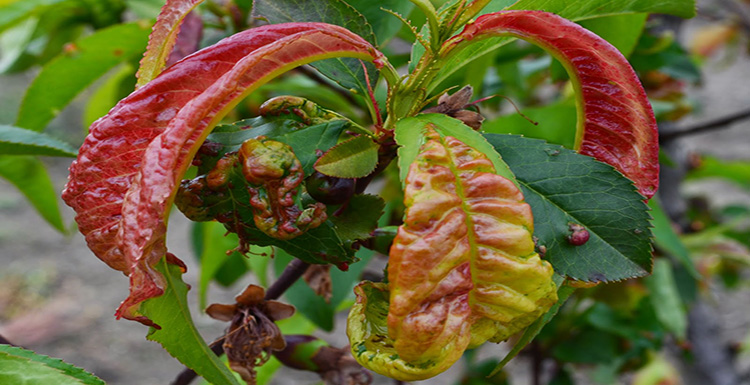
What is leaf curl (Taphrina deformans)?
Taphrina deformans is an ascomycete fungus responsible for the disease known as peach leaf curl, one of the most damaging diseases affecting stone fruit trees, especially peach, nectarine, flat peach and, to a lesser extent, almond trees and other Prunus species. This pathogen mainly attacks young leaves, tender shoots and, during favorable seasons, even fruits. The fungus survives as mycelium or spores on the surface of bark, buds and scales throughout winter, waiting for suitable humidity and cool temperatures to infect plant tissues during bud break.
The disease causes severe foliage deformities that reduce photosynthetic capacity and weaken the plant, potentially compromising annual production. Repeated infections year after year lead to significant vigor loss, premature leaf drop, secondary sprouting and increased susceptibility to frost damage or sunburn. Management requires special attention to preventive winter treatments or applications before bud break, since the fungus only infects tissues during the initial growth stage.
Symptoms and damage caused by leaf curl
• Curled, thickened and deformed leaves with very characteristic swellings.
• Color changes to reddish, yellowish or purple tones on young leaves.
• Fleshy or thickened texture of affected leaf tissues.
• Premature leaf drop, which may leave the tree partially defoliated.
• Weak secondary sprouting after defoliation.
• Damage to young shoots, which may become deformed or dry out.
• Occasional fruit damage with surface deformities and rough appearance.
• Reduced overall vigor and lower production when infections are severe.
Not sure what’s affecting your plants or crops?
Many plant diseases show very similar symptoms, making accurate identification difficult. A wrong diagnosis can lead to ineffective treatments, wasted time, and even more damage to your plants or crops. Get a professional plant diagnosis with a clear explanation of the cause, recommended treatments, and step-by-step guidance on how to act effectively.
How leaf curl spreads
The transmission and spread of Taphrina deformans mainly occurs through spores produced on the surface of infected leaves, which remain deposited on bark, buds and tree crevices after leaf fall. The fungus survives winter in a dormant state and, at the beginning of spring, under high humidity and temperatures between 10 and 20 °C, the spores germinate and infect young tissues during bud break. Wind and rain play a key role in the local spread of spores, while the movement of infected plant material can facilitate the introduction of the pathogen into new areas. The fungus can only infect during the initial growth stage of leaves and shoots; therefore, if these conditions coincide with prolonged rain or humidity, disease incidence can increase dramatically.
Leaf curl (Taphrina deformans): chemical, ecological and biocontrol treatments
Chemical treatments against leaf curl
(E)-11-TETRADECEN-1-YL ACETATE 39.4%
(E)-5-DECEN-1-IL-ACETATE 0.23g/diffuser
(E)-5-DECEN-1-YL-ACETATE 23.6%
(E)-5-DECEN-1-YL-ACETATE 41.7%
(E)-5-DECEN-1-YL ACETATE
(E)-5-DECEN-1-YL ACETATE 88g/kg
(E)-5-DECEN-1-OL
(E)-5-DECEN-1-OL 0.05g/diffuser
(E)-5-DECEN-1-OL 1.5%
(E)-8-DODECEN-1-YL ACETATE 2%
(E,Z)-2,13-OCTADECADIENYL ACETATE 0.12g/diffuser
(E,Z)-2,13-OCTADECADIENYL ACETATE 75.5%
(E,Z)-3,13-OCTADECADIENYL ACETATE 0.01g/diffuser
(E,Z)-3,13-OCTADECADIENYL ACETATE 3%
(E,Z)-3,8-TETRADECADIEN-1-YL ACETATE
(E,Z)-3,8-TETRADECADIEN-1-YL-ACETATE 3.1%
(E,Z)-7,9-DODECADIEN-1-YL ACETATE 0.21g/diffuser
(E,Z)-7,9-DODECADIEN-1-YL ACETATE 10%
(E,Z)-7,9-DODECADIEN-1-YL ACETATE 2.32%
(E,Z)-7,9-DODECADIEN-1-YL ACETATE 7%
(E,Z)-7,9-DODECADIEN-1-YL ACETATE 75.8%
(E,Z)-7,9-DODECADIENYL ACETATE 5.17%
(E,Z)-8-DODECEN-1-YL ACETATE 96.2g/kg
(E,Z,Z)-3,8,11-TETRADECATRIEN-1-YL ACETATE
(E,Z,Z)-3,8,11-TETRADECATRIENE-1-YL-ACETATE
(Z)-11 TETRADECEN-1-YL ACETATE 39.8%
(Z)-11-HEXADECENE-1-YL ACETATE 0.03g/diffuser
(Z)-11-HEXADECENAL 1.22g/diffuser
(Z)-11-HEXADECENAL 8.9%
(Z)-11-TETRADECEN-1-YL ACETATE 11.4%
(Z)-11-TETRADECEN-1-YL ACETATE 73.4%
(Z)-13-OCTADECENAL 0.15g/diffuser
(Z)-13-OCTADECENAL 8.9%
(Z)-8-DODECEN-1-YL ACETATE 13.1%
(Z)-8-DODECEN-1-YL ACETATE 37.7%
(Z)-8-DODECEN-1-YL ACETATE 4.65%
(Z)-8-DODECEN-1-YL ACETATE 82.2%
(Z)-8-DODECENE-1-OL 0.4%
(Z)-8-DODECENE-1-OL 0.9%
(Z)-9-HEXADECENAL 0.13g/diffuser
(Z)-9-TETRADECEN-1-YL ACETATE 14.9%
(Z)-9-TETRADECEN-1-YL ACETATE 6.3%
(Z,E)-9,12-TETRADECADIENE-1-YL ACETATE 0.28g/diffuser
1-TETRADECANOL 6.9%
1-TETRADECANOL 6.9% + DODECAN-1-OL 29.2% + (E,E)-8,10-DODECADIEN-1-OL 56% (382 mg S.A./diffuser)
ABAMECTIN 0.0015% + PYRETHRINS 0.02%
ABAMECTIN 1.8%
ABAMECTIN 2.5%
ABE-IT 56 32.56%
ONION OIL
CLOVE OIL 18.5%
CLOVE OIL 20.38%
RAPESEED OIL 0.825% + PYRETHRINS 0.018%
RAPESEAL OIL 70% + PYRETHRINS 0.7%
RAPESEED OIL 82.53% + PYRETHRINS 0.459%
SUNFLOWER OIL
ORANGE OIL 6%
ORANGE OIL 60g/L
PARAFFIN OIL (CAS 64742-46-7) 79%
PARAFFIN OIL (CAS 64742-46-7) 80%
PARAFFIN OIL (CAS 8042-47-5) 20%
PARAFFIN OIL (CAS 8042-47-5) 54.6%
PARAFFIN OIL (CAS 8042-47-5) 79%
PARAFFIN OIL (CAS 97862-82-3) 40%
PARAFFIN OIL (CAS 97862-82-3) 80%
PARAFFIN OIL 83%
ACEROPHAGUS ARTELLES
ACETAMIPRID 20%
(Z)-8-DODECEN-1-YL ACETATE 0.33%
CITRIC ACID 42.7%
PHOSPHORUS ACID
Phosphonic Acid 45%
ORGANIC ACIDS 5%
ADALIA BIPUNCTATA
AKANTHOMYCES MUSCARIUS (strain Ve6) 4.8%
AMBLYDROMALUS LIMONICUS
AMBLYSEIUS ANDERSONI
AMBLYSEIUS SWIRSKII
AMETOCTRADIN 20%
AMISULBROM 20%
AMISULBROM 24%
AMISULBROM 24% + OXATIAPIPROLIN 4.8%
AMPELOMYCES QUISQUALIS 58%
ANAGYRUS FUSCIVENTRIS
ANAGYRUS PSEUDOCOCCI
ANTHOCORIS NEMORALIS
APHELINUS ABDOMINALIS
APHIDIUS COLEMANI
APHIDIUS ERVI
APHIDIUS MATRICARIAE
APHIDOLETES APHIDIMYZA
APHYTIS MELINUS
Bactrocera Oleae Attractant
CERAMBYX SP. ATTRACTOR
Ceratitis capitata attractant
ATTRACTANT FOR CERATITIS CAPITATA AND BACTROCERA OLEAE
DROSOPHILA SUZUKII ATTRACTOR
IPS SEXDENTATUS ATTRACTOR
Monochamus Galloprovincelis attractant
THAUMETOPOEA PITYOCAMPA ATTRACTANT
No authorized chemical treatments are currently available. Explore other treatment options.
Ecological treatments to control leaf curl
(E)-5-DECEN-1-IL-ACETATE 0.23g/diffuser
(E)-5-DECEN-1-YL-ACETATE 41.7%
(E)-5-DECEN-1-YL ACETATE
(E)-5-DECEN-1-YL ACETATE 88g/kg
(E)-5-DECEN-1-OL
(E)-5-DECEN-1-OL 0.05g/diffuser
(E,Z)-2,13-OCTADECADIENYL ACETATE 0.12g/diffuser
(E,Z)-3,13-OCTADECADIENYL ACETATE 0.01g/diffuser
(E,Z)-3,8-TETRADECADIEN-1-YL ACETATE
(E,Z)-3,8-TETRADECADIEN-1-YL-ACETATE 3.1%
(E,Z)-7,9-DODECADIEN-1-YL ACETATE 0.21g/diffuser
(E,Z)-7,9-DODECADIEN-1-YL ACETATE 10%
(E,Z)-7,9-DODECADIEN-1-YL ACETATE 7%
(E,Z)-7,9-DODECADIENYL ACETATE 5.17%
(E,Z)-8-DODECEN-1-YL ACETATE 96.2g/kg
(E,Z,Z)-3,8,11-TETRADECATRIEN-1-YL ACETATE
(E,Z,Z)-3,8,11-TETRADECATRIENE-1-YL-ACETATE
(Z)-11-HEXADECENE-1-YL ACETATE 0.03g/diffuser
(Z)-11-HEXADECENAL 1.22g/diffuser
(Z)-11-HEXADECENAL 8.9%
(Z)-11-TETRADECEN-1-YL ACETATE 11.4%
(Z)-13-OCTADECENAL 0.15g/diffuser
(Z)-13-OCTADECENAL 8.9%
(Z)-8-DODECEN-1-YL ACETATE 13.1%
(Z)-8-DODECEN-1-YL ACETATE 4.65%
(Z)-9-HEXADECENAL 0.13g/diffuser
(Z)-9-TETRADECEN-1-YL ACETATE 6.3%
(Z,E)-9,12-TETRADECADIENE-1-YL ACETATE 0.28g/diffuser
ABE-IT 56 32.56%
ONION OIL
CLOVE OIL 20.38%
RAPESEED OIL 0.825% + PYRETHRINS 0.018%
RAPESEAL OIL 70% + PYRETHRINS 0.7%
RAPESEED OIL 82.53% + PYRETHRINS 0.459%
SUNFLOWER OIL
ORANGE OIL 6%
ORANGE OIL 60g/L
PARAFFIN OIL (CAS 64742-46-7) 79%
PARAFFIN OIL (CAS 8042-47-5) 20%
PARAFFIN OIL (CAS 8042-47-5) 54.6%
PARAFFIN OIL (CAS 8042-47-5) 79%
PARAFFIN OIL (CAS 97862-82-3) 40%
PARAFFIN OIL (CAS 97862-82-3) 80%
PARAFFIN OIL 83%
ACEROPHAGUS ARTELLES
CITRIC ACID 42.7%
ORGANIC ACIDS 5%
Bactrocera Oleae Attractant
CERAMBYX SP. ATTRACTOR
Ceratitis capitata attractant
ATTRACTANT FOR CERATITIS CAPITATA AND BACTROCERA OLEAE
DROSOPHILA SUZUKII ATTRACTOR
IPS SEXDENTATUS ATTRACTOR
Monochamus Galloprovincelis attractant
THAUMETOPOEA PITYOCAMPA ATTRACTANT
Vespa Velutina Attractant
AZADIRACTIN 1%
AZADIRACTIN 2.6%
SULFUR 0.4% + POTASSIUM SALTS OF UNSATURATED FATTY ACIDS C7-C18 & C18 1%
SULFUR 40%
SULFUR 60%
SULFUR 64%
SULFUR 70%
SULFUR 72%
SULFUR 80%
SULFUR 82.5%
SULFUR 98.5%
SULFUR 99%
Acleris rhombana (Pheromone)
Acrolepia assectella (Pheromone)
Adoxophyes orana (Pheromone)
Agrilus sp. (Pheromone)
Agriotes lineatus (Pheromone)
Agriotes obscurus (Pheromone)
Agriotes sordidus (Pheromone)
Agrotis exclamationis (Pheromone)
Agrotis fucosa (Pheromone)
Agrotis ipsilon (Pheromone)
Agrotis segetum (Pheromone)
Anarsia lineatella (Pheromone)
Anastrepha ludens (Pheromone)
Anoplophora chinensis (Pheromone)
Anoplophora glabripennis (Pheromone)
Anthonomus eugenii (Pheromone)
Aonidiella aurantii (Pheromone)
Archips argyrospilus (Pheromone)
Archips podana (Pheromone)
Argyresthia conjugella (Pheromone)
Argyrotaenia citrana (Pheromone)
Argyrotaenia pulchellana (Pheromone)
Argyrotaenia velutinana (Pheromone)
Autographa californica (Pheromone)
Autographa gamma (Pheromone)
SODIUM BICARBONATE
Bactrocera cucurbitae (Pheromone)
Bactrocera invadens (Pheromone)
Bactrocera oleae (Pheromone)
Bactrocera tryoni (Pheromone)
Bactrocera zonata (Pheromone)
Busseola fusca (Pheromone)
No authorized chemical treatments are currently available. Explore other treatment options.
Biological control of leaf curl (biocontrol)
ABE-IT 56 32.56%
ACEROPHAGUS ARTELLES
ADALIA BIPUNCTATA
AKANTHOMYCES MUSCARIUS (strain Ve6) 4.8%
AMBLYDROMALUS LIMONICUS
AMBLYSEIUS ANDERSONI
AMBLYSEIUS SWIRSKII
AMPELOMYCES QUISQUALIS 58%
ANAGYRUS FUSCIVENTRIS
ANAGYRUS PSEUDOCOCCI
ANTHOCORIS NEMORALIS
APHELINUS ABDOMINALIS
APHIDIUS COLEMANI
APHIDIUS ERVI
APHIDIUS MATRICARIAE
APHIDOLETES APHIDIMYZA
APHYTIS MELINUS
AUREOBASIDIUM PULLULANS (DSM 14940 strain) 25% (2.5x10e9 CFU/g) + AUREOBASIDIUM PULLULANS (DSM 14941 strain) 25% (2.5x10e9 CFU/g)
AUREOBASIDIUM PULLULANS (DSM 14940 strain) 50% (2.5x10e9 CFU/g) + AUREOBASIDIUM PULLULANS (DSM 14941 strain) 50% (2.5x10e9 CFU/g)
BACILLUS AMYLOLIQUEFACIENS (strain AH2)1x10e11ufc/L
BACILLUS AMYLOLIQUEFACIENS (strain FZB24) 13%
BACILLUS AMYLOLIQUEFACIENS (MBI 600 strain) 11%
BACILLUS AMYLOLIQUEFACIENS subsp. PLANTARUM (strain D747) 25%
BACILLUS AMYLOLIQUEFACIENS subsp. PLANTARUM (strain D747) 5%
BACILLUS SUBTILIS (strain IAB/BS03) 1%
BACILLUS SUBTILIS (strain IAB/BS03)1x10e8cfu/ml
BACILLUS SUBTILIS (strain QST 713) 1.34%
BACILLUS THURINGIENSIS AIZAWAI (strain ABTS-1857) 54%
BACILLUS THURINGIENSIS AIZAWAI (strain GC-91) 50%
BACILLUS THURINGIENSIS AIZAWAI 50%
BACILLUS THURINGIENSIS ISRAELENSIS (strain AM65-52) 12.3%
BACILLUS THURINGIENSIS KURSTAKI (strain ABTS-351) 13.9%
BACILLUS THURINGIENSIS KURSTAKI (strain ABTS-351) 54%
BACILLUS THURINGIENSIS KURSTAKI (strain ABTS-351) 64%
BACILLUS THURINGIENSIS KURSTAKI (strain EG 2348) 22.6%
BACILLUS THURINGIENSIS KURSTAKI (strain EG 2348) 37.5%
BACILLUS THURINGIENSIS KURSTAKI (strain PB-54) 0.5%
BACILLUS THURINGIENSIS KURSTAKI (strain PB-54) 17.6%
BACILLUS THURINGIENSIS KURSTAKI (strain PB-54) 32%
BACILLUS THURINGIENSIS KURSTAKI (strain PB-54) 9.74%
BACILLUS THURINGIENSIS KURSTAKI (strain SA-11) 85%
BACILLUS THURINGIENSIS KURSTAKI (strain SA-12) 18%
BEAUVERIA BASSIANA (strain 147)5x10e8ufc/g
BEAUVERIA BASSIANA (strain ATCC 74040) 2.3%
BEAUVERIA BASSIANA (GHA strain) 10.7%
BEAUVERIA BASSIANA (GHA strain) 22%
BEAUVERIA BASSIANA (strain NPP111B005)5x10e8ufc/g
BEAUVERIA BASSIANA (PPRI 5339 strain) 8%
BLAD 25%
CHRYSOPERLA CARNEA
CLONOSTACHYS ROSEA (formerly GLIOCLADIUM CATENULATUM) (strain J1446)1x10e9cfu/g
CLONOSTACHYS ROSEA (formerly GLIOCLADIUM CATENULATUM) (strain J1446)3x10e8cfu/g
CONIOTHYRIUM MINITANS (strain CON/M/91-08) 5.3%
CORDYCEPS FUMOSOROSEA (strain FE 9901) 18%
CORDYCEPS FUMOSOROSEA (strain FE 9901) 9%
CRYPTOLAEMUS MONTROUZIERI
DACNUSA SIBIRICA
DELPHASTUS CATALINAE
DIGLYPHUS ISAEA
ENCARSIA FORMOSA
ENCARSIA FORMOSA 50%
EPISYRPHUS BALTEATUS
ERETMOCERUS EREMICUS
ERETMOCERUS EREMICUS 50%
EUGENOL 3.3% + GERANIOL 6.6% + THYMOL 6.6%
AQUEOUS EXTRACT OF SWEET LUPINUS ALBUS SPROUTED SEEDS 100%
TEA TREE EXTRACT 22.25%
FELTIELLA ACARISUGA
FRANKLINOTHRIPS VESPIFORMIS
GERANIOL 12.1% + THYMOL 4.1%
CYDIA POMONELLA GRANULOVIRUS (Isolate R5) 90.9%
CYDIA POMONELLA GRANULOVIRUS (Mexican isolate) 4.96%
CYDIA POMONELLA GRANULOVIRUS (Mexican isolate) 90.9%
CYDIA POMONELLA GRANULOVIRUS (strain V15)3x10e13granules/L
CYDIA POMONELLA GRANULOVIRUS (strain V22)3x10e13granules/L
HETERORHABDITIS BACTERIOPHORA
HIPPODAMIA VARIEGATA
ISARIA FUMOSOROSEA (Apopka 97 strain) 20%
MACROLOPHUS PYGMAEUS
MACROLOPHUS PYGMAEUS
MELALEUCA ALTERNIFOLIA 22.25%
METARHIZIUM BRUNNEUM (Ma 43 strain) 10.5%
BENEFICIAL MICROORGANISMS
Mycodiplosis sp. (mosquito larva)
NEOSEIULUS CALIFORNICUS
NEOSEIULUS CUCUMERIS
NESIDIOCORIS TENUIS
ORIUS LAEVIGATUS
ORIUS MAJUSCULUS
PAECILOMYCES FUMOSOROSEUS (STRAIN FE 9901) (5 x 10 E8 CFU/ML)
PAECILOMYCES FUMOSOROSEUS (STRAIN FE 9901) 18% (2 X 10 E9 CFU/G)
PHYTOSEIULUS PERSIMILIS
PRAON VOLUCRE
PSEUDOMONAS SP. (DSMZ 13134 strain)6.6x10e10cfu/g
PURPUREOCILLIUM LILACINUM (STRAIN 251) 21.6%
PYTHIUM OLIGANDRUM (strain M1) 17.5%
RHYZOBIUS LOPHANTHAE
SACCHAROMYCES CEREVISIAE (strain LAS02) 96.1%
STEINERNEMA CARPOCAPSAE
STEINERNEMA FELTIAE
No authorized chemical treatments are currently available. Explore other treatment options.
Products to effectively control leaf curl
AFFECTED PLANTS AND CROPS



Explore more tools
Services
Contact
Legal
©2023 by ZERIMAR S.A.R.L. All rights reserved