

Orugas o gusanos
Big-Headed Worm
Capnodis Tenebrionis
Pathogen:
Insect
Type:
Risk to the plant:
HIGH

DESCRIPTION
WHO CAUSES IT?
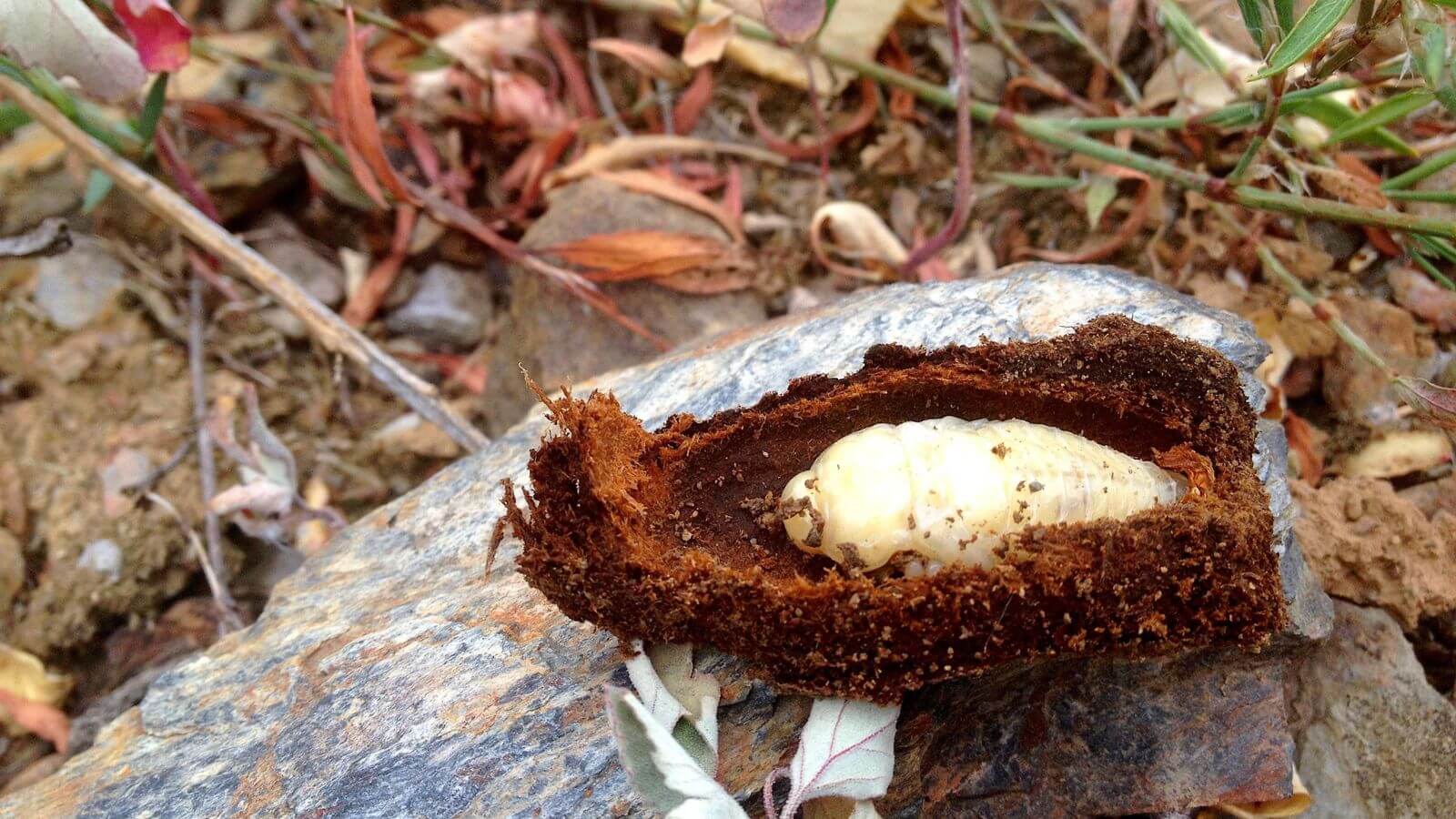
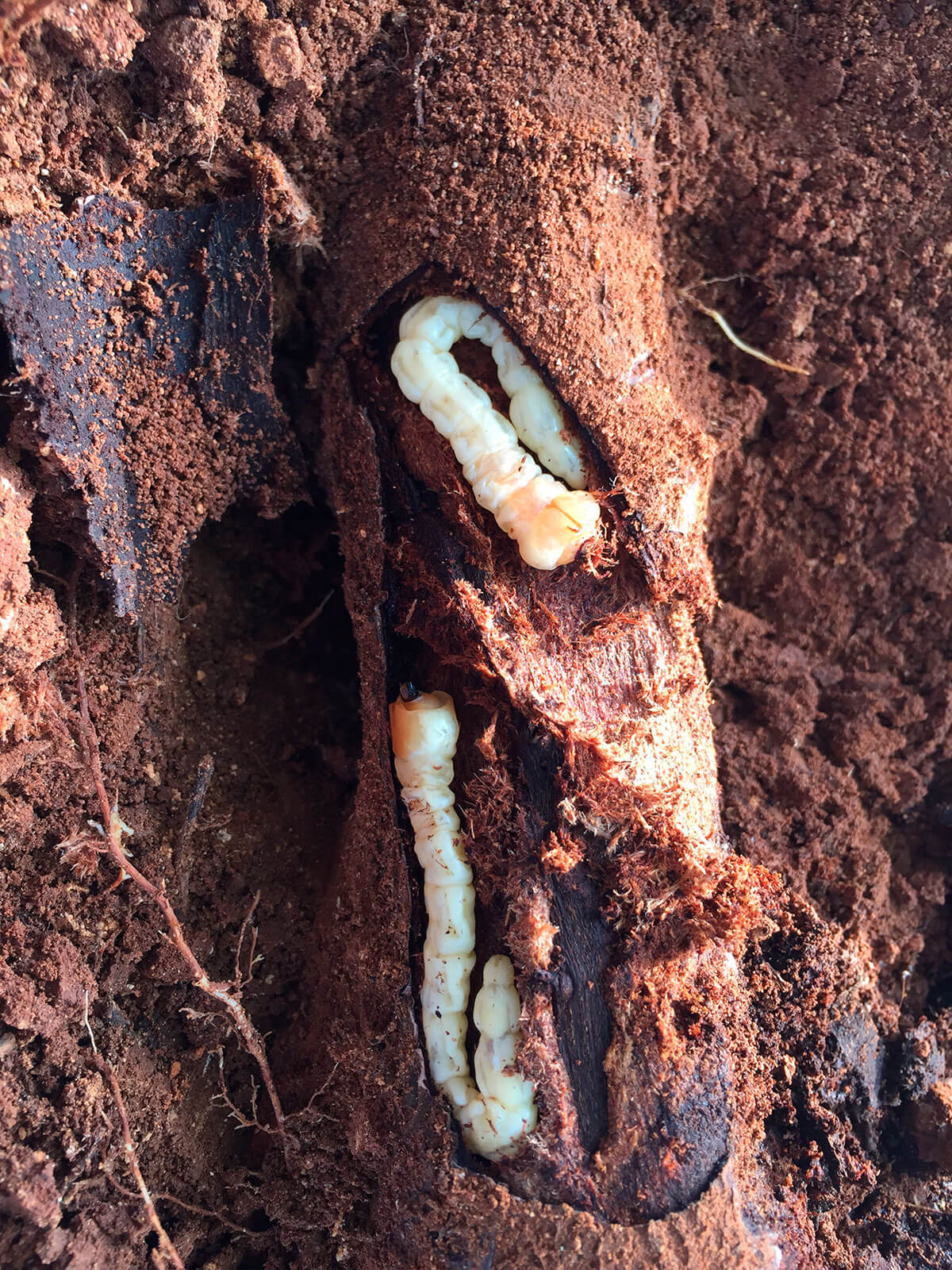
Capnodis tenebrionis, known as the big-headed worm, is a beetle that mainly affects stone fruit trees such as almond trees. Adults emerge in early summer and feed on the bark of young branches. Females lay eggs at the base of trees, usually in the soil near the roots. The larvae emerge and penetrate the soil, where they look for the main roots of the almond tree to feed. These larvae have a prolonged underground phase, often two to three years, during which they feed and grow, causing significant damage to the roots. Once their development is complete, the larvae pupate in the soil and emerge as adults, completing the cycle. This pattern can repeat several times a year depending on weather conditions and host availability.
SYMPTOMS
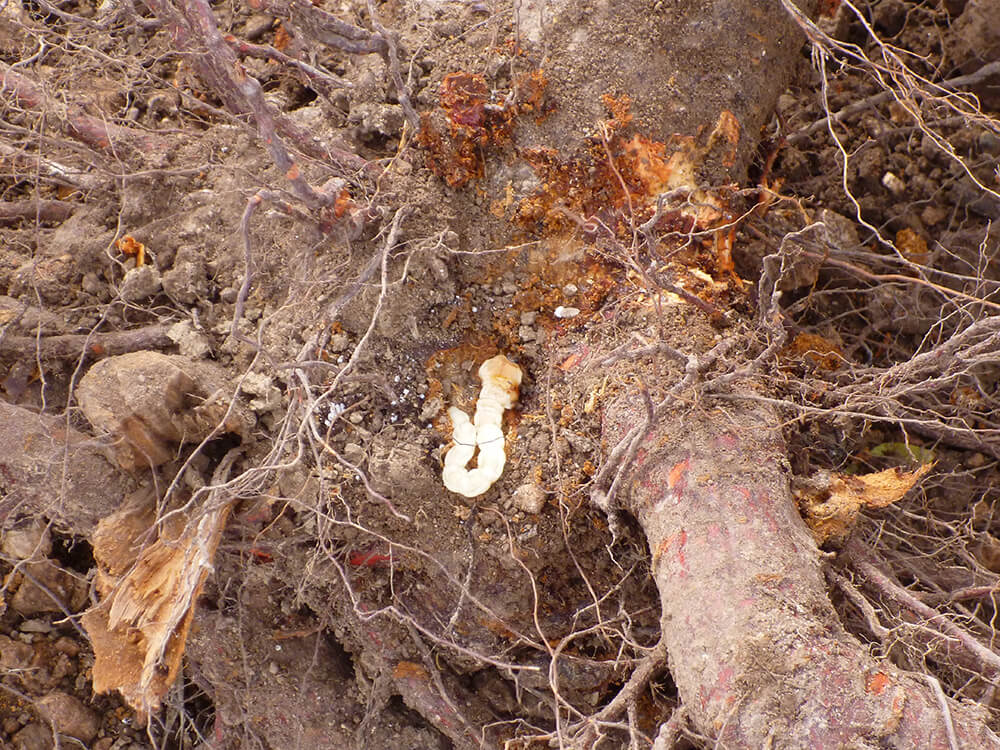
In the almond tree, the bigheaded worm causes damage to both the roots and the aerial part of the tree, weakening its structure and compromising its productivity. Larval damage to taproots interferes with nutrient and water uptake, which can lead to overall weakening of the tree.
- Yellowing and wilting of the leaves.
- Reduction in the growth and vigor of the tree.
- Appearance of rubber at the base of the trunk.
- Drying of branches and regressive death.
- Visible damage to the bark of young branches.
- Presence of galleries in the main roots.
- Loss of productivity and quality of the fruits.


TEMPERATURE AND HUMIDITY
25°C - 30°C
60% - 80%

HOW IS IT SPREAD?
Direct contact between plants, Movement of infested plants, Wind, Infested soil

HOW TO REMOVE IT?
Home remedies
There are no home treatments
Chemical treatments
• ACETAMIPRID 20% [SL] P/V
• ACETAMIPRID 20% [SP] P/P
• ACETAMIPRID 20% [SG] P/P
• DELTAMETHRIN 1.57% [SC] P/V
• ACETAMIPRID 20% [SP] P/P
Authorized treatments in organic farming
-
Insect allies
PREDATORY MITES
LADYBUGS
LACEWINGS
PARASITIC WASPS
HOVERFLIES OR PARASITIC FLIES
PREDATORY BUGS
There are no natural allies
Mycodiplosis oidii (predatory mosquito)
EFFECTIVE PRODUCTS TO ELIMINATE THIS DISEASE
Sponsored link
Sponsored link


Sponsored link
Sponsored link
Sponsored link


Sponsored link
Sponsored link
Effective against all types of fungi

Sponsored link


Sponsored link
Sponsored link

Sponsored link


Sponsored link
- Carry out regular monitoring to detect the presence of adults and larvae.
- Keep the ground around the trees clean and free of weeds that could serve as shelter.
- Apply chemical treatments to the soil around the base of the trunk to control larvae.
- Use pheromone traps to catch adults and reduce their population.
- Implement adequate irrigation practices to avoid water stress, which can predispose trees to attack.
- Promote biodiversity in the garden to encourage the presence of natural enemies of the big-headed worm.
- Apply biological products such as entomopathogenic nematodes to control larvae in the soil.
- Carry out correct pruning and removal of affected branches to reduce egg laying sites.
Recommendations

Enjoy idMicrobe TOTALLY FREE, with no trial periods.


