


Frutos
How to recognize and combat the botrytis fungus in fruit
Botrytis or gray mold
Fungus
Type:
Risk to the plant:
HIGH
Botrytis cinerea
Pathogen:
Botrytis


WHO CAUSES IT?
Botrytis cinerea is a widespread phytopathogenic fungus and one of the main agents responsible for rot in numerous crops. It is a necrotrophic fungus, capable of colonizing living plant tissues and obtaining nutrients as it causes the death of infected cells. It can develop on a wide variety of plant debris and plant organs, where it produces abundant mycelium and reproductive structures. Dispersal occurs primarily through conidia, which are produced in large quantities on affected tissues and can be transported by air currents, water splashes, rain, tools, insects, and tissue contact. Conidia can remain on plant surfaces until they find favorable conditions for germination. Germination and subsequent infection are especially favored by the presence of free water or very high ambient humidity and moderate temperatures. Penetration can occur directly through susceptible tissues, but wounds, cuts, abrasions, insect damage, and weakened tissues constitute important entry points. Once infection begins, the fungus develops hyphae that spread through the tissues, progressively destroying plant cells and causing necrotic and subsequently rotten areas. On infected tissues, it can produce new conidiophores and conidia, generating a continuous source of inoculum capable of colonizing other plant organs. Botrytis cinerea can also survive unfavorable periods through resistant structures, especially sclerotia, and through mycelium present in infected plant debris. Crop debris, affected fruit, and dead tissue can act as important reservoirs of the fungus between growing seasons. The disease can develop rapidly when moderate temperatures, high humidity, poor ventilation, and prolonged water exposure on the tissues coincide. Therefore, removing infected tissues, reducing humidity, and preventing wounds are essential to limiting the production and spread of inoculum.

SYMPTOMS
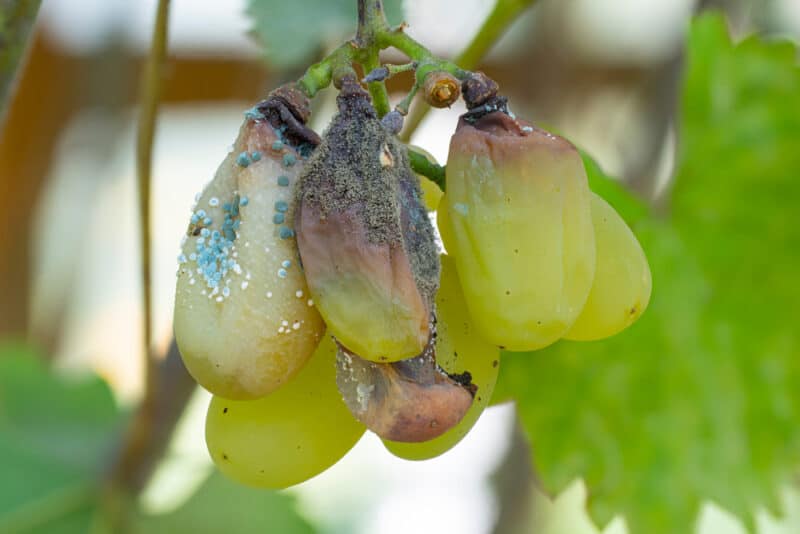
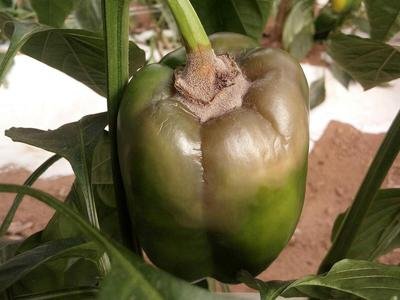
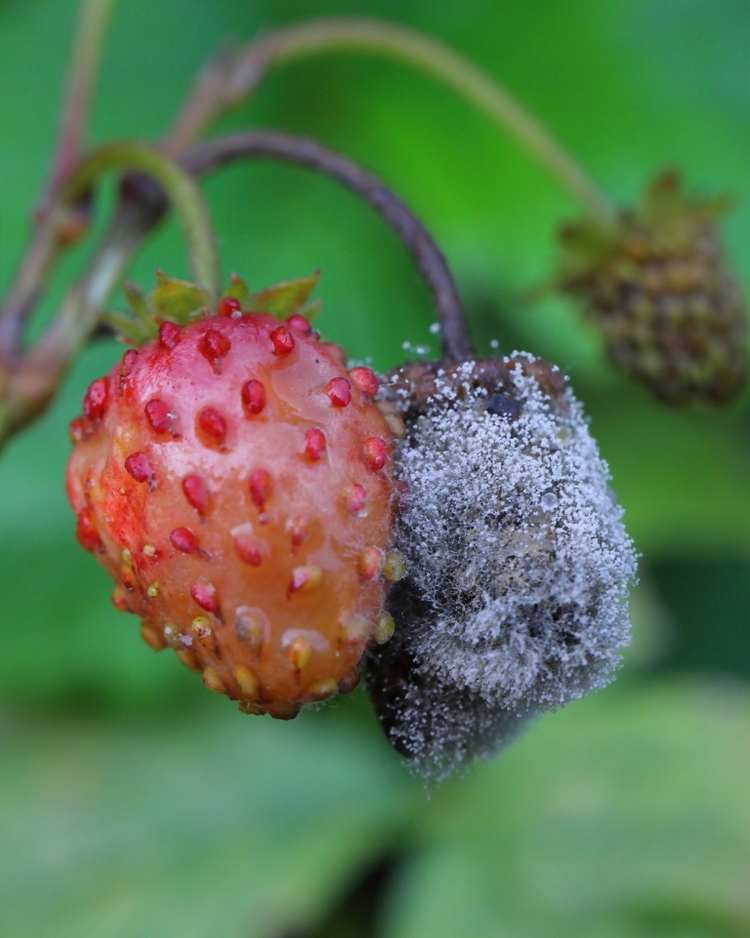
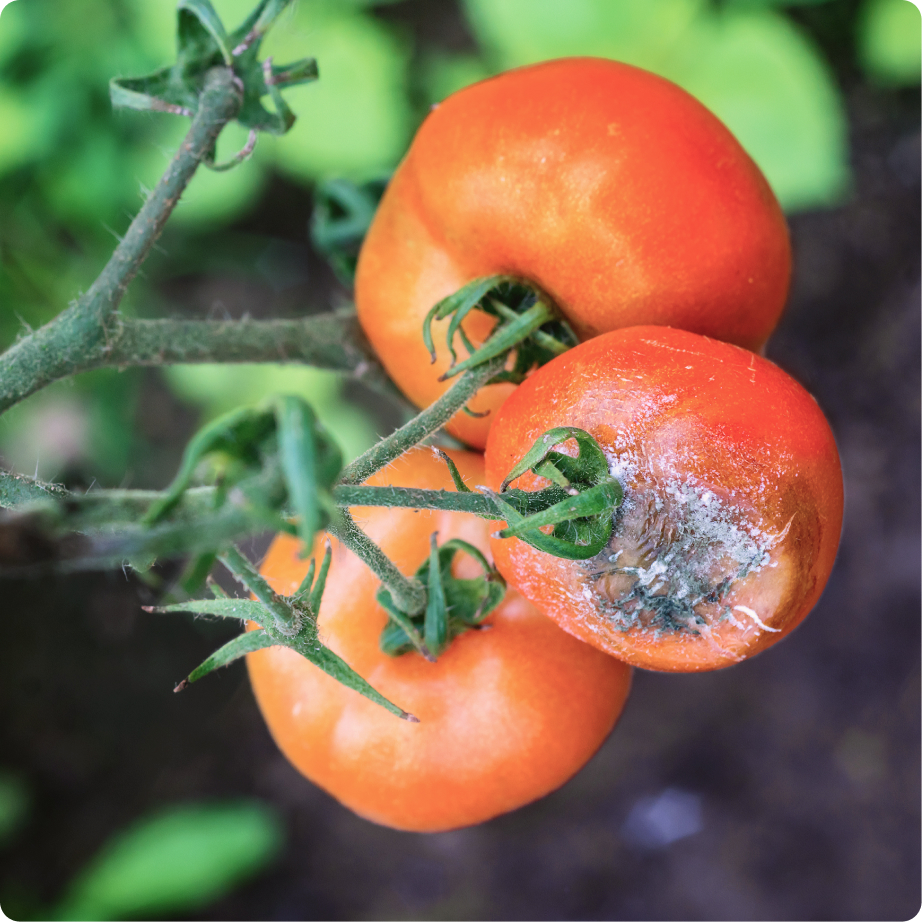
Botrytis, or gray mold, causes progressive degradation of fruit, which can begin in small wounds, weakened areas, or points of contact between fruits. Initially, water-soaked spots or discolored areas may appear, later turning brown or grayish. As the infection progresses, the tissues soften, lose their firmness, and rot develops, which can spread rapidly throughout the fruit. Under high humidity conditions, a characteristic mass of gray mycelium and sporulation appears on the affected areas, responsible for the gray mold appearance. The fruit can become completely spoiled and lose its commercial value. The disease can develop both before and after harvest, being especially problematic during transport and storage, where an infected fruit can contaminate other nearby fruit. Wounds caused during harvesting, handling, or transport considerably increase the risk of infection and spread of the disease. Among the most common manifestations are:
• Appearance of small, water-soaked or translucent spots.
• Appearance of small, water-soaked or translucent spots. • Formation of brown or tan lesions that progressively increase in size.
• Softening and loss of firmness of the fruit tissues.
• Development of progressive wet rot.
• Appearance of white or grayish mycelium on the affected areas.
• Formation of a characteristic gray sporulation mass on the fruit surface.
• Rapid spread of the rot to nearby tissues.
• Collapse and complete deterioration of the fruit in advanced infections.
• Appearance of mummified or dehydrated fruit when environmental conditions become unfavorable for active development.
• Contamination of healthy fruit in direct contact with affected fruit.
• Development of infections during transport and storage.
• Significant reduction in fruit quality and shelf life.
• Appearance of secondary rots associated with wounds and damaged tissues.


DEVELOPMENT CONDITIONS
Temperature:
15-25 °C
Humidity:
90-100 %

HOW IS IT SPREAD?
Airborne conidia, Rain, Irrigation water, Water splashes, Insects, Contact between fruits, Contact between plant tissues, Contaminated tools, Infected plant debris, Infected plant material

HOW TO ELIMINATE IT?
Home treatments
There are no home treatments
Natural allies
Chemical treatments
There are no treatments for this disease. Treatments are directed at the insect vectors that transmit it. See insect treatments.
RECOMMENDED PRODUCTS TO ELIMINATE THE PEST





REPELLENT PLANTS

RECOMMENDATIONS
OTHER PESTS THAT MAY INTEREST YOU


DID YOU LIKE IT?
Now you can always have it on your mobile, without ads and totally FREE. TRY idMicrobe NOW!



Explore more tools
Services
Contact
Legal
©2023 by ZERIMAR S.A.R.L. All rights reserved