

Leaf curl (Taphrina deformans): identification and ecological, chemical and biological treatments
Common name:
Leaf blister
Scientific name:
Taphrina deformans
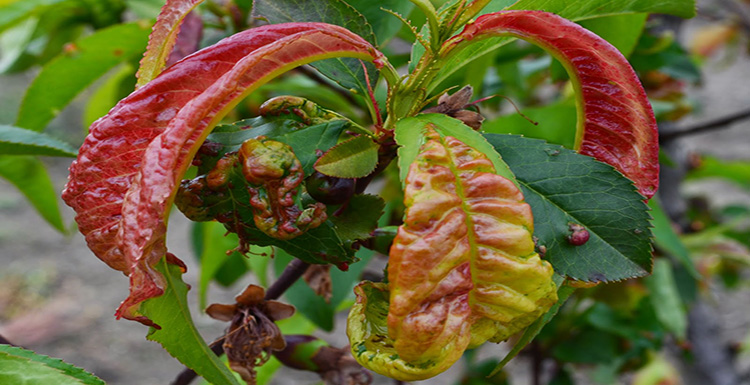
What is leaf curl (Taphrina deformans)?
Taphrina deformans is an ascomycete fungus responsible for the disease known as peach leaf curl, one of the most damaging diseases affecting stone fruit trees, especially peach, nectarine, flat peach and, to a lesser extent, almond trees and other Prunus species. This pathogen mainly attacks young leaves, tender shoots and, during favorable seasons, even fruits. The fungus survives as mycelium or spores on the surface of bark, buds and scales throughout winter, waiting for suitable humidity and cool temperatures to infect plant tissues during bud break.
The disease causes severe foliage deformities that reduce photosynthetic capacity and weaken the plant, potentially compromising annual production. Repeated infections year after year lead to significant vigor loss, premature leaf drop, secondary sprouting and increased susceptibility to frost damage or sunburn. Management requires special attention to preventive winter treatments or applications before bud break, since the fungus only infects tissues during the initial growth stage.
Symptoms and damage caused by leaf curl
• Curled, thickened and deformed leaves with very characteristic swellings.
• Color changes to reddish, yellowish or purple tones on young leaves.
• Fleshy or thickened texture of affected leaf tissues.
• Premature leaf drop, which may leave the tree partially defoliated.
• Weak secondary sprouting after defoliation.
• Damage to young shoots, which may become deformed or dry out.
• Occasional fruit damage with surface deformities and rough appearance.
• Reduced overall vigor and lower production when infections are severe.
Not sure what’s affecting your plants or crops?
Many plant diseases show very similar symptoms, making accurate identification difficult. A wrong diagnosis can lead to ineffective treatments, wasted time, and even more damage to your plants or crops. Get a professional plant diagnosis with a clear explanation of the cause, recommended treatments, and step-by-step guidance on how to act effectively.
How leaf curl spreads
The transmission and spread of Taphrina deformans mainly occurs through spores produced on the surface of infected leaves, which remain deposited on bark, buds and tree crevices after leaf fall. The fungus survives winter in a dormant state and, at the beginning of spring, under high humidity and temperatures between 10 and 20 °C, the spores germinate and infect young tissues during bud break. Wind and rain play a key role in the local spread of spores, while the movement of infected plant material can facilitate the introduction of the pathogen into new areas. The fungus can only infect during the initial growth stage of leaves and shoots; therefore, if these conditions coincide with prolonged rain or humidity, disease incidence can increase dramatically.
Leaf curl (Taphrina deformans): chemical, ecological and biocontrol treatments
Chemical treatments against leaf curl
No authorized chemical treatments are currently available. Explore other treatment options.
Ecological treatments to control leaf curl
No authorized chemical treatments are currently available. Explore other treatment options.
Biological control of leaf curl (biocontrol)
No authorized chemical treatments are currently available. Explore other treatment options.
Products to effectively control leaf curl
AFFECTED PLANTS AND CROPS

Explore more tools
Services
Contact
Legal
©2023 por ZeriMar Laboratoire. Todos los derechos reservados.