

Oídio
Powdery Mildew
Blumeria Graminis
Pathogen:
Fungus
Type:
Risk to the plant:
HIGH

DESCRIPTION
WHO CAUSES IT?
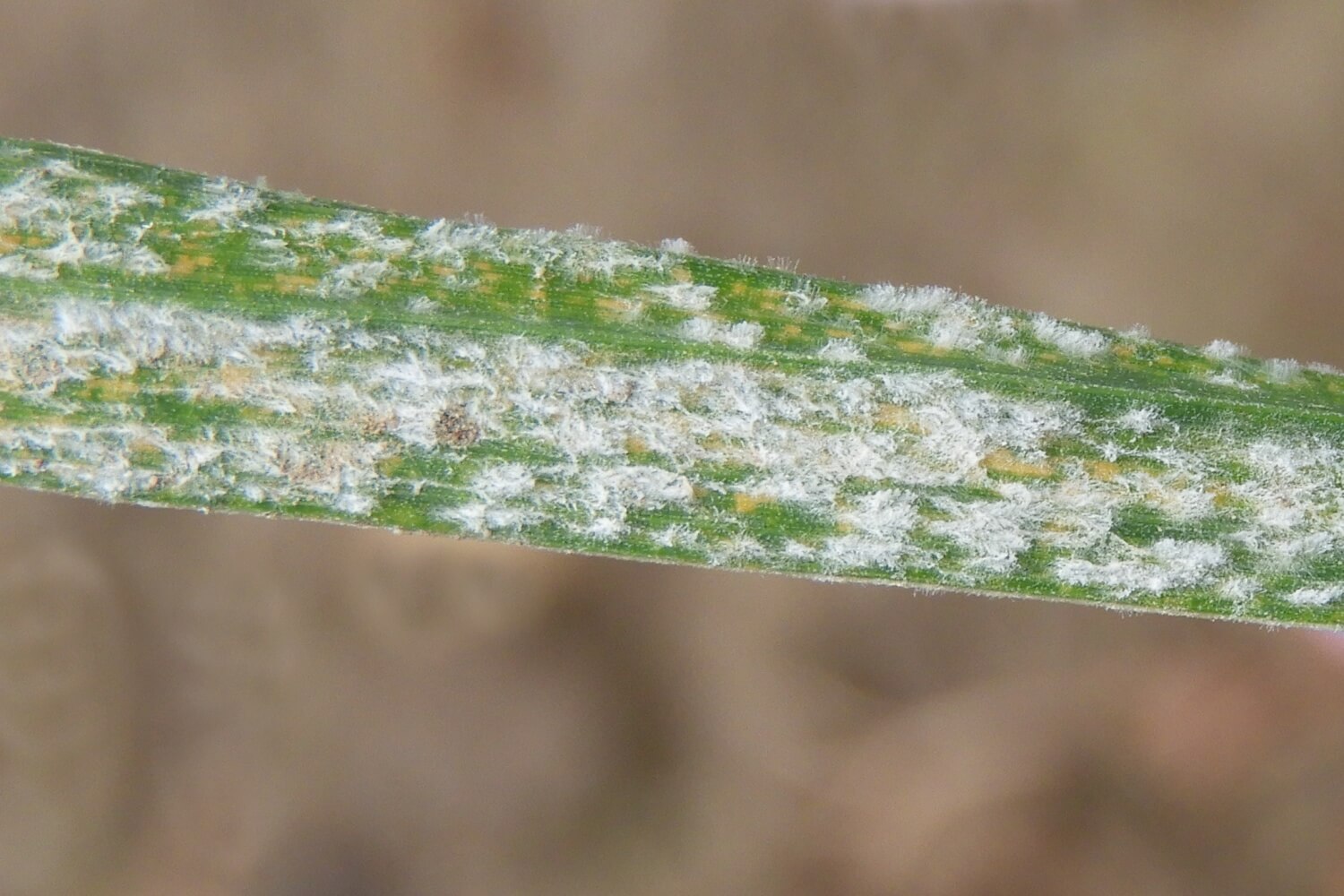
Blumeria graminis is a phytopathogenic fungus that mainly affects cereals, being the causal agent of powdery mildew in this type of crops. This pathogen is an obligate ectoparasite, which means that it grows on the surface of the plant, forming a specialized structure called a haustorium, which penetrates the host's epidermal cells to obtain nutrients. Its dispersion occurs through spores called conidia, which are released into the environment and are easily transported by the wind. Upon landing on the susceptible plant, they germinate in the presence of favorable environmental conditions, forming germ tubes that adhere to the surface of the leaves. The fungus forms visible colonies in the form of white or powdery Taches that cover the leaves and stems of infected plants. These colonies produce more conidia, perpetuating the infection throughout the growing season, while sexual structures known as cleistothecia can produce spores that survive the winter, guaranteeing their permanence.
SYMPTOMS
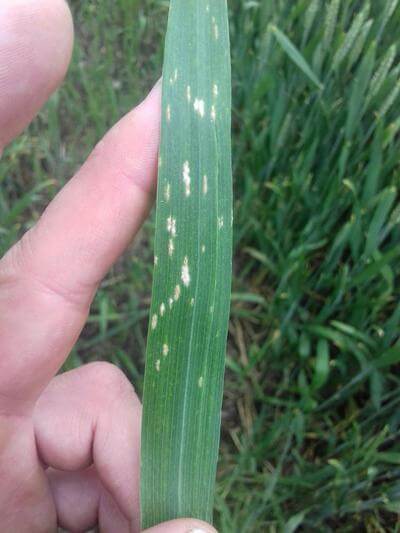
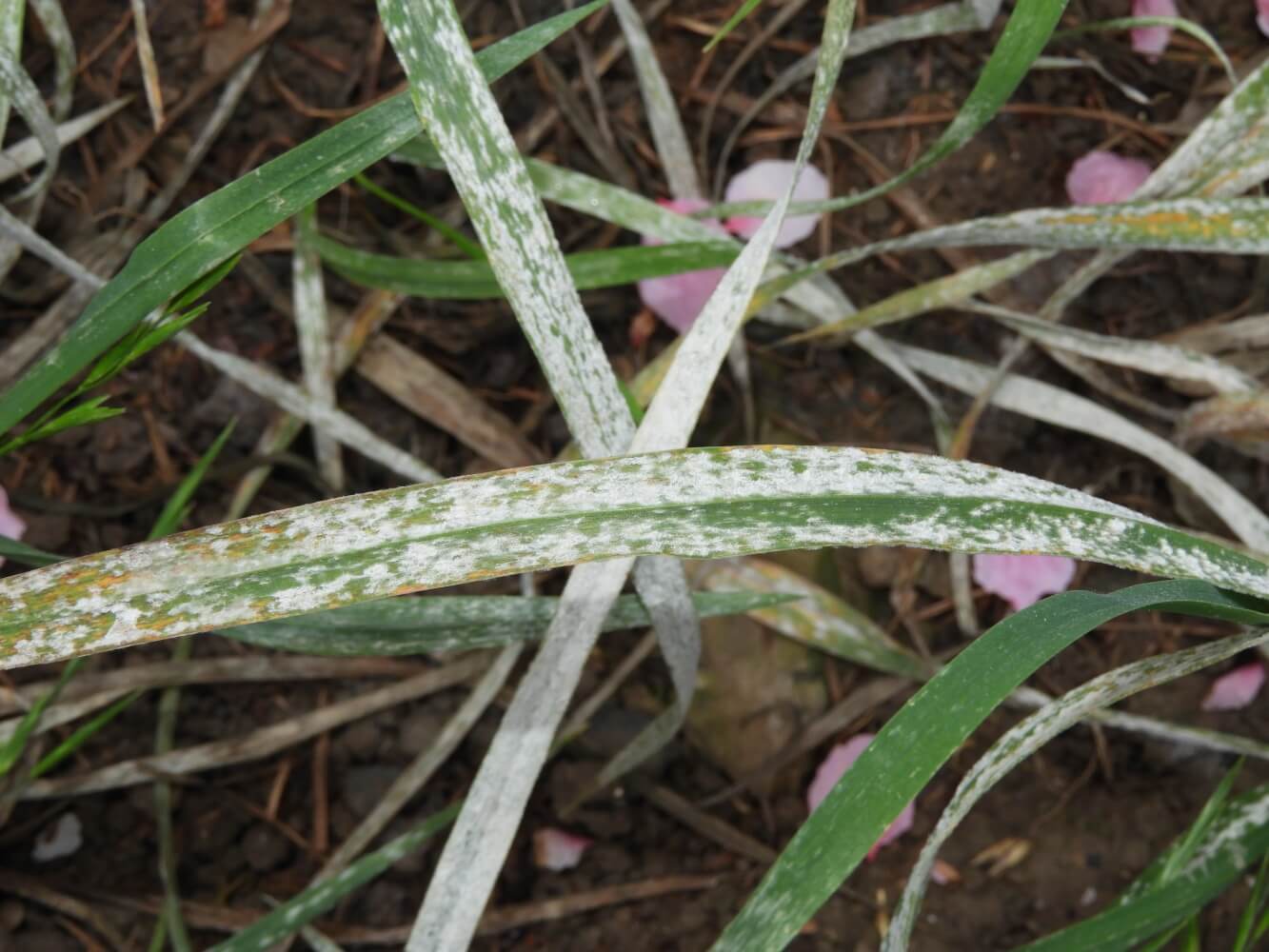
Powdery mildew caused by Blumeria graminis mainly affects winter cereals, compromising their photosynthetic capacity and weakening the general development of the plant. As the disease progresses, plants show characteristic symptoms ranging from white Taches on the leaves to necrosis. Symptoms begin with small chlorotic Taches that quickly become covered with a powdery white mold that spreads throughout the plant if conditions are favorable. In advanced stages, the affected areas may turn yellow or brown, and the leaves tend to wither. In severe infections, crop yield is compromised due to reduced functional leaf area and decreased photosynthesis.
- Whitish or powdery Taches on leaves and stems
- Progressive chlorosis
- Necrosis in affected areas
- Reduction in growth and general weakening of the plant
- Wilting and premature death of leaves
- Decrease in grain yield and quality


TEMPERATURE AND HUMIDITY
15°C - 25°C
70% - 90%

HOW IS IT SPREAD?
Wind-borne spores, direct contact between infected and healthy plants, remains of infected crops

HOW TO REMOVE IT?
Home remedies
There are no home treatments
Chemical treatments
• AZOXISTROBIN 12% + TEBUCONAZOLE 20% [SC] P/V
• AZOXISTROBIN 25% [SC] P/V
• SULFUR 70% [SC] P/V
• SULFUR 70% + TEBUCONAZOLE 4.5% [WG] P/P
• SULFUR 72% [SC] P/V
• SULFUR 80% [SC] P/V
• SULFUR 80% [WG] P/P
• SULFUR 80% [WP] P/P
• SULFUR 82.5% [SC] P/V
• BIXAFEN 7.5% + PROTHIOCONAZOLE 15% [EC] P/V
• BIXAFEN 7.5% + SPIROXAMINE 15% + TRIFLOXISTROBIN 10% [EC] P/V
• BROMUCONAZOLE 30% [EC] P/V
• CIFLUFENAMID 5.13% [EW] P/V
• FENPICOXAMID 5% + PROTHIOCONAZOLE 10% [EC] P/V
• FLUXAPYROXAD 33.3% [FS] P/V
• FLUXAPYROXAD 5% + MEFENTRIFLUCONAZOLE 10% [EC] P/V
• FLUXAPYROXAD 6.25% [EC] P/V
• FLUXAPYROXAD 62.5g/L + METCONAZOLE 45g/L [EC] P/V
• FLUXAPYROXAD 7.5% + PIRACLOSTROBIN 15% [EC] P/V
• METCONAZOLE 9% [EC] P/V
• METRAPHENONE 30% [SC] P/V
• PIRACLOSTROBIN 25% [EC] P/V
• PROTHIOCONAZOLE 12.5% + TEBUCONAZOLE 12.5% [EC] P/V
• PROTHIOCONAZOLE 25% [EC] P/V
• TEBUCONAZOLE 20% [EC] P/V
• TEBUCONAZOLE 20% [EW] P/V
• TEBUCONAZOLE 25% [EC] P/V
• TEBUCONAZOLE 25% [EW] P/V
• TEBUCONAZOLE 25% [WG] P/P
• TEBUCONAZOLE 43% [SC] P/V
• TEBUCONAZOLE 75% [WG] P/P
• TETRACONAZOLE 10% [EC] P/V
• TETRACONAZOLE 12.5% [ME] P/V
• TETRACONAZOLE 4% [ME] P/V
Authorized treatments in organic farming
• SULFUR 70% [SC] P/V
• SULFUR 72% [SC] P/V
• SULFUR 80% [SC] P/V
• SULFUR 80% [WG] P/P
• SULFUR 80% [WP] P/P
• SULFUR 82.5% [SC] P/V
Insect allies
PREDATORY MITES
LADYBUGS
LACEWINGS
PARASITIC WASPS
HOVERFLIES OR PARASITIC FLIES
PREDATORY BUGS
There are no natural allies
Mycodiplosis oidii (predatory mosquito)
EFFECTIVE PRODUCTS TO ELIMINATE THIS DISEASE
Sponsored link
Sponsored link


Sponsored link
Sponsored link
Sponsored link


Sponsored link
Sponsored link
Effective against all types of fungi

Sponsored link


Sponsored link
Sponsored link

Sponsored link


Sponsored link
- Use cereal varieties resistant to powdery mildew to avoid initial infection.
- Carry out an adequate crop rotation, alternating with plants that are not susceptible to Blumeria graminis, to reduce the accumulation of inoculum in the field.
- Maintain an adequate planting distance to promote air circulation between the plants, reducing the relative humidity in the crop microclimate.
- Apply preventive fungicides at key moments of the crop cycle, especially before weather conditions are favorable for the development of the fungus.
- Remove and destroy the remains of infected crops after harvest, as these can serve as a source of spores for the following season.
- Control weeds near crops, which can act as reservoirs of fungal spores.
- Implement irrigation practices that avoid excess humidity on the aerial part of the crop, since high humidity favors the development of the disease.
Recommendations

Enjoy idMicrobe TOTALLY FREE, with no trial periods.


