

Cercosporosis
Cercosporosis
Cercospora Apii
Pathogen:
Fungus
Type:
Risk to the plant:
HIGH
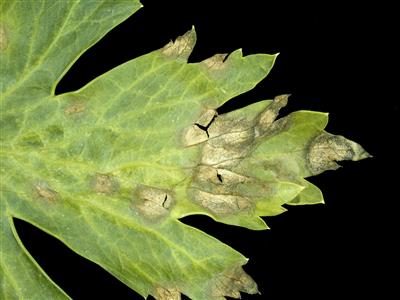
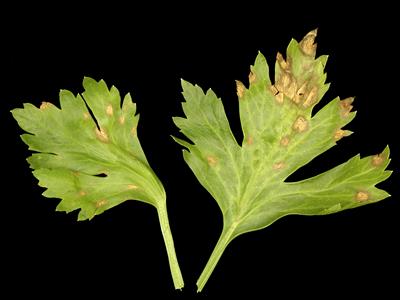

DESCRIPTION
WHO CAUSES IT?
Cercospora apii is a phytopathogenic fungus that causes the disease known as cercosporosis in various plants, including celery. This fungus produces asexual spores called conidia, which are spread by wind, rain or irrigation. Conidia germinate on the surface of the leaves when humidity conditions are high, penetrating through the stomata or through wounds in the tissues. The mycelium of the fungus develops internally, forming new spores that emerge through the lesions and can initiate new infections. During unfavorable periods, the fungus can survive on infected plant remains or in the soil, where it persists until conditions are again conducive to its activity. Infection is favored by warm temperatures and humid environments, allowing the fungus to complete several infection cycles in a single growing season.
SYMPTOMS
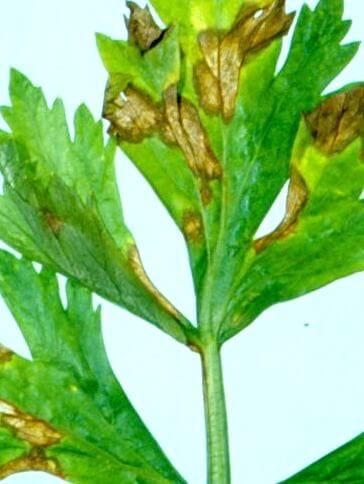
In celery, Cercospora apii causes cercosporosis, a disease that mainly affects the leaves and, in severe cases, can compromise the production and quality of the crop. Initial symptoms include small yellow Taches on leaves that progress to necrotic lesions with a gray center and brown edges. These Taches can coalesce, causing extensive desiccation of foliage and premature defoliation.
- Small yellow Taches on the leaves
- Necrotic lesions with gray center and brown edges
- Coalescence of Taches causing desiccation of the foliage
- Premature defoliation
- Reduction of photosynthesis and plant vigor


TEMPERATURE AND HUMIDITY
20-30°C
85-100%

HOW IS IT SPREAD?
Aerial spores, irrigation water, infected plant remains, contaminated tools

HOW TO REMOVE IT?
Home remedies
There are no home treatments
Chemical treatments
• AZOXISTROBIN 25% [SC] P/V
• LAMINARIN 4.5% [SL] P/S
• DIFENOCONAZOLE 25% [EC] P/V
Authorized treatments in organic farming
• LAMINARIN 4.5% [SL] P/S
Insect allies
PREDATORY MITES
LADYBUGS
LACEWINGS
PARASITIC WASPS
HOVERFLIES OR PARASITIC FLIES
PREDATORY BUGS
There are no natural allies
Mycodiplosis oidii (predatory mosquito)
EFFECTIVE PRODUCTS TO ELIMINATE THIS DISEASE
Sponsored link
Sponsored link


Sponsored link
Sponsored link
Sponsored link


Sponsored link
Sponsored link
Effective against all types of fungi

Sponsored link


Sponsored link
Sponsored link

Sponsored link


Sponsored link
- Use certified pathogen-free seeds to prevent the introduction of the fungus into the field.
- Implement a crop rotation of at least two years with species not susceptible to Cercospora apii.
- Remove and destroy the remains of infected plants to reduce the source of inoculum.
- Avoid sprinkler irrigation and prefer drip irrigation to minimize humidity on the foliage.
- Space plants appropriately to improve air circulation and reduce relative humidity in the canopy.
- Apply preventive and curative fungicides according to local recommendations and following an integrated pest management program.
- Regularly monitor the crop to detect symptoms early and apply timely treatments.
- Keep the growing area free of weeds that can serve as alternative hosts for the fungus.
- Perform soil analysis and adjust nutrient levels to promote overall crop health and disease resistance.
Recommendations

Enjoy idMicrobe TOTALLY FREE, with no trial periods.


