

Oídio
Powdery Mildew
Erysiphe Cichoracerum
Pathogen:
Fungus
Type:
Risk to the plant:
HIGH
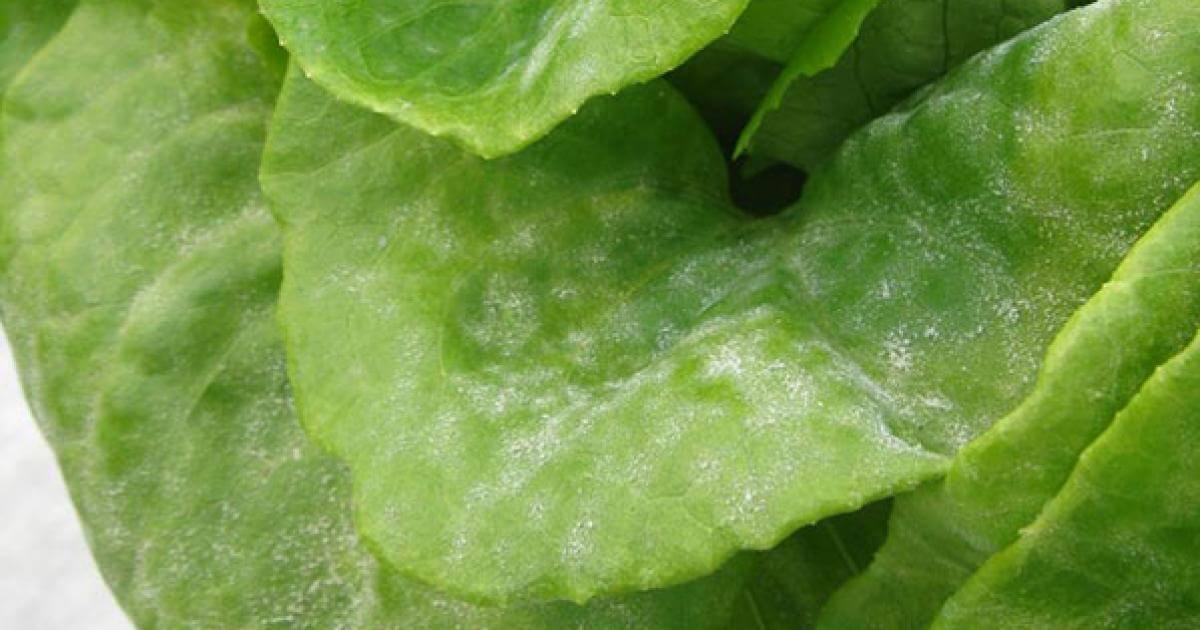
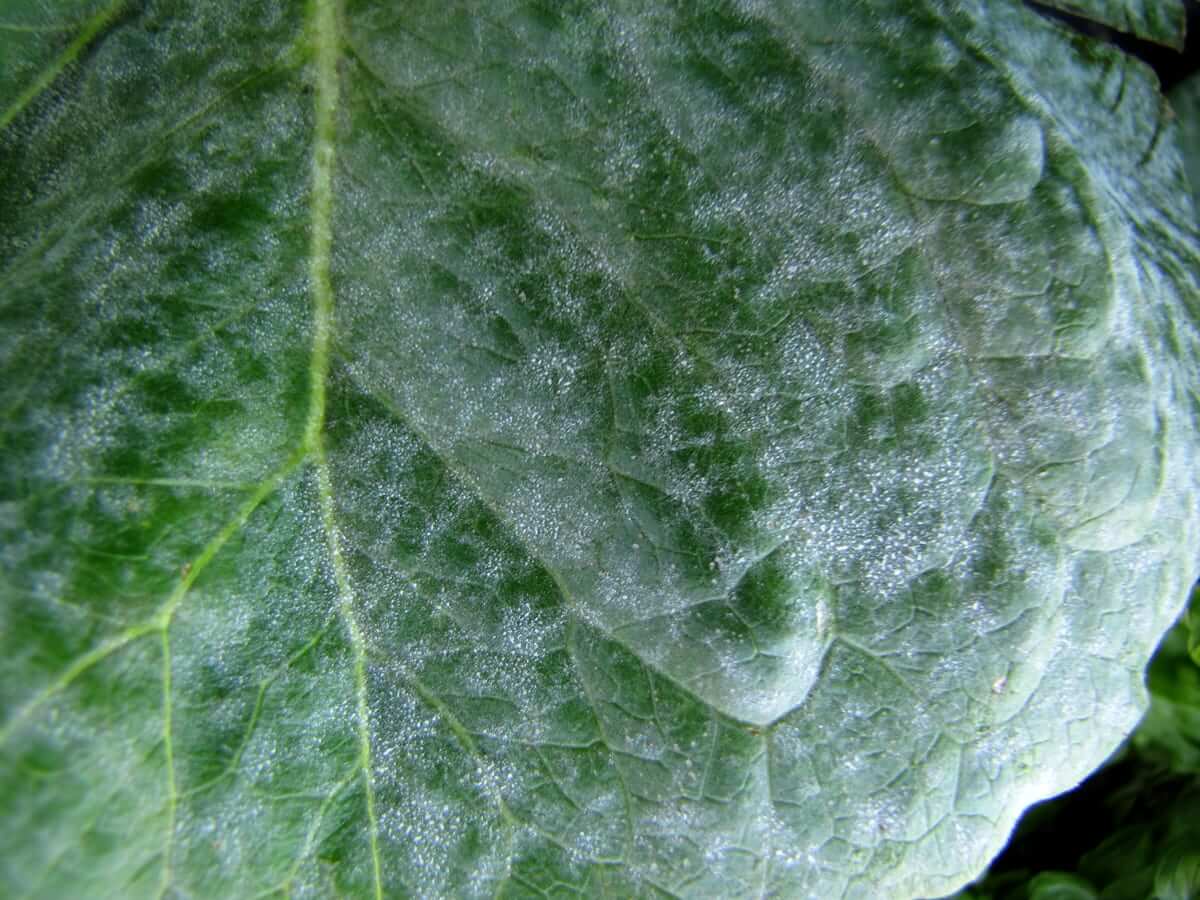

DESCRIPTION
WHO CAUSES IT?
Erysiphe cichoracearum is a biotrophic fungus that belongs to the order Erysiphales, responsible for causing powdery mildew in various plant species. This pathogen is characterized by forming white mycelia and sporangia on the surface of the leaves and other aerial parts of the plant. The cycle begins with the dissemination of conidia through the air, which find a susceptible plant in which to germinate and penetrate the tissues, forming haustoria that extract nutrients from living cells. Throughout its development, it produces new generations of conidia that continue the spread of the fungus. During the coldest months or in the absence of hosts, the fungus survives in specialized structures called cleistothecia, which house ascospores capable of resisting adverse conditions until the arrival of more favorable temperatures.
SYMPTOMS
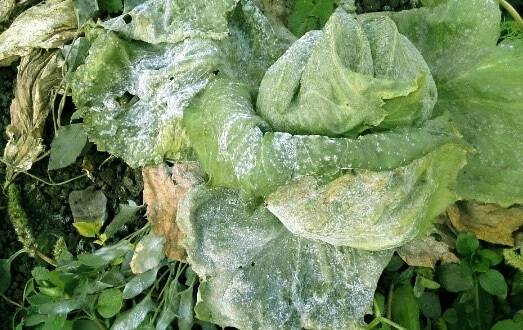
In lettuce and similar crops, Erysiphe cichoracearum causes powdery mildew, a disease that affects the growth and productivity of plants by interfering with their photosynthetic capacity and weakening them. The first symptoms appear as powdery white Taches on the leaves, stems or even flowers. As the disease progresses, the affected leaves tend to yellow, dry and fall prematurely, seriously affecting the quality of the crop.
- Appearance of whitish, powdery Taches on the surface of the leaves.
- Yellowing and weakening of the affected leaves.
- Premature fall of severely infected leaves.
- Delay in the general growth and development of the plant.
- Reduction in the quality and quantity of the harvest.


TEMPERATURE AND HUMIDITY
15-25°C
50-80%

HOW IS IT SPREAD?
Air, wind, infected plant debris, contaminated tools, contaminated irrigation water

HOW TO REMOVE IT?
Home remedies
There are no home treatments
Chemical treatments
• ORANGE OIL 6% [SL] P/V
• ORANGE OIL 60g/L [ME] P/S
• AZOXISTROBIN 20% + DIFENOCONAZOLE 12.5% [SC] P/V
• AZOXISTROBIN 25% [SC] P/V
• SULFUR 80% [SC] P/V
• SULFUR 80% [WG] P/P
• SULFUR 80% [WP] P/P
• SULFUR 82.5% [SC] P/V
• DIFENOCONAZOLE 25% [EC] P/V
• EUGENOL 3.3% + GERANIOL 6.6% + THYMOL 6.6% [CS] P/V
• FLUXAPYROXAD 7.5% + DIFENOCONAZOLE 5% [SC] P/V
• LAMINARIN 4.5% [SL] P/S
• PIRACLOSTROBIN 6.7% + BOSCALIDE 26.7% ( ) [WG] P/P
Authorized treatments in organic farming
• ORANGE OIL 6% [SL] P/V
• ORANGE OIL 60g/L [ME] P/S
• SULFUR 80% [SC] P/V
• SULFUR 80% [WG] P/P
• SULFUR 80% [WP] P/P
• SULFUR 82.5% [SC] P/V
• EUGENOL 3.3% + GERANIOL 6.6% + THYMOL 6.6% [CS] P/V
• LAMINARIN 4.5% [SL] P/S
Insect allies
PREDATORY MITES
LADYBUGS
LACEWINGS
PARASITIC WASPS
HOVERFLIES OR PARASITIC FLIES
PREDATORY BUGS
There are no natural allies
Mycodiplosis oidii (predatory mosquito)
EFFECTIVE PRODUCTS TO ELIMINATE THIS DISEASE
Sponsored link
Sponsored link


Sponsored link
Sponsored link
Sponsored link


Sponsored link
Sponsored link
Effective against all types of fungi

Sponsored link


Sponsored link
Sponsored link

Sponsored link


Sponsored link
- Use powdery mildew resistant cultivars when possible, as a key preventive measure.
- Ensure adequate ventilation between plants to reduce the accumulation of humidity, a favorable condition for the development of the fungus.
- Avoid sprinkler irrigation in the cooler hours, since prolonged humidity on the leaves encourages the germination of pathogen spores.
- Carry out constant monitoring in the early stages of the crop to detect the first signs of infection and apply treatments in time.
- Apply fungicides preventively or at the beginning of the appearance of symptoms, using specific products for powdery mildew.
- Rotate fungicides with different modes of action to avoid the appearance of resistance.
- Eliminate and destroy infected plant remains after harvest to reduce the presence of inoculum in the following season.
- Keep nearby weeds under control that may serve as alternative hosts for the fungus.
Recommendations

Enjoy idMicrobe TOTALLY FREE, with no trial periods.


