

Trips
Thrips
Frankliniella Occidentalis
Pathogen:
Insect
Type:
Risk to the plant:
HIGH

DESCRIPTION
WHO CAUSES IT?
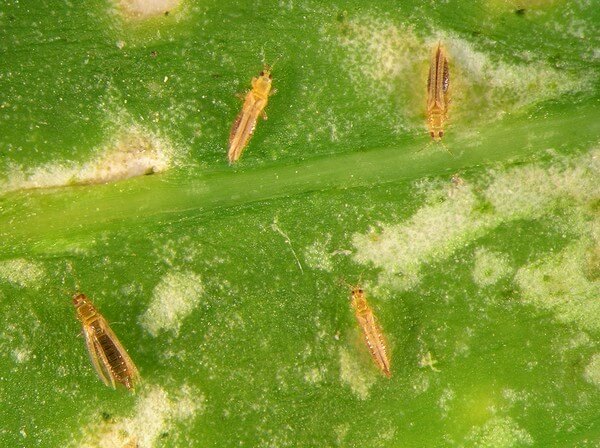
Frankliniella occidentalis, known as western flower thrips, is a small insect that infests various crops, including lettuce. Adults measure between 1 and 2 mm and have an elongated body, usually yellow or brown. They have fringed wings that allow them to disperse easily. The female deposits her eggs within the plant tissues, where the larvae develop, which emerge after a few days. These larvae go through two larval stages before becoming nymphs, a stage in which they stop to pupate in the soil or at the base of plants. They then emerge as adults ready to feed on leaves, flowers and fruits. Thrips have a very rapid reproductive cycle under favorable conditions, which can cause explosive outbreaks in crops, especially in hot, dry climates.
SYMPTOMS
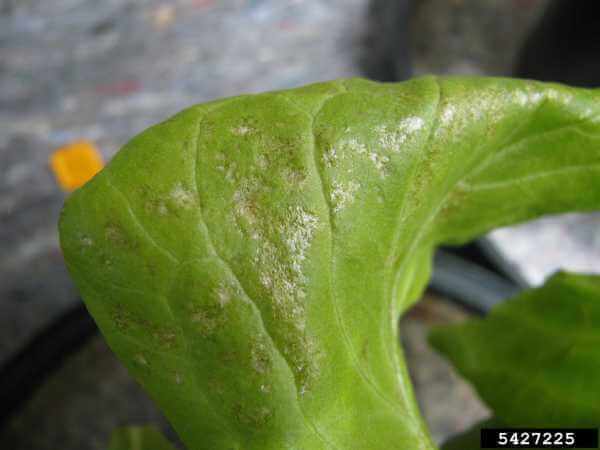
In lettuce, thrips feed by piercing the plant cells and sucking the contents, which causes the destruction of plant tissues and the appearance of scars on the leaves. This damage reduces the commercial quality of the lettuce and can make affected plants less attractive for sale. In addition to direct physical damage, thrips can also act as vectors for viruses, such as tomato wilt virus (TSWV), further exacerbating problems in the crop.
- Leaves with silvery or tan scars due to sap suction.
- Deformations in young leaves.
- Brown Taches on the leaves.
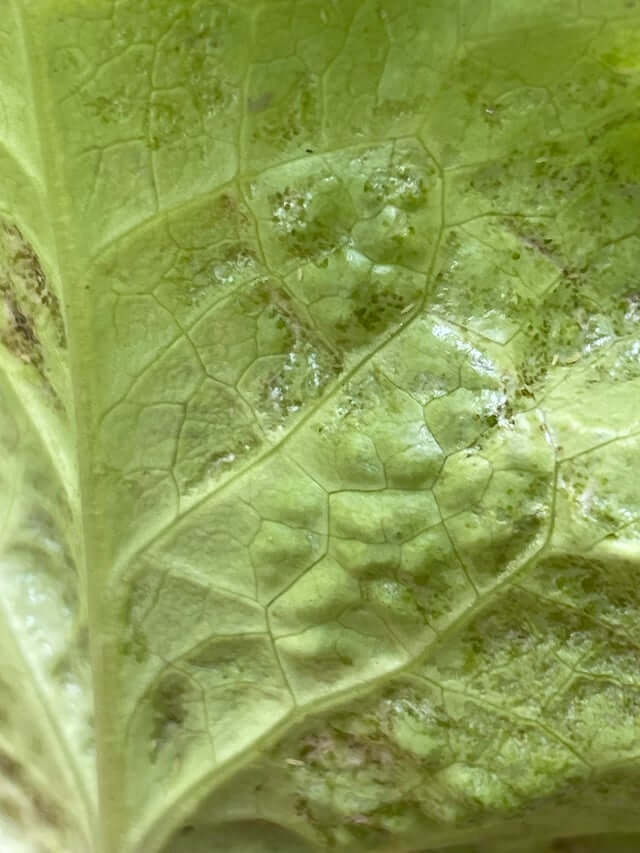
- Presence of black excrement on the underside of the leaves.
- Appearance of viruses such as TSWV transmitted by thrips.
- Loss of vigor in affected plants.
- Reduction in crop growth and quality.


TEMPERATURE AND HUMIDITY
20-30°C
40-60%

HOW IS IT SPREAD?
Wind, movement of infested plants, contaminated growing tools, humans, migration of winged thrips

HOW TO REMOVE IT?
Home remedies
There are no home treatments
Chemical treatments
• ABAMECTIN 0.0015% + PYRETHRINS 0.02% [AL] P/V
• RAPE OIL 1.53% [AL] P/V
• RAPE OIL 848.24 g/l [EC] P/V
• ORANGE OIL 6% [SL] P/V
• ORANGE OIL 60g/L [ME] P/S
• AZADIRACTIN 1% (AS AZADIRACTIN A) [EC] P/V
• Azadirachtin 2.6% (AS AZADIRACTIN A) [EC] P/V
• CYANTRANILIPROL 10% + ACIBENZOLAR-S-METHYL 1.25% [SC] P/V
• CYANTRANILIPROL 20% [SC] P/V
• DELTAMETHRIN 1.5% [EW] P/V
• DELTAMETHRIN 1.57% [SC] P/V
• DELTAMETHRIN 10% [EC] P/V
• DELTAMETHRIN 2.5% [EC] P/V
• DELTAMETHRIN 2.5% [EW] P/V
• FORMETANATE 50% [SP] P/P
• LAMBDA CYHALOTHRIN 0.0015% [ME] P/V
• LAMBDA CYHALOTHRIN 1.5% [CS] P/V
• LAMBDA CYHALOTHRIN 10% [CS] P/V
• PYRETHRINS 4% (PYRETHHRINE EXTR.) [EC] P/V
• POTASSIUM SALTS OF FATTY ACIDS C14-C20 48% [EW] P/V
• SPINETORAM 2.5% [SC] P/V
• SPINOSAD 2.4% [SC] P/V
• SPINOSAD 48% [SC] P/V
• SPIROTETRAMAT 10% [SC] P/V
• SPIROTETRAMAT 15% [OD] P/V
• TAU-FLUVALINATE 24% [EW] P/V
Authorized treatments in organic farming
• RAPE OIL 1.53% [AL] P/V
• RAPE OIL 848.24 g/l [EC] P/V
• ORANGE OIL 6% [SL] P/V
• ORANGE OIL 60g/L [ME] P/S
• AZADIRACTIN 1% (AS AZADIRACTIN A) [EC] P/V
• Azadirachtin 2.6% (AS AZADIRACTIN A) [EC] P/V
• LAMBDA CYHALOTHRIN 0.0015% [ME] P/V
• LAMBDA CYHALOTHRIN 1.5% [CS] P/V
• LAMBDA CYHALOTHRIN 10% [CS] P/V
• PYRETHRINS 4% (PYRETHHRINE EXTR.) [EC] P/V
• POTASSIUM SALTS OF FATTY ACIDS C14-C20 48% [EW] P/V
• SPINOSAD 2.4% [SC] P/V
• SPINOSAD 48% [SC] P/V
Insect allies
PREDATORY MITES
LADYBUGS
LACEWINGS
PARASITIC WASPS
HOVERFLIES OR PARASITIC FLIES
PREDATORY BUGS
There are no natural allies
Mycodiplosis oidii (predatory mosquito)
EFFECTIVE PRODUCTS TO ELIMINATE THIS DISEASE
Sponsored link
Sponsored link


Sponsored link
Sponsored link
Sponsored link


Sponsored link
Sponsored link
Effective against all types of fungi

Sponsored link


Sponsored link
Sponsored link

Sponsored link


Sponsored link
- Implement physical barriers, such as anti-insect mesh, to prevent thrips from entering the crop.
- Carry out periodic inspections in the initial stages of lettuce growth to detect the early presence of thrips and apply control measures immediately.
- Promote biological control by introducing natural predators of thrips, such as predatory mites (*Amblyseius swirskii*) or insects such as lacewing.
- Avoid excessive use of broad-spectrum insecticides that can eliminate the natural enemies of thrips and cause imbalances in the crop ecosystem.
- Use blue sticky traps to monitor the thrips population and detect early infestations.
- Rotate crops to break the life cycle of thrips and reduce the incidence of infestations in successive seasons.
- Apply specific phytosanitary treatments for thrips at critical moments, ensuring that different modes of action alternate to prevent the appearance of resistance.
- Maintain good ventilation and humidity control in greenhouses, since dry conditions favor the development of thrips.
Recommendations

Enjoy idMicrobe TOTALLY FREE, with no trial periods.


