

Fumagina o negrilla
Sooty mold or black mold: what it is, how it originates, and how to remove it effectively
Bold Or Sooty Mold
Fungal Complex
Pathogen:
Fungus
Type:
Risk to the plant:
MILD


DESCRIPTION
WHO CAUSES IT?
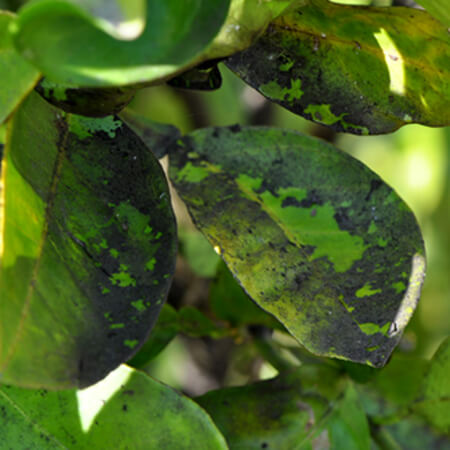
Sooty mold is a fungus that develops on honeydew secreted by sap-sucking insects such as aphids, whiteflies and mealybugs. This fungus is superficial and does not directly infect plant tissues, but creates a black coating on the leaves, shoots and fruits that interferes with photosynthesis and normal plant development.
SYMPTOMS
In citrus fruits, sooty mold can cover the leaves, branches and fruits with a black layer, which prevents the entry of light and makes photosynthesis difficult. This results in a general weakening of the plant, reduction in the production and quality of the fruits, and a deteriorated appearance of the crop.
• Black fungal layer on leaves, branches and fruits.
• Reduction of photosynthesis.
• General weakening of the plant.
• Decrease in fruit production and quality.
• Dirty or blackened appearance of the plant.


TEMPERATURE AND HUMIDITY
15°C - 30°C
60% - 80%

HOW IS IT SPREAD?
Honeydew produced by sap-sucking insects.

HOW TO REMOVE IT?
Home remedies
There are no home treatments
Chemical treatments
• COPPER OXYCHLORIDE 37.5% (EXPR. IN CU) [WG] P/P
• COPPER OXYCHLORIDE 38% (EXPR. IN CU) [SC] P/V
• COPPER OXYCHLORIDE 70% (EXPR. IN CU) [SC] P/V
Authorized treatments in organic farming
• COPPER OXYCHLORIDE 37.5% (EXPR. IN CU) [WG] P/P
• COPPER OXYCHLORIDE 38% (EXPR. IN CU) [SC] P/V
• COPPER OXYCHLORIDE 70% (EXPR. IN CU) [SC] P/V
Insect allies
PREDATORY MITES
LADYBUGS
LACEWINGS
PARASITIC WASPS
HOVERFLIES OR PARASITIC FLIES
PREDATORY BUGS
There are no natural allies
Mycodiplosis oidii (predatory mosquito)
EFFECTIVE PRODUCTS TO ELIMINATE THIS DISEASE
Sponsored link
Sponsored link


Sponsored link
Sponsored link
Sponsored link


Sponsored link
Sponsored link
Effective against all types of fungi

Sponsored link


Sponsored link
Sponsored link

Sponsored link


Sponsored link
• Control populations of sucking insects that produce honeydew.
• Clean plants with water to remove honeydew and fungus.
• Maintain a clean environment around plants to reduce spread.
• Prune and remove severely affected branches and leaves.
• Use of specific fungicides when necessary.
Recommendations

Enjoy idMicrobe TOTALLY FREE, with no trial periods.


