

Polillas
Bunch moth or European bunch moth: what it is, how it originates, and how to eliminate it effectively.
Cluster Moth Or European Moth
Lobesia Botrana
Pathogen:
Insect
Type:
Risk to the plant:
HIGH

DESCRIPTION
WHO CAUSES IT?
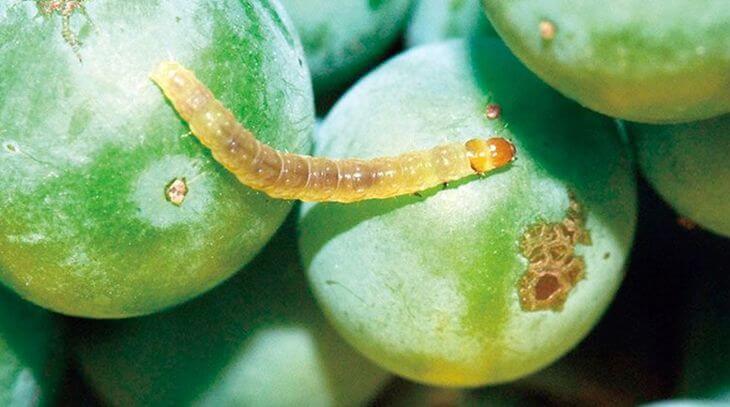
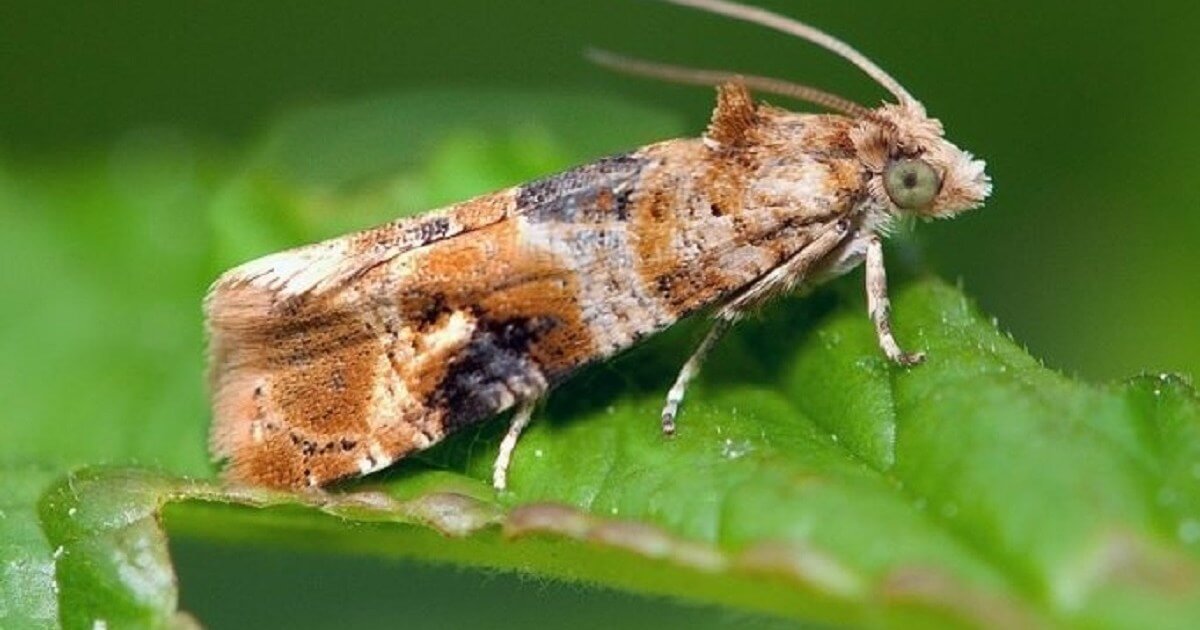
*Lobesia botrana*, commonly known as the cluster moth or European moth, is a lepidopteran that represents one of the most important pests for the vine. Its development goes through several phases, beginning with the laying of eggs in the inflorescences or clusters of the vine. The larvae emerge and begin to feed on floral tissues or berries, causing direct damage to the clusters. Throughout its development, the moth goes through 3 to 5 generations annually, depending on climatic conditions. The larvae pupate in the soil or in the bark of the vine, where they transform into adults. The adults are small moths that restart the reproductive cycle. During the colder months, the moth enters a diapause phase as a pupa, allowing it to survive until the next spring. Favorable conditions, such as warm temperatures and the continuous presence of hosts, allow rapid spread and increase of populations.
SYMPTOMS
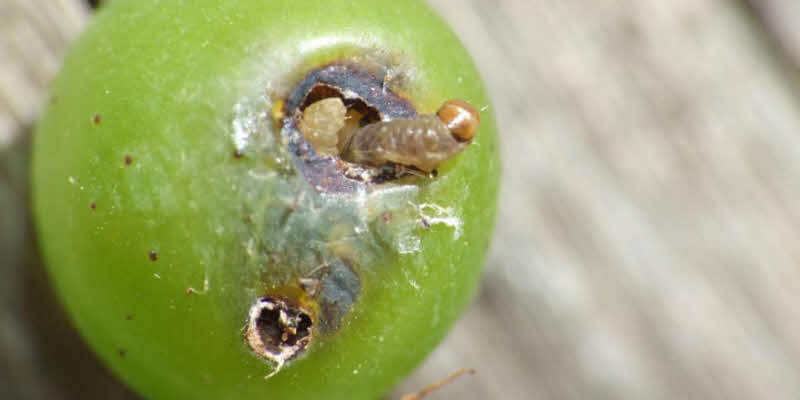
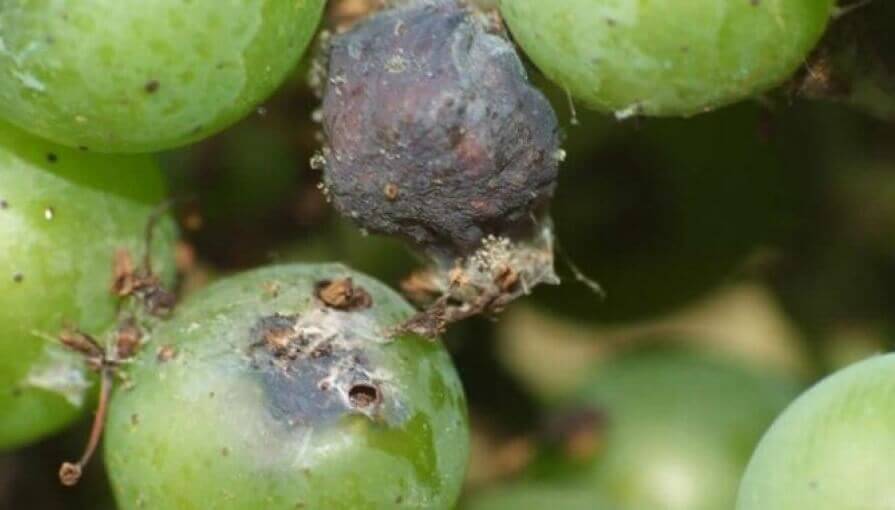
The infestation of *Lobesia botrana* in the vine causes significant damage to the clusters, directly affecting the quality and quantity of production. The larvae feed on flowers and berries, creating wounds that encourage the entry of secondary pathogens, such as fungi that cause rot. In addition to physical damage, affected grapes are more susceptible to fungal diseases, which further compromises fruit production and quality.
- Visible damage to the vine inflorescences.
- Drilling and destruction of young berries.
- Drying and premature fall of damaged fruits.
- Appearance of gray rot in the clusters due to secondary infections.
- Reduction in total crop yield.
- Loss of quality in fruits due to wounds caused by larvae feeding.


TEMPERATURE AND HUMIDITY
18°C - 30°C
70% - 90%

HOW IS IT SPREAD?
Wind, movement of infected plants, crop remains, dispersal of flying adults

HOW TO REMOVE IT?
Home remedies
There are no home treatments
Chemical treatments
• (E,Z)-7,9-dodecadien-1-yl-acetate 11.74% [AE] P/V
• (E,Z)-7,9-dodecadien-1-yl-acetate 18.85% [CS] P/P
• (E,Z)-7,9-DODECADIEN-1-YL ACETATE 10% [CS] P/V
• (E,Z)-7,9-DODECADIEN-1-YL ACETATE 3.8% [VP] P/P
• (E,Z)-7,9-DODECADIEN-1-YL ACETATE 7% [AE] P/P
• (E,Z)-7,9-DODECADIEN-1-YL ACETATE 79.2% [VP] P/P [380 mg/diffuser] [VP] P/P
• (E,Z)-7,9-DODECADIEN-1-YL ACETATE 8.2% [VP] P/P
• (E,Z)-7,9-DODECADIEN-1-YL ACETATE 9.11% [AE] P/P
• (E,Z)-7,9-DODECADIEN-1-YL ACETATE 9.8% (400 mg/diffuser) [VP] P/P
• SULFUR 40% + CYPERMETHRIN 0.5% [DP] P/P
• CYPERMETHRIN 0.033% [DP] P/P
• CYPERMETHRIN 10% [EC] P/V
• CYPERMETHRIN 10% [EW] P/V
• CYPERMETHRIN 5% [EC] P/V
• CYPERMETHRIN 50% [EC] P/V
• CHLORANTRANILIPROL 35% [WG] P/P
• CHLORANTRANILIPROLE 5.17% [SC] P/V
• DELTAMETHRIN 1.5% [EW] P/V
• DELTAMETHRIN 1.57% [SC] P/V
• DELTAMETHRIN 10% [EC] P/V
• DELTAMETHRIN 2.5% [EC] P/V
• DELTAMETHRIN 2.5% [EW] P/V
• DODECAN-1-YL-ACETATE 2.72% (127 MG/DIFFUSER) + E/Z-7,9-DODECADIENYL ACETATE 5.17% (240 MG/DIFFUSER) [VP] P/P
• E/Z-7,9-DODECADIENYL ACETATE 79.2% (380 MG S.A./DIFFUSER) [VP] P/P
• ESFENVALERATE 2.5% [EC] P/V
• ESFENVALERATE 5% [EC] P/V
• ESFENVALERATO 5% [EW] P/V
• LAMBDA CYHALOTHRIN 1.5% [CS] P/V
• LAMBDA CYHALOTHRIN 10% [CS] P/V
• LAMBDA CYHALOTHRIN 2.5% [WG] P/P
• PYRETHRINS 4.65% (as pyrethrum extract) [EC] P/V
• SPINOSAD 2.4% [SC] P/V
• SPINOSAD 48% [SC] P/V
• TEBUFENOCIDE 24% [SC] P/V
Authorized treatments in organic farming
• (E,Z)-7,9-dodecadien-1-yl-acetate 11.74% [AE] P/V
• (E,Z)-7,9-dodecadien-1-yl-acetate 18.85% [CS] P/P
• (E,Z)-7,9-DODECADIEN-1-YL ACETATE 10% [CS] P/V
• (E,Z)-7,9-DODECADIEN-1-YL ACETATE 3.8% [VP] P/P
• (E,Z)-7,9-DODECADIEN-1-YL ACETATE 7% [AE] P/P
• (E,Z)-7,9-DODECADIEN-1-YL ACETATE 79.2% [VP] P/P [380 mg/diffuser] [VP] P/P
• (E,Z)-7,9-DODECADIEN-1-YL ACETATE 8.2% [VP] P/P
• (E,Z)-7,9-DODECADIEN-1-YL ACETATE 9.11% [AE] P/P
• (E,Z)-7,9-DODECADIEN-1-YL ACETATE 9.8% (400 mg/diffuser) [VP] P/P
• SULFUR 60% + BACILLUS THURINGIENSIS KURSTAKI (STRAIN PB 54) (1x10E6 I.U./G) 0.5% [DP] P/P
• DODECAN-1-YL-ACETATE 2.72% (127 MG/DIFFUSER) + E/Z-7,9-DODECADIENYL ACETATE 5.17% (240 MG/DIFFUSER) [VP] P/P
• LAMBDA CYHALOTHRIN 1.5% [CS] P/V
• LAMBDA CYHALOTHRIN 10% [CS] P/V
• LAMBDA CYHALOTHRIN 2.5% [WG] P/P
• PYRETHRINS 4.65% (as pyrethrum extract) [EC] P/V
• SPINOSAD 2.4% [SC] P/V
• SPINOSAD 48% [SC] P/V
Insect allies
PREDATORY MITES
LADYBUGS
LACEWINGS
PARASITIC WASPS
HOVERFLIES OR PARASITIC FLIES
PREDATORY BUGS
There are no natural allies
Mycodiplosis oidii (predatory mosquito)
EFFECTIVE PRODUCTS TO ELIMINATE THIS DISEASE
Sponsored link
Sponsored link


Sponsored link
Sponsored link
Sponsored link


Sponsored link
Sponsored link
Effective against all types of fungi

Sponsored link


Sponsored link
Sponsored link

Sponsored link


Sponsored link
- Periodically monitor vine clusters during the growing season, using pheromone traps to detect the presence of adults.
- Apply insecticides preventively during the flowering phase and when the first signs of larval infestation are detected.
- Use biological products based on Bacillus thuringiensis, which act specifically on the larvae without harming other beneficial insects.
- Implement integrated control strategies, combining the use of pheromone traps with cultural practices such as adequate pruning to improve ventilation and reduce humidity in the foliage.
- Carry out phytosanitary treatments on a rotating basis to avoid the emergence of resistance to insecticides.
- Remove and safely dispose of the affected bunches and crop remains, preventing the pupae from surviving in the soil.
Recommendations

Enjoy idMicrobe TOTALLY FREE, with no trial periods.


