

Monilia
Monilinia or brown rot: what it is, how it originates, and how to eliminate it effectively.
Monilinia Or Brown Rot
Monilinia Frutícola / Monilinia Laxa
Pathogen:
Fungus
Type:
Risk to the plant:
HIGH

DESCRIPTION
WHO CAUSES IT?
Monilinia frutícola and Monilinia laxa are two pathogenic fungi responsible for the disease known as Monilinia or brown rot. These pathogens belong to the phylum Ascomycota and are widely distributed in temperate and subtropical regions. Infection begins when fungal spores, produced in large quantities, are dispersed by wind, water or insects to susceptible flowers or fruits. Once the spores find favorable conditions, they germinate and penetrate plant tissues through wounds or natural openings, such as stomata. Within the host tissue, fungi develop infection structures that degrade plant cells and obtain nutrients, thus forming the characteristic sclerotia and conidia on the affected surfaces, which ensure the continuity of the infectious cycle. During the dormant season, sclerotia and conidia can survive in plant debris, waiting for favorable conditions to restart the infectious cycle in the following growing season.
SYMPTOMS
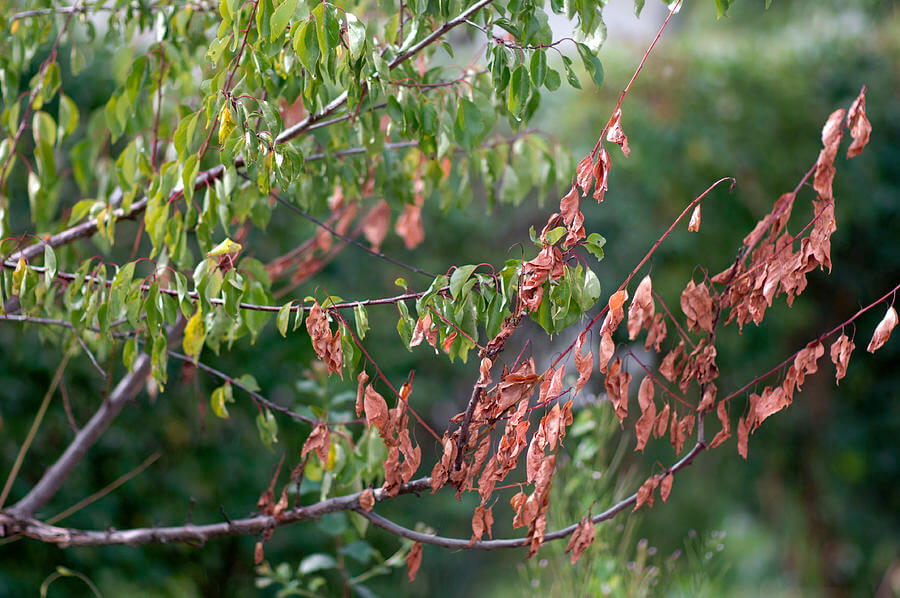
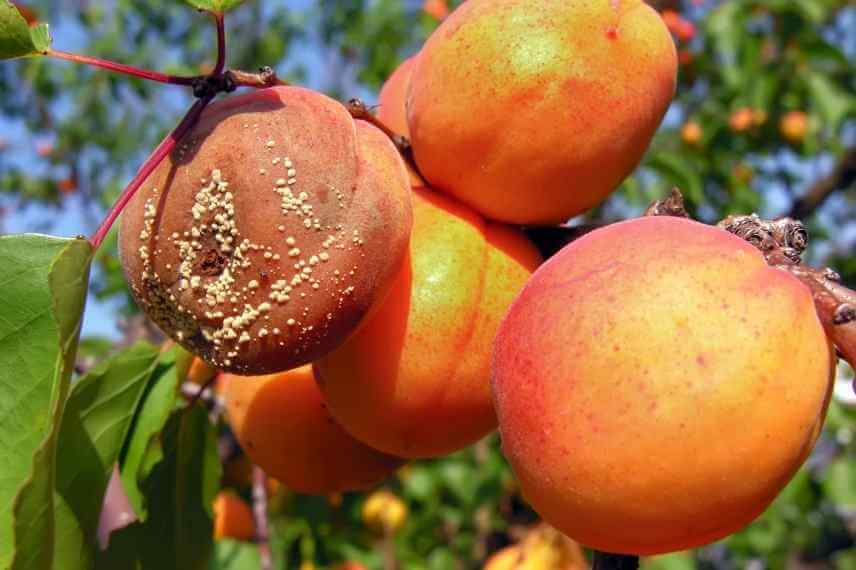
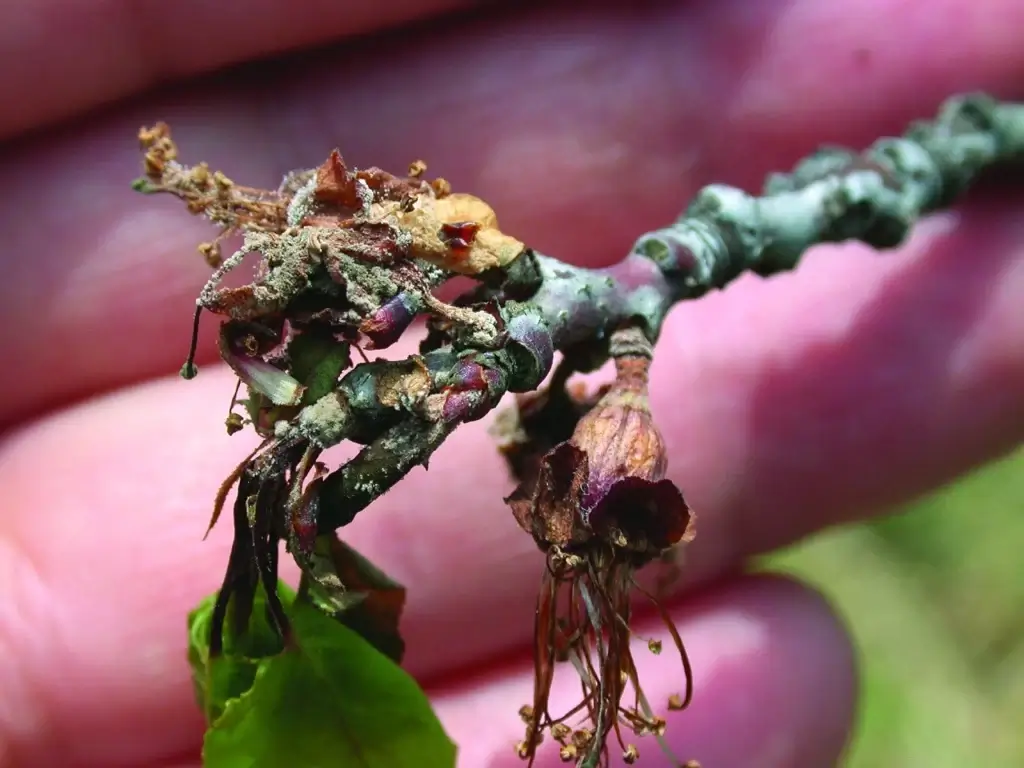
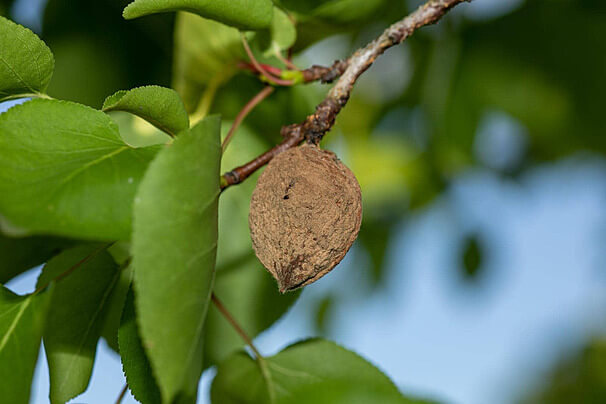
Monilinia or brown rot seriously affects apricot trees, manifesting itself in various organs of the plant, especially in flowers, fruits and young branches. Initial symptoms on flowers include wilting and premature death, followed by characteristic desiccation. On fruits, the disease manifests itself as brown Taches that spread rapidly, leading to complete decomposition of the affected tissue. Young branches may show canker, with gum exudation and dieback. In infected fruits you can observe:
- Brown Taches that expand rapidly.
- Aqueous decomposition of the tissue.
- Appearance of a grayish mass of spores on the surface.
- Easy detachment of the fruit from the tree.
- Mummification of the fruit, which remains attached to the tree.
- Gum exudation on young branches.
- Withering and death of flowers.


TEMPERATURE AND HUMIDITY
15-25°C
60-80%

HOW IS IT SPREAD?
Wind, Water, Insects, Direct contact with infected fruits, Contaminated plant remains

HOW TO REMOVE IT?
Home remedies
There are no home treatments
Chemical treatments
• SULFUR 70% [SC] P/V
• SULFUR 72% [SC] P/V
• CAPTAN 47.5% [SC] P/V
• CAPTAIN 80% [WG] P/P
• CIPRODINIL 37.5% + FLUDIOXONIL 25% [WG] P/P
• Cyprodinil 50% [WG] P/P
• DIFENOCONAZOLE 25% [EC] P/V
• PHENHEXAMIDE 50% [SC] P/V
• PHENHEXAMIDE 50% [WG] P/P
• PHENPIRAZAMINE 50% [WG] P/P
• FLUDIOXONIL 50% [WG] P/P
• FLUOPYRAM 20% + TEBUCONAZOLE 20% [SC] P/V
• FLUOPYRAM 50% [SC] P/V
• POTASSIUM HYDROGEN CARBONATE 0.425% [AL] P/V
• POTASSIUM HYDROGEN CARBONATE 85% [SP] P/P
• CUPRIC HYDROXIDE 13.6% (EXPR. IN CU) + COPPER OXYCHLORIDE 13.6% (EXPR. IN CU) [SC] P/V
• CUPRIC HYDROXIDE 20% (EXPR. IN CU) [WG] P/P
• CUPRIC HYDROXIDE 25% (EXPR. IN CU) [WG] P/P
• CUPRIC HYDROXIDE 30% (EXPR. IN CU) [WG] P/P
• CUPRIC HYDROXIDE 35% (EXPR. IN CU) [WG] P/P
• CUPRIC HYDROXIDE 36% (EXPR. IN CU) [SC] P/V
• CUPRIC HYDROXIDE 40% (EXPR. IN CU) [WG] P/P
• CUPRIC HYDROXIDE 50% (EXPR. IN CU) [WG] P/P
• CUPRIC HYDROXIDE 50% (EXPR. IN CU) [WP] P/P
• ISOFETAMID 40% [SC] P/V
• MANDESTROBIN 25% [SC] P/V
• MEFENTRIFLUCONAZOLE 7.5% [SC] P/V
• COPPER OXYCHLORIDE 30% (EXPR. IN CU) [WP] P/P
• COPPER OXYCHLORIDE 35% (EXPR. IN CU) [WG] P/P
• COPPER OXYCHLORIDE 37.5% (EXPR. IN CU) [WG] P/P
• COPPER OXYCHLORIDE 38% (EXPR. IN CU) [SC] P/V
• COPPER OXYCHLORIDE 50% (EXPR. IN CU) [WP] P/P
• COPPER OXYCHLORIDE 52% (EXPR. IN CU) [SC] P/V
• COPPER OXYCHLORIDE 70% [SC] P/V
• CUPROUS OXIDE 50% (EXPR. IN CU) [WP] P/P
• CUPROUS OXIDE 75% (EXPR. IN CU) [WG] P/P
• PIRACLOSTROBIN 6.7% + BOSCALIDE 26.7% ( ) [WG] P/P
• CALCIUM POLYSULPHIDE 38% [DC] P/V
• CUPROCALCIC SULFATE 12.4% (EXPR. IN CU) [SC] P/V
• CUPROCALCIC SULFATE 20% (EXPR. IN CU) [WG] P/P
• TRIBASIC COPPER SULFATE 40% (EXPR. IN CU) [WG] P/P
• TEBUCONAZOLE 20% [EW] P/V
• TEBUCONAZOLE 25% [WG] P/P
• TEBUCONAZOLE 50% + TRIFLOXISTROBIN 25% [WG] P/P
Authorized treatments in organic farming
• SULFUR 70% [SC] P/V
• SULFUR 72% [SC] P/V
• POTASSIUM HYDROGEN CARBONATE 0.425% [AL] P/V
• POTASSIUM HYDROGEN CARBONATE 85% [SP] P/P
• CUPRIC HYDROXIDE 13.6% (EXPR. IN CU) + COPPER OXYCHLORIDE 13.6% (EXPR. IN CU) [SC] P/V
• CUPRIC HYDROXIDE 20% (EXPR. IN CU) [WG] P/P
• CUPRIC HYDROXIDE 25% (EXPR. IN CU) [WG] P/P
• CUPRIC HYDROXIDE 30% (EXPR. IN CU) [WG] P/P
• CUPRIC HYDROXIDE 35% (EXPR. IN CU) [WG] P/P
• CUPRIC HYDROXIDE 36% (EXPR. IN CU) [SC] P/V
• CUPRIC HYDROXIDE 40% (EXPR. IN CU) [WG] P/P
• CUPRIC HYDROXIDE 50% (EXPR. IN CU) [WG] P/P
• CUPRIC HYDROXIDE 50% (EXPR. IN CU) [WP] P/P
• COPPER OXYCHLORIDE 30% (EXPR. IN CU) [WP] P/P
• COPPER OXYCHLORIDE 35% (EXPR. IN CU) [WG] P/P
• COPPER OXYCHLORIDE 37.5% (EXPR. IN CU) [WG] P/P
• COPPER OXYCHLORIDE 38% (EXPR. IN CU) [SC] P/V
• COPPER OXYCHLORIDE 50% (EXPR. IN CU) [WP] P/P
• COPPER OXYCHLORIDE 52% (EXPR. IN CU) [SC] P/V
• COPPER OXYCHLORIDE 70% [SC] P/V
• CUPROUS OXIDE 50% (EXPR. IN CU) [WP] P/P
• CUPROUS OXIDE 75% (EXPR. IN CU) [WG] P/P
• CUPROCALCIC SULFATE 12.4% (EXPR. IN CU) [SC] P/V
• CUPROCALCIC SULFATE 20% (EXPR. IN CU) [WG] P/P
• TRIBASIC COPPER SULFATE 40% (EXPR. IN CU) [WG] P/P
Insect allies
PREDATORY MITES
LADYBUGS
LACEWINGS
PARASITIC WASPS
HOVERFLIES OR PARASITIC FLIES
PREDATORY BUGS
There are no natural allies
Mycodiplosis oidii (predatory mosquito)
EFFECTIVE PRODUCTS TO ELIMINATE THIS DISEASE
Sponsored link
Sponsored link


Sponsored link
Sponsored link
Sponsored link


Sponsored link
Sponsored link
Effective against all types of fungi

Sponsored link


Sponsored link
Sponsored link

Sponsored link


Sponsored link
- Use varieties resistant to Monilinia.
- Carry out adequate pruning to improve air circulation in the tree crown.
- Eliminate and destroy mummified fruits and affected plant remains.
- Avoid injuries to the fruits during harvesting and handling.
- Apply preventive fungicide treatments at critical times, such as before flowering and during fruit development.
- Control insect vectors that can facilitate infection.
- Maintain good hygiene practice in the orchard, reducing sources of inoculum.
Recommendations

Enjoy idMicrobe TOTALLY FREE, with no trial periods.


