

Oídio
Powdery Mildew
Erysiphe Heraclei
Pathogen:
Fungus
Type:
Risk to the plant:
HIGH

DESCRIPTION
WHO CAUSES IT?
Erysiphe heraclei is an ascomycete fungus that causes powdery mildew on carrots and other plants. This fungus forms structures called cleistothecia in its sexual phase, which are spherical and contain asci with ascospores. During its asexual phase, E. heraclei produces conidia in chains that are dispersed by the wind. The conidia germinate on the leaf surface, where the fungus penetrates the epidermal cells and develops haustoria that extract nutrients from the plant. Primary infection may arise from hibernating spores that reactivate with the arrival of favorable conditions, generally moderate temperatures and high relative humidity. Once established, the mycelium of the fungus spreads over the surface of the plant, forming a characteristic whitish layer. The continuous production of conidia allows the infection to spread rapidly to other plants.
SYMPTOMS
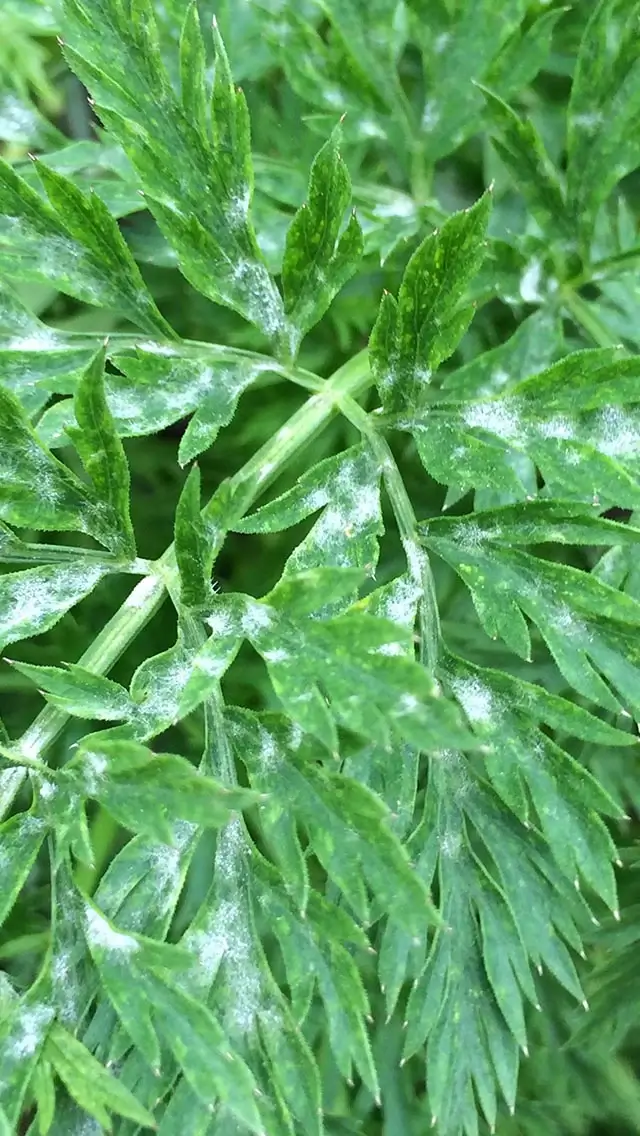
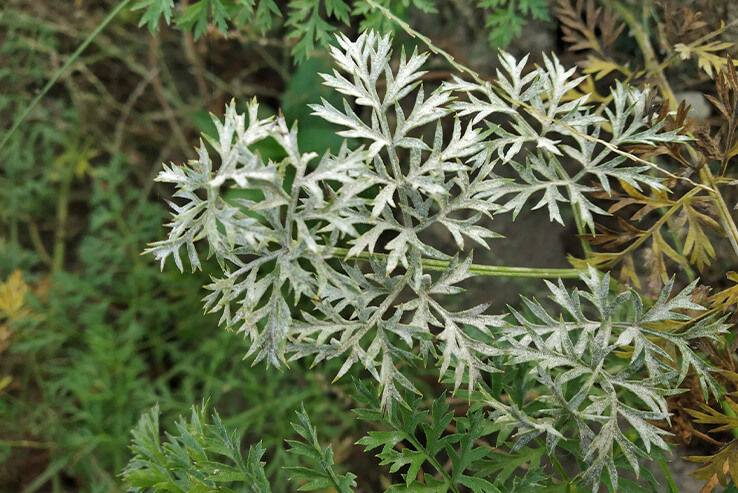
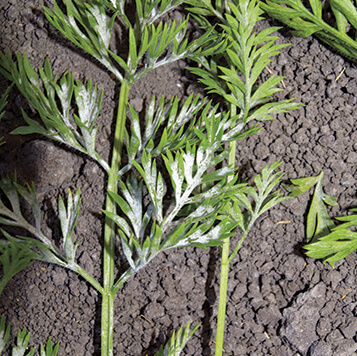
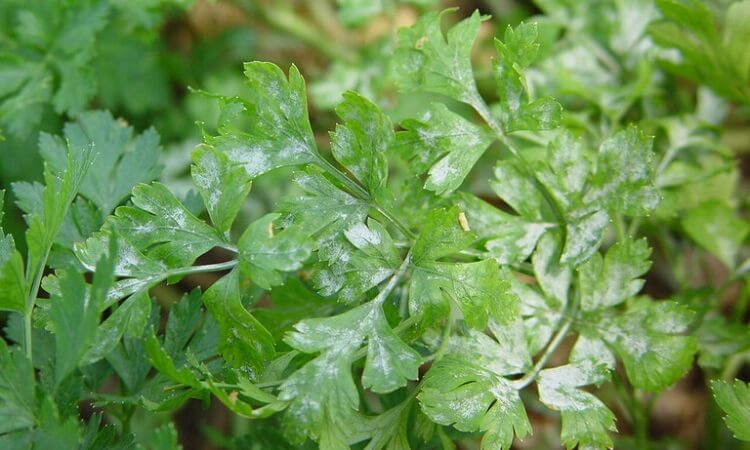
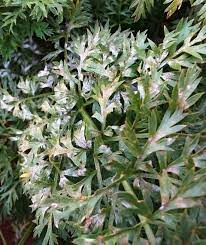
The carrot powdery mildew disease, caused by Erysiphe heraclei, manifests itself with a white powdery coating on the leaves and stems. This layer is actually the mycelium and conidia of the fungus. Infection can lead to reduced photosynthesis, weakening of the plant and, in severe cases, death of leaves. Infected plants exhibit a reduction in growth and production of good quality roots, which directly impacts crop yield.
- Presence of white powder on leaves and stems.
- Yellowing of the leaves.
- Curling and deformation of the leaves.
- Reduction of plant growth.
- Decrease in the production and quality of the roots.
- Defoliation in severe infections.

TEMPERATURE AND HUMIDITY
15-25°C
60-80%

HOW IS IT SPREAD?
Wind, Water, Contaminated tools, Infected plant material, Insect vectors

HOW TO REMOVE IT?
Home remedies
There are no home treatments
Chemical treatments
• ORANGE OIL 6% [SL] P/V
• ORANGE OIL 60g/L [ME] P/S
• AZOXISTROBIN 20% + DIFENOCONAZOLE 12.5% [SC] P/V
• AZOXISTROBIN 25% [SC] P/V
• SULFUR 70% [SC] P/V
• SULFUR 80% [SC] P/V
• SULFUR 80% [WG] P/P
• SULFUR 80% [WP] P/P
• SULFUR 82.5% [SC] P/V
• DIFENOCONAZOLE 25% [EC] P/V
• FLUXAPYROXAD 7.5% + DIFENOCONAZOLE 5% [SC] P/V
• POTASSIUM HYDROGEN CARBONATE 85% [SP] P/P
• POTASSIUM HYDROGEN CARBONATE 99% [SP] P/P
• PIRACLOSTROBIN 6.7% + BOSCALIDE 26.7% ( ) [WG] P/P
• PIRACLOSTROBIN 6.7% + BOSCALIDE 26.7% (I) [WG] P/P
• PIRACLOSTROBIN 6.7% + BOSCALIDE 26.7% [WG] P/P
Authorized treatments in organic farming
• ORANGE OIL 6% [SL] P/V
• ORANGE OIL 60g/L [ME] P/S
• SULFUR 70% [SC] P/V
• SULFUR 80% [SC] P/V
• SULFUR 80% [WG] P/P
• SULFUR 80% [WP] P/P
• SULFUR 82.5% [SC] P/V
• POTASSIUM HYDROGEN CARBONATE 85% [SP] P/P
• POTASSIUM HYDROGEN CARBONATE 99% [SP] P/P
Insect allies
PREDATORY MITES
LADYBUGS
LACEWINGS
PARASITIC WASPS
HOVERFLIES OR PARASITIC FLIES
PREDATORY BUGS
There are no natural allies
Mycodiplosis oidii (predatory mosquito)
EFFECTIVE PRODUCTS TO ELIMINATE THIS DISEASE
Sponsored link

Sponsored link


Sponsored link
Sponsored link
Sponsored link


Sponsored link
Sponsored link
Effective against all types of fungi

Sponsored link


Sponsored link
Sponsored link

Sponsored link


Sponsored link
- Select carrot varieties resistant to powdery mildew.
- Implement crop rotations to avoid the accumulation of the pathogen in the soil.
- Maintain an adequate distance between plants to improve air circulation.
- Avoid sprinkler irrigation and opt for drip irrigation to reduce humidity on the surface of the plants.
- Apply preventive treatments with specific fungicides against powdery mildew.
- Regularly monitor the crop for early detection of symptoms and apply timely treatments.
- Eliminate and destroy infected plants to reduce the source of inoculum.
- Promote integrated management practices that include the use of biological and chemical products alternately to minimize the risk of resistance.
Recommendations

Enjoy idMicrobe TOTALLY FREE, with no trial periods.


