

Fusariosis
Dry Rot
Fusarium Solani / Fusarium Sambucinum
Pathogen:
Fungus
Type:
Risk to the plant:
INTERMEDIATE

DESCRIPTION
WHO CAUSES IT?
Fusarium solani and Fusarium sambucinum are phytopathogenic fungi that affect potato and other vegetable crops, causing a disease known as dry rot. These fungi can survive in soil and infected plant remains for long periods. Fungal spores are spread through contaminated growing tools, irrigation water, or direct contact with infected plants. Once they infect a potato plant, the fungi feed on the tissues, causing the tubers to rot.
SYMPTOMS
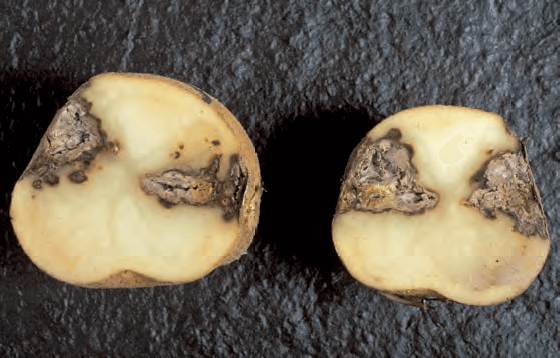
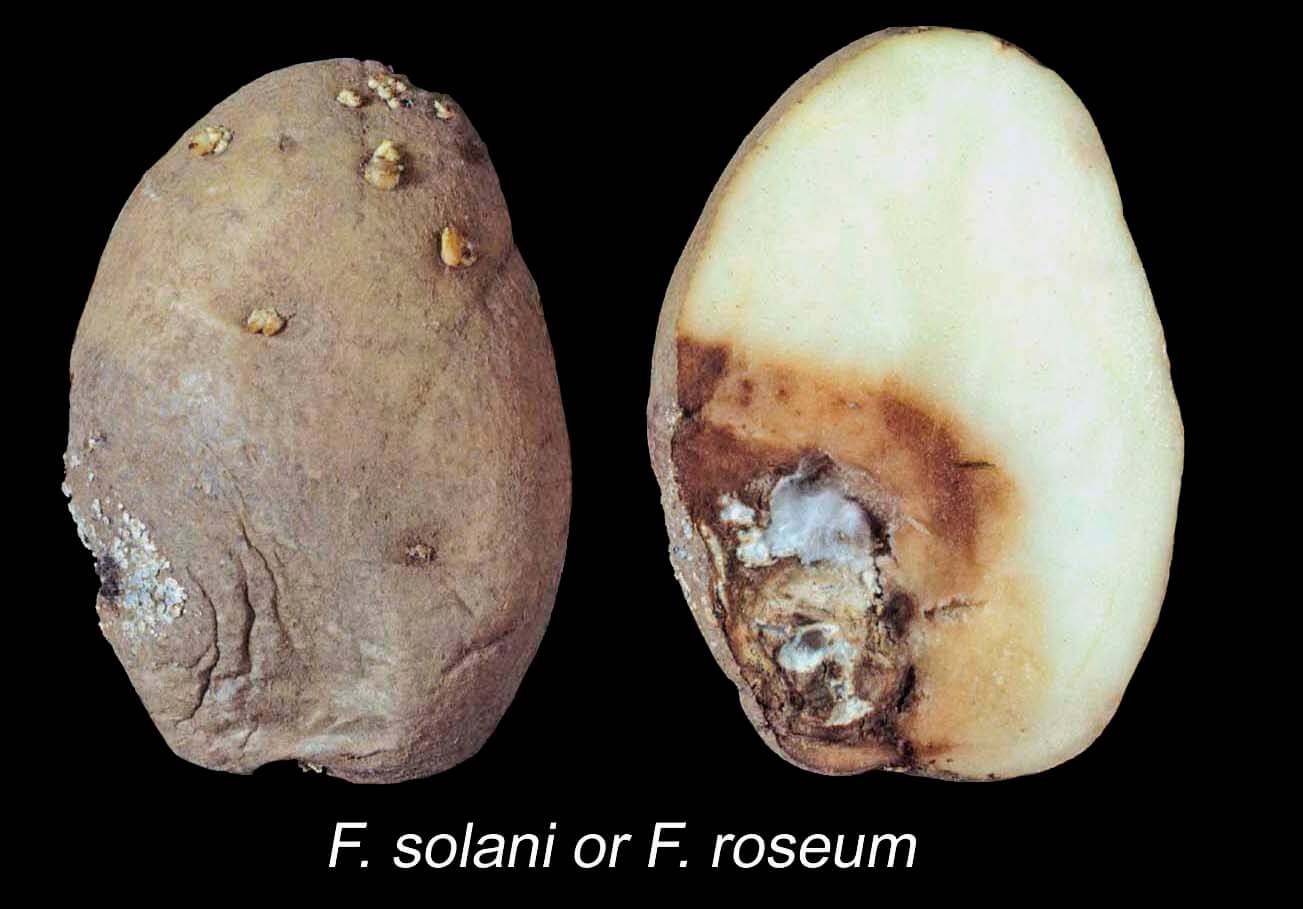
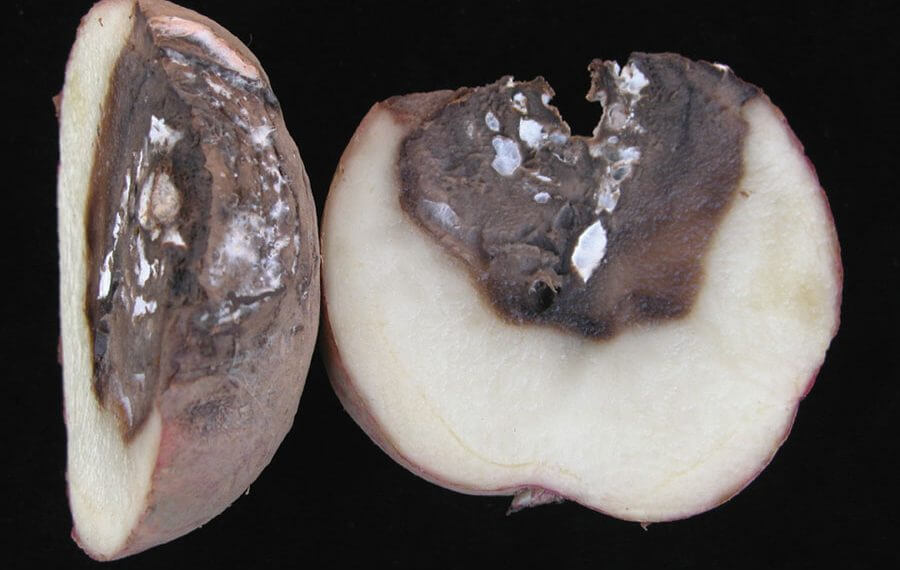
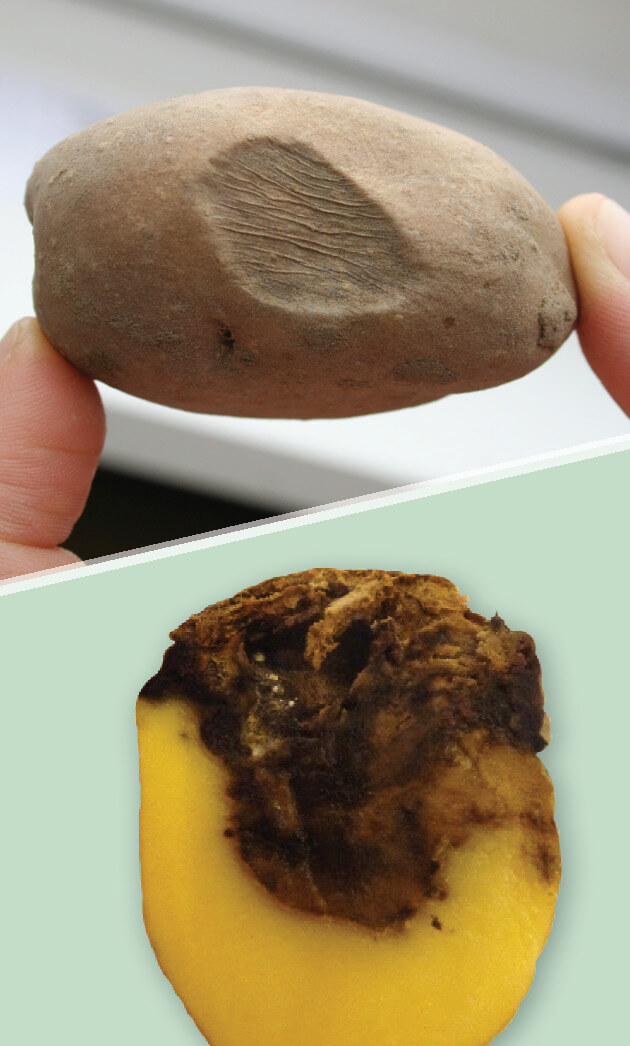
Dry rot is a disease that causes lesions on potato tubers, especially during storage. Symptoms include dark, sunken Taches on the skin of the tubercles, which extend inward, causing tissue breakdown. As the disease progresses, the tubers may dry out and become hard, affecting their quality and marketability.
• Dark, sunken Taches on the skin of the tubers.
• Decomposition of tuber tissues.
• Dry and hard tubers.
• Decrease in the quality and marketability of tubers.


TEMPERATURE AND HUMIDITY
20°C - 30°C
60% - 80%

HOW IS IT SPREAD?
Contaminated soil, contaminated irrigation water, contaminated growing tools, contact with infected plants or tubers.

HOW TO REMOVE IT?
Home remedies
There are no home treatments
Chemical treatments
• AZOXISTROBIN 25% [SC] P/V
• FOLPET 50% [SC] P/V
• FOLPET 80% [WG] P/P
Authorized treatments in organic farming
-
Insect allies
PREDATORY MITES
LADYBUGS
LACEWINGS
PARASITIC WASPS
HOVERFLIES OR PARASITIC FLIES
PREDATORY BUGS
There are no natural allies
Mycodiplosis oidii (predatory mosquito)
EFFECTIVE PRODUCTS TO ELIMINATE THIS DISEASE
Sponsored link
Sponsored link


Sponsored link
Sponsored link
Sponsored link


Sponsored link
Sponsored link
Effective against all types of fungi

Sponsored link


Sponsored link
Sponsored link

Sponsored link


Sponsored link
• Use potato varieties resistant to Fusarium fungi.
• Practice crop rotation to interrupt the life cycle of fungi.
• Improve soil drainage and avoid excess moisture.
• Disinfect growing tools to prevent the spread of fungi.
• Store tubers in dry, cool conditions to reduce the risk of infection.
• Apply specific fungicide treatments according to the instructions of experts.
Recommendations

Enjoy idMicrobe TOTALLY FREE, with no trial periods.


