

Pulgones
Aphid
Rhopalosiphum Maidis
Pathogen:
Insect
Type:
Risk to the plant:
HIGH
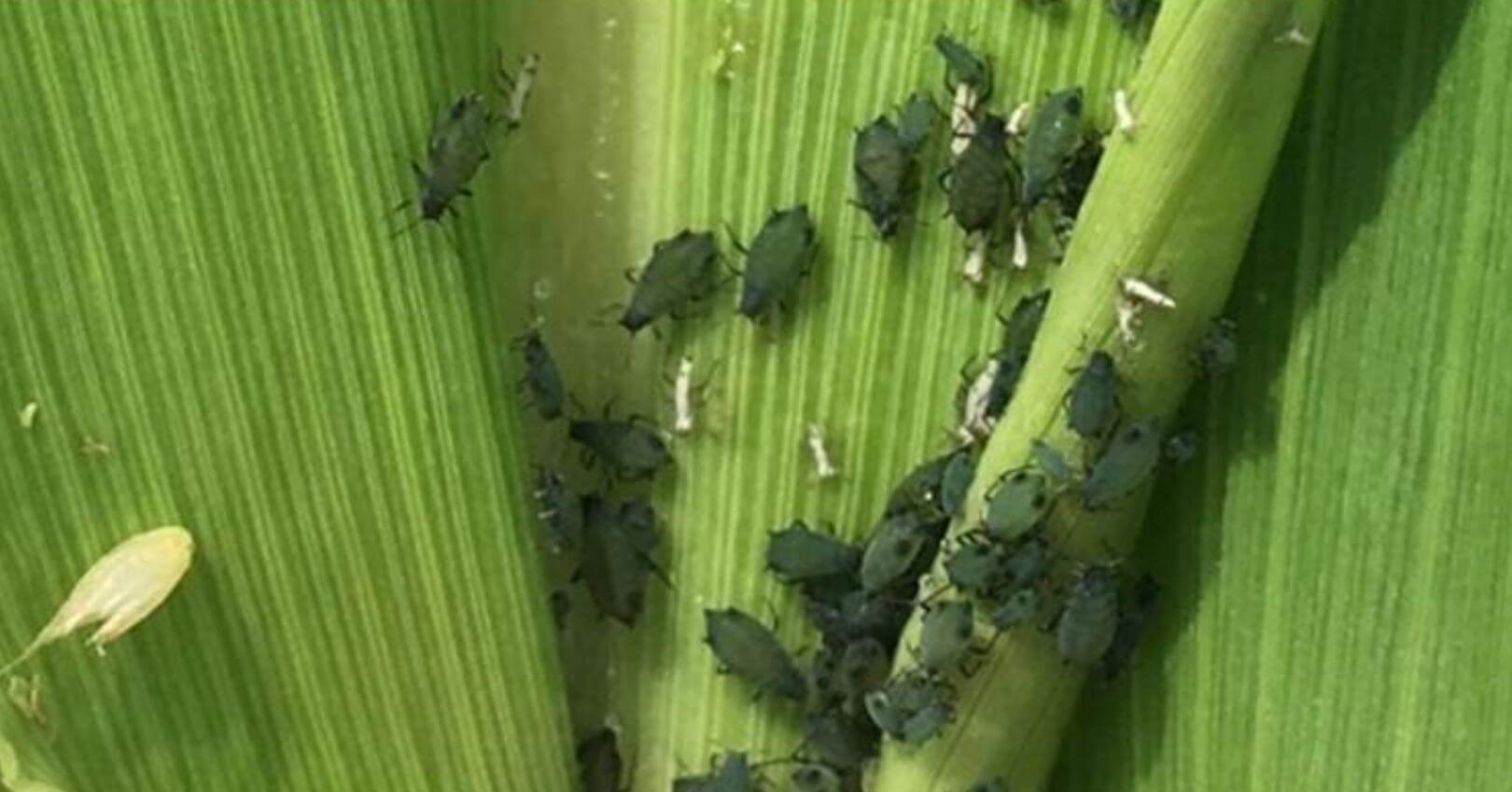
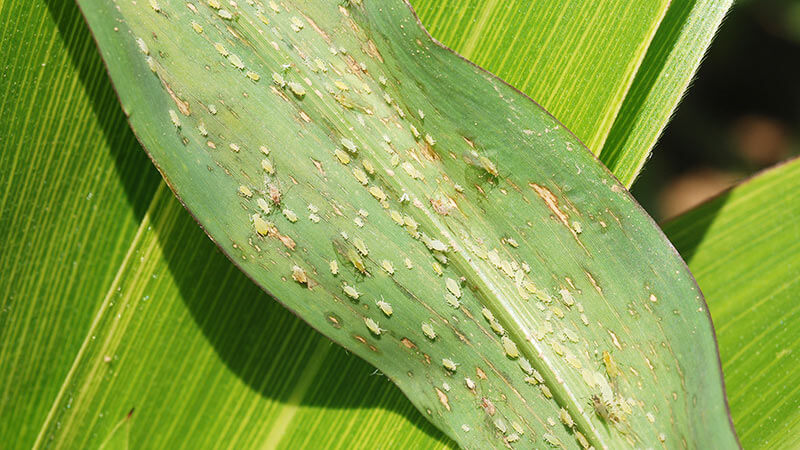

DESCRIPTION
WHO CAUSES IT?
Rhopalosiphum maidis, known as the corn aphid, is a hemipteran insect belonging to the Aphididae family. This aphid has a complex biological cycle that includes both sexual and asexual reproduction, allowing it to adapt and proliferate in different environmental conditions. During warm seasons, parthenogenetic females (able to reproduce without fertilization) give birth to live young, allowing for rapid population growth. These insects feed by inserting their stylets into plant tissues to suck sap, which causes direct damage and can transmit viral diseases to plants. Under unfavorable conditions, aphids can develop winged forms that allow them to migrate to new host plants. The ability to adapt quickly and its high fecundity make Rhopalosiphum maidis a particularly challenging pest of corn.
SYMPTOMS
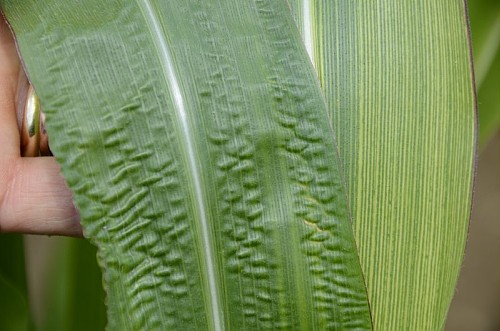
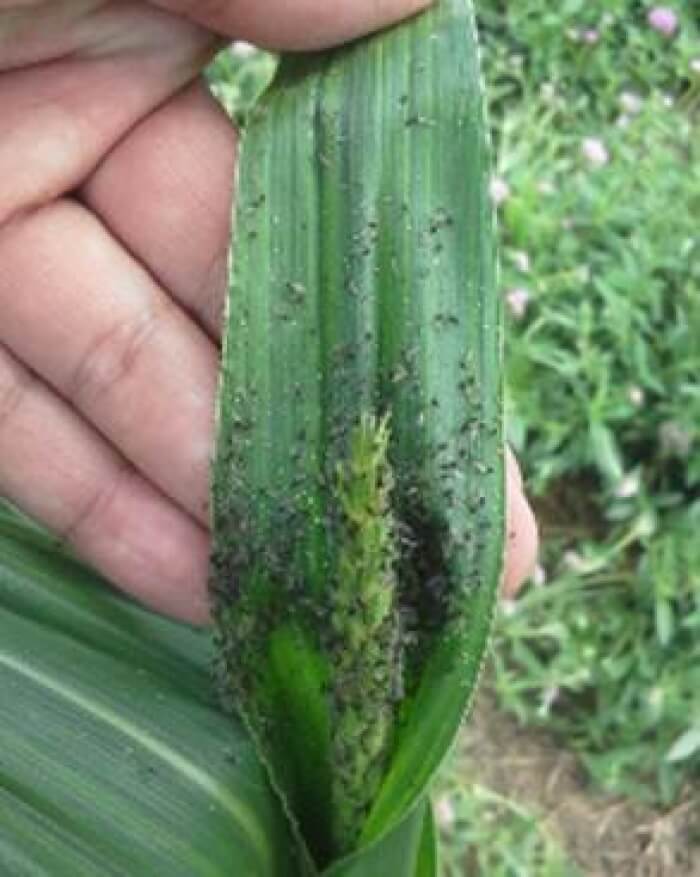
Corn aphid infestation causes a series of problems in corn, affecting both its development and yield. These insects not only weaken plants by feeding on their sap, but they also excrete honeydew, a sticky substance that promotes the growth of sooty fungi and reduces photosynthesis. In addition, they are vectors of viruses, which can further aggravate the damage.
- Yellowing and curling of the leaves.
- Presence of molasses and sooty mold (black soot) in the affected parts.
- Reduction in plant vigor and growth.
- Transmission of viral diseases such as Corn Rough Dwarf Virus (MRDV).
- Deformations in leaves and ears.
- Decrease in the production and quality of grains.


TEMPERATURE AND HUMIDITY
20°C - 30°C
60% - 80%

HOW IS IT SPREAD?
Contact between plants, wind, contaminated tools, insects vectors

HOW TO REMOVE IT?
Home remedies
There are no home treatments
Chemical treatments
• PARAFFIN OIL (CAS [8042-47-5]) 54.6% [EW] P/V
• ACETAMIPRID 20% [SP] P/P
• CYPERMETHRIN 10% [EC] P/V
• CYPERMETHRIN 50% [EC] P/V
• DELTAMETHRIN 1.57% [SC] P/V
• DELTAMETHRIN 10% [EC] P/V
• DELTAMETHRIN 2.5% [EC] P/V
• DELTAMETHRIN 2.5% [EW] P/V
• LAMBDA CYHALOTHRIN 1.5% [CS] P/V
• LAMBDA CYHALOTHRIN 10% [CS] P/V
• LAMBDA CYHALOTHRIN 2.5% [WG] P/P
• LAMBDA CYHALOTHRIN 5% [EG] P/P
• MALTODEXTRIN 47.6% [SL] P/V
• POTASSIUM SALTS OF FATTY ACIDS C14-C20 48% [EW] P/V
• ADHESIVE TRAP
• CHROMATIC TRAP
Authorized treatments in organic farming
• PARAFFIN OIL (CAS [8042-47-5]) 54.6% [EW] P/V
• LAMBDA CYHALOTHRIN 1.5% [CS] P/V
• LAMBDA CYHALOTHRIN 10% [CS] P/V
• LAMBDA CYHALOTHRIN 2.5% [WG] P/P
• LAMBDA CYHALOTHRIN 5% [EG] P/P
• MALTODEXTRIN 47.6% [SL] P/V
• POTASSIUM SALTS OF FATTY ACIDS C14-C20 48% [EW] P/V
• ADHESIVE TRAP
• CHROMATIC TRAP
Insect allies
PREDATORY MITES
LADYBUGS
LACEWINGS
PARASITIC WASPS
HOVERFLIES OR PARASITIC FLIES
PREDATORY BUGS
There are no natural allies
Mycodiplosis oidii (predatory mosquito)
EFFECTIVE PRODUCTS TO ELIMINATE THIS DISEASE
Sponsored link
Sponsored link


Sponsored link
Sponsored link
Sponsored link


Sponsored link
Sponsored link
Effective against all types of fungi

Sponsored link


Sponsored link
Sponsored link

Sponsored link


Sponsored link
- Regularly monitor crops to detect the presence of aphids early.
- Use aphid-resistant corn varieties.
- Implement crop rotation practices to break the life cycle of aphids.
- Keep the field free of weeds that can serve as alternative hosts for aphids.
- Promote biological control through the conservation and release of natural enemies such as ladybugs and lacewings.
- Apply specific insecticides when aphid populations exceed economic damage thresholds.
- Avoid the indiscriminate use of insecticides to prevent the appearance of resistance.
- Improve crop management practices, such as adequate fertilization and irrigation, to increase plant resistance to aphid attack.
Recommendations

Enjoy idMicrobe TOTALLY FREE, with no trial periods.


