

Pulgones
Aphid
Myzus Persicae, Macrosiphum Euphorbiae
Pathogen:
Insect
Type:
Risk to the plant:
HIGH


DESCRIPTION
WHO CAUSES IT?
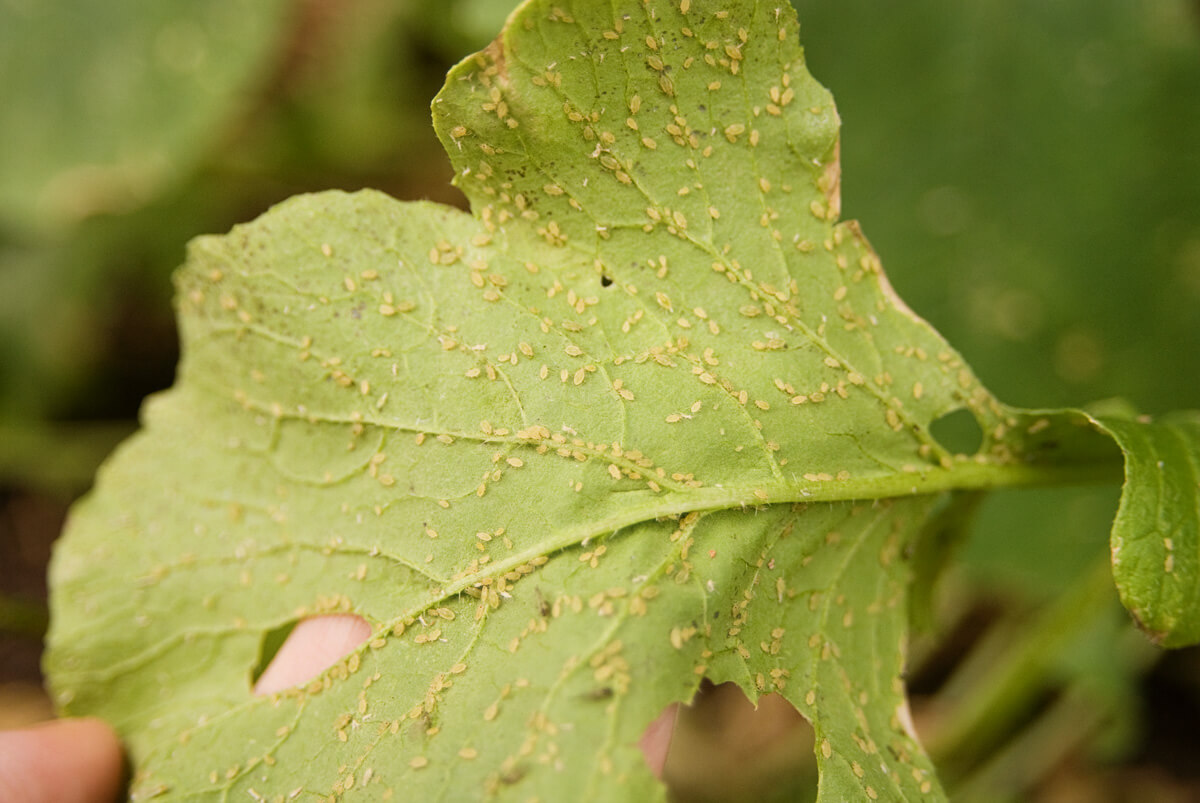
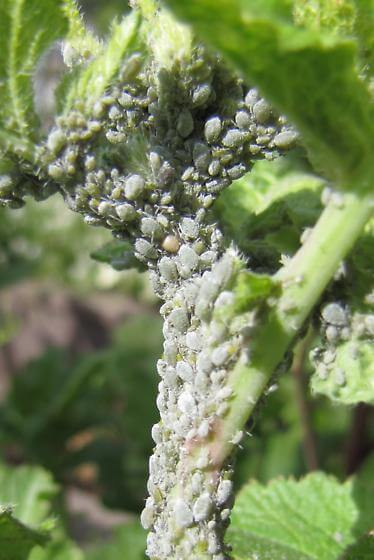
Myzus persicae and Macrosiphum euphorbiae, commonly known as aphids, are small insects that belong to the Aphididae family. Aphids have a complex life cycle that includes both sexual and asexual reproduction, depending on environmental conditions. During warm seasons, parthenogenetic (giving birth without the need for fertilization) females predominate, producing live young without the need for eggs. These babies are born as nymphs and go through several molts until they reach the adult stage. In temperate climates, with the arrival of autumn, sexual males and females are produced that mate to produce winter-hardy eggs. Aphids can reproduce very quickly, with several generations per season, which contributes to their ability to invade and damage host plants. Additionally, some aphids develop wings, allowing them to disperse widely and colonize new plants.
SYMPTOMS
On radish, aphids can cause a number of problems by feeding on plant sap. By sucking the juices from tender leaves and stems, aphids weaken plants and reduce their vigor. This feeding activity can also induce leaf curling and deformation in young shoots. Additionally, aphids excrete a sticky substance known as honeydew, which can attract sooty fungi, fouling the leaves and further reducing the plant's photosynthetic ability. Damage caused by aphids can be severe, especially in mass infestations, resulting in lower crop production and quality.
- Leaf curling
- Deformations in young shoots
- Presence of honeydew on the leaves and stems
- Appearance of sooty fungi
- Reduction of plant vigor
- Lower production and quality of the crop.


TEMPERATURE AND HUMIDITY
15-25°C
60-80%

HOW IS IT SPREAD?
Wind, contact between plants, contaminated agricultural tools, clothing and work equipment, vector insects

HOW TO REMOVE IT?
Home remedies
There are no home treatments
Chemical treatments
• PARAFFIN OIL (CAS [8042-47-5]) 54.6% [EW] P/V
• CYPERMETHRIN 10% [EC] P/V
• CYPERMETHRIN 50% [EC] P/V
• DELTAMETHRIN 2.5% [EC] P/V
• DELTAMETHRIN 2.5% [EW] P/V
• LAMBDA CYHALOTHRIN 1.5% [CS] P/V
• LAMBDA CYHALOTHRIN 10% [CS] P/V
• LAMBDA CYHALOTHRIN 2.5% [WG] P/P
• MALTODEXTRIN 47.6% [SL] P/V
• PIRIMICARB 50% [WG] P/P
• POTASSIUM SALTS OF UNSATURATED FATTY ACIDS C7-C18 & C18 (CAS [67701-09-1] 515g/L [SL] P/V
• POTASSIUM SALTS OF FATTY ACIDS C14-C20 48% [EW] P/V
• SPIROTETRAMAT 10% [SC] P/V
• ADHESIVE TRAP
• CHROMATIC TRAP
Authorized treatments in organic farming
• PARAFFIN OIL (CAS [8042-47-5]) 54.6% [EW] P/V
• LAMBDA CYHALOTHRIN 1.5% [CS] P/V
• LAMBDA CYHALOTHRIN 10% [CS] P/V
• LAMBDA CYHALOTHRIN 2.5% [WG] P/P
• MALTODEXTRIN 47.6% [SL] P/V
• POTASSIUM SALTS OF UNSATURATED FATTY ACIDS C7-C18 & C18 (CAS [67701-09-1] 515g/L [SL] P/V
• POTASSIUM SALTS OF FATTY ACIDS C14-C20 48% [EW] P/V
• ADHESIVE TRAP
• CHROMATIC TRAP
Insect allies
PREDATORY MITES
LADYBUGS
LACEWINGS
PARASITIC WASPS
HOVERFLIES OR PARASITIC FLIES
PREDATORY BUGS
There are no natural allies
Mycodiplosis oidii (predatory mosquito)
EFFECTIVE PRODUCTS TO ELIMINATE THIS DISEASE
Sponsored link
Sponsored link


Sponsored link
Sponsored link
Sponsored link


Sponsored link
Sponsored link
Effective against all types of fungi

Sponsored link


Sponsored link
Sponsored link

Sponsored link


Sponsored link
- Regularly monitor crops to detect the presence of aphids early.
- Introduce and encourage populations of natural enemies such as ladybugs, lacewings and parasitoid wasps.
- Use repellent plant extracts or natural insecticides, such as neem oil.
- Implement crop rotations to interrupt the life cycle of aphids.
- Apply specific insecticides in a controlled manner and according to technical recommendations to avoid resistance.
- Maintain good crop hygiene, eliminating plant debris and weeds that may harbor aphids.
- Avoid excessive use of nitrogen fertilizers, as they can increase the susceptibility of plants to aphids.
- Use yellow chromatic traps to monitor and control the population of winged aphids.
- Carry out preventive treatments with potassium soap or soap and water solutions.
Recommendations

Enjoy idMicrobe TOTALLY FREE, with no trial periods.


