

Royas
Rust
Puccinia Pelargonii-Zonalis
Pathogen:
Fungus
Type:
Risk to the plant:
INTERMEDIATE


DESCRIPTION
WHO CAUSES IT?
Puccinia pelargonii-zonalis is a pathogenic fungus that mainly affects geraniums, causing the disease known as geranium leaf rust. This fungus belongs to the Puccinia genus and is specific to this ornamental plant. It is a common disease in many regions where geraniums are grown and can cause significant damage if not properly controlled.
SYMPTOMS
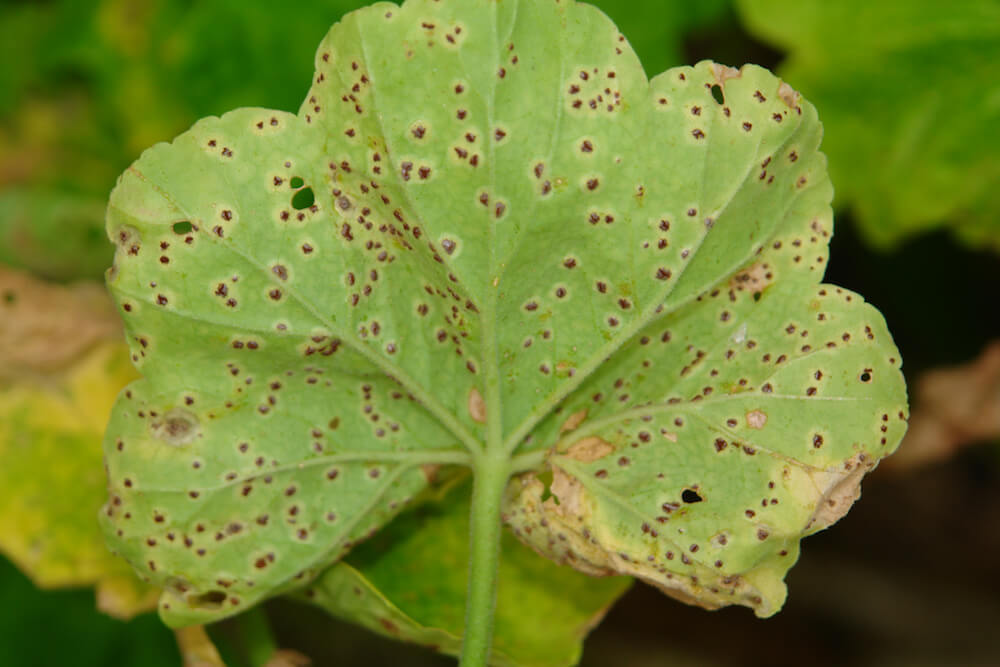
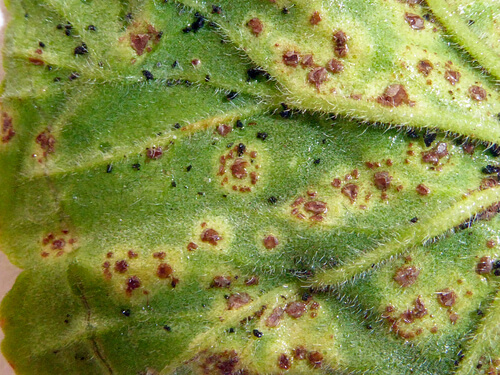
In geraniums, infection by Puccinia pelargonii-zonalis manifests itself with the appearance of orange, yellow or brown Taches on the surface of the leaves. These Taches are usually accompanied by an orange powder, which are the spores of the fungus. As the disease progresses, the leaves may turn yellow, dry out, and drop prematurely, weakening the plant and reducing its ornamental value.


TEMPERATURE AND HUMIDITY
15°C - 25°C
80%

HOW IS IT SPREAD?
Wind-borne spores, contaminated irrigation water, infected plant material, agricultural tools, biological vectors, human movement.

HOW TO REMOVE IT?
Home remedies
There are no home treatments
Chemical treatments
• AZOXISTROBIN 25% [SC] P/V
• CUPRIC HYDROXIDE 50% (EXPR. IN CU) [WP] P/P
• COPPER OXYCHLORIDE 50% (EXPR. IN CU) [WP] P/P
• CUPROCALCIC SULFATE 20% (EXPR. IN CU) [WP] P/P
• TETRACONAZOLE 4% [ME] P/V
Authorized treatments in organic farming
• CUPRIC HYDROXIDE 50% (EXPR. IN CU) [WP] P/P
• COPPER OXYCHLORIDE 50% (EXPR. IN CU) [WP] P/P
• CUPROCALCIC SULFATE 20% (EXPR. IN CU) [WP] P/P
Insect allies
PREDATORY MITES
LADYBUGS
LACEWINGS
PARASITIC WASPS
HOVERFLIES OR PARASITIC FLIES
PREDATORY BUGS
There are no natural allies
Mycodiplosis oidii (predatory mosquito)
EFFECTIVE PRODUCTS TO ELIMINATE THIS DISEASE
Sponsored link
Sponsored link


Sponsored link
Sponsored link
Sponsored link


Sponsored link
Sponsored link
Effective against all types of fungi

Sponsored link


Sponsored link
Sponsored link

Sponsored link


Sponsored link
To prevent and control geranium leaf rust caused by Puccinia pelargonii-zonalis, it is recommended to implement a series of integrated pest and disease management measures. This includes removing infected leaves and plant debris, promoting air circulation around the plants, drip irrigation instead of overhead irrigation, and preventatively applying organic or chemical fungicides as needed.
Recommendations

Enjoy idMicrobe TOTALLY FREE, with no trial periods.


