

Royas
Rust
Gymnosporangium Clavariiforme
Pathogen:
Fungus
Type:
Risk to the plant:
HIGH
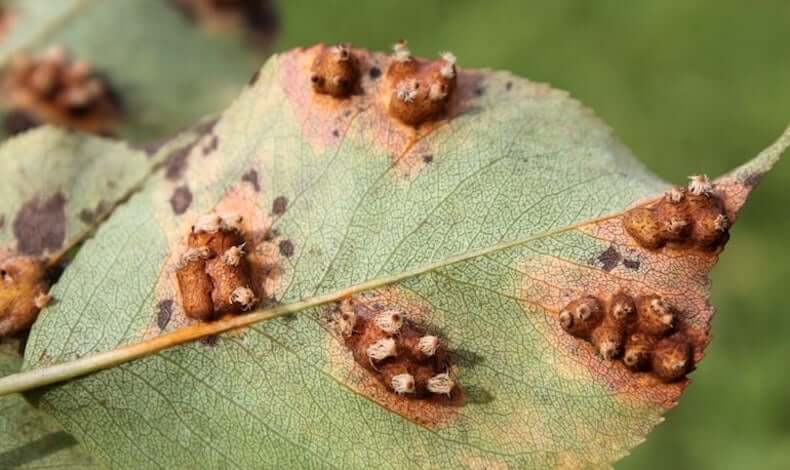
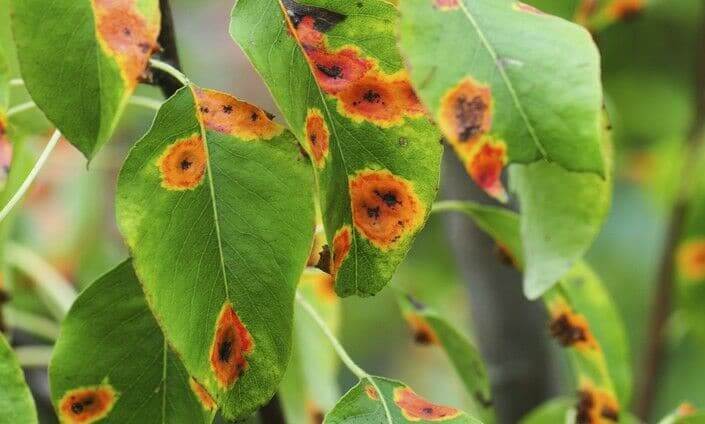

DESCRIPTION
WHO CAUSES IT?
Gymnosporangium clavariiforme is a heteroecious fungus, meaning that it requires two different hosts to complete its development: generally junipers (Juniperus spp.) and pome fruit trees. In spring, spores are produced in the galls of juniper trees and are released when conditions are moist and warm, dispersing to pome fruit trees. The spores germinate on the leaves and fruits of these trees, where the fungus forms infection structures. During the summer, asexual spores are generated in the infected tissues of pome fruit trees, which in turn infect other tissues on the same tree. In autumn, the fungus produces spores that infect the junipers again, thus completing their development.
SYMPTOMS
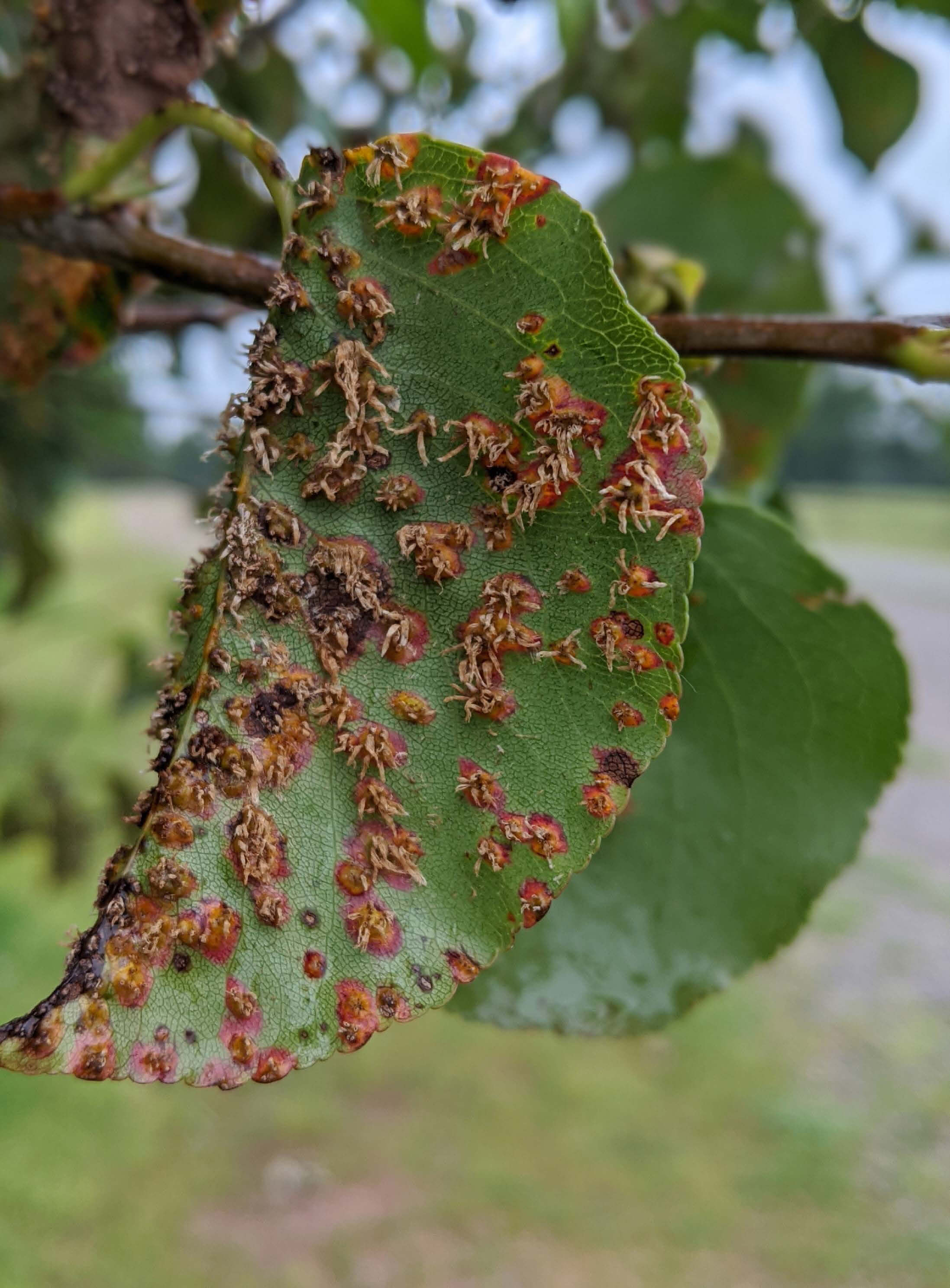
The rust produced by Gymnosporangium clavariiforme mainly affects pome fruit trees, causing a variety of symptoms that impact both the aesthetics and productivity of the tree. Initial symptoms include yellow Taches on the leaves, which eventually develop pustules on the underside. These pustules release spores that can cause new infections in the same or nearby trees.
- Yellow Taches on the leaves.
- Pustules on the underside of the leaves.
- Deformations in the leaves.
- Taches on the fruits.
- Premature fall of leaves.
- Reduction in the quality of the fruits.
- Loss of vigor in the tree.


TEMPERATURE AND HUMIDITY
15°C - 25°C
80% - 95%

HOW IS IT SPREAD?
Wind, Rain, Direct contact with infected trees

HOW TO REMOVE IT?
Home remedies
There are no home treatments
Chemical treatments
• ORANGE OIL 60g/L [ME] P/S
• CAPTAN 47.5% [SC] P/V
• CUPRIC HYDROXIDE 25% (EXPR. IN CU) [WG] P/P
• CUPRIC HYDROXIDE 40% (EXPR. IN CU) [WG] P/P
• CUPRIC HYDROXIDE 50% (EXPR. IN CU) [WP] P/P
• METIRAM 70% [WG] P/P
• COPPER OXYCHLORIDE 30% (EXPR. IN CU) [WP] P/P
• COPPER OXYCHLORIDE 38% (EXPR. IN CU) [SC] P/V
• COPPER OXYCHLORIDE 50% (EXPR. IN CU) [WG] P/P
• COPPER OXYCHLORIDE 50% (EXPR. IN CU) [WP] P/P
• COPPER OXYCHLORIDE 52% (EXPR. IN CU) [SC] P/V
• COPPER OXYCHLORIDE 70% (EXPR. IN CU) [SC] P/V
• CUPROUS OXIDE 75% (EXPR. IN CU) [WG] P/P
• CUPROCALCIC SULFATE 20% (EXPR. IN CU) [WG] P/P
• CUPROCALCIC SULFATE 20% (EXPR. IN CU) [WP] P/P
• CUPROCALCIC SULFATE 20% (EXPR. IN CU) [WG] P/P
• CUPROCALCIC SULFATE 20% [WP] P/P
• TEBUCONAZOLE 25% [WG] P/P
Authorized treatments in organic farming
• ORANGE OIL 60g/L [ME] P/S
• CUPRIC HYDROXIDE 25% (EXPR. IN CU) [WG] P/P
• CUPRIC HYDROXIDE 40% (EXPR. IN CU) [WG] P/P
• CUPRIC HYDROXIDE 50% (EXPR. IN CU) [WP] P/P
• COPPER OXYCHLORIDE 30% (EXPR. IN CU) [WP] P/P
• COPPER OXYCHLORIDE 38% (EXPR. IN CU) [SC] P/V
• COPPER OXYCHLORIDE 50% (EXPR. IN CU) [WG] P/P
• COPPER OXYCHLORIDE 50% (EXPR. IN CU) [WP] P/P
• COPPER OXYCHLORIDE 52% (EXPR. IN CU) [SC] P/V
• COPPER OXYCHLORIDE 70% (EXPR. IN CU) [SC] P/V
• CUPROUS OXIDE 75% (EXPR. IN CU) [WG] P/P
• CUPROCALCIC SULFATE 20% (EXPR. IN CU) [WG] P/P
• CUPROCALCIC SULFATE 20% (EXPR. IN CU) [WP] P/P
• CUPROCALCIC SULFATE 20% (EXPR. IN CU) [WG] P/P
• CUPROCALCIC SULFATE 20% [WP] P/P
Insect allies
PREDATORY MITES
LADYBUGS
LACEWINGS
PARASITIC WASPS
HOVERFLIES OR PARASITIC FLIES
PREDATORY BUGS
There are no natural allies
Mycodiplosis oidii (predatory mosquito)
EFFECTIVE PRODUCTS TO ELIMINATE THIS DISEASE
Sponsored link
Sponsored link


Sponsored link
Sponsored link
Sponsored link


Sponsored link
Sponsored link
Effective against all types of fungi

Sponsored link


Sponsored link
Sponsored link

Sponsored link


Sponsored link
- Maintain an adequate distance between pome fruit trees and junipers to reduce the probability of cross infection.
- Carry out sanitary pruning by eliminating and destroying affected branches and leaves to reduce the source of inoculum.
- Apply preventative fungicides in spring when juniper spores begin to be released.
- Regularly monitor trees to detect the first signs of infection and act quickly.
- Select varieties of pome fruit trees that are resistant or less susceptible to rust.
- Implement an integrated pest and disease management program, combining the use of fungicides with appropriate cultural practices.
- Avoid sprinkler irrigation, as it increases humidity and favors the spread of the fungus.
- Promote good air circulation within the orchard through proper pruning and spacing of trees.
Recommendations

Enjoy idMicrobe TOTALLY FREE, with no trial periods.


