

Moho blanco
White Rot
Sclerotinia Sclerotiorum
Pathogen:
Fungus
Type:
Risk to the plant:
HIGH

DESCRIPTION
WHO CAUSES IT?
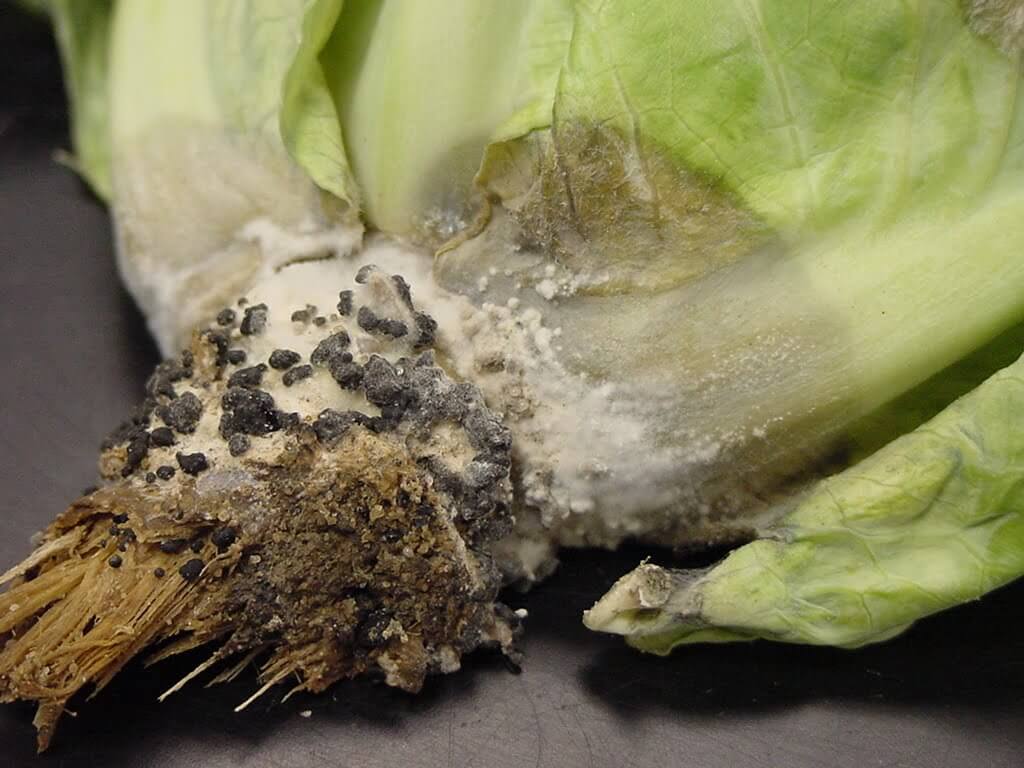
Sclerotinia sclerotiorum is a phytopathogenic fungus that affects a wide variety of crops, especially in temperate and humid climates. Its reproduction is based on the production of sclerotia, resistant structures that can remain viable in the soil for several years. When conditions are favorable, sclerotia germinate and produce apothecia, which are fruiting bodies that release ascospores into the air. These ascospores, spread by the wind, land on plant tissues, generally on flowers or wounds, where they germinate and infect the tissues. The fungus quickly colonizes the affected parts, decomposing them through enzymes and toxins. As the infection progresses, the fungus forms a mass of white mycelium and black sclerotia, preparing the next phase of survival.
SYMPTOMS
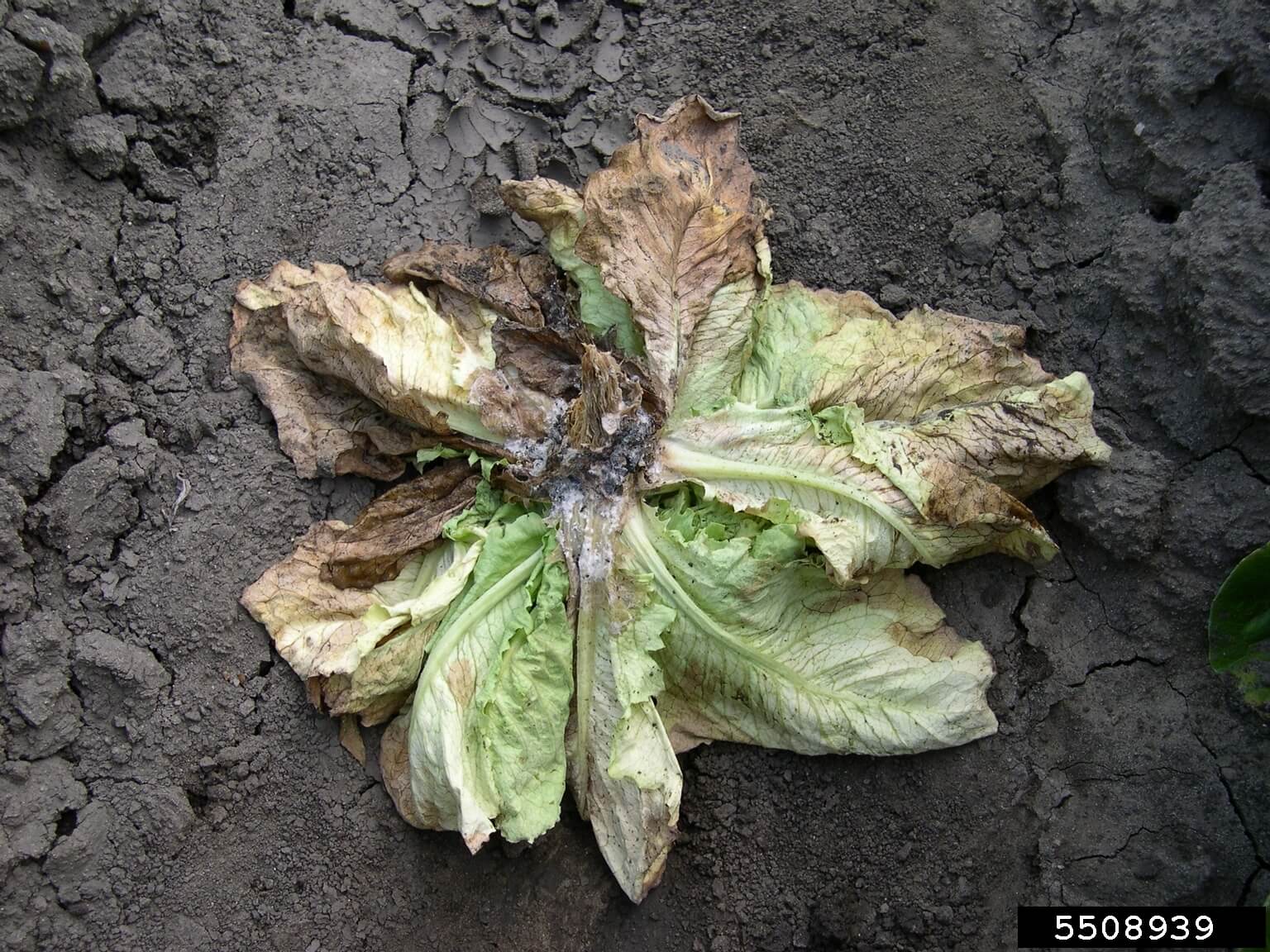
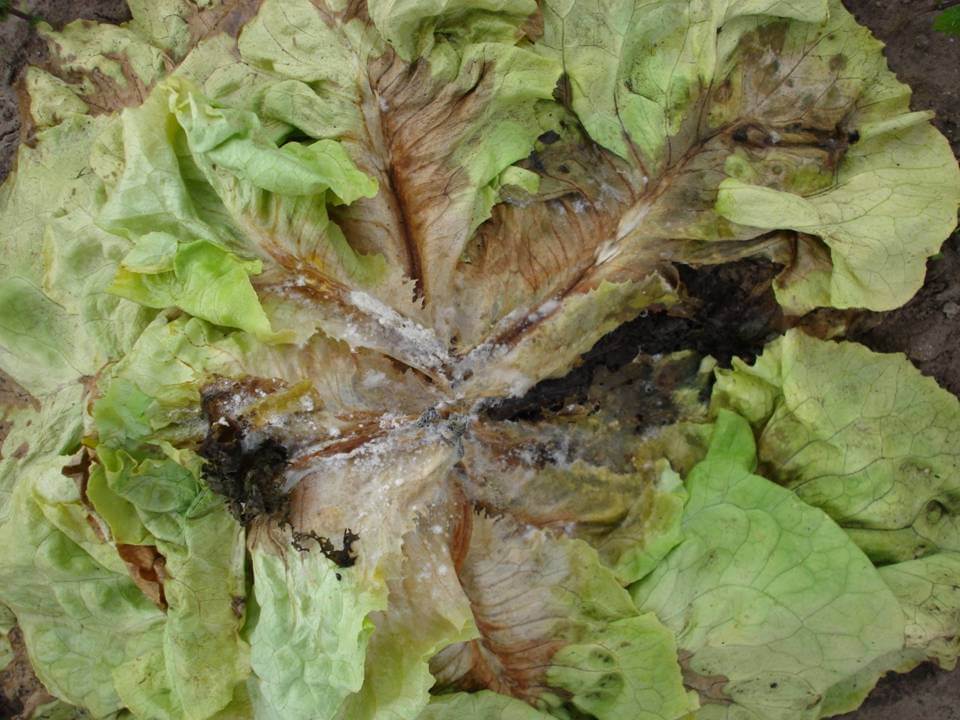
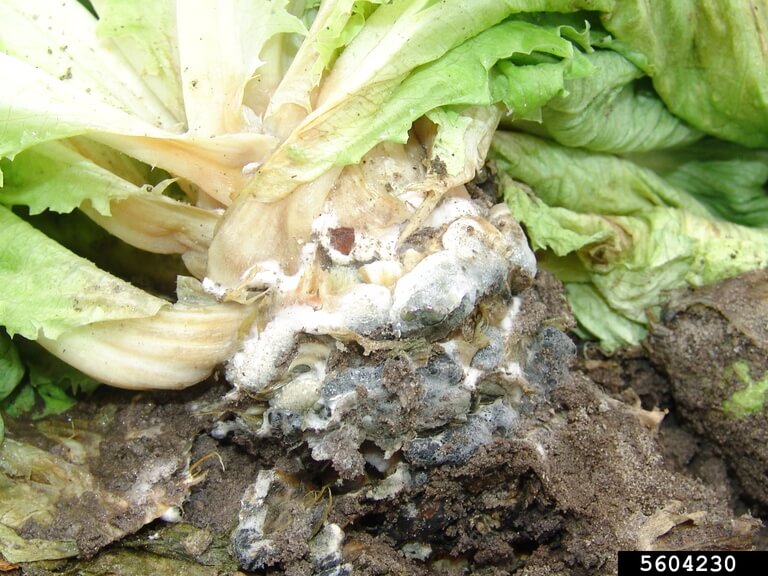
White rot caused by Sclerotinia sclerotiorum severely affects lettuce and similar crops, causing the plant to collapse. The disease begins with watery Taches at the base of the plant, which spread rapidly through the stem and leaves. Tissue decomposition progresses, causing infected plants to lose vigor and wilt, especially in high humidity conditions.
- Watery Taches at the base of the plant.
- Rotting of the stem and lower leaves.
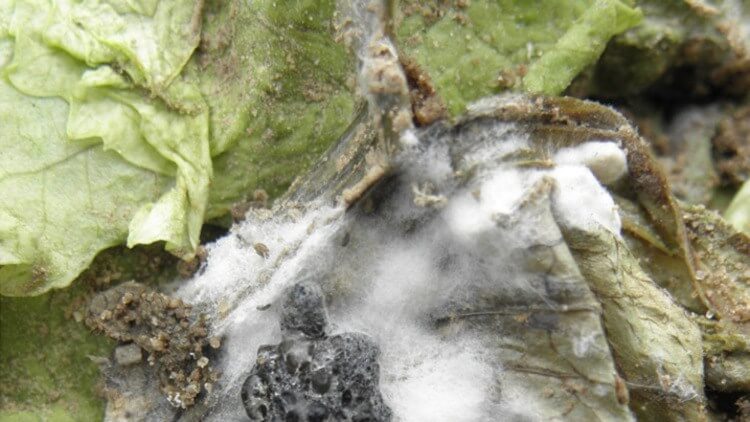
- Appearance of a white cottony mass (mycelium) in infected areas.
- Formation of black sclerotia inside the decomposed tissues.
- Withering and collapse of the plant.
- Premature fall of affected leaves.

TEMPERATURE AND HUMIDITY
15-25°C
85-100%

HOW IS IT SPREAD?
Sclerotia in the soil, contaminated tools, infected plant remains, wind, contaminated irrigation water, infected transplants

HOW TO REMOVE IT?
Home remedies
There are no home treatments
Chemical treatments
• AZOXISTROBIN 20% + DIFENOCONAZOLE 12.5% [SC] P/V
• AZOXISTROBIN 25% [SC] P/V
• CIPRODINIL 37.5% + FLUDIOXONIL 25% [WG] P/P
• DIFENOCONAZOLE 25% [EC] P/V
• EUGENOL 3.3% + GERANIOL 6.6% + THYMOL 6.6% [CS] P/V
• PHENHEXAMIDE 50% [SC] P/V
• FLUDIOXONIL 50% [WG] P/P
• FLUXAPYROXAD 7.5% + DIFENOCONAZOLE 5% [SC] P/V
• PENTIOPYRAD 20% [SC] P/V
• PIRACLOSTROBIN 6.7% + BOSCALIDE 26.7% ( ) [WG] P/P
• PIRACLOSTROBIN 6.7% + BOSCALIDE 26.7% (I) [WG] P/P
• PYRIMETANIL 40% [SC] P/V
Authorized treatments in organic farming
• EUGENOL 3.3% + GERANIOL 6.6% + THYMOL 6.6% [CS] P/V
Insect allies
PREDATORY MITES
LADYBUGS
LACEWINGS
PARASITIC WASPS
HOVERFLIES OR PARASITIC FLIES
PREDATORY BUGS
There are no natural allies
Mycodiplosis oidii (predatory mosquito)
EFFECTIVE PRODUCTS TO ELIMINATE THIS DISEASE
Sponsored link

Sponsored link


Sponsored link
Sponsored link
Sponsored link


Sponsored link
Sponsored link
Effective against all types of fungi

Sponsored link


Sponsored link
Sponsored link

Sponsored link


Sponsored link
- Use varieties resistant to Sclerotinia sclerotiorum when available.
- Carry out crop rotations with non-host species of the fungus to reduce the presence of sclerotia in the soil.
- Implement good soil drainage and avoid waterlogging to limit humidity around the plants, a key factor for the development of the disease.
- Apply treatments with specific fungicides at the beginning of the crop cycle, especially in climatic conditions favorable for infection.
- Incorporate well decomposed organic matter, since the fungus spreads easily in soils rich in undecomposed plant remains.
- Immediately remove plant debris from infected plants to prevent the spread of sclerotia.
- Maintain adequate space between plants to facilitate ventilation and reduce humidity in the crop microclimate.
- Carry out adequate disinfection of tools and machinery before coming into contact with new plots to avoid the spread of spores and sclerotia.
Recommendations

Enjoy idMicrobe TOTALLY FREE, with no trial periods.


