

Micosis/Hongos
Black Sigatoka
Mycosphaerella fijiensis
Pathogen:
Fungus
Type:
Risk to the plant:
CRITICAL


DESCRIPTION
WHO CAUSES IT?
Mycosphaerella fijiensis is a phytopathogenic ascomycete fungus that seriously affects banana trees. Its spread occurs through spores that are spread by wind and water. Under favorable temperature and humidity conditions, the fungus germinates on the surface of the leaves, penetrating through the stomata. As it progresses, it develops specialized structures for the colonization of leaf tissue, weakening the plant and reducing photosynthetic capacity. The infection remains latent for several days before symptoms become visible, favoring its spread. Over time, the fungus forms new sporulation structures in the foliar lesions, closing its cycle and restarting the infectious process. The persistence of the fungus in the residues of infected leaves contributes to reinfection, making its control difficult.
SYMPTOMS
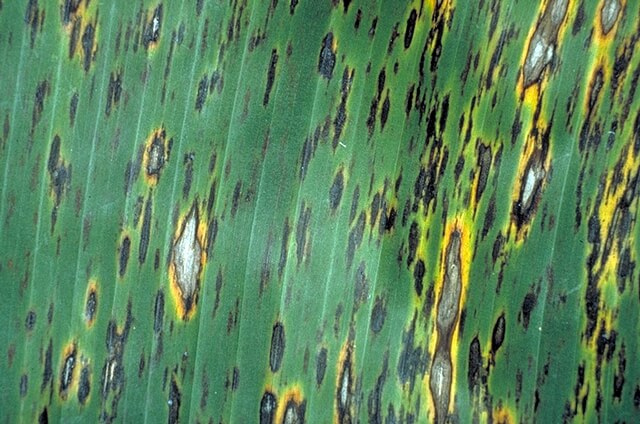
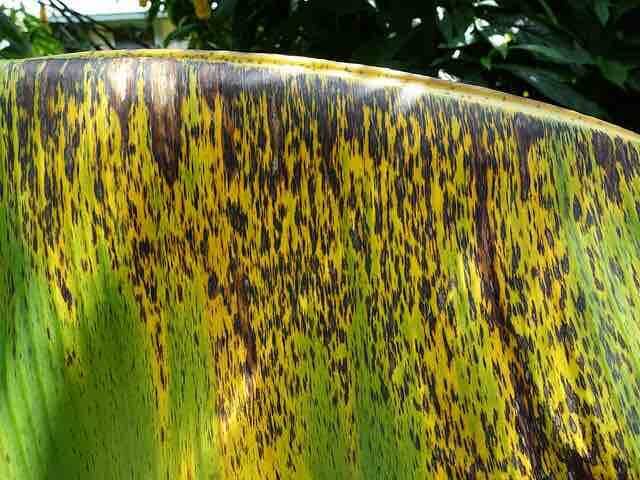
Black Sigatoka seriously affects the development and yield of the banana tree by attacking its leaves, reducing photosynthetic capacity and weakening the plant. The first lesions appear as small dark brown streaks on the surface of the leaf, progressing progressively to form necrotic spots that spread and join, causing the premature death of the leaf tissue.
- Appearance of dark brown or blackish lines on the leaves.
- Irregular spots with a yellow halo that expand.
- Progressive necrosis of the leaf tissue.
- Premature wilting of affected leaves.
- Reduction in plant growth and vigor.
- Decrease in the size and quality of the fruits.
- Early defoliation in severe cases.


TEMPERATURE AND HUMIDITY
25°C - 30°C
90% - 100%

HOW IS IT SPREAD?
Wind, rainwater, irrigation splashes, infected leaf debris, contaminated pruning tools, infected propagation material

HOW TO REMOVE IT?
Home remedies
There are no home treatments
Chemical treatments
-
Authorized treatments in organic farming
-
Insect allies
PREDATORY MITES
LADYBUGS
LACEWINGS
PARASITIC WASPS
HOVERFLIES OR PARASITIC FLIES
PREDATORY BUGS
There are no natural allies
Mycodiplosis oidii (predatory mosquito)
EFFECTIVE PRODUCTS TO ELIMINATE THIS DISEASE
Sponsored link
Sponsored link


Sponsored link
Sponsored link
Sponsored link


Sponsored link
Sponsored link
Effective against all types of fungi

Sponsored link


Sponsored link
Sponsored link

Sponsored link


Sponsored link
- Use banana varieties that are resistant or tolerant to the disease.
- Implement periodic sanitary pruning to eliminate affected leaves and reduce the source of inoculum.
- Maintain adequate distance between plants to improve ventilation and reduce foliar humidity.
- Avoid sprinkler irrigation to minimize the spread of spores by splashing.
- Apply fungicides preventively and alternate active ingredients to avoid the appearance of resistance.
- Carry out constant monitoring to detect early symptoms and act immediately.
- Properly handle the remains of infected leaves, eliminating them or incorporating them into the soil to avoid re-inoculation.
- Promote the use of agroecological practices such as crop rotation and diversification to reduce pathogen pressure.
Recommendations

Enjoy idMicrobe TOTALLY FREE, with no trial periods.


