

Orugas o gusanos
Black donut or prodeni: what it is, how it originates, and how to eliminate it effectively.
Black Donut Or Prodeni
Spodoptera Littoralis
Pathogen:
Insect
Type:
Risk to the plant:
HIGH

DESCRIPTION
WHO CAUSES IT?
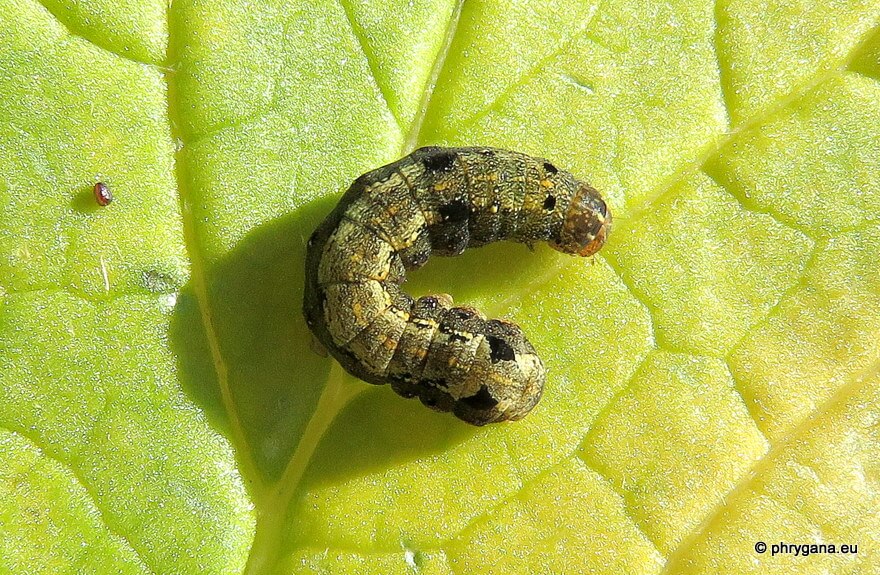
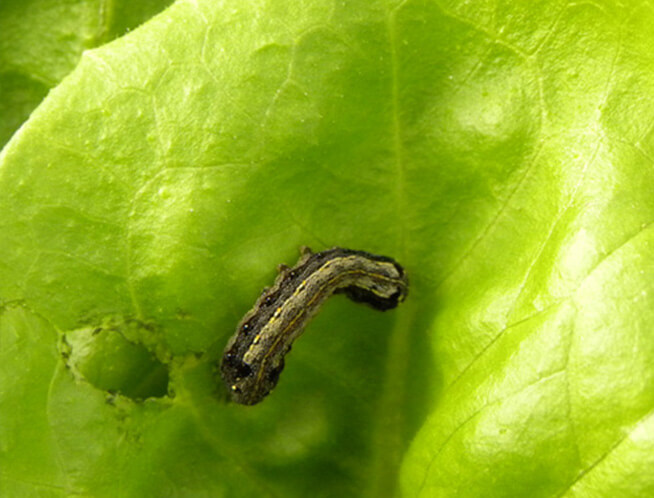
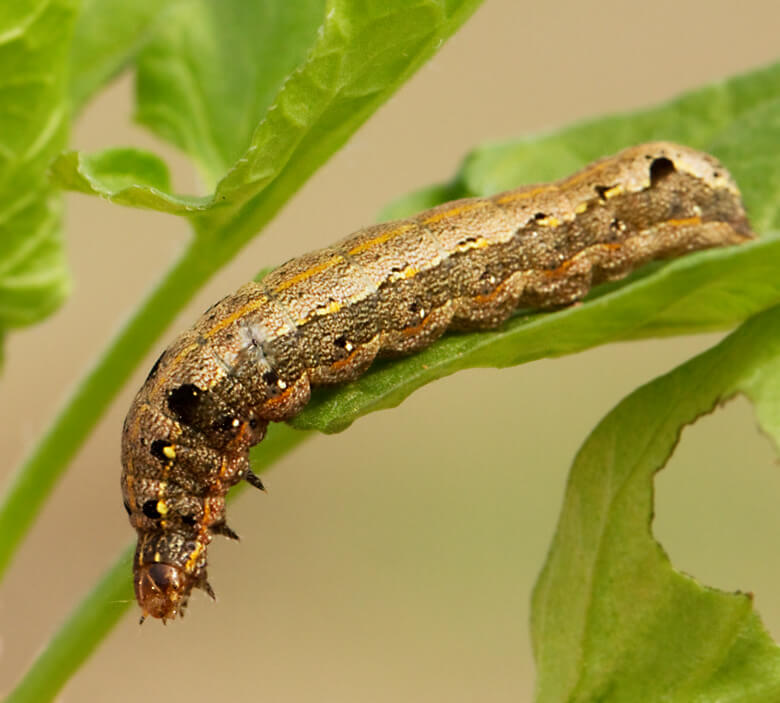
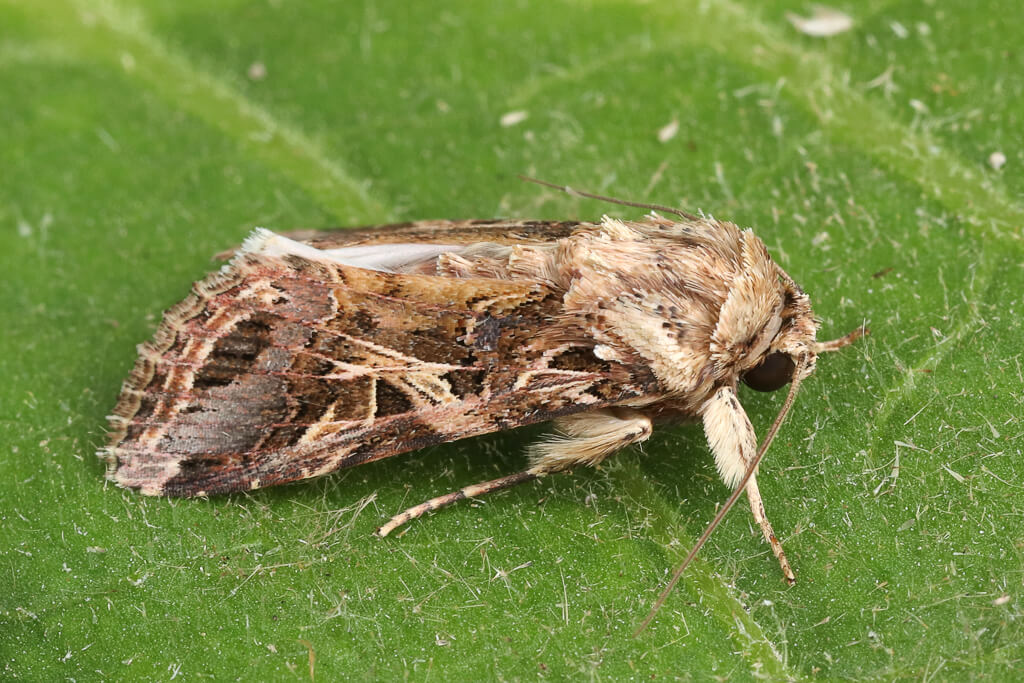
Spodoptera littoralis, commonly known as the black donut or cutworm, is a lepidopteran of the Noctuidae family that affects various cultivated plants, including lettuce. Adults are dark brown nocturnal moths with lighter bands and a wingspan of approximately 40 mm. Females lay large quantities of eggs on the underside of leaves, in masses of up to 300 eggs, which hatch in a few days. The larvae are brown or dark gray, with light longitudinal lines along the body. These caterpillars go through six to seven larval stages and can reach up to 4 cm in length. During the night they feed on the leaves, stems and flowers of plants, while during the day they hide under the ground or among plant debris. After the last larval stage, the caterpillars burrow into the ground to pupate, emerging as adults in approximately two weeks. Spodoptera littoralis has a high reproductive capacity and can have several generations per year under favorable conditions, which facilitates its rapid propagation.
SYMPTOMS
In lettuce crops and similar plants, Spodoptera littoralis causes a disease commonly known as black donut or Prodenia. This pest mainly affects the leaves, cutting the leaf tissue and severely damaging the plant's ability to develop properly. Young larvae feed on the underside of leaves, while older larvae tend to feed near the neck of the plant, causing damage that can be fatal, especially in young seedlings. Affected areas are susceptible to secondary infections by fungal and bacterial pathogens due to open wounds.
- Leaves with large defoliated areas.
- Damage to young stems and bases of plants.
- Destruction of seedlings in early stages of growth.
- Presence of dark excrements on the leaves and the ground.
- Weakened stem and fall of affected plants.
- Dwarfism in surviving plants due to severe tissue damage.


TEMPERATURE AND HUMIDITY
20-30°C
60-80%

HOW IS IT SPREAD?
Movement of infested plants, Wind, Migration of adults, Contamination of agricultural tools, Contact with plant residues

HOW TO REMOVE IT?
Home remedies
There are no home treatments
Chemical treatments
• CHLORANTRANILIPROL 35% [WG] P/P
• CYANTRANILIPROL 10% + ACIBENZOLAR-S-METHYL 1.25% [SC] P/V
• DELTAMETHRIN 1.5% [EW] P/V
• DELTAMETHRIN 2.5% [EC] P/V
• DELTAMETHRIN 2.5% [EW] P/V
• METAFLUMIZONE 24% [SC] P/V
• SPINETORAM 2.5% [SC] P/V
• Spodoptera littoralis (Pheromone)
• TEBUFENOCIDE 24% [SC] P/V
Authorized treatments in organic farming
• Spodoptera littoralis (Pheromone)
Insect allies
PREDATORY MITES
LADYBUGS
LACEWINGS
PARASITIC WASPS
HOVERFLIES OR PARASITIC FLIES
PREDATORY BUGS
There are no natural allies
Mycodiplosis oidii (predatory mosquito)
EFFECTIVE PRODUCTS TO ELIMINATE THIS DISEASE
Sponsored link
Sponsored link


Sponsored link
Sponsored link
Sponsored link


Sponsored link
Sponsored link
Effective against all types of fungi

Sponsored link


Sponsored link
Sponsored link

Sponsored link


Sponsored link
- Carry out constant monitoring of the crop using pheromone traps to detect the presence of adults and establish treatment thresholds before the larvae cause severe damage.
- Keep the growing area free of weeds, since these plants can serve as alternative hosts for Spodoptera littoralis larvae.
- Apply biological treatments such as Bacillus thuringiensis or neem extracts to control larvae in early stages without affecting natural predators.
- Implement crop rotation with plants that are not prone to Spodoptera littoralis infestations, which helps reduce the residual population of the pest.
- Encourage the presence of natural predators and parasitoids, such as wasps and birds, which can help control black donut populations.
- Use physical barriers, such as plant covers or mulch, to make it difficult for larvae to access the necks of plants and minimize damage in the early stages.
- Use selective insecticides when populations reach critical levels, making sure to rotate the products to avoid the emergence of resistance.
- Maintain a record of the dates of appearance of adults and larvae, to improve the planning of control measures in future seasons.
Recommendations

Enjoy idMicrobe TOTALLY FREE, with no trial periods.


