

Trips
Thrips
Thrips
Pathogen:
Insect
Type:
Risk to the plant:
HIGH

DESCRIPTION
WHO CAUSES IT?
Thrips are small insects belonging to the order Thysanoptera, and multiple species can act as pathogens on various plants. Thrips go through several stages in their development: egg, larva, pupa and adult. Females lay eggs within plant tissue, which provides protection to the embryos. The larvae emerge from the eggs and begin to feed on the plant, causing direct damage. After completing several molts, the larvae enter the pupal phase, generally in the soil or decomposing plant matter. Eventually, adults emerge and can reproduce rapidly, especially in warm conditions. Thrips are mobile and can fly or be carried by the wind, which facilitates their dispersal to new host plants. These insects are capable of causing damage both through direct feeding and through the transmission of phytopathogenic viruses.
SYMPTOMS
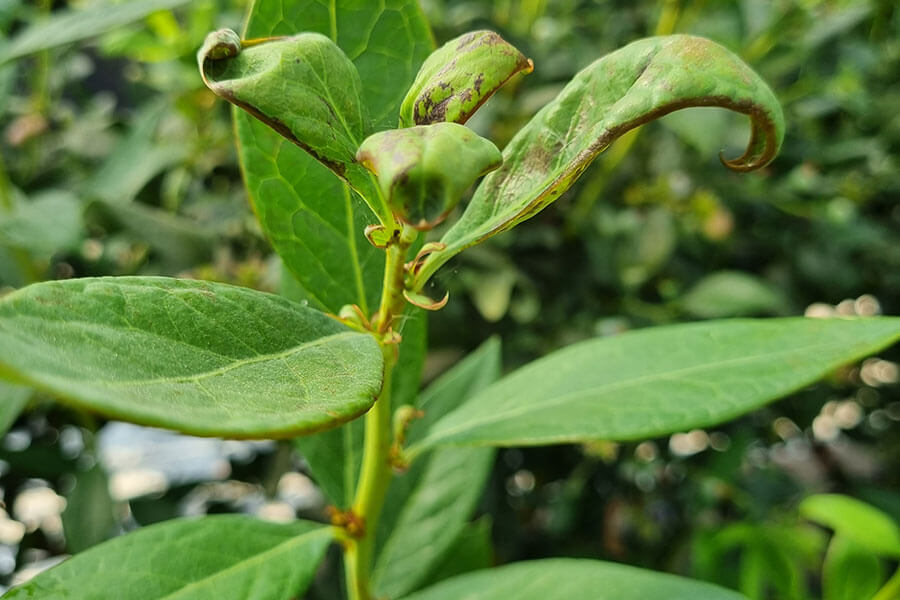
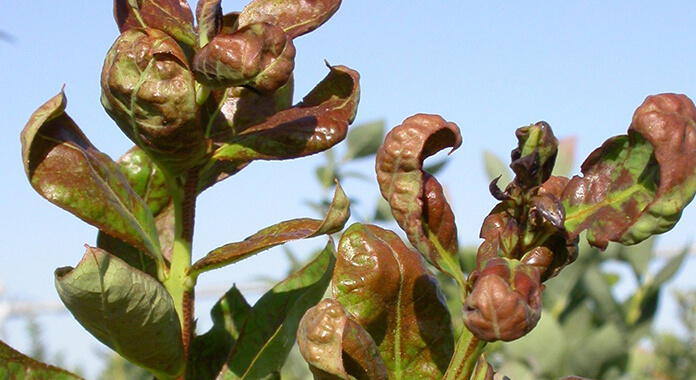
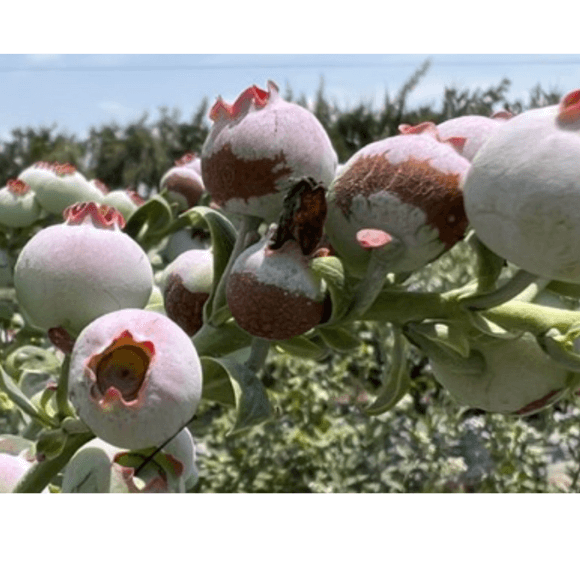
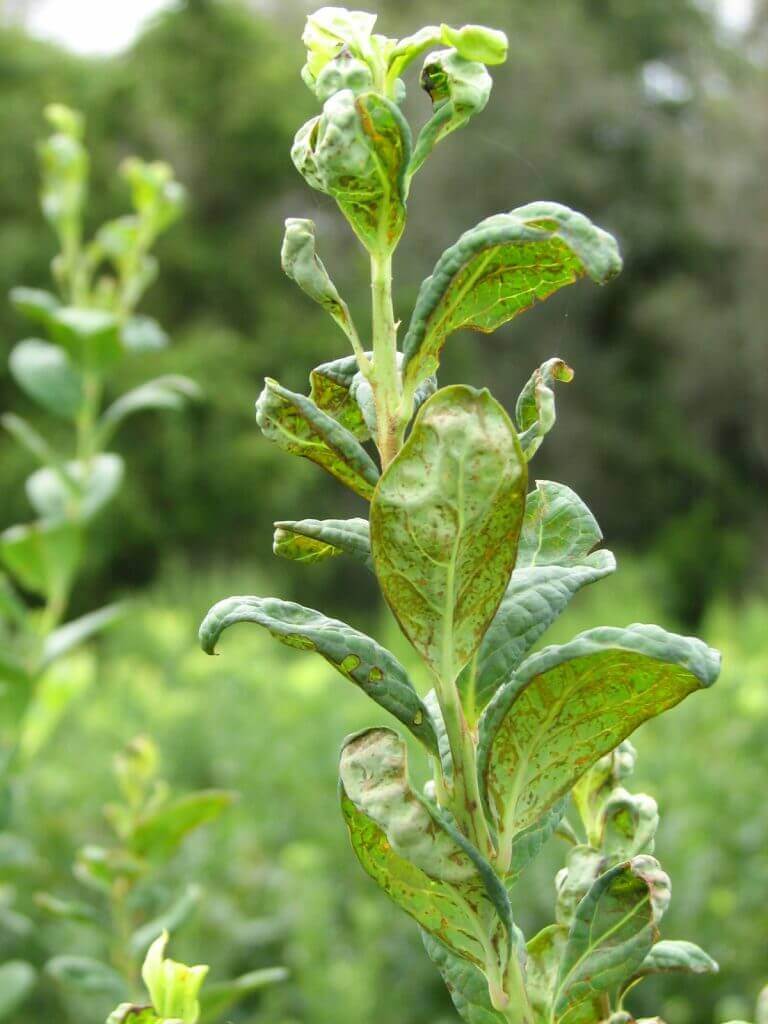
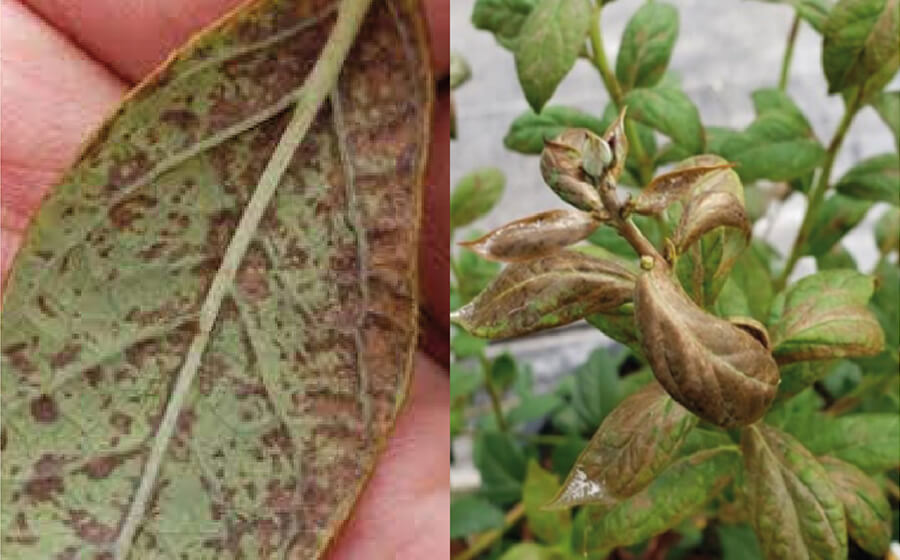
The presence of thrips in blueberries causes a disease characterized by visible damage to the leaves, flowers and fruits. Thrips feed by scraping the surface of plant tissue and sucking out cellular contents, resulting in the appearance of silvery or discolored Taches on affected areas. This can lead to a reduction in photosynthesis and therefore overall plant vigor. Additionally, thrips can transmit viruses, further compounding the impact of the infestation.
- Silvery or discolored Taches on the leaves.
- Deformation of leaves and young shoots.
- Reduction in plant growth and vigor.
- Scars and deformities in the fruits.
- Premature fall of flowers and fruits.
- Potential transmission of phytopathogenic viruses.

TEMPERATURE AND HUMIDITY
20°C - 30°C
60% - 80%

HOW IS IT SPREAD?
Wind, Contact with infested plants, Contaminated agricultural tools, Transport of infected plants or fruits

HOW TO REMOVE IT?
Home remedies
There are no home treatments
Chemical treatments
• ORANGE OIL 6% [SL] P/V
• ORANGE OIL 60g/L [ME] P/S
• ORANGE OIL 60g/L [ME] P/S
• ORANGE OIL 60g/L [ME] P/S
• PARAFFIN OIL (CAS [8042-47-5]) 54.6% [EW] P/V
• AZADIRACTIN 1% (AS AZADIRACTIN A) [EC] P/V
• AZADIRACTIN 1% (AS AZADIRACTIN A) [EC] P/V
• Azadirachtin 2.6% (AS AZADIRACTIN A) [EC] P/V
• Azadirachtin 2.6% (AS AZADIRACTIN A) [EC] P/V
• Azadirachtin 2.6% (AS AZADIRACTIN A) [EC] P/V
• Azadirachtin 2.6% (AS AZADIRACTIN A) [EC] P/V
• Azadirachtin 2.6% (AS AZADIRACTIN A) [EC] P/V
• Azadirachtin 2.6% (AS AZADIRACTIN A) [EC] P/V
• Azadirachtin 2.6% (AS AZADIRACTIN A) [EC] P/V
• Azadirachtin 2.6% (AS AZADIRACTIN A) [EC] P/V
• Azadirachtin 2.6% (AS AZADIRACTIN A) [EC] P/V
• FORMETANATE 50% [SP] P/P
• POTASSIUM SALTS OF FATTY ACIDS C14-C20 48% [EW] P/V
• POTASSIUM SALTS OF FATTY ACIDS C14-C20 48% [EW] P/V
• SPINETORAM 2.5% [SC] P/V
• SPINETORAM 2.5% [SC] P/V
• SPIROTETRAMAT 10% [SC] P/V
• CHROMATIC TRAP
• ADHESIVE TRAP
Authorized treatments in organic farming
• ORANGE OIL 6% [SL] P/V
• ORANGE OIL 60g/L [ME] P/S
• ORANGE OIL 60g/L [ME] P/S
• ORANGE OIL 60g/L [ME] P/S
• PARAFFIN OIL (CAS [8042-47-5]) 54.6% [EW] P/V
• AZADIRACTIN 1% (AS AZADIRACTIN A) [EC] P/V
• AZADIRACTIN 1% (AS AZADIRACTIN A) [EC] P/V
• Azadirachtin 2.6% (AS AZADIRACTIN A) [EC] P/V
• Azadirachtin 2.6% (AS AZADIRACTIN A) [EC] P/V
• Azadirachtin 2.6% (AS AZADIRACTIN A) [EC] P/V
• Azadirachtin 2.6% (AS AZADIRACTIN A) [EC] P/V
• Azadirachtin 2.6% (AS AZADIRACTIN A) [EC] P/V
• Azadirachtin 2.6% (AS AZADIRACTIN A) [EC] P/V
• Azadirachtin 2.6% (AS AZADIRACTIN A) [EC] P/V
• Azadirachtin 2.6% (AS AZADIRACTIN A) [EC] P/V
• Azadirachtin 2.6% (AS AZADIRACTIN A) [EC] P/V
• POTASSIUM SALTS OF FATTY ACIDS C14-C20 48% [EW] P/V
• POTASSIUM SALTS OF FATTY ACIDS C14-C20 48% [EW] P/V
• CHROMATIC TRAP
• ADHESIVE TRAP
Insect allies
PREDATORY MITES
LADYBUGS
LACEWINGS
PARASITIC WASPS
HOVERFLIES OR PARASITIC FLIES
PREDATORY BUGS
There are no natural allies
Mycodiplosis oidii (predatory mosquito)
EFFECTIVE PRODUCTS TO ELIMINATE THIS DISEASE
Sponsored link

Sponsored link


Sponsored link
Sponsored link
Sponsored link


Sponsored link
Sponsored link
Effective against all types of fungi

Sponsored link


Sponsored link
Sponsored link

Sponsored link


Sponsored link
- Implement constant monitoring to early detect the presence of thrips using sticky traps and regular visual checks.
- Promote biodiversity in cultivation, including plants that attract natural predators of thrips, such as phytoseiid mites and lacewings.
- Maintain adequate crop hygiene, eliminating plant remains and weeds that may harbor thrips.
- Use anti-insect meshes in greenhouses and tunnels to prevent the entry of thrips.
- Apply treatments with specific insecticides, following the recommendations for doses and application times to minimize the risk of resistance.
- Implement crop rotation to break the life cycle of thrips and reduce the population.
- Promote the use of biological products and natural controllers, such as entomopathogenic fungi and beneficial nematodes.
- Adjust watering and fertilization to avoid plant stress, which can make them more susceptible to thrips infestations.
Recommendations

Enjoy idMicrobe TOTALLY FREE, with no trial periods.


