

Micosis/Hongos
Mycosis
Fungus
Pathogen:
Fungus
Type:
Risk to the plant:
CRITICAL
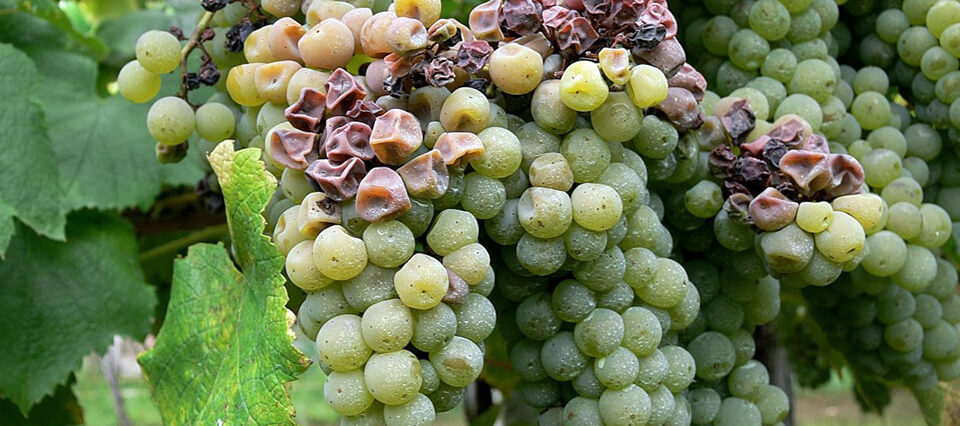
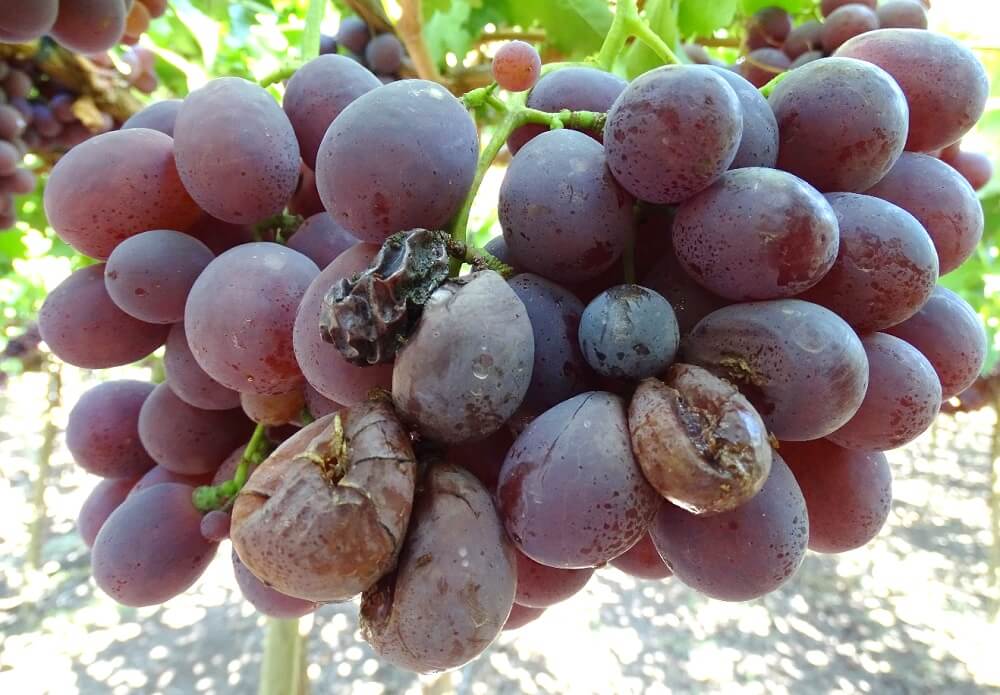

DESCRIPTION
WHO CAUSES IT?
Mycoses in the vine are caused by several species of phytopathogenic fungi that affect different parts of the plant, mainly roots, stems and leaves. These fungi are microscopic organisms that spread through spores, which are dispersed by wind, water or contact with infected tools. Once the spores find a favorable environment on the vine, they germinate and develop filaments called hyphae, which penetrate the plant tissues and spread, consuming nutrients and weakening the vine's natural defenses. Fungi survive in soil or plant remains, entering a state of rest during adverse conditions and reactivating when environmental conditions, such as temperature and humidity, are optimal for their development. In certain cases, spores can also remain attached to plant surfaces during the winter, waiting for the right conditions to initiate a new infection.
SYMPTOMS
Mycoses in the vine can cause significant weakening of the plant, affecting its ability to grow and produce fruit optimally. These diseases manifest mainly in the roots, stems and leaves, causing a progressive loss of vigor and, in severe cases, the death of the plant. The infection affects the vascular system of the vine, making it difficult to absorb water and nutrients, leading to generalized decay.
- Discoloration and necrosis in leaves and stems.
- Premature defoliation.
- Necrotic lesions on the stems and roots.
- Delay in plant growth.
- Regressive death of branches.
- Reduction in grape production.


TEMPERATURE AND HUMIDITY
18-28°C
70-90%

HOW IS IT SPREAD?
Wind-borne spores, contaminated irrigation water, infected tools, decaying plant remains

HOW TO REMOVE IT?
Home remedies
There are no home treatments
Chemical treatments
• ORANGE OIL 6% [SL] P/V
• AZOXISTROBIN 12% + TEBUCONAZOLE 20% [SC] P/V
• AZOXISTROBIN 25% [SC] P/V
• SULFUR 70% [SC] P/V
• SULFUR 72% [SC] P/V
• SULFUR 80% [DP] P/P
• SULFUR 80% [SC] P/V
• SULFUR 80% [WG] P/P
• SULFUR 80% [WP] P/P
• SULFUR 82.5% [SC] P/V
• SULFUR 90% [DP] P/P
• SULFUR 98.5% [DP] P/P
• SULFUR 99% [DP] P/P
• DIFENOCONAZOLE 1.67% [EC] P/V
• DIFENOCONAZOLE 25% [EC] P/V
• EUGENOL 3.3% + GERANIOL 6.6% + THYMOL 6.6% [CS] P/V
• CUPRIC HYDROXIDE 13.6% (EXPR. IN CU) + COPPER OXYCHLORIDE 13.6% (EXPR. IN CU) [SC] P/V
• CUPRIC HYDROXIDE 20% (EXPR. IN CU) [WG] P/P
• CUPRIC HYDROXIDE 25% (EXPR. IN CU) [WG] P/P
• CUPRIC HYDROXIDE 40% (EXPR. IN CU) [WG] P/P
• CUPRIC HYDROXIDE 50% (EXPR. IN CU) [WP] P/P
• COPPER OXYCHLORIDE 14% (exp. in Cu) + CUPRIC HYDROXIDE 14% (exp. in Cu) [WG] P/P
• COPPER OXYCHLORIDE 25% (EXPR. IN CU) [WG] P/P
• COPPER OXYCHLORIDE 30% (EXPR. IN CU) [WP] P/P
• COPPER OXYCHLORIDE 35% (exp. in Cu) [WG] P/P
• COPPER OXYCHLORIDE 35% (exp. in Cu) [WP] P/P
• COPPER OXYCHLORIDE 38% (EXPR. IN CU) [SC] P/V
• COPPER OXYCHLORIDE 50% (EXPR. IN CU) [WP] P/P
• COPPER OXYCHLORIDE 52% (EXPR. IN CU) [SC] P/V
• COPPER OXYCHLORIDE 70% (EXPR. IN CU) [SC] P/V
• COPPER OXYCHLORIDE 70% [SC] P/V
• CUPROSUS OXIDE 45% (exp. in Cu) [WG] P/P
• CUPROUS OXIDE 50% (EXPR. IN CU) [WP] P/P
• CUPROUS OXIDE 75% (EXPR. IN CU) [WG] P/P
• CUPROCALCIC SULFATE 12.4% (EXPR. IN CU) [SC] P/V
• CUPROCALCIC SULFATE 20% (EXPR. IN CU) [WG] P/P
• CUPROCALCIC SULFATE 20% (EXPR. IN CU) [WP] P/P
• TEBUCONAZOLE 20% [EC] P/V
• TEBUCONAZOLE 20% [EW] P/V
• TEBUCONAZOLE 25% [EC] P/V
• TEBUCONAZOLE 25% [EW] P/V
• TEBUCONAZOLE 25% [WG] P/P
• TETRACONAZOLE 10% [EC] P/V
• TETRACONAZOLE 12.5% [ME] P/V
• TETRACONAZOLE 4% [ME] P/V
Authorized treatments in organic farming
• ORANGE OIL 6% [SL] P/V
• SULFUR 60% + BACILLUS THURINGIENSIS KURSTAKI (STRAIN PB 54) (1x10E6 I.U./G) 0.5% [DP] P/P
• SULFUR 70% [SC] P/V
• SULFUR 72% [SC] P/V
• SULFUR 80% [DP] P/P
• SULFUR 80% [SC] P/V
• SULFUR 80% [WG] P/P
• SULFUR 80% [WP] P/P
• SULFUR 82.5% [SC] P/V
• SULFUR 90% [DP] P/P
• SULFUR 98.5% [DP] P/P
• SULFUR 99% [DP] P/P
• EUGENOL 3.3% + GERANIOL 6.6% + THYMOL 6.6% [CS] P/V
• CUPRIC HYDROXIDE 13.6% (EXPR. IN CU) + COPPER OXYCHLORIDE 13.6% (EXPR. IN CU) [SC] P/V
• CUPRIC HYDROXIDE 20% (EXPR. IN CU) [WG] P/P
• CUPRIC HYDROXIDE 25% (EXPR. IN CU) [WG] P/P
• CUPRIC HYDROXIDE 40% (EXPR. IN CU) [WG] P/P
• CUPRIC HYDROXIDE 50% (EXPR. IN CU) [WP] P/P
• COPPER OXYCHLORIDE 14% (exp. in Cu) + CUPRIC HYDROXIDE 14% (exp. in Cu) [WG] P/P
• COPPER OXYCHLORIDE 25% (EXPR. IN CU) [WG] P/P
• COPPER OXYCHLORIDE 30% (EXPR. IN CU) [WP] P/P
• COPPER OXYCHLORIDE 35% (exp. in Cu) [WG] P/P
• COPPER OXYCHLORIDE 35% (exp. in Cu) [WP] P/P
• COPPER OXYCHLORIDE 38% (EXPR. IN CU) [SC] P/V
• COPPER OXYCHLORIDE 50% (EXPR. IN CU) [WP] P/P
• COPPER OXYCHLORIDE 52% (EXPR. IN CU) [SC] P/V
• COPPER OXYCHLORIDE 70% (EXPR. IN CU) [SC] P/V
• COPPER OXYCHLORIDE 70% [SC] P/V
• CUPROSUS OXIDE 45% (exp. in Cu) [WG] P/P
• CUPROUS OXIDE 50% (EXPR. IN CU) [WP] P/P
• CUPROUS OXIDE 75% (EXPR. IN CU) [WG] P/P
• CUPROCALCIC SULFATE 12.4% (EXPR. IN CU) [SC] P/V
• CUPROCALCIC SULFATE 20% (EXPR. IN CU) [WG] P/P
• CUPROCALCIC SULFATE 20% (EXPR. IN CU) [WP] P/P
Insect allies
PREDATORY MITES
LADYBUGS
LACEWINGS
PARASITIC WASPS
HOVERFLIES OR PARASITIC FLIES
PREDATORY BUGS
There are no natural allies
Mycodiplosis oidii (predatory mosquito)
EFFECTIVE PRODUCTS TO ELIMINATE THIS DISEASE
Sponsored link
Sponsored link


Sponsored link
Sponsored link
Sponsored link


Sponsored link
Sponsored link
Effective against all types of fungi

Sponsored link


Sponsored link
Sponsored link

Sponsored link


Sponsored link
- Carry out periodic monitoring of the vines to detect the early presence of fungi and act quickly with control measures.
- Use vine varieties more resistant to fungal diseases to reduce the incidence of mycoses in vineyards.
- Maintain good drainage in the soil to avoid conditions of excess humidity that favor the growth of fungi.
- Regularly disinfect pruning and harvesting tools to prevent the spread of fungal spores between plants.
- Remove and eliminate the remains of infected plants to reduce the source of inoculum in the vineyard.
- Apply preventive treatments with fungicides in the most vulnerable phases of vine development, such as budding and initial growth.
- Promote adequate ventilation in the vineyard to reduce humidity in the foliage and make it difficult for fungi to establish.
Recommendations

Enjoy idMicrobe TOTALLY FREE, with no trial periods.


