

Virus
Banana necrotic streak virus (BSV): what it is, how it originates, and how to eliminate it effectively.
Banana necrotic streak virus (BSV)
BSV Virus
Pathogen:
Virus
Type:
Risk to the plant:
HIGH

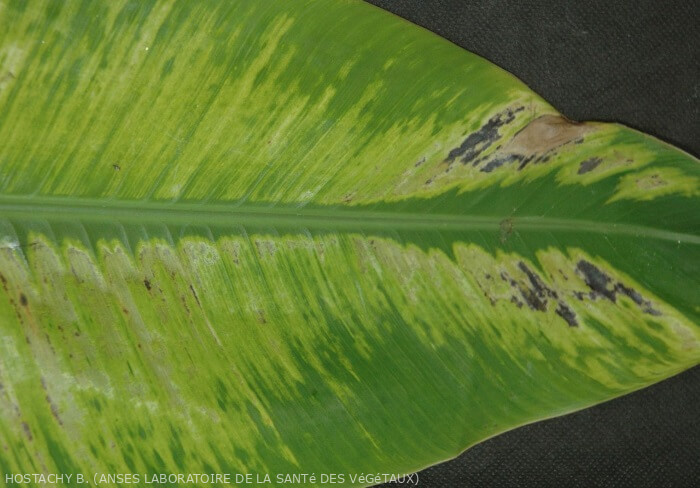

DESCRIPTION
WHO CAUSES IT?
The BSV Virus (Banana streak virus) is a pathogen belonging to the Caulimoviridae family, within the Badnavirus genus. It is a pararetroviral DNA virus, which means that its genome can integrate into the DNA of the banana tree latently, activating under stress conditions. Its spread can occur both endogenously, when the plant material already contains viral sequences that are activated, and exogenously, when it is transmitted through biological vectors or inappropriate agricultural practices. When the virus is activated, it replicates in the nucleus of plant cells through reverse transcription, generating infectious viral particles that are distributed throughout the vascular system of the banana tree. Its spread can occur systemically within the plant and spread to others through insect vectors, contaminated tools or infected plant material. Infections can be chronic or episodic, depending on environmental factors and the physiological state of the culture.
SYMPTOMS
In the banana tree, infection by the BSV Virus causes a disease of economic importance, since it affects the development of the plant and reduces the quality and yield of the fruits. The impact of the disease varies depending on the banana variety and environmental conditions, and symptoms may be mild or severe.
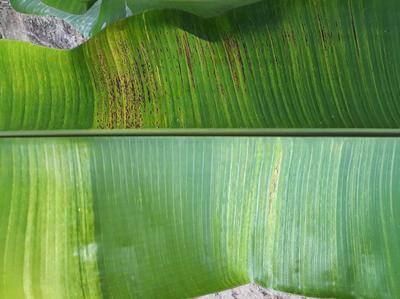
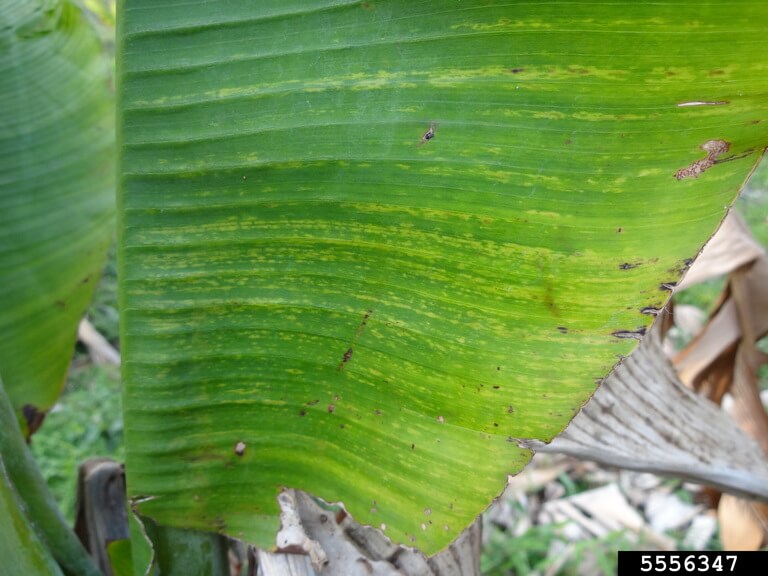
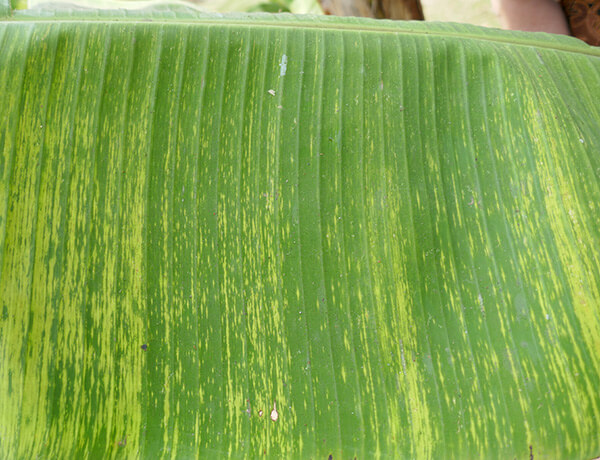
- Appearance of chlorotic streaks on the leaves, which later evolve into necrosis.
- Deformation and weakening of the foliage, with smaller leaves and irregular growth.
- Reduction in the general vigor of the plant, with lower biomass production.
- Fruits with necrotic spots and alterations in the skin, which affects their commercial value.
- Lower yield in the harvest due to the impact on the development of the clusters.
- Increased sensitivity to other diseases and environmental stress, which compromises the longevity of the banana tree.

TEMPERATURE AND HUMIDITY
24°C - 30°C
60% - 85%

HOW IS IT SPREAD?
Infected propagation material, insect vectors, contaminated tools, contact between plants

HOW TO REMOVE IT?
Home remedies
There are no home treatments
Chemical treatments
Il n'existe pas de traitements efficaces contre les virus, les traitements sont axés sur la lutte contre l'insecte ou le vecteur porteur du virus (VOIR TRAITEMENTS DISPONIBLES CONTRE LES INSECTES)
Authorized treatments in organic farming
Il n'existe pas de traitements efficaces contre les virus, les traitements sont axés sur la lutte contre l'insecte ou le vecteur porteur du virus (VOIR TRAITEMENTS DISPONIBLES CONTRE LES INSECTES)
Insect allies
PREDATORY MITES
LADYBUGS
LACEWINGS
PARASITIC WASPS
HOVERFLIES OR PARASITIC FLIES
PREDATORY BUGS
There are no natural allies
Mycodiplosis oidii (predatory mosquito)
EFFECTIVE PRODUCTS TO ELIMINATE THIS DISEASE
Sponsored link

Sponsored link


Sponsored link
Sponsored link
Sponsored link


Sponsored link
Sponsored link
Effective against all types of fungi

Sponsored link


Sponsored link
Sponsored link

Sponsored link


Sponsored link
- Use certified, infection-free planting material to avoid the spread of the virus in new plantations.
- Implement sanitation practices on agricultural tools and pruning equipment to avoid mechanical transmission.
- Control insect vectors, such as scale insects and aphids, through the use of traps, physical barriers or phytosanitary treatments.
- Apply integrated pest management techniques to reduce infection pressure on crops.
- Avoid water and nutritional stress in banana trees, since adverse conditions can activate the latent virus in the plant's DNA.
- Carry out constant monitoring in plantations to detect early symptoms and eliminate severely affected plants.
- Avoid vegetative propagation of infected plants, since the virus can remain in rhizomes and cuttings used for new plantings.
- Promote genetic diversification in crops through the use of varieties with partial resistance or tolerance to the disease.
Recommendations

Enjoy idMicrobe TOTALLY FREE, with no trial periods.


