

Virus
Beet Moderate Yellowness Virus
Beet Mild Yellowing Virus (Bmyv)
Pathogen:
Virus
Type:
Risk to the plant:
HIGH

DESCRIPTION
WHO CAUSES IT?
Beet Mild Yellowing Virus (BMYV) is a virus that belongs to the Luteoviridae family and mainly affects sugar beet. BMYV is transmitted by aphids, especially the green peach aphid (Myzus persicae) and the black beet aphid (Aphis fabae). Aphids acquire the virus by feeding on an infected plant, retaining it in their circulatory system without it replicating in the insect. Subsequently, during feeding on healthy plants, the virus is inoculated into the phloem of these plants. Once inside the phloem, BMYV spreads systemically, interfering with nutrient translocation and causing characteristic symptoms. Infection can persist in host plants and migratory aphid populations, facilitating the spread of the virus in subsequent growing seasons. Environmental conditions, such as moderate temperatures and high vector density, favor the incidence and severity of the disease.
SYMPTOMS
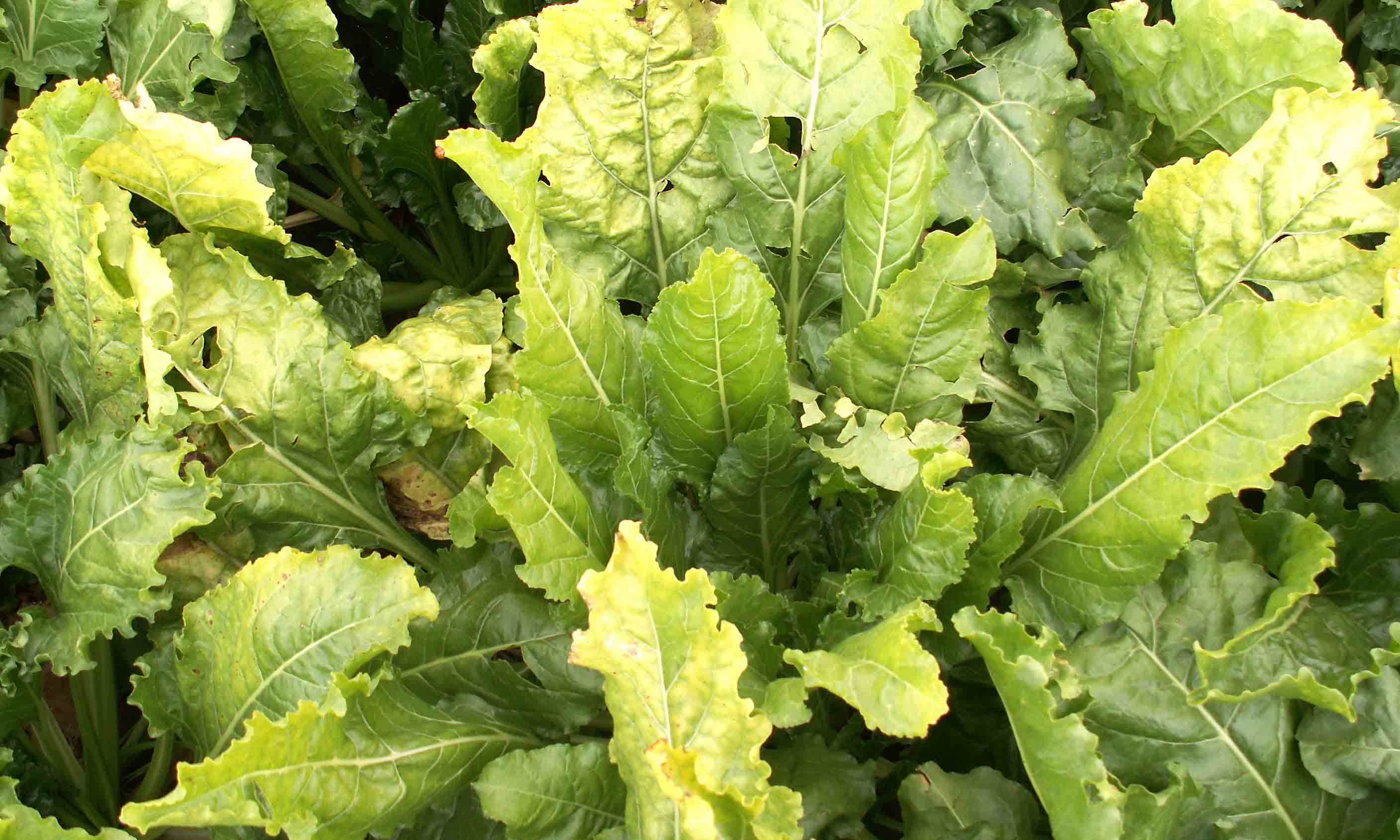
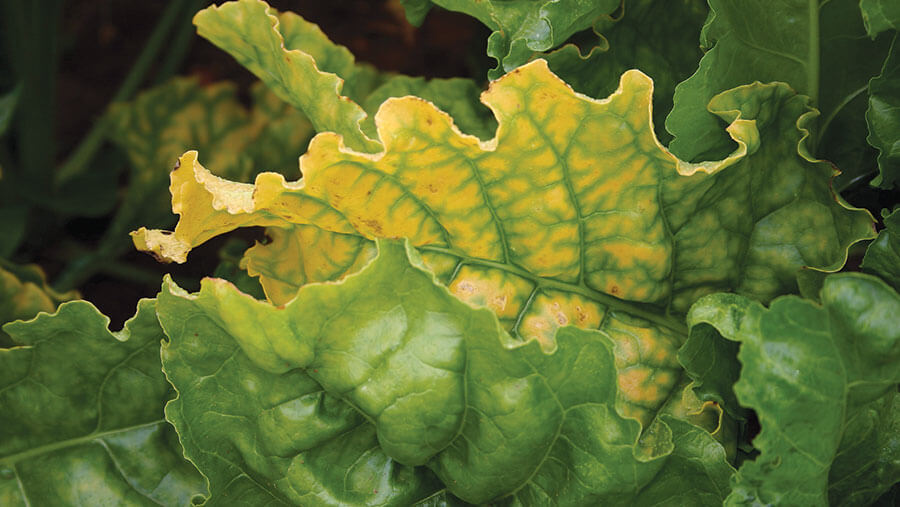
Beet moderate yellowness virus, caused by BMYV, significantly affects sugar beets, reducing their yield and quality. The disease manifests itself through various symptoms that decrease photosynthetic efficiency and sugar storage capacity in the roots.
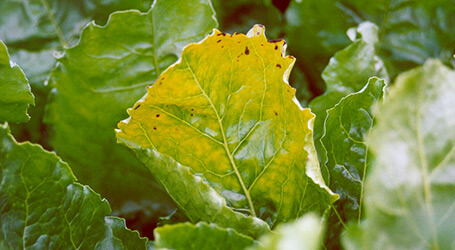
- Generalized yellowing of the leaves, starting with the oldest ones.
- Reduction in the size of leaves and roots.
- Appearance of chlorotic Taches on the leaves.
- Slight curling of the leaves.
- Greater susceptibility to other diseases.
- Reduction of sugar content in roots.


TEMPERATURE AND HUMIDITY
15°C - 25°C
60% - 80%

HOW IS IT SPREAD?
Aphids, Infected planting material, Infected crop remains

HOW TO REMOVE IT?
Home remedies
There are no home treatments
Chemical treatments
There are no effective treatments against viruses, the treatments are focused on combating the insect or vector carrying the virus (SEE AVAILABLE TREATMENTS AGAINST INSECTS)
Authorized treatments in organic farming
There are no effective treatments against viruses, the treatments are focused on combating the insect or vector carrying the virus (SEE AVAILABLE TREATMENTS AGAINST INSECTS)
Insect allies
PREDATORY MITES
LADYBUGS
LACEWINGS
PARASITIC WASPS
HOVERFLIES OR PARASITIC FLIES
PREDATORY BUGS
There are no natural allies
Mycodiplosis oidii (predatory mosquito)
EFFECTIVE PRODUCTS TO ELIMINATE THIS DISEASE
Sponsored link
Sponsored link


Sponsored link
Sponsored link
Sponsored link


Sponsored link
Sponsored link
Effective against all types of fungi

Sponsored link


Sponsored link
Sponsored link

Sponsored link


Sponsored link
- Use sugar beet varieties resistant or tolerant to BMYV.
- Implement effective control of aphids through the use of specific insecticides and biological control agents.
- Practice crop rotation to reduce the pressure of the pathogen and its vectors in the field.
- Keep fields clean, eliminating crop residues and weeds that may harbor aphids.
- Avoid sprinkler irrigation, which can facilitate the dispersal of aphids.
- Constantly monitor crops for early detection of aphids and BMYV symptoms.
- Install physical barriers such as anti-insect mesh to limit the entry of aphids into crops.
- Apply mineral oils that interfere with the aphids' ability to transmit the virus.
Recommendations

Enjoy idMicrobe TOTALLY FREE, with no trial periods.


