

Maíz
How to recognize and combat brown spot in corn
Brown Spot
Fungus
Type:
Risk to the plant:
INTERMEDIATE
Physoderma Maydis
Pathogen:
Micosis/Hongos


WHO CAUSES IT?
Physoderma maydis is a pathogenic fungus that affects corn, causing the disease known as brown spot. This fungus belongs to the class Chytridiomycetes and is characterized by its production of spores that spread in humid conditions. The fungus begins its infectious cycle in the leaf tissue of corn, especially in the leaf sheaths and stems. During periods of high humidity, motile zoospore spores are released and swim to the stomata of leaves where they germinate and penetrate plant tissue. Once inside, the fungus forms structures called sporangia that produce new spores, which are released into the environment and continue the infectious cycle. Physoderma maydis can survive in crop residues and soil for long periods, facilitating its reappearance in successive seasons if adequate control measures are not implemented.
.png)
SYMPTOMS
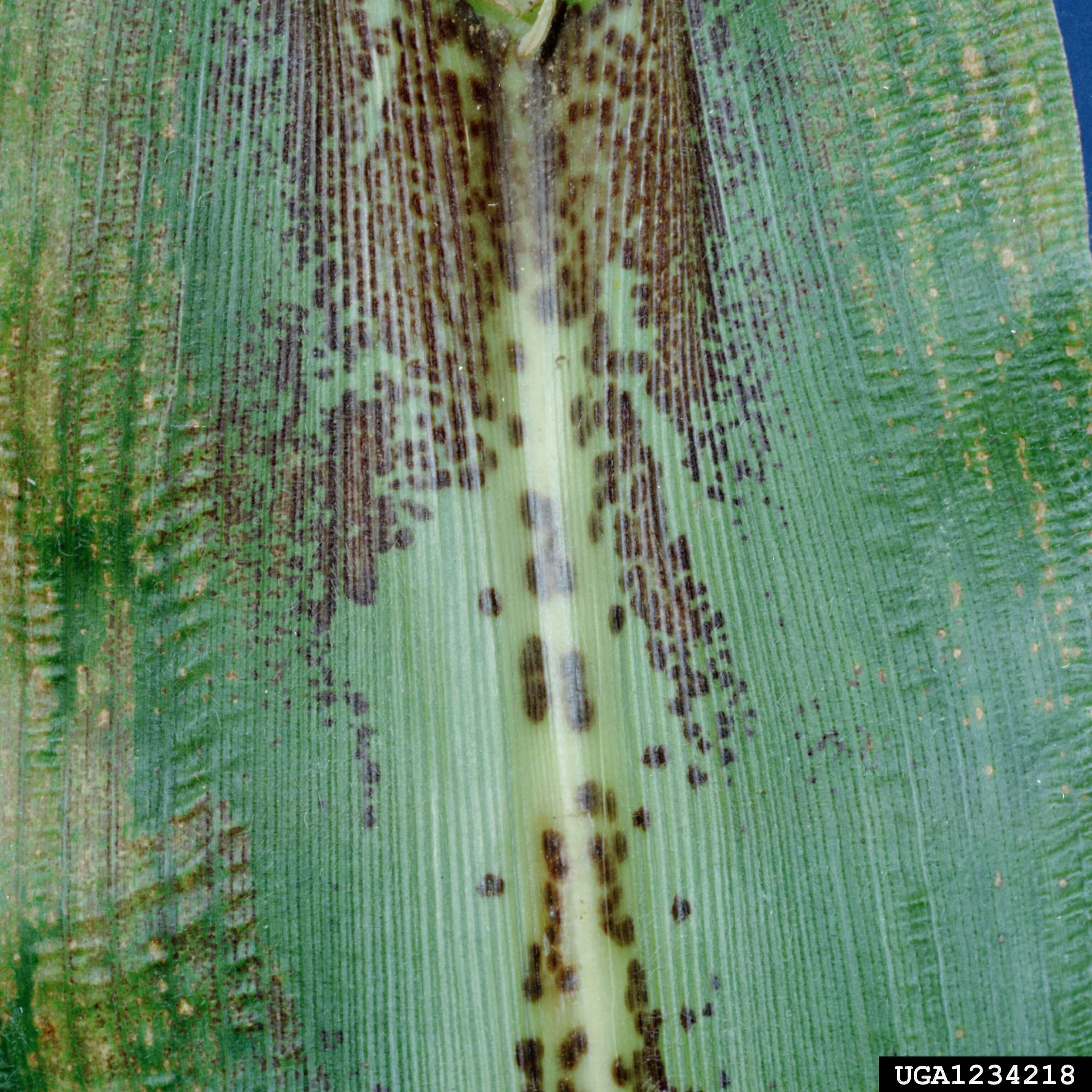
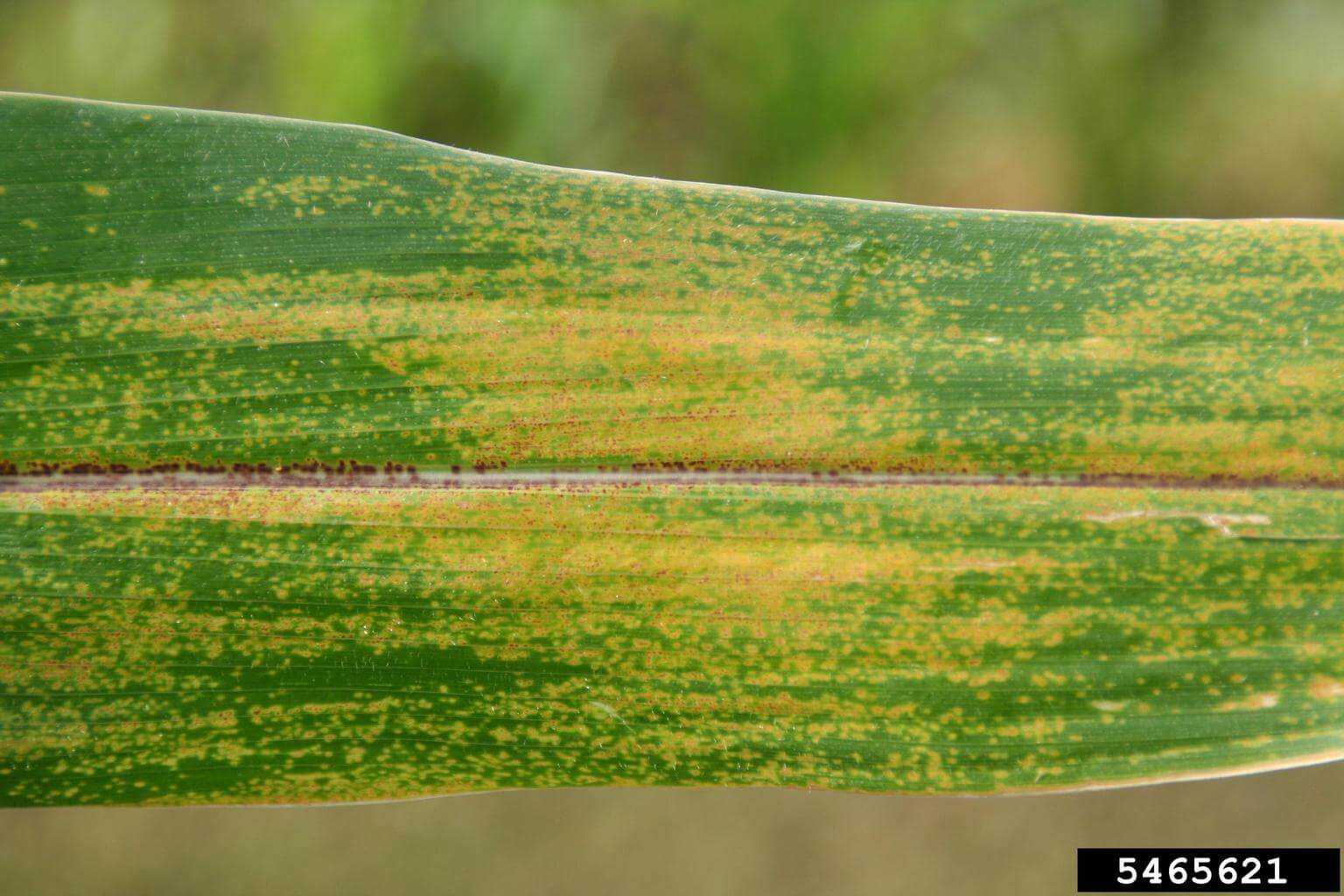
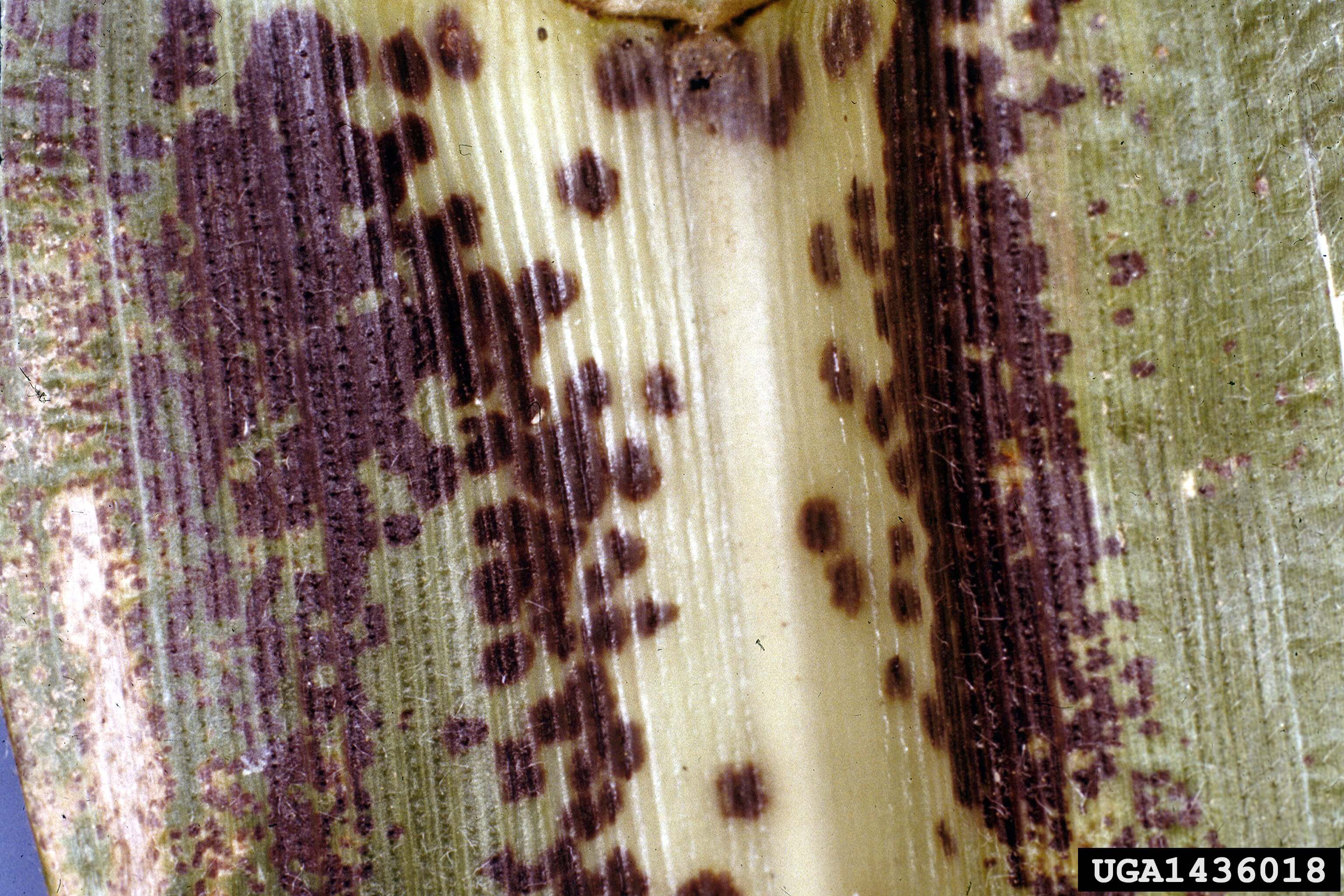
Brown spot in corn, caused by Physoderma maydis, is a disease that mainly affects the leaves, stems and leaf sheaths, reducing the photosynthetic capacity of the plant and, consequently, its yield.
- Small circular dark brown Taches on the leaves.
- Lesions on the leaf sheaths, which can coalesce and form larger necrotic areas.
- Dark brown necrotic bands at the nodes of the stem.
- Reduction in the growth and vigor of affected plants.
- Deformations and weakness in the stems, increasing susceptibility to lodging.
- Decrease in grain production due to reduction in photosynthesis.


DEVELOPMENT CONDITIONS
Temperature:
20-30°C
Humidity:
70-90%

HOW IS IT SPREAD?
Wind, irrigation water, cultivation tools, infected crop remains, movement of agricultural machinery

HOW TO ELIMINATE IT?
Home treatments
There are no home treatments
Natural allies
Chemical treatments
There are no treatments for this disease. Treatments are directed at the insect vectors that transmit it. See insect treatments.
RECOMMENDED PRODUCTS TO ELIMINATE THE PEST
Sponsored link
Sponsored link


Sponsored link
Sponsored link
Sponsored link


Sponsored link
Sponsored link
Effective against all types of fungi

Sponsored link


Sponsored link
Sponsored link

Sponsored link


Sponsored link

REPELLENT PLANTS

RECOMMENDATIONS
OTHER PESTS THAT MAY INTEREST YOU


DID YOU LIKE IT?
Now you can always have it on your mobile, without ads and totally FREE. TRY idMicrobe NOW!


