

Berries
How to recognize and combat powdery mildew on berries
Powdery Mildew
Fungus
Type:
Risk to the plant:
INTERMEDIATE
Sphaerotheca Macularis F.Sp. Fragariae
Pathogen:
Oídio


WHO CAUSES IT?
Sphaerotheca macularis f.sp. fragariae is an ascomycete fungus that causes powdery mildew on berries, particularly strawberries. This pathogen is characterized by forming white superficial mycelium on leaves, stems and fruits. The asexual spores, called conidia, are dispersed by wind and germinate under conditions of high humidity and moderate temperatures. The mycelium of the fungus adheres to the surface of the plant and penetrates the epidermal cells through haustoria, specialized structures that extract nutrients from the host. In addition to the asexual phase, Sphaerotheca macularis can produce cleistothecia, sexual structures that contain ascospores, which allow the fungus to survive in adverse conditions. These ascospores are released into the environment and germinate under favorable conditions, initiating new infections. This cycle repeats several times during the growing season, causing significant accumulation of inoculum in the field.
.png)
SYMPTOMS
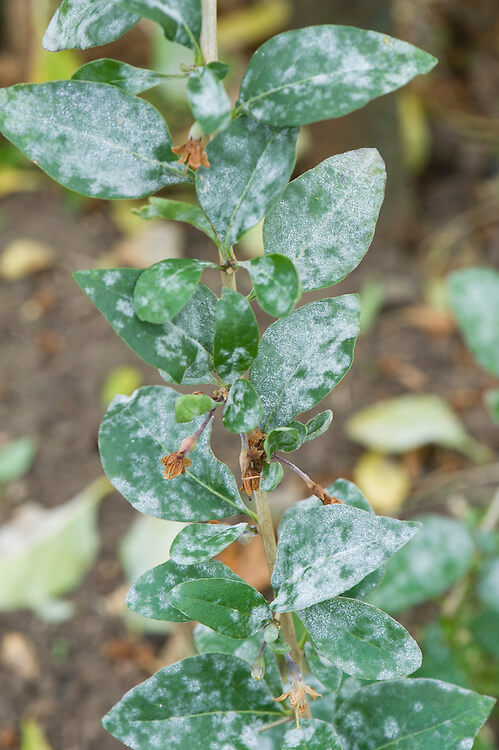
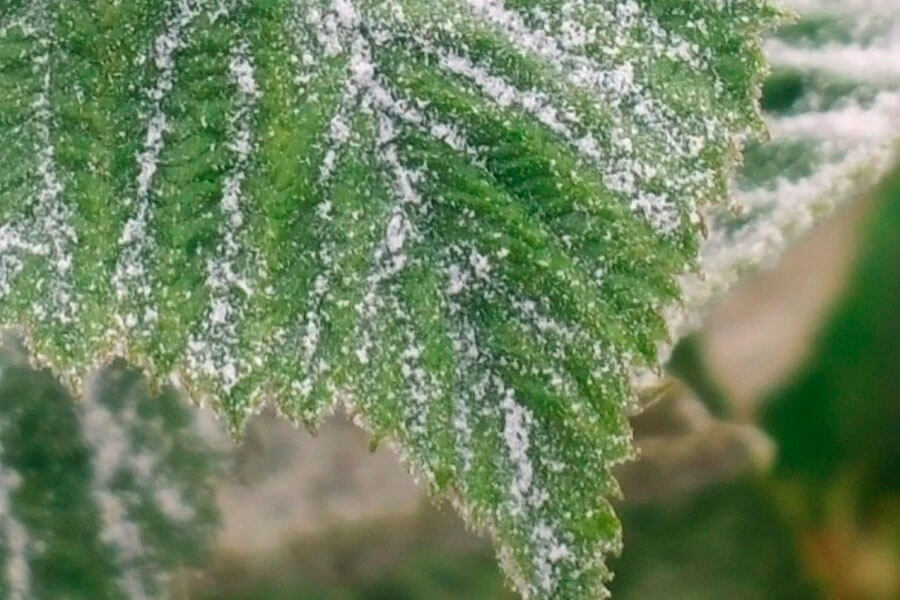
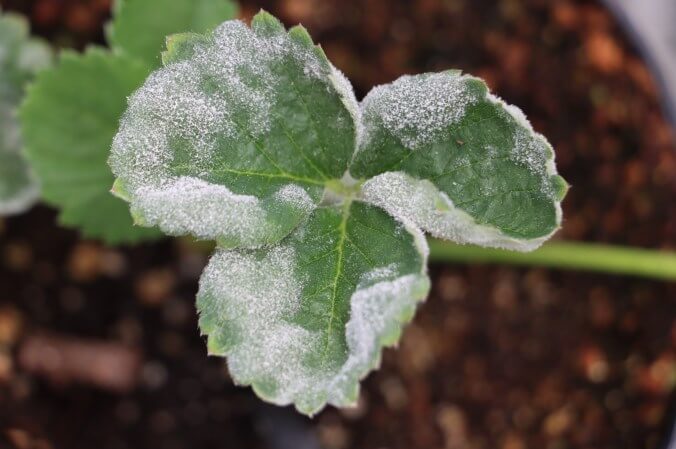
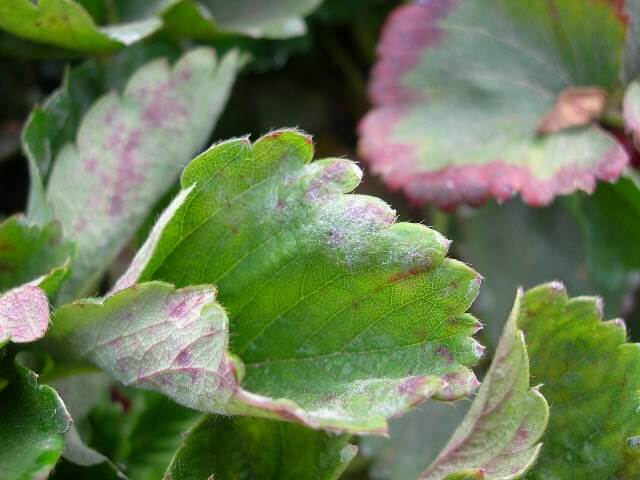
Powdery mildew caused by Sphaerotheca macularis f.sp. fragariae in berries manifests itself as a white powder on the surface of the leaves, stems and fruits, affecting photosynthesis and the normal development of the plant. Symptoms begin with small chlorotic Taches that quickly become covered with a white layer of mycelium and conidia, leading to deformation and necrosis of the affected tissues.
- Appearance of a white powder on leaves, stems and fruits
- Chlorotic Taches that become necrotic
- Deformation of leaves and fruits
- Delayed plant growth
- Loss of vigor and productivity
- Reduction in the quality and appearance of the fruits
- Premature death of severely affected leaves


DEVELOPMENT CONDITIONS
Temperature:
15-25°C
Humidity:
70-90%

HOW IS IT SPREAD?
Wind, contaminated tools, physical contact with infected plants, infected plant remains

HOW TO ELIMINATE IT?
Home treatments
There are no home treatments
Natural allies
Chemical treatments
There are no treatments for this disease. Treatments are directed at the insect vectors that transmit it. See insect treatments.
RECOMMENDED PRODUCTS TO ELIMINATE THE PEST
Sponsored link

Sponsored link


Sponsored link
Sponsored link
Sponsored link


Sponsored link
Sponsored link
Effective against all types of fungi

Sponsored link


Sponsored link
Sponsored link

Sponsored link


Sponsored link

REPELLENT PLANTS

RECOMMENDATIONS
OTHER PESTS THAT MAY INTEREST YOU


DID YOU LIKE IT?
Now you can always have it on your mobile, without ads and totally FREE. TRY idMicrobe NOW!


