

Ácaros
Mites
Panonychus Ulmi
Pathogen:
Insect
Type:
Risk to the plant:
HIGH

DESCRIPTION
WHO CAUSES IT?
Panonychus ulmi, commonly known as the European red mite, is a phytophagous mite belonging to the Tetranychidae family. Adults are bright red and approximately 0.5 mm in length. Females deposit their eggs on the surface of the leaves, preferably at the base of the hairs on the underside of the leaf. The eggs are orange-red and hatch within a few days, releasing six-legged larvae. These larvae go through two nymphal phases before becoming adults, the protonymph and deutymph phases, each separated by a brief period of inactivity called the quiescence phase. Under favorable conditions, the entire cycle from egg to adult can be completed in about two weeks, allowing several generations to exist in a single growing season. Mites feed by sucking the cellular contents of leaves, causing visible damage to plants.
SYMPTOMS
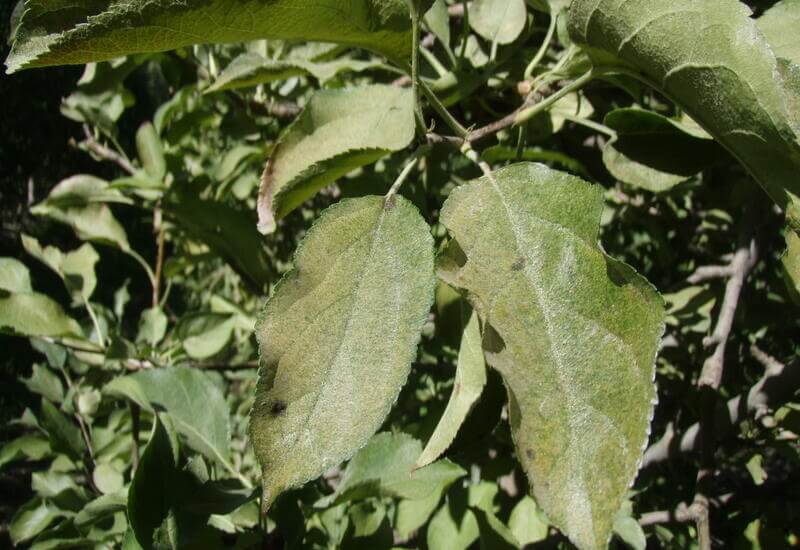
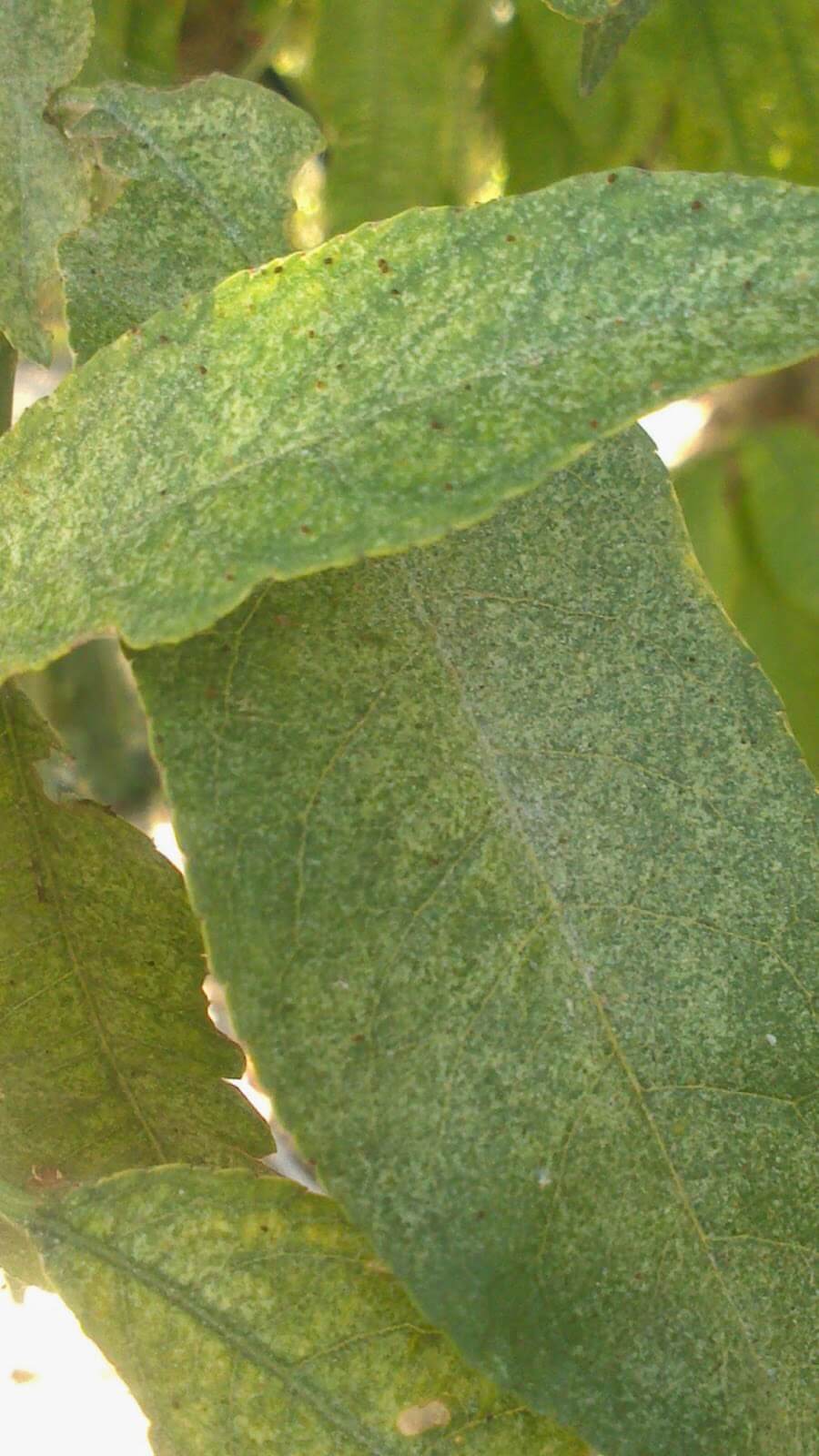
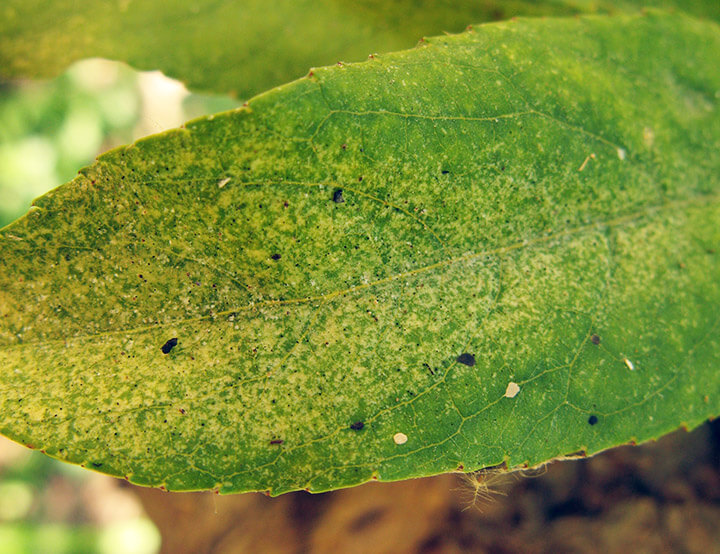
In peach, peach or nectarine, the presence of Panonychus ulmi causes a disease characterized by a general weakening of the plant and a reduction in its photosynthetic capacity. The mites suck the sap from the leaves, leaving chlorotic Taches that turn brown over time. This feeding activity can lead to premature desiccation and defoliation of the leaves, affecting the quality and quantity of the harvest.
- Chlorotic Taches on the leaves
- Discoloration and browning of leaves
- Drying and premature leaf fall
- Reduction in the size and quality of the fruits
- Decrease in photosynthetic activity
- Fine cobwebs on the surface of the leaves
- General weakening of the plant and lower crop yield


TEMPERATURE AND HUMIDITY
20-30°C
40-70%

HOW IS IT SPREAD?
Wind, movement of infected plant material, contaminated tools, direct contact between infested and healthy plants

HOW TO REMOVE IT?
Home remedies
There are no home treatments
Chemical treatments
• RAPE OIL 1.69% ( ) [AL] P/V
• RAPE OIL 77.7% [EC] P/V
• ORANGE OIL 60g/L [ME] P/S
• PARAFFIN OIL (CAS [64742-46-7]) 79% [EC] P/V
• PARAFFIN OIL (CAS [64742-46-7]) 80% [EC] P/V
• PARAFFIN OIL (CAS [8042-47-5]) 54.6% [EW] P/V
• PARAFFIN OIL (CAS [8042-47-5]) 79% [EC] P/V
• PARAFFIN OIL (CAS [97862-82-3]) 40% [EW] P/V
• PARAFFIN OIL (CAS [97862-82-3]) 80% [EC] P/V
• Paraffin oil 65.4% [EW] P/V
• PARAFFIN OIL 81.7% [EC] P/V
• PARAFFIN OIL 83% [EC] P/V
• ACEQUINOCIL 16.4% [SC] P/V
• SULFUR 70% [SC] P/V
• SULFUR 72% [SC] P/V
• SULFUR 80% [SC] P/V
• SULFUR 80% [WG] P/P
• SULFUR 80% [WP] P/P
• ALUMINUM PHOSPHIDE 56% (0.6 G/TABLET) [GE] P/P
• ALUMINUM PHOSPHIDE 56% (3 G/TABLET) [GE] P/P
• ALUMINUM PHOSPHIDE 56% [GE] P/P
• LAMBDA CYHALOTHRIN 10% [CS] P/V
• POTASSIUM SALTS OF FATTY ACIDS C14-C20 48% [EW] P/V
• SPIROTETRAMAT 10% [SC] P/V
• TAU-FLUVALINATE 24% [EW] P/V
Authorized treatments in organic farming
• RAPE OIL 1.69% ( ) [AL] P/V
• RAPE OIL 77.7% [EC] P/V
• ORANGE OIL 60g/L [ME] P/S
• PARAFFIN OIL (CAS [64742-46-7]) 79% [EC] P/V
• PARAFFIN OIL (CAS [64742-46-7]) 80% [EC] P/V
• PARAFFIN OIL (CAS [8042-47-5]) 54.6% [EW] P/V
• PARAFFIN OIL (CAS [8042-47-5]) 79% [EC] P/V
• PARAFFIN OIL (CAS [97862-82-3]) 40% [EW] P/V
• PARAFFIN OIL (CAS [97862-82-3]) 80% [EC] P/V
• Paraffin oil 65.4% [EW] P/V
• PARAFFIN OIL 81.7% [EC] P/V
• PARAFFIN OIL 83% [EC] P/V
• SULFUR 70% [SC] P/V
• SULFUR 72% [SC] P/V
• SULFUR 80% [SC] P/V
• SULFUR 80% [WG] P/P
• SULFUR 80% [WP] P/P
• LAMBDA CYHALOTHRIN 10% [CS] P/V
• POTASSIUM SALTS OF FATTY ACIDS C14-C20 48% [EW] P/V
Insect allies
PREDATORY MITES
LADYBUGS
LACEWINGS
PARASITIC WASPS
HOVERFLIES OR PARASITIC FLIES
PREDATORY BUGS
There are no natural allies
Mycodiplosis oidii (predatory mosquito)
EFFECTIVE PRODUCTS TO ELIMINATE THIS DISEASE
Sponsored link
Sponsored link


Sponsored link
Sponsored link
Sponsored link


Sponsored link
Sponsored link
Effective against all types of fungi

Sponsored link


Sponsored link
Sponsored link

Sponsored link


Sponsored link
- Regularly monitor crops to detect the presence of mites early.
- Use sticky traps to capture and monitor mite populations.
- Apply horticultural oils and insecticidal soaps to reduce mite populations.
- Encourage the presence of natural enemies such as predatory mites and lacewings.
- Avoid excessive use of nitrogen fertilizers that can favor the reproduction of mites.
- Maintain good garden hygiene by eliminating plant debris and weeds that may serve as shelter.
- Carry out adequate irrigation to avoid water stress on plants, which makes them more vulnerable.
- Implement integrated pest management (IPM) techniques to reduce dependence on chemicals.
- Apply specific acaricides at critical moments in the pest cycle.
- Rotate phytosanitary products to avoid the development of resistance.
Recommendations

Enjoy idMicrobe TOTALLY FREE, with no trial periods.


