

Mosca blanca
White Fly
Bemisia Tabaci
Pathogen:
Insect
Type:
Risk to the plant:
HIGH
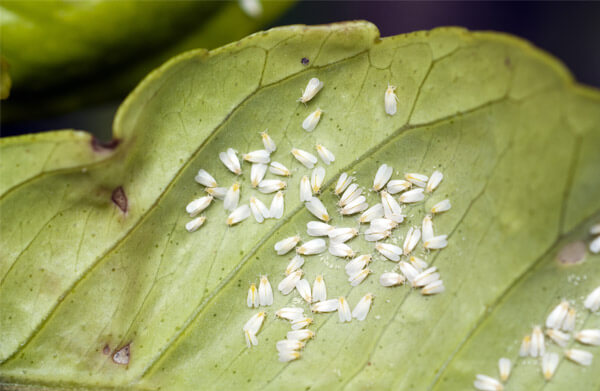
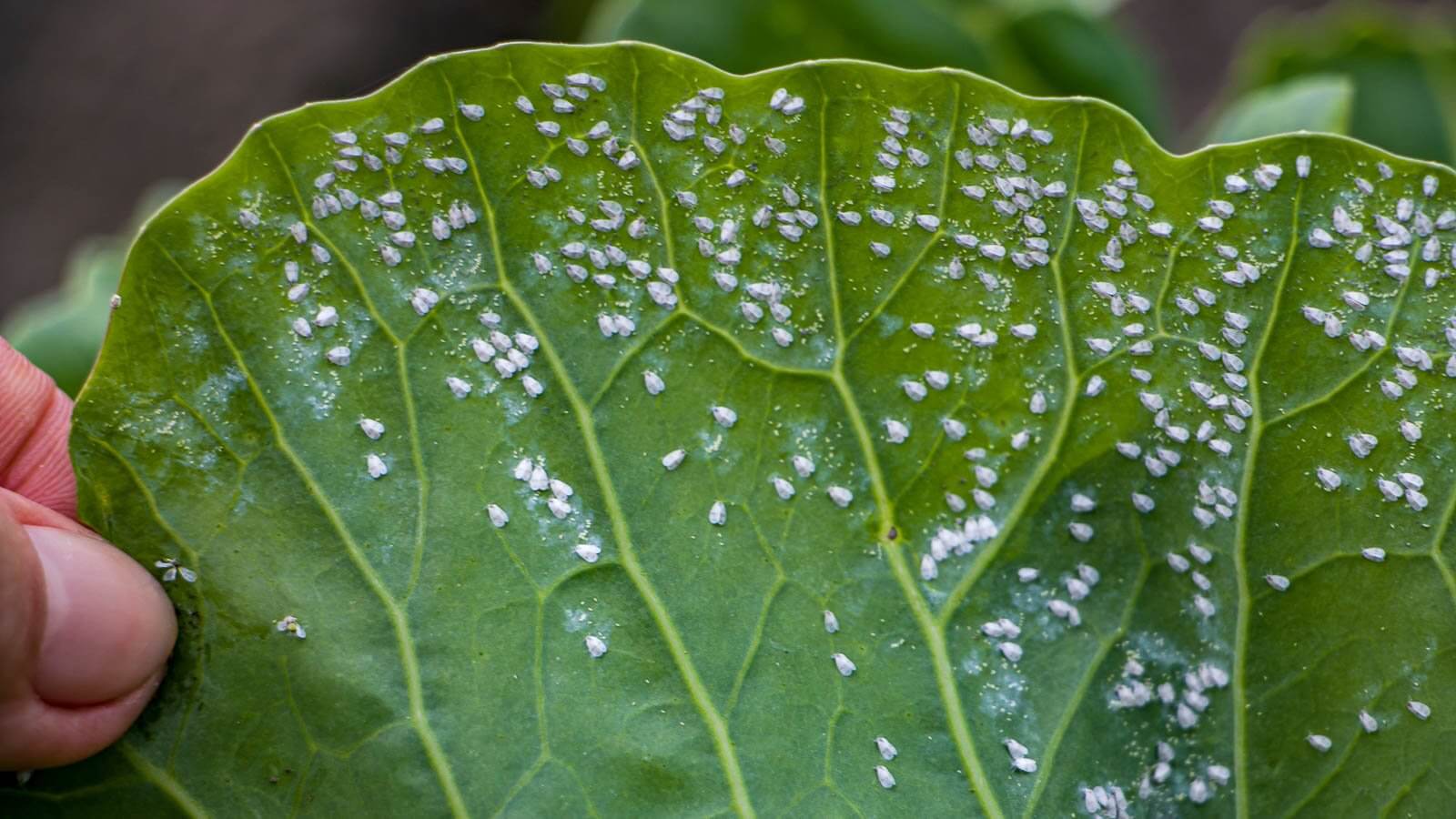

DESCRIPTION
WHO CAUSES IT?
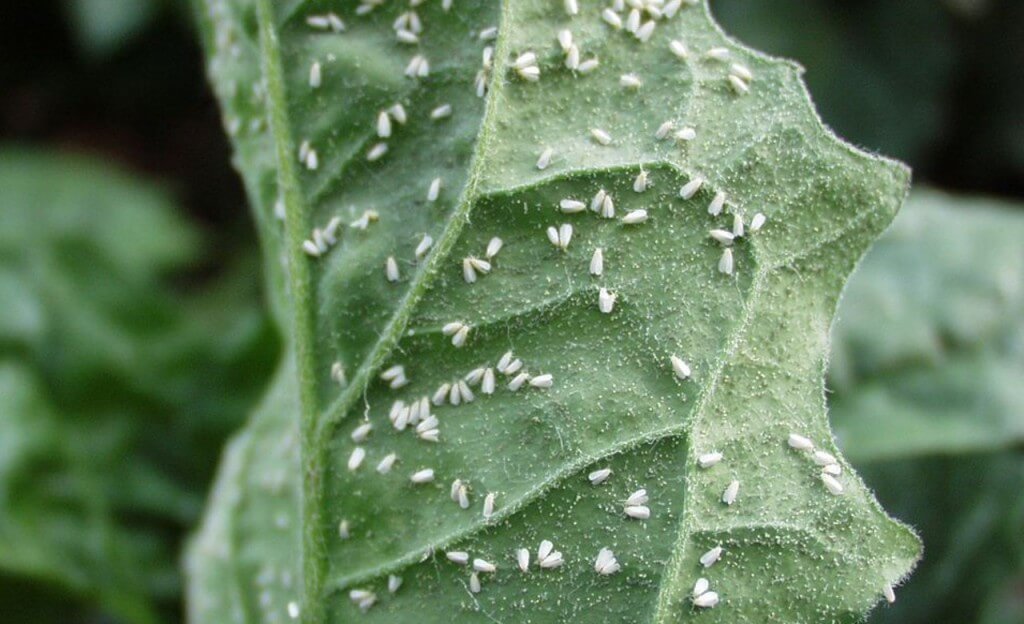
Bemisia tabaci, commonly known as whitefly, is a small insect that belongs to the Aleyrodidae family. Its cycle begins when adult females deposit eggs on the underside of plant leaves. After a few days, the eggs hatch and release the first instar nymphs, which are mobile and look for a suitable place to feed. These nymphs, once settled, become immobile and go through several larval stages until they reach the pupal stage. During this phase, they remain attached to the leaves, feeding on plant sap using a stinging-sucking mouthpart. Finally, they emerge as adults, continuing to reproduce. The life of an adult can extend from 2 to 4 weeks, and females can lay between 150 and 300 eggs throughout their life, depending on weather conditions. The ability of *Bemisia tabaci* to reproduce quickly and its resistance to different environmental conditions give it a high infestation capacity.
SYMPTOMS
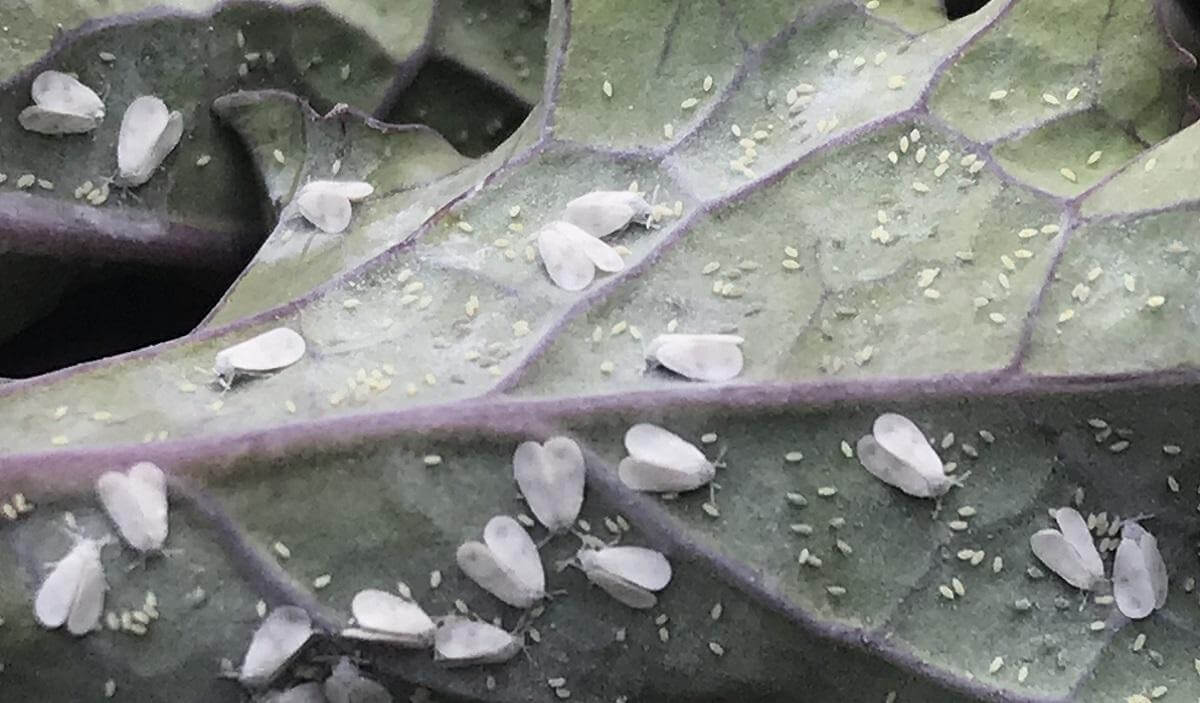
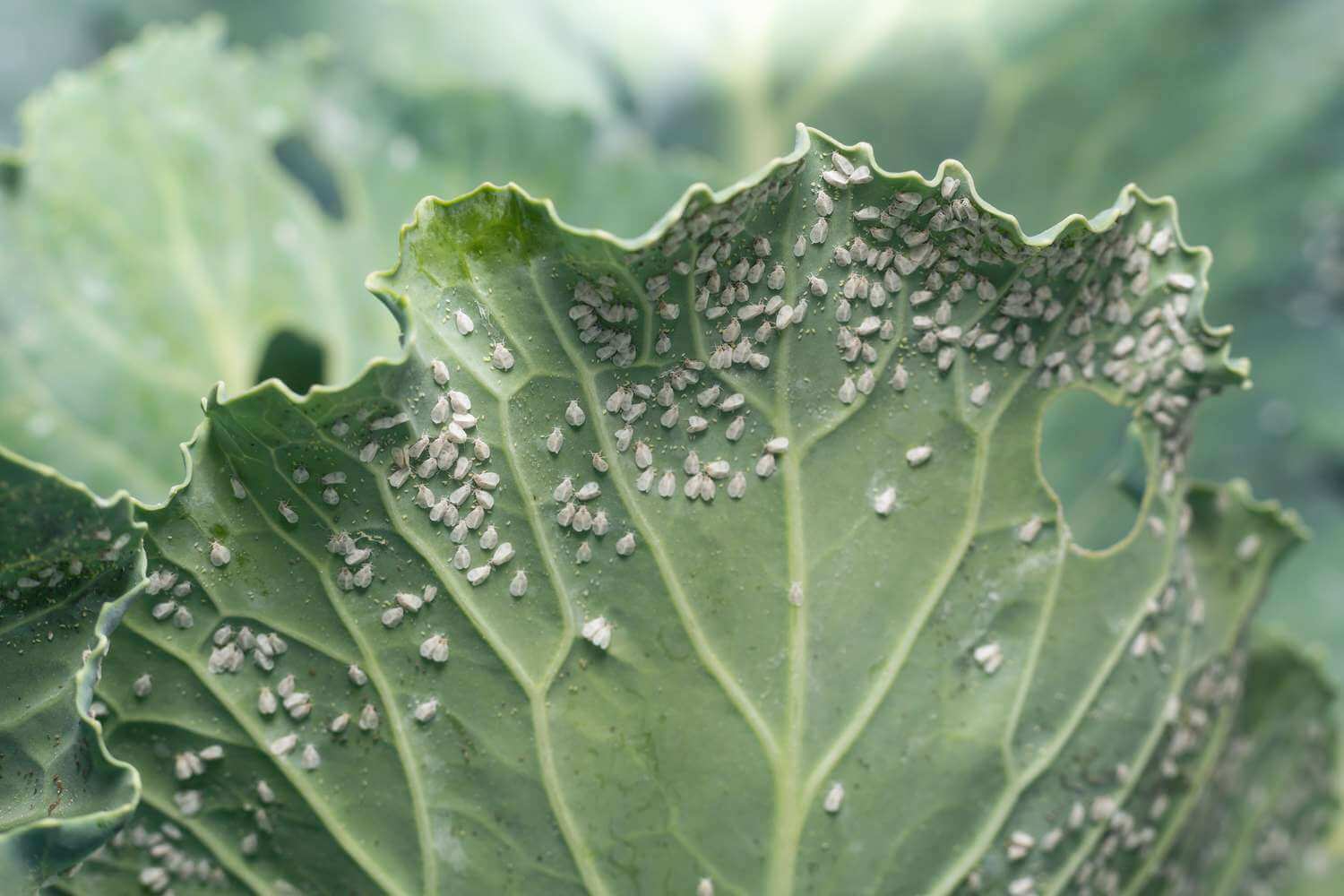
The whitefly causes considerable damage to lettuce and similar crops by feeding on plant sap, which can reduce their vigor and photosynthetic capacity. In addition, this insect secretes a sticky substance called honeydew, which promotes the appearance of sooty mold, a black fungus that covers the leaves, further reducing photosynthesis and depreciating the commercial value of crops.
- General weakening of the plant due to loss of sap.
- Appearance of yellow Taches on the leaves due to feeding by the nymphs.
- Development of sooty mold on the molasses excreted by insects.
- Delay in plant growth.
- Deformation or premature fall of the affected leaves.
- Transmission of plant viruses, such as the mosaic virus.

TEMPERATURE AND HUMIDITY
20-30°C
50-70%

HOW IS IT SPREAD?
Wind, infested plants, contaminated tools, infected transplants, flight of adults, spread by workers' clothing and shoes

HOW TO REMOVE IT?
Home remedies
There are no home treatments
Chemical treatments
• ABAMECTIN 0.0015% + PYRETHRINS 0.02% [AL] P/V
• RAPE OIL 1.53% [AL] P/V
• RAPE OIL 848.24 g/l [EC] P/V
• ORANGE OIL 6% [SL] P/V
• ORANGE OIL 60g/L [ME] P/S
• ACETAMIPRID 0.5% [SL] P/V
• ACETAMIPRID 20% [SG] P/P
• ACETAMIPRID 20% [SL] P/V
• ACETAMIPRID 20% [SP] P/P
• AZADIRACTIN 1% (AS AZADIRACTIN A) [EC] P/V
• Azadirachtin 2.6% (AS AZADIRACTIN A) [EC] P/V
• CYANTRANILIPROL 10% + ACIBENZOLAR-S-METHYL 1.25% [SC] P/V
• DELTAMETHRIN 1.5% [EW] P/V
• DELTAMETHRIN 1.57% [SC] P/V
• DELTAMETHRIN 10% [EC] P/V
• DELTAMETHRIN 2.5% [EC] P/V
• DELTAMETHRIN 2.5% [EW] P/V
• FLUPIRADIFURONE 0.008% [AL] P/V
• FLUPYRADIFURONE 20% [SL] P/V
• LAMBDA CYHALOTHRIN 0.0015% [ME] P/V
• LAMBDA CYHALOTHRIN 1.5% [CS] P/V
• LAMBDA CYHALOTHRIN 10% [CS] P/V
• LAMBDA CYHALOTHRIN 2.5% [WG] P/P
• LAMBDA CYHALOTHRIN 5% [EG] P/P
• PYRETHRINS 2% (PYRETHRE EXTR.) [EC] P/V
• PYRETHRINS 2% [EC] P/V
• PYRETHRINS 4% (PYRETHHRINE EXTR.) [EC] P/V
• PYRETHRINS 4% [EC] P/V
• POTASSIUM SALTS OF FATTY ACIDS C14-C20 48% [EW] P/V
• SPIROTETRAMAT 10% [SC] P/V
• SPIROTETRAMAT 15% [OD] P/V
• ADHESIVE TRAPS
• CHROMATIC TRAPS
Authorized treatments in organic farming
• RAPE OIL 1.53% [AL] P/V
• RAPE OIL 848.24 g/l [EC] P/V
• ORANGE OIL 6% [SL] P/V
• ORANGE OIL 60g/L [ME] P/S
• AZADIRACTIN 1% (AS AZADIRACTIN A) [EC] P/V
• Azadirachtin 2.6% (AS AZADIRACTIN A) [EC] P/V
• LAMBDA CYHALOTHRIN 0.0015% [ME] P/V
• LAMBDA CYHALOTHRIN 1.5% [CS] P/V
• LAMBDA CYHALOTHRIN 10% [CS] P/V
• LAMBDA CYHALOTHRIN 2.5% [WG] P/P
• LAMBDA CYHALOTHRIN 5% [EG] P/P
• PYRETHRINS 2% (PYRETHRE EXTR.) [EC] P/V
• PYRETHRINS 2% [EC] P/V
• PYRETHRINS 4% (PYRETHHRINE EXTR.) [EC] P/V
• PYRETHRINS 4% [EC] P/V
• POTASSIUM SALTS OF FATTY ACIDS C14-C20 48% [EW] P/V
• ADHESIVE TRAPS
• CHROMATIC TRAPS
Insect allies
PREDATORY MITES
LADYBUGS
LACEWINGS
PARASITIC WASPS
HOVERFLIES OR PARASITIC FLIES
PREDATORY BUGS
There are no natural allies
Mycodiplosis oidii (predatory mosquito)
EFFECTIVE PRODUCTS TO ELIMINATE THIS DISEASE
Sponsored link

Sponsored link


Sponsored link
Sponsored link
Sponsored link


Sponsored link
Sponsored link
Effective against all types of fungi

Sponsored link


Sponsored link
Sponsored link

Sponsored link


Sponsored link
- Install yellow chromatic traps in crops to attract and capture *Bemisia tabaci* adults.
- Carry out periodic inspections on the leaves, mainly on the underside, to detect eggs and nymphs in the initial stages of infestation.
- Promote the presence of natural predators such as parasitoid wasps of the genus *Encarsia* and *Eretmocerus*, which biologically control the pest.
- Use anti-insect meshes in greenhouses to prevent the entry of adults.
- Apply potassium soap or insecticidal oils to eliminate the nymphs attached to the leaves, limiting their ability to feed and develop.
- Alternate insecticides with different modes of action to avoid the emergence of resistance in whitefly populations.
- Avoid excessive use of nitrogen fertilizers, as they favor the growth of young tissues that are more vulnerable to the pest.
- Implement crop rotation programs to interrupt the insect life cycle and reduce infestation pressure in successive crops.
Recommendations

Enjoy idMicrobe TOTALLY FREE, with no trial periods.


