

Deficiencia de Potasio
Potassium Deficiency
-
Pathogen:
Nutritional disorder
Type:
Risk to the plant:
INTERMEDIATE

DESCRIPTION
WHO CAUSES IT?
Potassium deficiency is a physiological and nutritional disorder caused by insufficient potassium availability to meet the crop's needs. Potassium is an essential macronutrient involved in regulating water balance, stomatal opening and closing, activating numerous enzymes, transporting sugars and other photoassimilates, protein synthesis, and regulating cell osmotic pressure. Unlike structural nutrients such as calcium, potassium is highly mobile within the plant and can be redistributed from older tissues to younger or high-demand organs when a deficiency exists. For this reason, the first symptoms usually appear in mature leaves, while the consequences for fruit are especially evident when the deficiency coincides with periods of rapid growth and sugar accumulation. Potassium absorption occurs primarily through the roots and depends on its concentration in the soil solution, moisture, temperature, root activity, and the soil's physical and chemical characteristics. Sandy, highly leached soils, or soils with low cation exchange capacity may exhibit reduced potassium retention. Furthermore, high concentrations of calcium, magnesium, or certain fertilizers can create imbalances that hinder its absorption. Drought, excess water, soil compaction, or any significant alteration of the root system can also reduce the effective availability of this nutrient. In fruits, potassium is especially important during growth and ripening, as it participates in the transport and accumulation of sugars, the regulation of water content, and the formation of tissues with adequate firmness. Therefore, a persistent deficiency can reduce fruit size, alter quality, and hinder uniform ripening. There is no infection, reproduction, or spread of a causal organism; rather, it is a nutritional imbalance whose occurrence and severity depend on potassium availability, root absorption capacity, and environmental and growing conditions.
SYMPTOMS
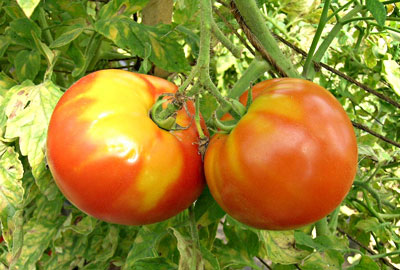
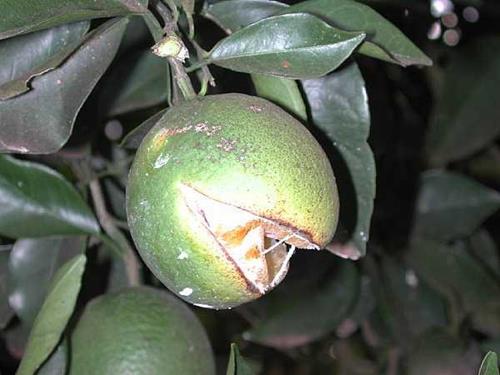
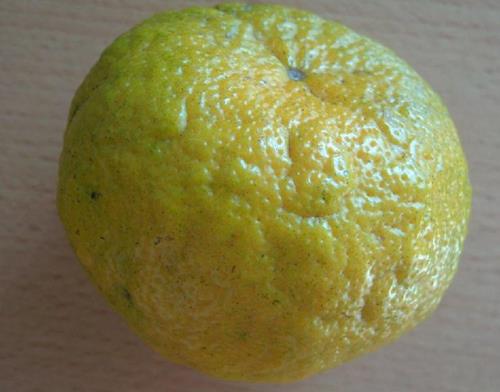
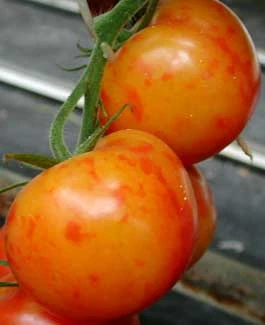
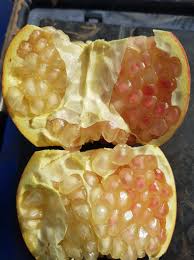
Potassium deficiency in fruit can cause alterations in its growth, ripening, firmness, color, and quality. The severity of the symptoms depends on the species, variety, duration of the deficiency, and when it occurs. When potassium supply is insufficient during the growth and ripening phases, fruit may develop below its usual size and exhibit insufficient accumulation of sugars and other quality-related compounds. Uneven ripening may also occur, with color variations between different areas of the fruit, reduced firmness, and inferior organoleptic qualities. In some species, deformed or unevenly developed fruit may appear, especially when the deficiency is severe and prolonged. Impaired water balance regulation can also lead to a loss of turgor and increased sensitivity to stress. Potassium deficiency can also reduce the overall resistance of tissues and increase the crop's susceptibility to certain environmental factors and diseases, although these consequences do not, in themselves, constitute an infectious disease. Small fruit / Deformation / Uneven ripening / Uneven coloring / Loss of firmness / Dehydration / Uneven fruit development / Reduced quality

TEMPERATURE AND HUMIDITY
-
-

HOW IS IT SPREAD?
-

HOW TO REMOVE IT?
Home remedies
There are no home treatments
Chemical treatments
• SOLUBLE POTASSIUM FERTILIZERS: Potassium sulfate, potassium chloride; rapid absorption through soil or fertigation.
• CONTROLLED-RELEASE/ENCAPSULATED FERTILIZERS: Gradual release, ideal for long-cycle crops.
• ORGANIC FERTILIZERS + POTASSIUM: Compost, humus, plant ash; improve fertility and organic matter.
• FERTILIZERS WITH AMINO ACIDS + POTASSIUM: Rapid absorption through foliar application or fertigation, with added micronutrients.
Authorized treatments in organic farming
• SOLUBLE POTASSIUM FERTILIZERS: Potassium sulfate, potassium chloride; rapid absorption through soil or fertigation.
• CONTROLLED-RELEASE/ENCAPSULATED FERTILIZERS: Gradual release, ideal for long-cycle crops.
• ORGANIC FERTILIZERS + POTASSIUM: Compost, humus, plant ash; improve fertility and organic matter.
• FERTILIZERS WITH AMINO ACIDS + POTASSIUM: Rapid absorption through foliar application or fertigation, with added micronutrients.
Insect allies
PREDATORY MITES
LADYBUGS
LACEWINGS
PARASITIC WASPS
HOVERFLIES OR PARASITIC FLIES
PREDATORY BUGS
There are no natural allies
Mycodiplosis oidii (predatory mosquito)
EFFECTIVE PRODUCTS TO ELIMINATE THIS DISEASE
Sponsored link

Sponsored link
Sponsored link
Sponsored link
Sponsored link
Sponsored link
Sponsored link
Sponsored link
Sponsored link
Sponsored link


Sponsored link
Sponsored link
Effective against all types of fungi

Sponsored link
Sponsored link
Sponsored link
Sponsored link
Sponsored link
Sponsored link
Sponsored link
Sponsored link


Sponsored link
Sponsored link

Sponsored link
Sponsored link
Sponsored link
Sponsored link
Sponsored link
Sponsored link
Sponsored link
Sponsored link


Sponsored link
Sponsored link
Sponsored link
Sponsored link
Sponsored link
Sponsored link
Sponsored link
Sponsored link
Sponsored link
Sponsored link


Sponsored link
• Conduct a soil analysis when potassium deficiency is suspected to determine its actual availability before increasing fertilizer doses.
• Maintain balanced fertilization adapted to the specific needs of the crop and its stage of development.
• Apply potassium fertilizers when analyses indicate insufficient availability and the crop has a high demand.
• Adjust potassium doses considering the crop's expected uptake and the anticipated yield.
• Avoid excessive potassium applications, as a high application rate can cause imbalances with other nutrients, especially calcium and magnesium.
• Split potassium applications when soil characteristics or crop needs make gradual release advisable.
• Maintain relatively stable soil moisture to promote continuous potassium uptake by the roots.
• Avoid prolonged periods of drought that reduce root activity and hinder nutrient absorption.
• Also avoid prolonged waterlogging, which can reduce soil oxygenation and impair root function.
• Improve drainage where water frequently accumulates around the root system.
• Avoid soil compaction and promote a structure that allows for adequate root expansion and activity.
• Maintain a healthy and active root system, preventing damage during transplanting, cultivation, or work around the plants.
• Pay special attention to sandy soils or soils with low cation exchange capacity, where potassium can be lost more easily.
• Avoid excessive irrigation, which can promote potassium leaching, especially in light soils.
• Maintain adequate levels of organic matter to improve soil structure and nutrient retention capacity.
• Monitor for potential imbalances between potassium, calcium, and magnesium that could interfere with the absorption of these nutrients.
• Avoid excessive nitrogen fertilization, which leads to excessive vegetative growth and increases the crop's nutritional requirements. • Ensure an adequate supply of potassium during periods of peak demand, especially during fruit growth and ripening.
• Use potassium sources appropriate to the soil characteristics, avoiding those that unnecessarily increase salinity when it is a problem.
• Monitor the electrical conductivity of the soil or nutrient solution in intensively fertilized crops.
• Periodically observe the size, color, firmness, and uniformity of the fruit to detect any nutritional deficiencies early.
• Supplement soil analysis with foliar analysis when necessary to confirm the plant's nutritional status.
• Correct any irrigation, drainage, or root problems that may be hindering potassium absorption before increasing fertilizer doses.
• Remove severely affected fruit once it has lost its commercial value and correct the underlying nutritional conditions.
Recommendations

Enjoy idMicrobe TOTALLY FREE, with no trial periods.


