top of page
Recognize and eliminate pests and diseases from your plants with idMicrobe

The Guide to Caring for Your Plants

Learn to recognize pests and how to combat them

Guide to plant diseases and professional and home treatments - IdMicrobe

The Guide to Caring for Your Plants

Learn to recognize pests and how to combat them

Psilas

Asian citrus psyllid: what it is, how it originates, and how to effectively eliminate it.

Asian Citrus Psyllid

Diaphorina Citri

Pathogen:

Insect

Type:

Risk to the plant:

CRITICAL
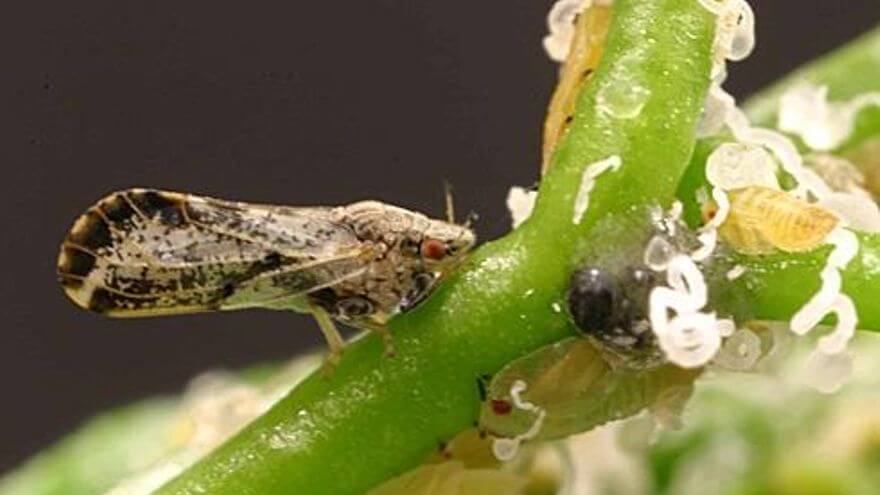
Asian citrus psyllid: what it is, how it originates, and how to effectively eliminate it.
Asian citrus psyllid on orange trees | idMicrobe
Glossary of diseases, pests, treatments, and plant tips - idMicrobe
1709890758744.png

DESCRIPTION

WHO CAUSES IT?

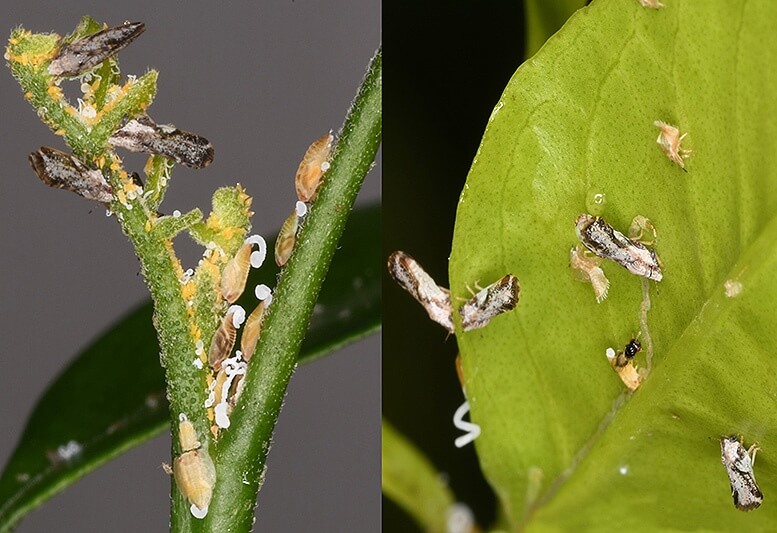
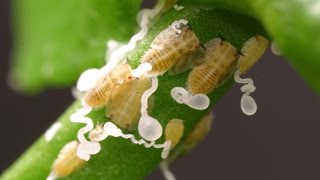
Diaphorina citri, known as the Asian citrus psyllid, is a small insect that belongs to the Psyllidae family. This insect goes through several stages from egg to adult. Adult females lay their eggs in the young shoots of citrus trees. The eggs hatch in about a week, giving rise to nymphs that go through five nymphal stages before becoming adults. The nymphs feed on the phloem of young leaves, causing the production of a sticky substance known as honeydew, which can encourage the growth of sooty molds. Adults are winged and can fly, thus facilitating the dispersal of the insect and the infection of new plants. This cycle can repeat several times a year, depending on environmental conditions, especially temperature and the availability of tender shoots on the host plants.

SYMPTOMS

The Asian citrus psyllid is a vector of huanglongbing (HLB), one of the most destructive diseases of orange trees. This insect, when feeding, transmits the bacteria Candidatus Liberibacter asiaticus, which causes HLB. The disease severely affects plant development and fruit quality, leading to significant loss of productivity.

- Leaves with asymmetrical mottling and yellowing.
- Young shoots with poor growth.
- Deformed and smaller fruits.
- Fruits with a bitter or metallic taste.
- Premature loss of fruits.
- Progressive death of branches and shoots.
- Presence of sooty molds due to the honeydew produced by the nymphs.
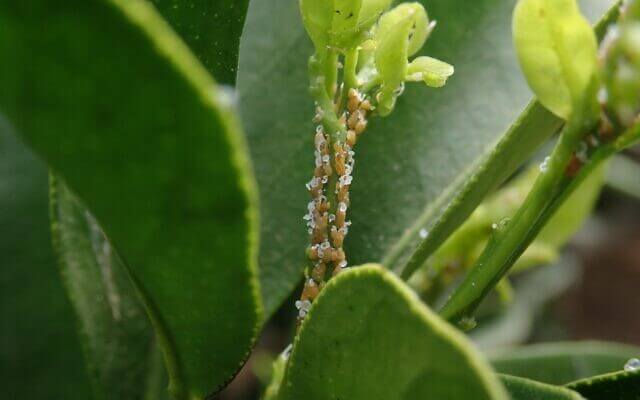
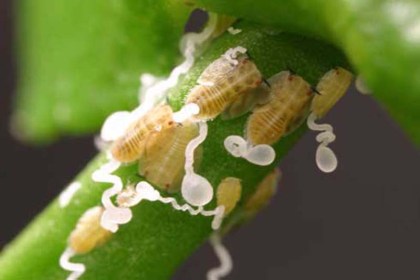
Asian Citrus Psyllid: Symptoms and Damage in Orange Trees
Damage caused by the Asian Citrus Psyllid in orange trees
Asian Citrus Psyllid in Orange Trees: How to Recognize and Treat It Effectively
Guide to plant diseases and professional and home treatments - IdMicrobe
1709890758650.png

TEMPERATURE AND HUMIDITY

25-28°C

60-80%

1709890758697.png

HOW IS IT SPREAD?

Insect vectors, infected plant grafts, infected plant material

1709890758673.png

HOW TO REMOVE IT?

Home remedies

POTASSIUM SOAP AND NEEM OIL SOLUTION

POTASSIUM SOAP SOLUTION + NEEM OIL + DIATOMACEOUS EARTH

BAKING SODA AND NEUTRAL SOAP SOLUTION

GARLIC INFUSION WITH NEUTRAL SOAP

CHROMATIC OR ADHESIVE TRAPS

DILUTED MILK

HORSETAIL INFUSION

TRUNK WHITEWASHING

DIATOMACEOUS EARTH

WOOD ASH

NETTLE SLURRY

CUT THE AFFECTED BRANCHES AND APPLY CINNAMON

GARLIC AND CINNAMON INFUSION

INFUSION OF WORMWOOD, CHILI OR CHILLI

CLEAN THE AFFECTED AREA AND APPLY ASH PASTE WITH GARLIC OR CINNAMON

GARLIC AND MINT INFUSION

LIGHT TRAPS

APPLY CINNAMON POWDER

PITFALL TRAPS

CRUSHED EGG SHELLS

CLEAN AND SEAL THE WOUND WITH CLAY, CINNAMON AND GARLIC PASTE

GARLIC INFUSION

MATURE COMPOST

TRAPS WITH VINEGAR AND SOAP

SEAL HOLES WITH ASH PASTE AND CRUSHED GARLIC

VINEGAR AND BAKING SODA SOLUTION

ANT TRAP

TAPE TRAP

PHEROMONE TRAP

ALCOHOL TRAPS

FUNNEL TRAP

There are no home treatments

Chemical treatments

• PYRIPROXIFEN 10% [EC] P/V
• ORANGE OIL 60g/L [ME] P/S

Authorized treatments in organic farming

• ORANGE OIL 60g/L [ME] P/S

Insect allies

PREDATORY MITES

LADYBUGS

LACEWINGS

PARASITIC WASPS

HOVERFLIES OR PARASITIC FLIES

PREDATORY BUGS

There are no natural allies

Mycodiplosis oidii (predatory mosquito)

EFFECTIVE PRODUCTS TO ELIMINATE THIS DISEASE

Sponsored link

Sponsored link

Sponsored link

Sponsored link

Insecticidal soap

Insecticidal soap

Home treatment. Eco-friendly

Sponsored link

Bacillus Thuringiensis BT Organic Worm & Caterpillar Control

Bacillus Thuringiensis BT Organic Worm & Caterpillar Control

Eco-friendly. Respectful of animals, the environment, and people.

Sponsored link

Fruit fly traps

Fruit fly traps

Non-Toxic. Reusable. For indoor and outside

Sponsored link

Treatment against snails and slugs

Treatment against snails and slugs

Granulated bait, attractive, safe and fast.

Sponsored link

Sponsored link

Sponsored link

Sponsored link

Sponsored link

Sponsored link

Natural Pesticide, Fungicide, Miticide, Insecticide, Spider Mites, Powdery Mildew, Botrytis and Mold

Natural Pesticide, Fungicide, Miticide, Insecticide, Spider Mites, Powdery Mildew, Botrytis and Mold

100% ecological fungicide

Sponsored link

Nematodes - Biological Pest Control for Fungus Gnats, Thrips, & Whiteflies

Nematodes - Biological Pest Control for Fungus Gnats, Thrips, & Whiteflies

Biological Pest Control for Fungus Gnats, Thrips, & Whiteflies

Sponsored link

Light traps for insects

Light traps for insects

Solar trap for outside

Sponsored link

Sponsored link

Effective against all types of fungi

Sponsored link

Anti-ant adhesive tape

Anti-ant adhesive tape

Tree protection. Easy to use.

Sponsored link

Sponsored link

Sponsored link

Adhesive traps for insects

Adhesive traps for insects

For orchards, terraces and flower pots.

Sponsored link

Insecticide, fungicide, acaricide and nematicide spraying

Insecticide, fungicide, acaricide and nematicide spraying

100% organic. For indoor and outdoor use

Sponsored link

Lime for whitewashing

Lime for whitewashing

Insect Barrier/Repellent

Sponsored link

Fungus Gnat Killer & Bug Spray

Fungus Gnat Killer & Bug Spray

For outdoor and indoor use. Pet friendly

Sponsored link

Sponsored link

Sponsored link

Mature compost. Worm castings

Mature compost. Worm castings

100% Natural. Soil Restorative

Sponsored link

Sponsored link

Sponsored link

100% organic diatomaceous earth

100% organic diatomaceous earth

Natural insecticide against insects

Sponsored link

Beetle traps

Beetle traps

Ideal for ornamentals, flowers and shrubs.

Sponsored link

Trap for Tuta absoluta

Trap for Tuta absoluta

Attracts and traps tomato moths

Sponsored link

Snail and slug traps

Snail and slug traps

Ideal for orchards, gardens and pots.

Sponsored link

Copper-based fungicide - Curative and preventive

Copper-based fungicide - Curative and preventive

Effective against all types of fungi

Sponsored link

- Carry out regular and systematic monitoring of citrus crops to detect the presence of psyllids and HLB symptoms.
- Use selective insecticides and biological control with natural enemies of the psyllid, such as predators and parasitoids.
- Promote crop diversification and plant rotation to reduce dependence on citrus fruits and reduce insect pressure.
- Implement cultural practices that strengthen plant health, such as pruning infested shoots and eliminating infected plants.
- Use physical barriers and sticky traps to reduce the psyllid population in crops.
- Maintain integrated pest management (IPM) that combines chemical, biological and cultural methods for more effective control.
- Collaborate with agricultural extension programs and local communities to share knowledge and management strategies for psyllid and HLB.

Recommendations

Recognize and eliminate pests and diseases from your plants with idMicrobe

Enjoy idMicrobe TOTALLY FREE, with no trial periods.

button_google_play_EN.png
boton_mobile_Version_EN.jpg
bottom of page