


Escarabajos
Beetles: what they are, how they develop, and how to effectively eliminate them from fruit
Beetles
Different species
Pathogen:
Insect
Type:
Risk to the plant:
HIGH

DESCRIPTION
WHO CAUSES IT?
Plant-eating beetles comprise numerous species of Coleoptera capable of feeding on different parts of plants, including fruits. Depending on the species, they may belong to families such as Chrysomelidae, Curculionidae, Scarabaeidae, Nitidulidae, or Coccinellidae, although not all species in these groups are harmful. Adults typically feed directly on plant tissues, while larvae may develop in the soil, inside fruits, in roots, stems, or decaying plant matter, depending on the species. Females lay their eggs in suitable locations so that the larvae can find food immediately after hatching. After several larval stages, the larvae reach the pupal stage, and the adults subsequently emerge. Some species produce only one generation per year, while others can complete several generations when temperatures are favorable. Adults can move by flight between different plants and plots, facilitating the colonization of new crops. Some species can also survive unfavorable periods by taking refuge in the soil, plant debris, bark, organic matter, or other sheltered places. The activity of many beetles increases with moderate to high temperatures and the availability of food. Feeding injuries can appear on both young and mature fruit, and in addition to direct damage, these wounds can facilitate the entry of fungi and bacteria. The presence of ripe fruit, plant debris, and other food sources can encourage the persistence and reproduction of certain species within or around the crop.
SYMPTOMS
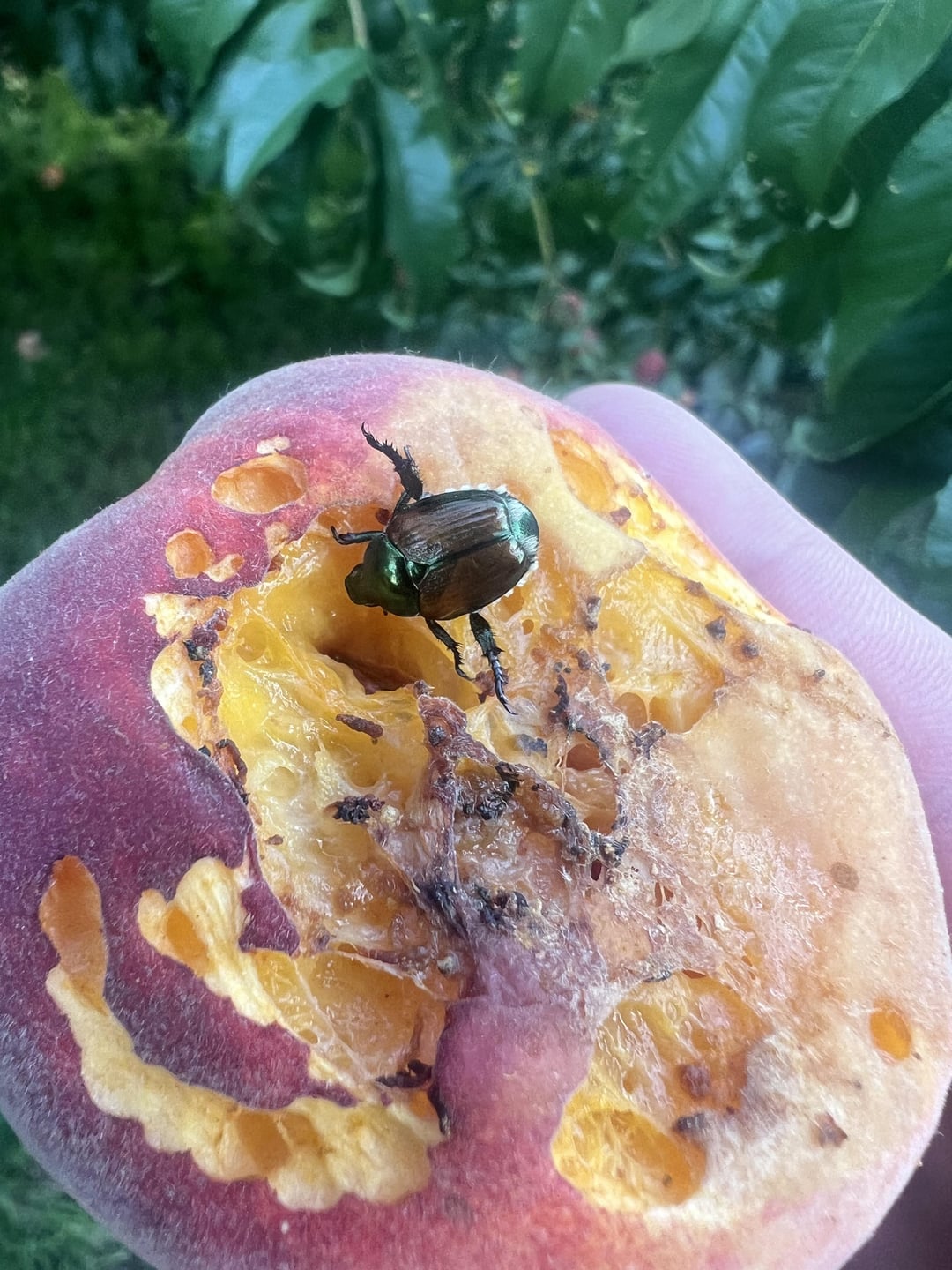
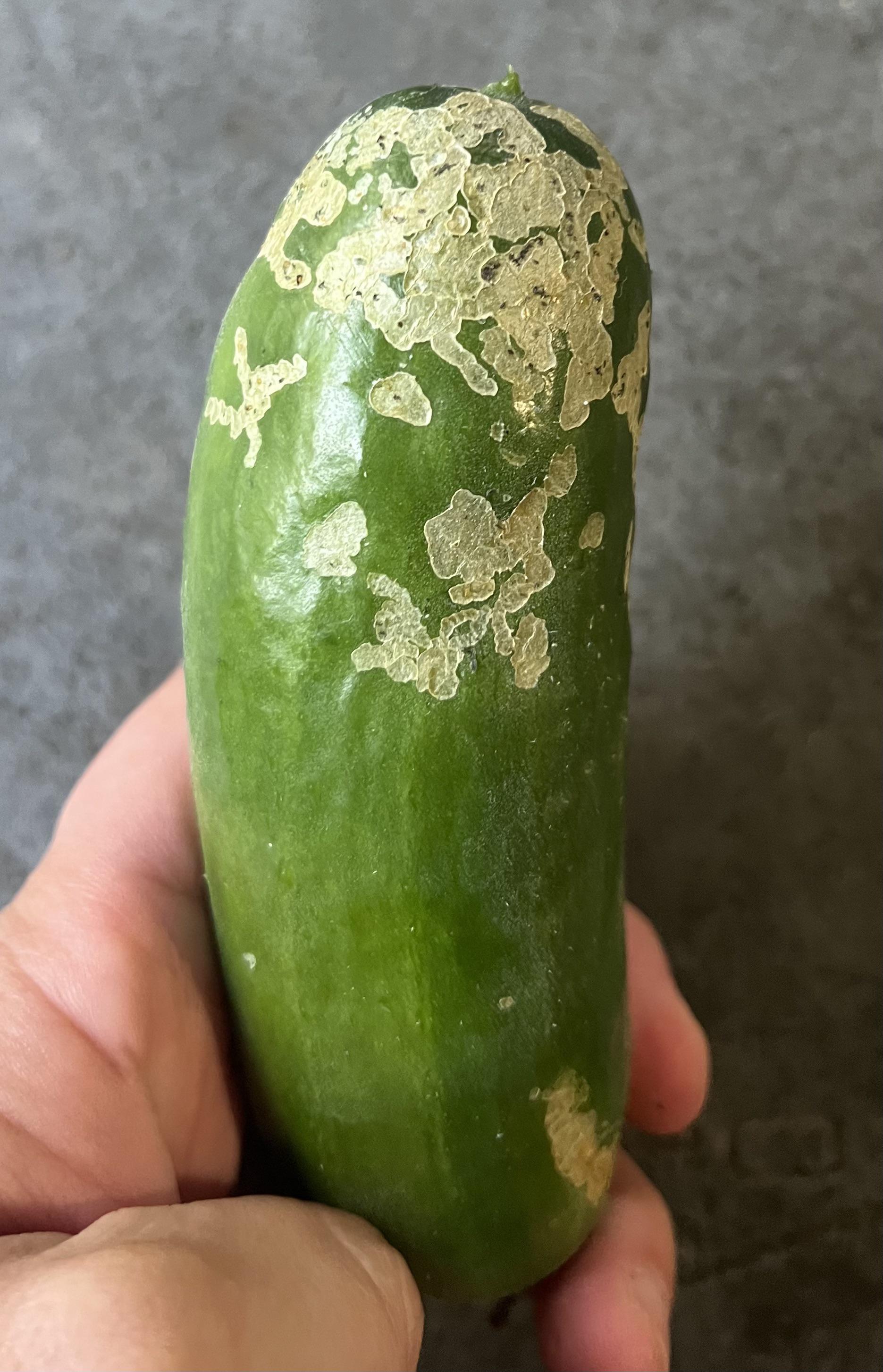
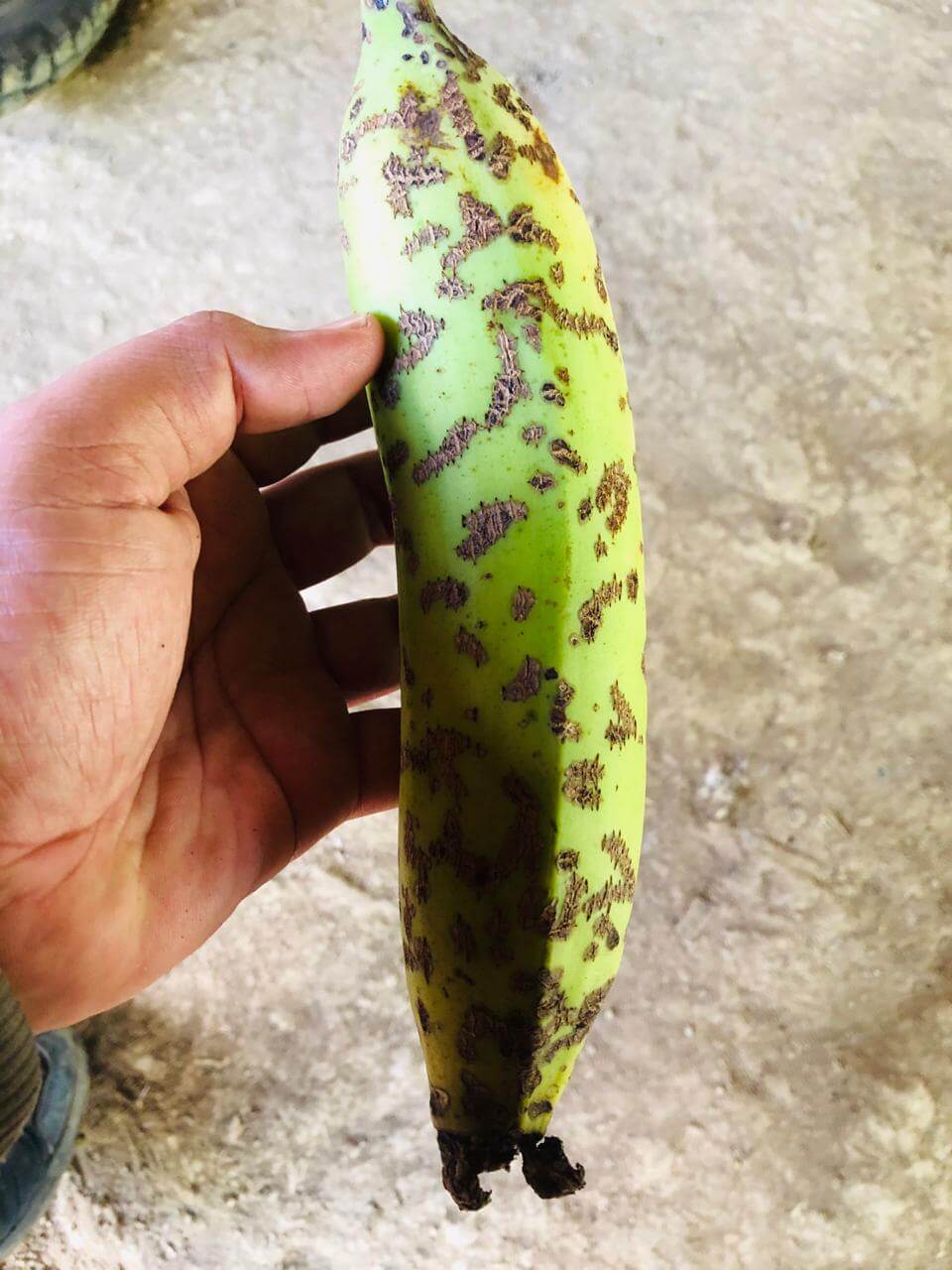
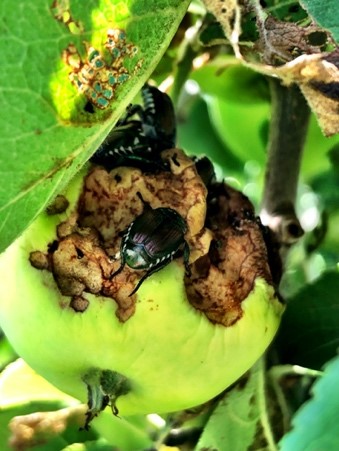
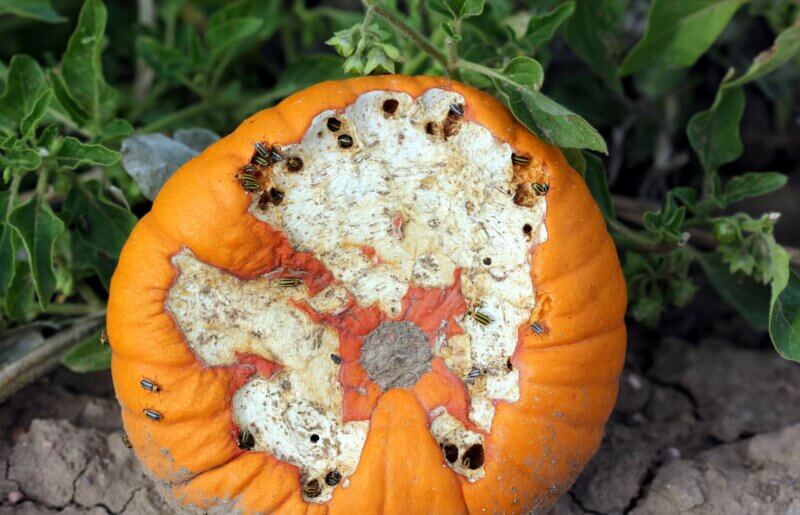
Beetles can cause direct damage to fruit through biting, perforation, and consumption of the epidermis and internal tissues. The severity of the damage depends on the species, the number of individuals present, and the stage of fruit development. Lesions can significantly reduce commercial quality, especially in fruit intended for fresh consumption. Wounds can also facilitate the entry of secondary microorganisms and promote rotting. In severe infestations, numerous damaged, deformed, or tissue-losing fruits may appear, leading to significant economic losses.
• Perforations and holes of varying sizes on the fruit surface.
• Biting and tissue loss in the epidermis.
• Appearance of gnawed or partially consumed areas.
• Sunken or irregular lesions around feeding points.
• Presence of scars and deformations during fruit growth.
• Appearance of brown or necrotic spots around the wounds.
• Loss of visual and commercial quality.
• Secondary rots caused by fungi or bacteria that penetrate through wounds.
• Premature fruit drop when damage is severe.
• Presence of larvae or galleries inside certain fruits, depending on the species.
• Reduction in the commercial value of the harvest.

TEMPERATURE AND HUMIDITY
20-30 °C
60-90 %

HOW IS IT SPREAD?
Adult flight, Movement between plants, Spontaneous vegetation, Infested plant material, Plant debris, Infested soil, Accidental transport of insects

HOW TO REMOVE IT?
Home remedies
There are no home treatments
Chemical treatments
• ORANGE OIL 60g/L [ME] P/S
• ACETAMIPRID 0.005% [AL] P/V
• AZADIRACTIN 1% (AS AZADIRACTIN A) [EC] P/V
• Azadirachtin 2.6% (AS AZADIRACTIN A) [EC] P/V
• CYPERMETHRIN 10% [EC] P/V
• CYPERMETHRIN 5% [EC] P/V
• DELTAMETHRIN 2.5% [EC] P/V
• LAMBDA CYHALOTHRIN 1.5% [CS] P/V
• LAMBDA CYHALOTHRIN 10% [CS] P/V
• LAMBDA CYHALOTHRIN 5% [EG] P/P
• SPINOSAD 48% [SC] P/V
Authorized treatments in organic farming
• ORANGE OIL 60g/L [ME] P/S
• AZADIRACTIN 1% (AS AZADIRACTIN A) [EC] P/V
• Azadirachtin 2.6% (AS AZADIRACTIN A) [EC] P/V
• LAMBDA CYHALOTHRIN 1.5% [CS] P/V
• LAMBDA CYHALOTHRIN 10% [CS] P/V
• LAMBDA CYHALOTHRIN 5% [EG] P/P
• SPINOSAD 48% [SC] P/V
Insect allies
PREDATORY MITES
LADYBUGS
LACEWINGS
PARASITIC WASPS
HOVERFLIES OR PARASITIC FLIES
PREDATORY BUGS
There are no natural allies
Mycodiplosis oidii (predatory mosquito)
EFFECTIVE PRODUCTS TO ELIMINATE THIS DISEASE





• Conduct frequent inspections of plants and fruit to detect adults, larvae, and recent damage.
• Pay special attention to crop edges and nearby areas with spontaneous vegetation.
• Remove severely damaged or decomposing fruit when they may encourage the presence of certain species.
• Remove plant debris that could serve as shelter or breeding grounds.
• Use monitoring or trapping devices when appropriate for the species present.
• Keep spontaneous vegetation that could encourage the presence of beetles under control.
• Encourage the presence of natural enemies and avoid indiscriminate treatments that affect beneficial insects.
• Use physical protection methods, such as netting or barriers, when feasible for the crop.
• Apply phytosanitary treatments only when the population reaches levels that justify intervention.
• Use products authorized for the crop and the pest, strictly adhering to the label dosages and conditions.
• Alternate active ingredients with different modes of action when multiple applications are necessary.
• Combine chemical control with cultural, physical, and biological measures to improve efficacy and reduce selection pressure.
Recommendations



Explore more tools
Services
Contact
Legal
©2026 by ZERIMAR S.A.R.L. All rights reserved