

Bacteriosis
Fire Blight Or Fog
Erwinia Amylovora
Pathogen:
Bacterium
Type:
Risk to the plant:
CRITICAL

DESCRIPTION
WHO CAUSES IT?
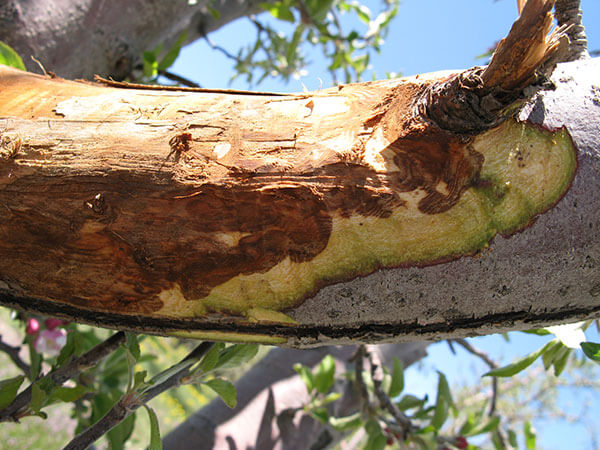
The pathogen Erwinia amylovora is a gram-negative bacteria that causes fire blight in pome fruit trees. This bacteria survives the winter on the margins of cankers formed on infected branches and trunks. With the arrival of spring and rising temperatures, the bacteria begin to exude a sticky liquid filled with bacterial cells, which is transported to new flowers, buds and leaves by insects, rain and contaminated pruning tools. Erwinia amylovora infects plant tissues through natural or induced wounds, such as those from insects or tools. Once inside the plant, the bacteria multiply rapidly, clogging the sap-conducting vessels and producing toxins that kill plant cells. During the summer, bacteria can spread further, infecting new shoots and fruits. At the end of the season, the bacteria return to the cankers to hibernate and repeat the process the following year.
SYMPTOMS
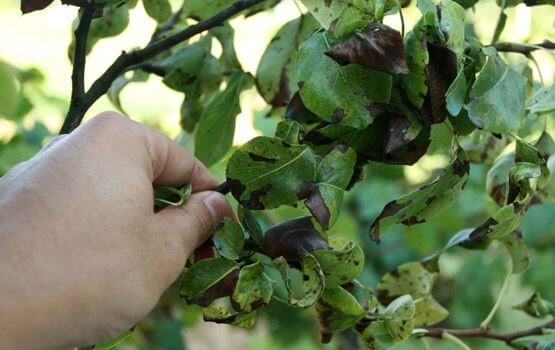
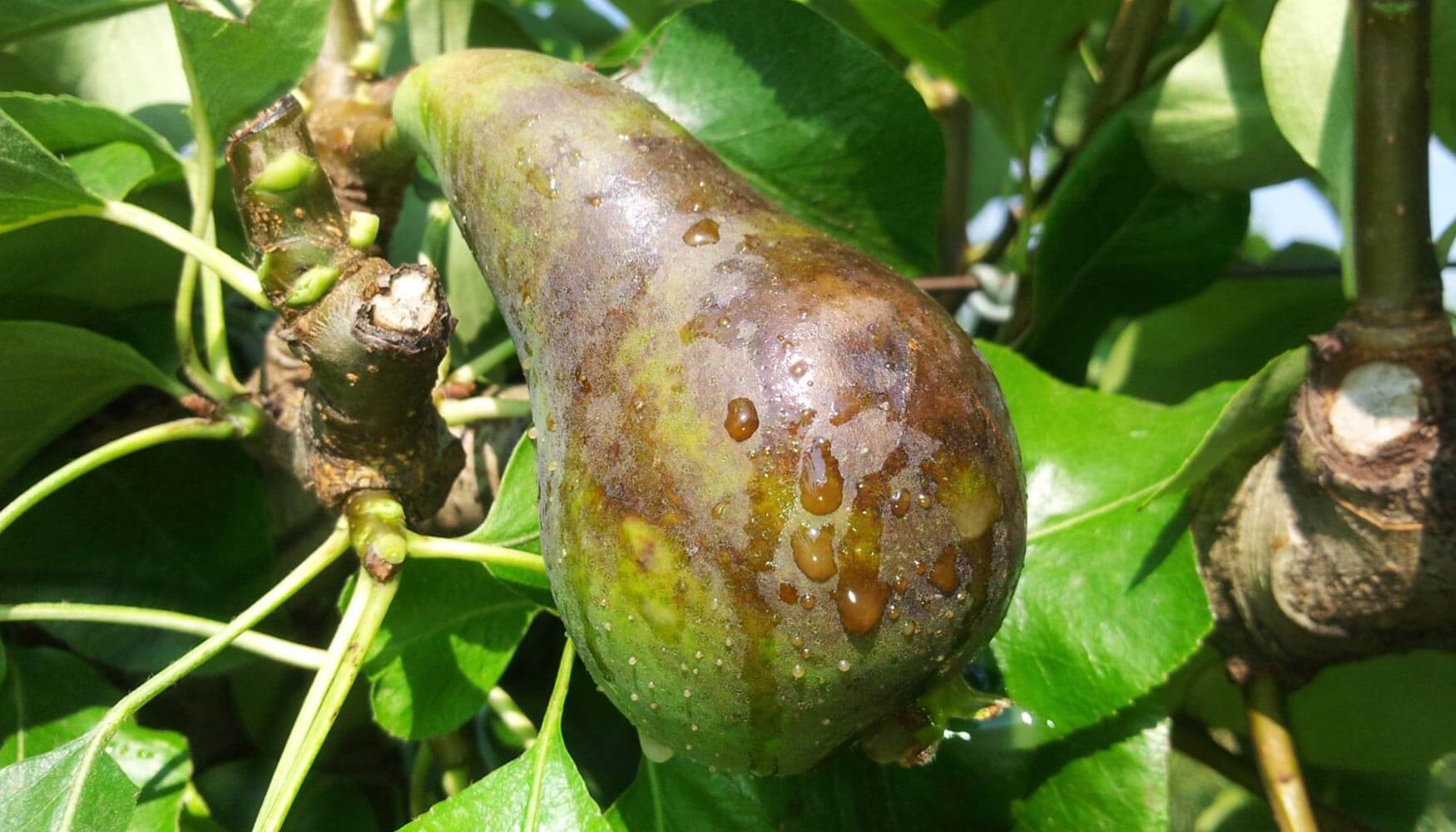
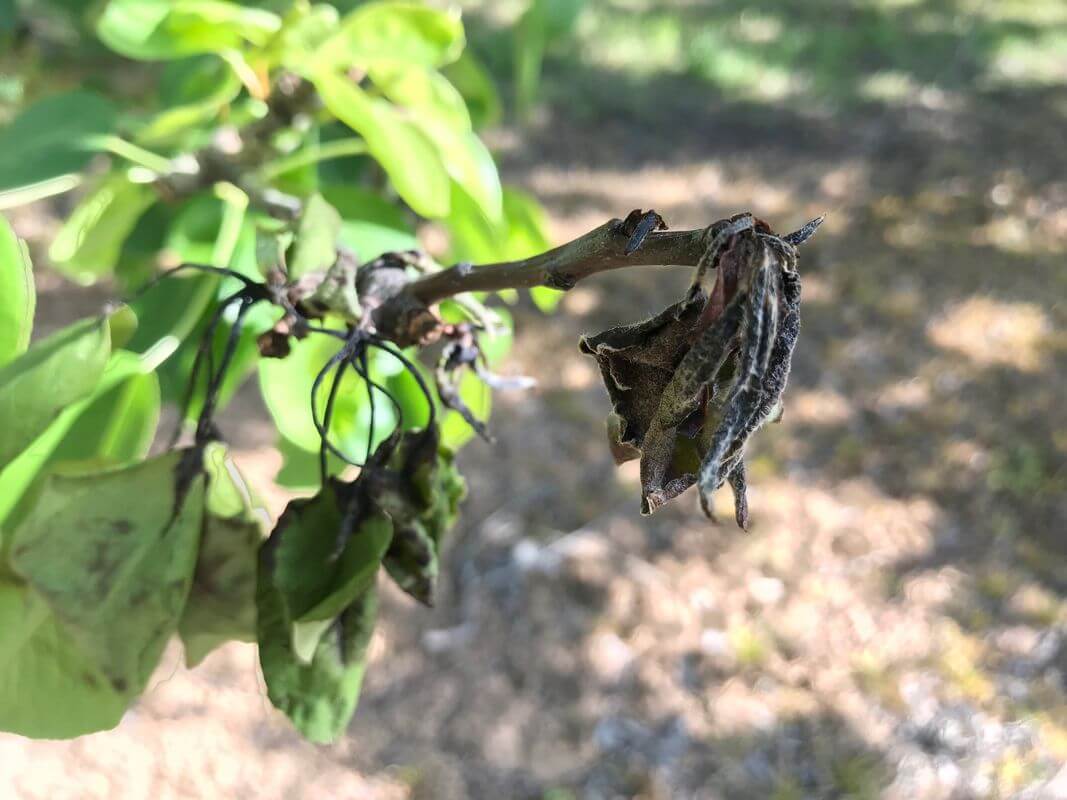
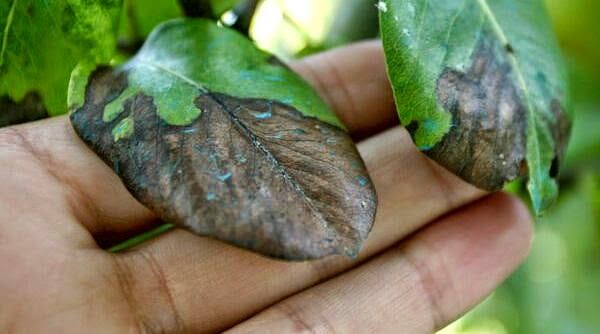
The disease caused by Erwinia amylovora in pome fruit trees is highly destructive and is characterized by symptoms that give the plants a burned appearance, hence its name. The first signs of infection usually appear in spring with the wilting and blackening of the flowers, which dry out and remain attached to the plant. As the infection progresses, symptoms spread to shoots, branches and fruits, causing widespread wilting and tissue death. Infected plants may also exude a sticky, amber-colored bacterial fluid.
- Withering and blackening of flowers.
- Drying of flowers that remain attached.
- Blackening of shoots and branches.
- Appearance of cankers on branches and trunks.
- Exudation of sticky bacterial fluid.
- Generalized wilting of leaves and shoots.
- Fruits with necrotic Taches and exudation.
- Death of young branches and, in severe cases, of entire trees.

TEMPERATURE AND HUMIDITY
18°C - 28°C
60% - 80%

HOW IS IT SPREAD?
Insects, contaminated pruning tools, rain, wind, direct contact between plants, natural or induced wounds, bacterial exudation

HOW TO REMOVE IT?
Home remedies
There are no home treatments
Chemical treatments
• COPPER OXYCHLORIDE 35% (exp. in Cu) [WG] P/P
• CUPROUS OXIDE 75% (EXPR. IN CU) [WG] P/P
Authorized treatments in organic farming
• COPPER OXYCHLORIDE 35% (exp. in Cu) [WG] P/P
• CUPROUS OXIDE 75% (EXPR. IN CU) [WG] P/P
Insect allies
PREDATORY MITES
LADYBUGS
LACEWINGS
PARASITIC WASPS
HOVERFLIES OR PARASITIC FLIES
PREDATORY BUGS
There are no natural allies
Mycodiplosis oidii (predatory mosquito)
EFFECTIVE PRODUCTS TO ELIMINATE THIS DISEASE
Sponsored link

Sponsored link
Sponsored link


Sponsored link
Sponsored link
Sponsored link
Sponsored link


Sponsored link
Sponsored link
Effective against all types of fungi

Sponsored link
Sponsored link


Sponsored link
Sponsored link

Sponsored link
Sponsored link


Sponsored link
- Use varieties of pome fruit trees resistant to fire blight whenever possible.
- Carry out regular pruning to remove and destroy infected branches, preferably in dry conditions.
- Disinfect pruning tools between each cut to prevent the spread of bacteria.
- Avoid over-fertilizing with nitrogen, since fast and tender growth is more susceptible to infection.
- Implement adequate irrigation management to avoid excessive humidity in the foliage.
- Regularly monitor fruit trees to detect early symptoms and apply control measures immediately.
- Use insecticides to control populations of insect vectors that can transmit the bacteria.
- Apply treatments with bactericidal products in accordance with technical recommendations.
- Carry out crop rotation and do not plant pome fruit trees in areas previously affected by fire blight.
- Establish a quarantine and avoid transporting infected plant material between different areas.
Recommendations

Enjoy idMicrobe TOTALLY FREE, with no trial periods.


