

Gorgojos
Vine Weevil
Otiorhynchus Sulcatus
Pathogen:
Insect
Type:
Risk to the plant:
HIGH
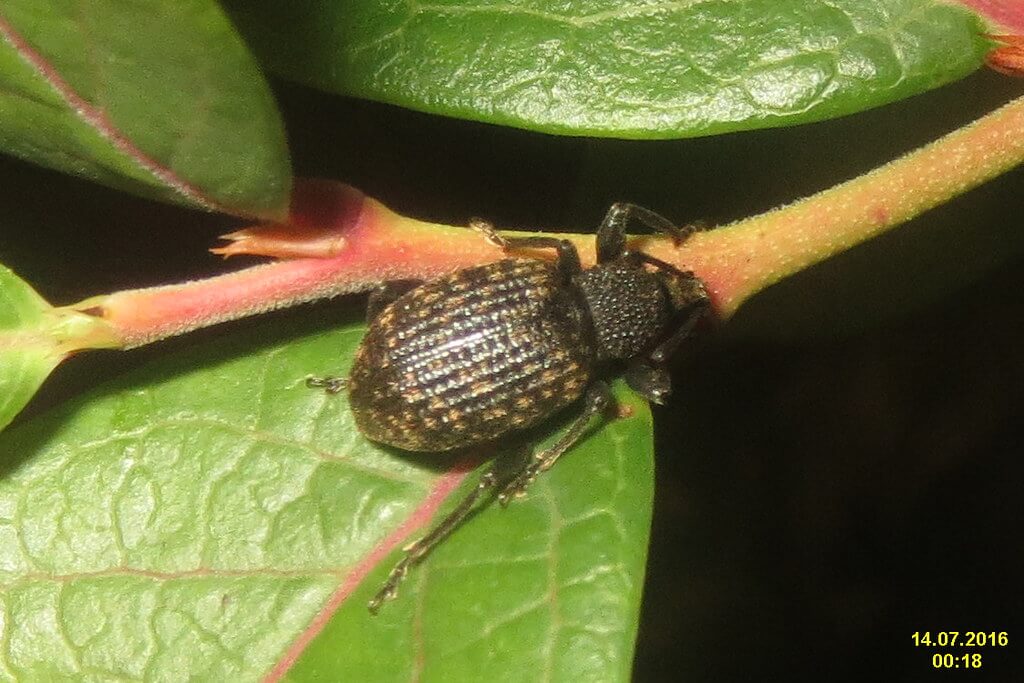
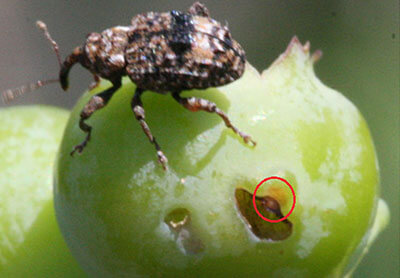

DESCRIPTION
WHO CAUSES IT?
Otiorhynchus sulcatus, commonly known as the vine weevil, is an insect belonging to the Curculionidae family. This weevil goes through several stages in its development: egg, larva, pupa and adult. Adult females lay their eggs in the soil, near the base of host plants. The larvae, which are creamy white with brown heads, emerge from the eggs and feed on plant roots, causing significant damage. The larvae overwinter in the soil and pupate in spring and then emerge as adults. The adults are nocturnal and feed on the leaves and shoots of plants at night, creating characteristic notches on the edges of the leaves. Adults cannot fly and move around by walking, which limits their natural dispersal. This cycle can repeat several times a year, especially in warmer climates.
SYMPTOMS
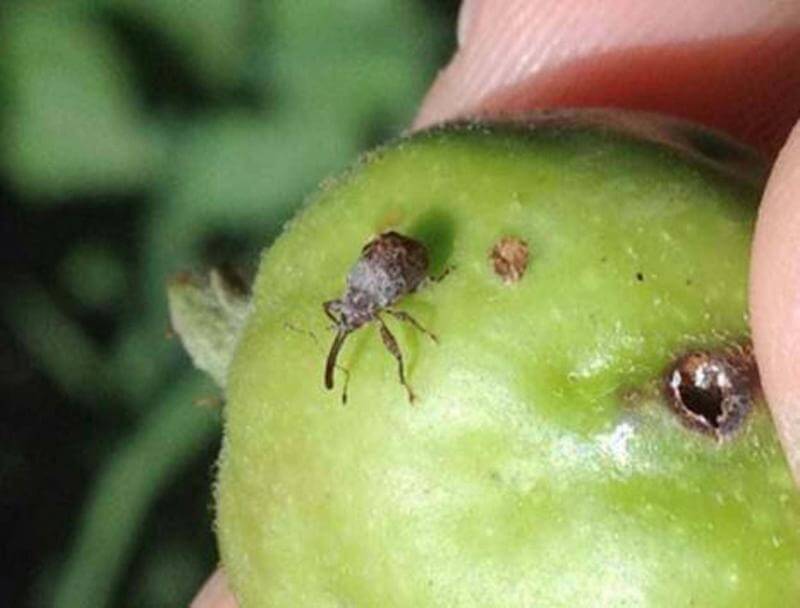
The disease caused by the vine weevil in blueberry is characterized by damage to the roots and foliage, which leads to a reduction in the vitality and production of the plant. Symptoms include:
- Plant wilting.
- Yellowing and premature leaf fall.
- Reduction in the growth of new shoots.
- Presence of notches on the edges of the leaves.
- Damaged and cut roots.
- Reduction in the size and quality of the fruits.


TEMPERATURE AND HUMIDITY
20°C - 25°C
70% - 90%

HOW IS IT SPREAD?
Movements of contaminated soil, Infected plants, Contaminated tools, Traffic of adults through the soil

HOW TO REMOVE IT?
Home remedies
There are no home treatments
Chemical treatments
• ORANGE OIL 60g/L [ME] P/S
• AZADIRACTIN 1% (AS AZADIRACTIN A) [EC] P/V
• Azadirachtin 2.6% (AS AZADIRACTIN A) [EC] P/V
• SPINOSAD 48% [SC] P/V
Authorized treatments in organic farming
• ORANGE OIL 60g/L [ME] P/S
• AZADIRACTIN 1% (AS AZADIRACTIN A) [EC] P/V
• Azadirachtin 2.6% (AS AZADIRACTIN A) [EC] P/V
• SPINOSAD 48% [SC] P/V
Insect allies
PREDATORY MITES
LADYBUGS
LACEWINGS
PARASITIC WASPS
HOVERFLIES OR PARASITIC FLIES
PREDATORY BUGS
There are no natural allies
Mycodiplosis oidii (predatory mosquito)
EFFECTIVE PRODUCTS TO ELIMINATE THIS DISEASE
Sponsored link
Sponsored link


Sponsored link
Sponsored link
Sponsored link


Sponsored link
Sponsored link
Effective against all types of fungi

Sponsored link


Sponsored link
Sponsored link

Sponsored link


Sponsored link
- Implement regular monitoring to detect the presence of adults and larvae in the field.
- Use weevil traps to reduce the adult population.
- Apply entomopathogenic nematodes to the soil to control larvae.
- Maintain an adequate crop rotation to avoid the accumulation of pests in the soil.
- Disinfect pruning tools and other equipment to prevent the spread of the weevil.
- Implement physical barriers around plants to prevent adult access.
- Use trap plants around main crops to attract and control weevils.
- Apply selective insecticides to the soil and foliage of affected plants.
- Encourage the presence of natural enemies such as birds and other predatory insects.
- Maintain adequate management of crop residues to eliminate possible refuges for larvae and adults.
Recommendations

Enjoy idMicrobe TOTALLY FREE, with no trial periods.


