

Orugas o gusanos
Heliothis
Helicoverpa Armigera
Pathogen:
Insect
Type:
Risk to the plant:
HIGH

DESCRIPTION
WHO CAUSES IT?
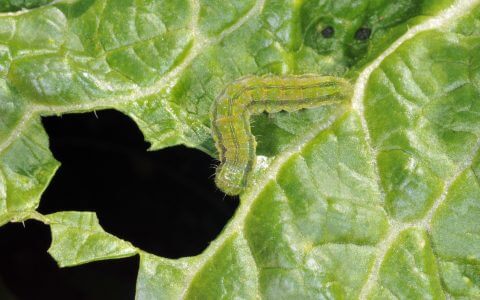
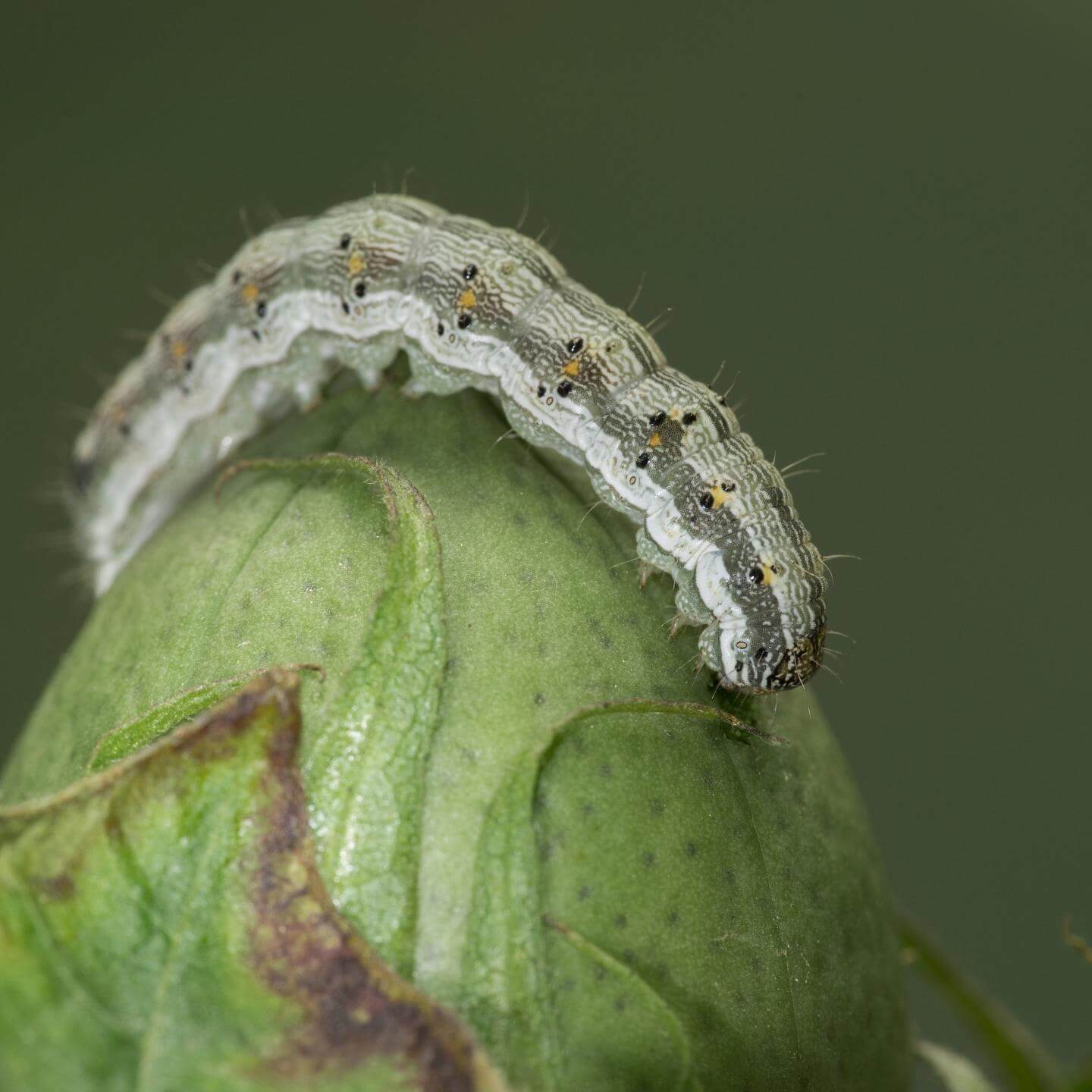
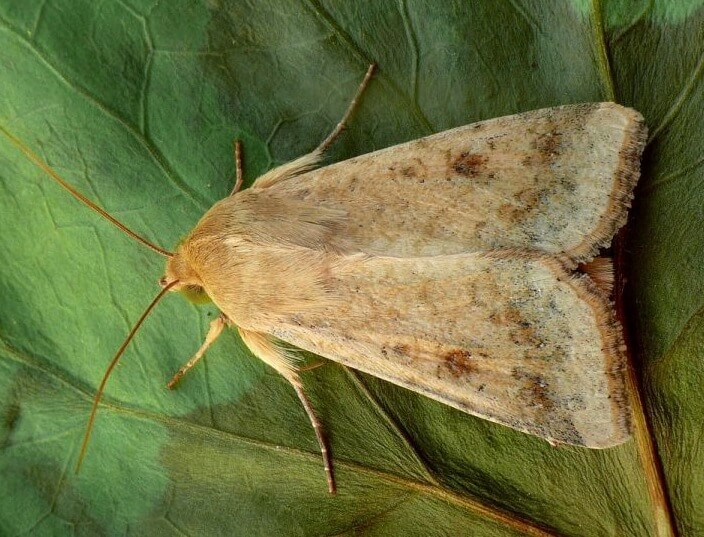
Helicoverpa armigera, also known as the cotton or corn caterpillar, is a highly polyphagous pest that affects a wide variety of crops, including lettuce. Adults are pale brown moths with dark Taches on the forewings, which can fly great distances to search for suitable places to lay their eggs. Females can lay more than 1,000 eggs throughout their life, depositing them on young leaves or flower buds of plants. After hatching, the larvae begin to feed voraciously on plant tissue, going through six larval stages in which they increase considerably in size. Mature larvae can measure up to 4 cm and vary in color from green to brown, depending on the environment. When they complete their development, they descend to the ground to pupate in shallow chambers. Under favorable conditions, Helicoverpa armigera can have several generations per year, which complicates its control.
SYMPTOMS
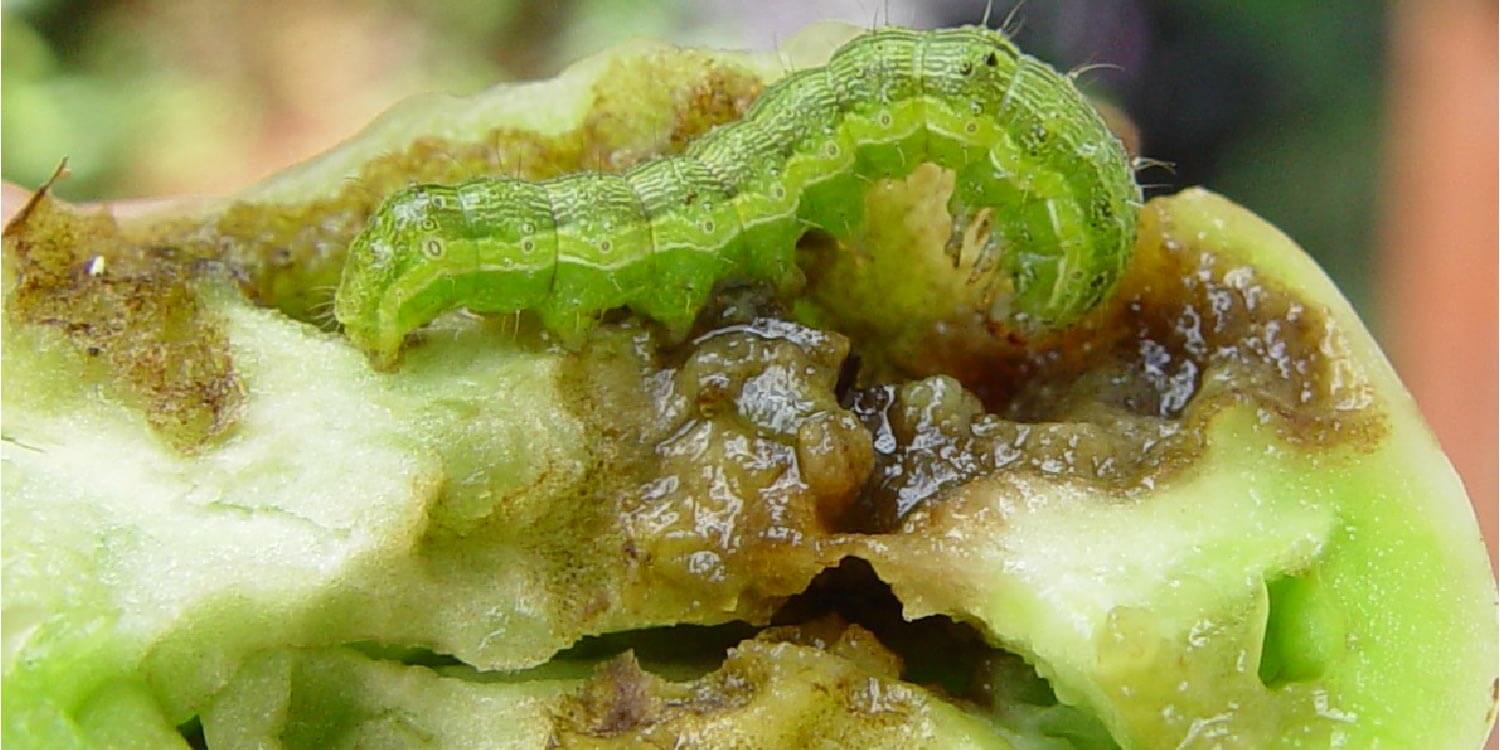
In lettuce, the Helicoverpa armigera pest can cause severe damage to the leaves and tender parts of the plant. The larvae pierce and chew large sections of leaf tissue, reducing photosynthetic area and affecting overall growth. Furthermore, feeding of the larvae on the main shoot and young leaves can lead to deformations and affect the quality of the crop, making it less marketable.
- Leaves with irregular perforations.
- Presence of larvae in the shoots and young leaves.
- Severe damage to the outer leaves and bud.
- Withering and deformation of the leaves.
- Presence of dark excrements on the leaves.
- Reduced or delayed growth due to loss of leaf area.


TEMPERATURE AND HUMIDITY
22-30°C
60-80%

HOW IS IT SPREAD?
Wind, movement of larvae between plants, migration of adults, contaminated transplants

HOW TO REMOVE IT?
Home remedies
There are no home treatments
Chemical treatments
• CHLORANTRANILIPROL 35% [WG] P/P
• DELTAMETHRIN 1.5% [EW] P/V
• DELTAMETHRIN 1.57% [SC] P/V
• DELTAMETHRIN 10% [EC] P/V
• DELTAMETHRIN 2.5% [EC] P/V
• DELTAMETHRIN 2.5% [EW] P/V
• LAMBDA CYHALOTHRIN 1.5% [CS] P/V
• LAMBDA CYHALOTHRIN 10% [CS] P/V
• LAMBDA CYHALOTHRIN 2.5% [WG] P/P
• METAFLUMIZONE 24% [SC] P/V
• SPINETORAM 2.5% [SC] P/V
Authorized treatments in organic farming
• LAMBDA CYHALOTHRIN 1.5% [CS] P/V
• LAMBDA CYHALOTHRIN 10% [CS] P/V
• LAMBDA CYHALOTHRIN 2.5% [WG] P/P
Insect allies
PREDATORY MITES
LADYBUGS
LACEWINGS
PARASITIC WASPS
HOVERFLIES OR PARASITIC FLIES
PREDATORY BUGS
There are no natural allies
Mycodiplosis oidii (predatory mosquito)
EFFECTIVE PRODUCTS TO ELIMINATE THIS DISEASE
Sponsored link
Sponsored link


Sponsored link
Sponsored link
Sponsored link


Sponsored link
Sponsored link
Effective against all types of fungi

Sponsored link


Sponsored link
Sponsored link

Sponsored link


Sponsored link
- Constantly monitor the crop to detect the presence of eggs and young larvae.
- Install pheromone traps to capture adult moths and reduce populations.
- Introduce natural enemies such as Chrysoperla spp. or parasitoids such as Trichogramma spp. for biological control.
- Apply biological insecticides such as Bacillus thuringiensis during the first larval stages.
- Practice crop rotation to interrupt the pest cycle and avoid the accumulation of populations.
- Manually eliminate visible larvae on plants during inspections.
- Implement physical barriers such as protective nets to prevent the entry of adult moths into the crop.
- Use varieties of lettuce that are more resistant or less attractive to the pest.
- Maintain cleanliness of the field, eliminating remains of previous crops where the pest could survive.
- Avoid excessive use of broad-spectrum insecticides to preserve natural enemies.
Recommendations

Enjoy idMicrobe TOTALLY FREE, with no trial periods.


