

Gorgojos
Lixus
Lixus Junci / Lixus Scabricollis
Pathogen:
Insect
Type:
Risk to the plant:
HIGH


DESCRIPTION
WHO CAUSES IT?
Lixus junci and Lixus scabricollis are beetles of the Curculionidae family, known for their ability to infest beet crops. Adults emerge in early spring and feed on the young leaves and stems of plants. The females lay their eggs inside the beet stem, where the larvae develop. The larvae excavate galleries in the stems and roots, feeding on internal tissue and causing extensive damage. These galleries interfere with the transport of nutrients and water within the plant, weakening it significantly. After several weeks, the larvae complete their development and pupate within the galleries. The adults emerge at the end of summer, thus completing the cycle. This cycle can repeat several times a year, depending on weather conditions, allowing Lixus populations to increase rapidly.
SYMPTOMS
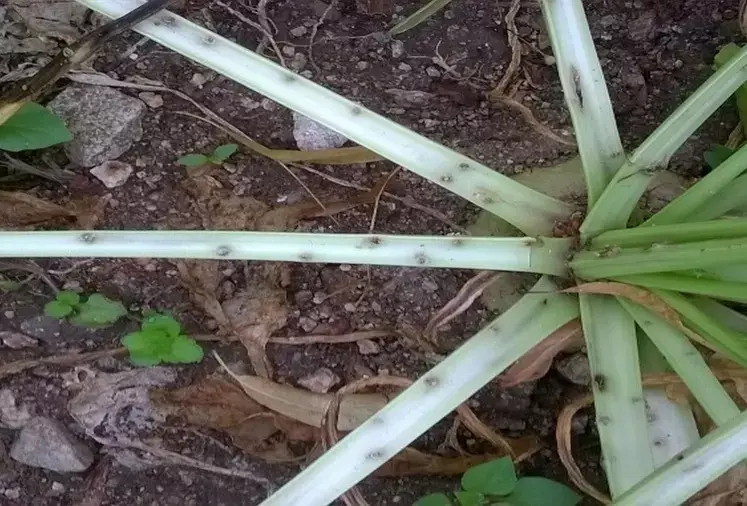
The disease known as Lixus, caused by the beetles Lixus junci and Lixus scabricollis, causes serious damage to beets. The infestation of these beetles mainly affects the stems and roots of the plant, leading to a decrease in crop production and quality.
- Stems with perforations and galleries
- General weakening of the plant
- Yellowing and wilting of leaves
- Delayed growth
- Reduction in the size and quality of the roots
- Possible death of young plants


TEMPERATURE AND HUMIDITY
20°C - 30°C
60% - 80%

HOW IS IT SPREAD?
Soil movements, Infested plants, Contaminated agricultural machinery, Wind, Transport of agricultural products

HOW TO REMOVE IT?
Home remedies
There are no home treatments
Chemical treatments
• CYPERMETHRIN 5% [EC] P/V
• DELTAMETHRIN 2.5% [EW] P/V
• DELTAMETHRIN 1.57% [SC] P/V
• SPINOSAD 48% [SC] P/V
• LAMBDA CYHALOTHRIN 5% [EG] P/P
Authorized treatments in organic farming
• SPINOSAD 48% [SC] P/V
• LAMBDA CYHALOTHRIN 5% [EG] P/P
Insect allies
PREDATORY MITES
LADYBUGS
LACEWINGS
PARASITIC WASPS
HOVERFLIES OR PARASITIC FLIES
PREDATORY BUGS
There are no natural allies
Mycodiplosis oidii (predatory mosquito)
EFFECTIVE PRODUCTS TO ELIMINATE THIS DISEASE
Sponsored link
Sponsored link


Sponsored link
Sponsored link
Sponsored link


Sponsored link
Sponsored link
Effective against all types of fungi

Sponsored link


Sponsored link
Sponsored link

Sponsored link


Sponsored link
- Implement crop rotations to avoid the accumulation of Lixus in the soil.
- Carry out frequent monitoring of crops to detect and eliminate adults early.
- Use pheromone traps to reduce the adult population.
- Introduce and encourage natural enemies such as parasitoids and specific predators of Lixus.
- Apply specific insecticides in a controlled manner and following technical recommendations.
- Maintain good agricultural hygiene, eliminating crop residues and weeds that may provide shelter for beetles.
- Use physical barriers, such as mesh, to protect crops during critical growth stages.
- Promote integrated pest management (IPM) to combine different control strategies and reduce dependence on chemical products.
- Use resistant beet cultivars, if available, to minimize the impact of infestations.
- Ensure good soil drainage to avoid conditions that favor the survival of larvae.
Recommendations

Enjoy idMicrobe TOTALLY FREE, with no trial periods.


