

Micosis/Hongos
Cherry Leaf Spot
Blumeriella Jaapii
Pathogen:
Fungus
Type:
Risk to the plant:
HIGH

DESCRIPTION
WHO CAUSES IT?
Blumeriella jaapii is an ascomycete fungus responsible for cherry leaf spot. This pathogen overwinters in the soil and in the remains of infected leaves from the previous year, where it forms resistance structures called ascocarps. In spring, with increasing temperature and humidity, ascocarps release ascospores that are dispersed by wind and rain to the young leaves of the cherry tree. Once on the surface of the leaf, the ascospores germinate and penetrate through the stomata, developing between the cells of the leaf tissue. After infection, the fungus forms reproductive structures called conidiophores on the underside of the leaf, producing conidia that can initiate new infections. This process can be repeated several times during the growing season if environmental conditions remain favorable, especially in humid and warm periods.
SYMPTOMS
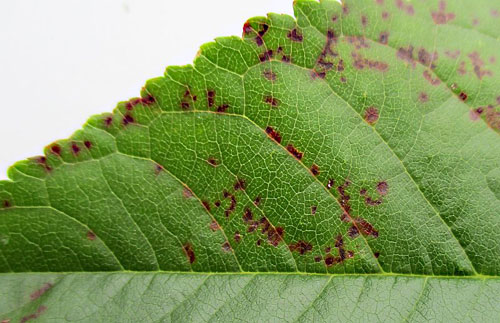
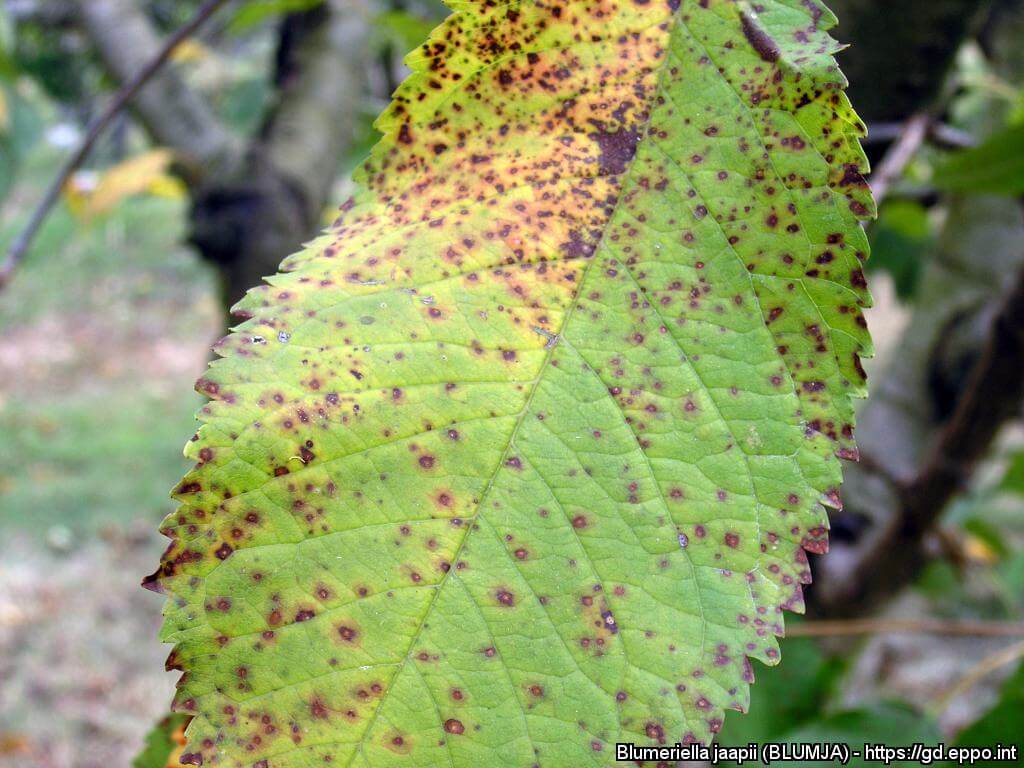
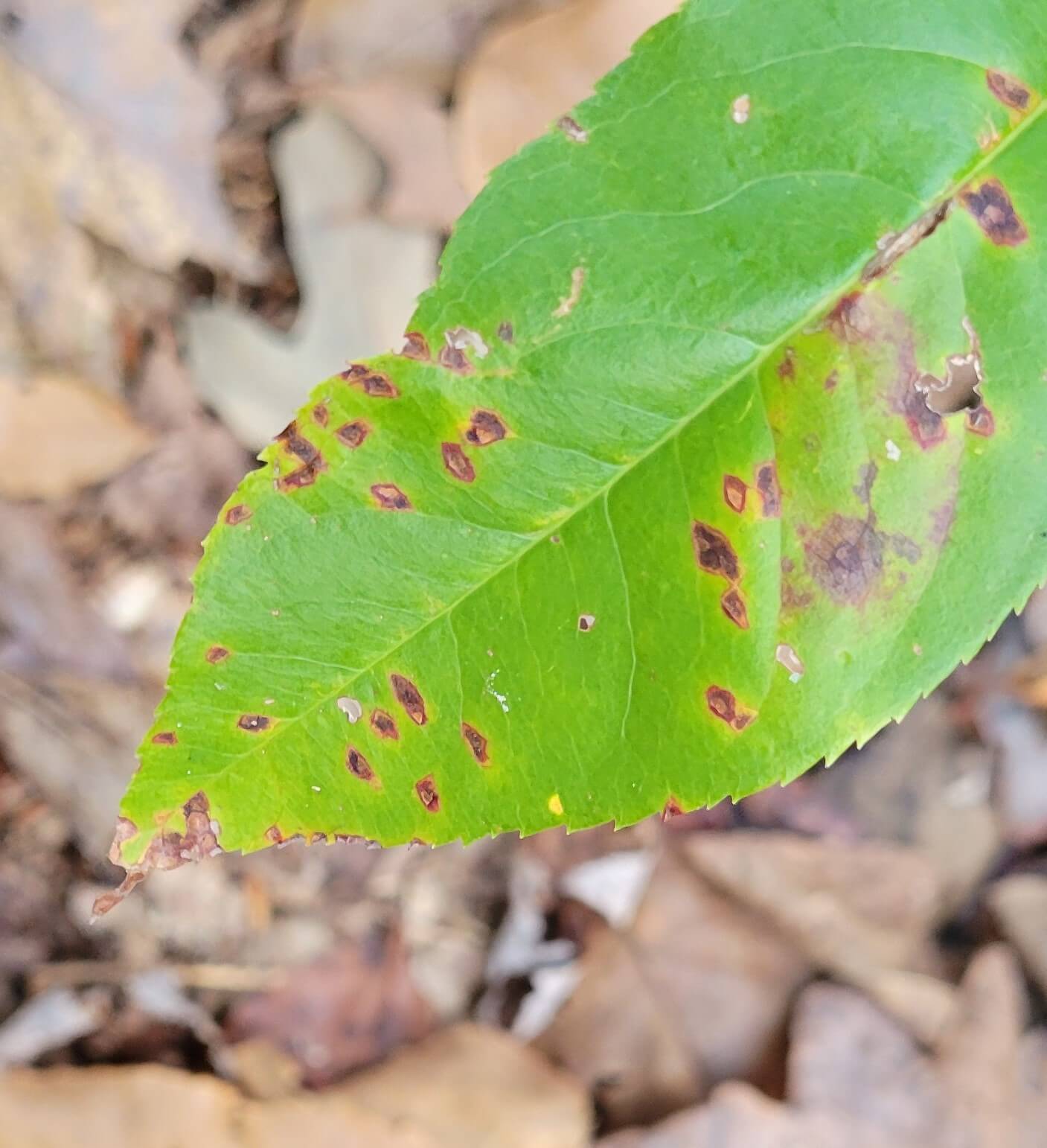
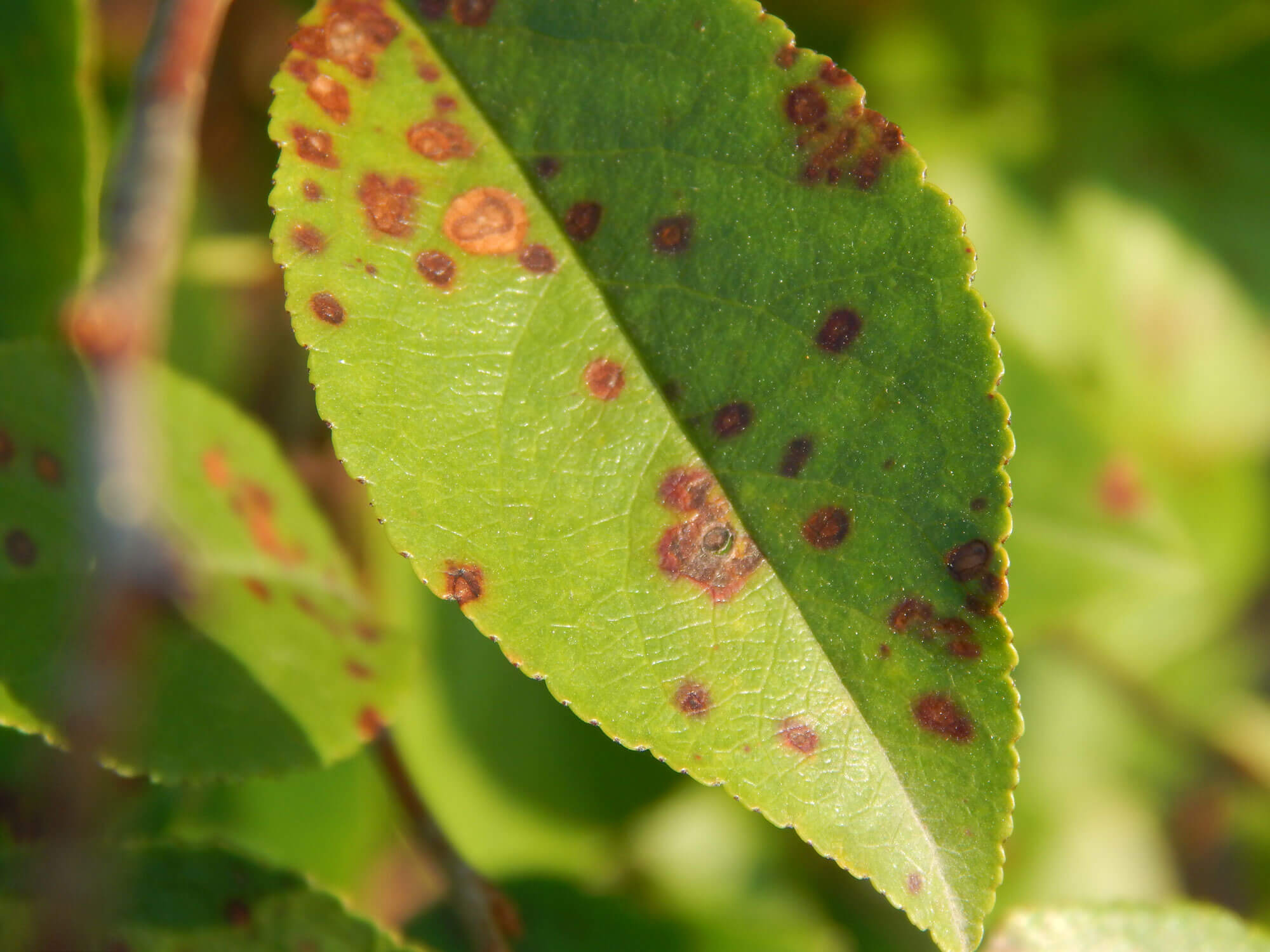
Cherry leaf spot caused by Blumeriella jaapii significantly affects cherry trees, weakening the plants and reducing their photosynthetic capacity, which can lead to reduced fruit production. The disease initially manifests itself as small purple Taches on the surface of the leaves. As the disease progresses, these Taches enlarge and may merge, forming larger necrotic areas.
- Small purple Taches on the upper surface of the leaves.
- Enlargement and fusion of Taches into larger necrotic areas.
- Presence of white sporulation on the underside of the leaves.
- Premature fall of severely infected leaves.
- Reduction in the photosynthetic capacity of plants.
- Decrease in the production and quality of the fruits.
- Greater susceptibility to other diseases due to the general weakening of the tree.
- Appearance of early defoliation and long-term weakening of the tree.


TEMPERATURE AND HUMIDITY
18°C - 25°C
70% - 85%

HOW IS IT SPREAD?
Wind, Rain, Sprinkler irrigation, Contaminated tools, Infected leaves, Plant remains, Insect vectors

HOW TO REMOVE IT?
Home remedies
There are no home treatments
Chemical treatments
• CAPTAN 47.5% [SC] P/V
• CAPTAIN 80% [WG] P/P
• DODINA 40% [SC] P/V
• DODINA 54.4% [SC] P/S
• COPPER OXYCHLORIDE 30% (EXPR. IN CU) [WP] P/P
• COPPER OXYCHLORIDE 35% (exp. in Cu) [WG] P/P
• TEBUCONAZOLE 20% [EW] P/V
• TEBUCONAZOLE 25% [WG] P/P
Authorized treatments in organic farming
• COPPER OXYCHLORIDE 30% (EXPR. IN CU) [WP] P/P
• COPPER OXYCHLORIDE 35% (exp. in Cu) [WG] P/P
Insect allies
PREDATORY MITES
LADYBUGS
LACEWINGS
PARASITIC WASPS
HOVERFLIES OR PARASITIC FLIES
PREDATORY BUGS
There are no natural allies
Mycodiplosis oidii (predatory mosquito)
EFFECTIVE PRODUCTS TO ELIMINATE THIS DISEASE
Sponsored link
Sponsored link


Sponsored link
Sponsored link
Sponsored link


Sponsored link
Sponsored link
Effective against all types of fungi

Sponsored link


Sponsored link
Sponsored link

Sponsored link


Sponsored link
- Select cherry varieties resistant to Blumeriella jaapii.
- Perform appropriate pruning to improve air circulation and reduce humidity in the tree canopy.
- Apply preventive fungicide treatments before the appearance of symptoms, especially during wet periods.
- Remove and destroy fallen leaves and remains of infected plants at the end of the season to reduce the source of inoculum.
- Avoid sprinkler irrigation that can wet the foliage and favor the dispersal of spores.
- Implement a regular monitoring program for early detection of the disease and timely application of control measures.
- Maintain good fertilization and soil management to ensure vigorous trees and less susceptible to infections.
- Use plant covers or mulching to minimize the spread of spores from the soil to young leaves.
Recommendations

Enjoy idMicrobe TOTALLY FREE, with no trial periods.


