

Monilia
Moniliosis or brown rot
Monilinia sp.
Pathogen:
Fungus
Type:
Risk to the plant:
HIGH
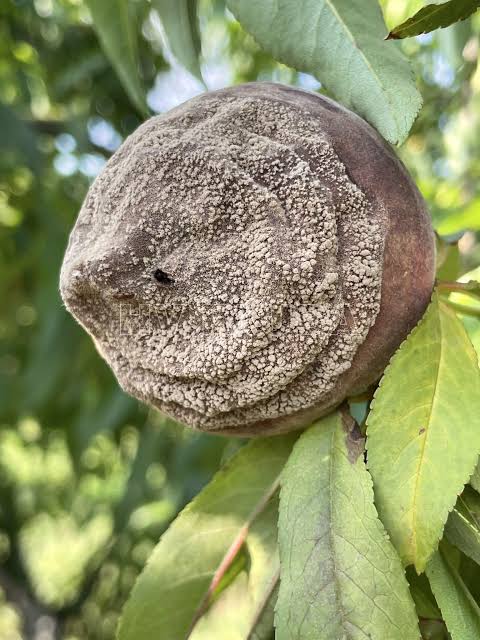
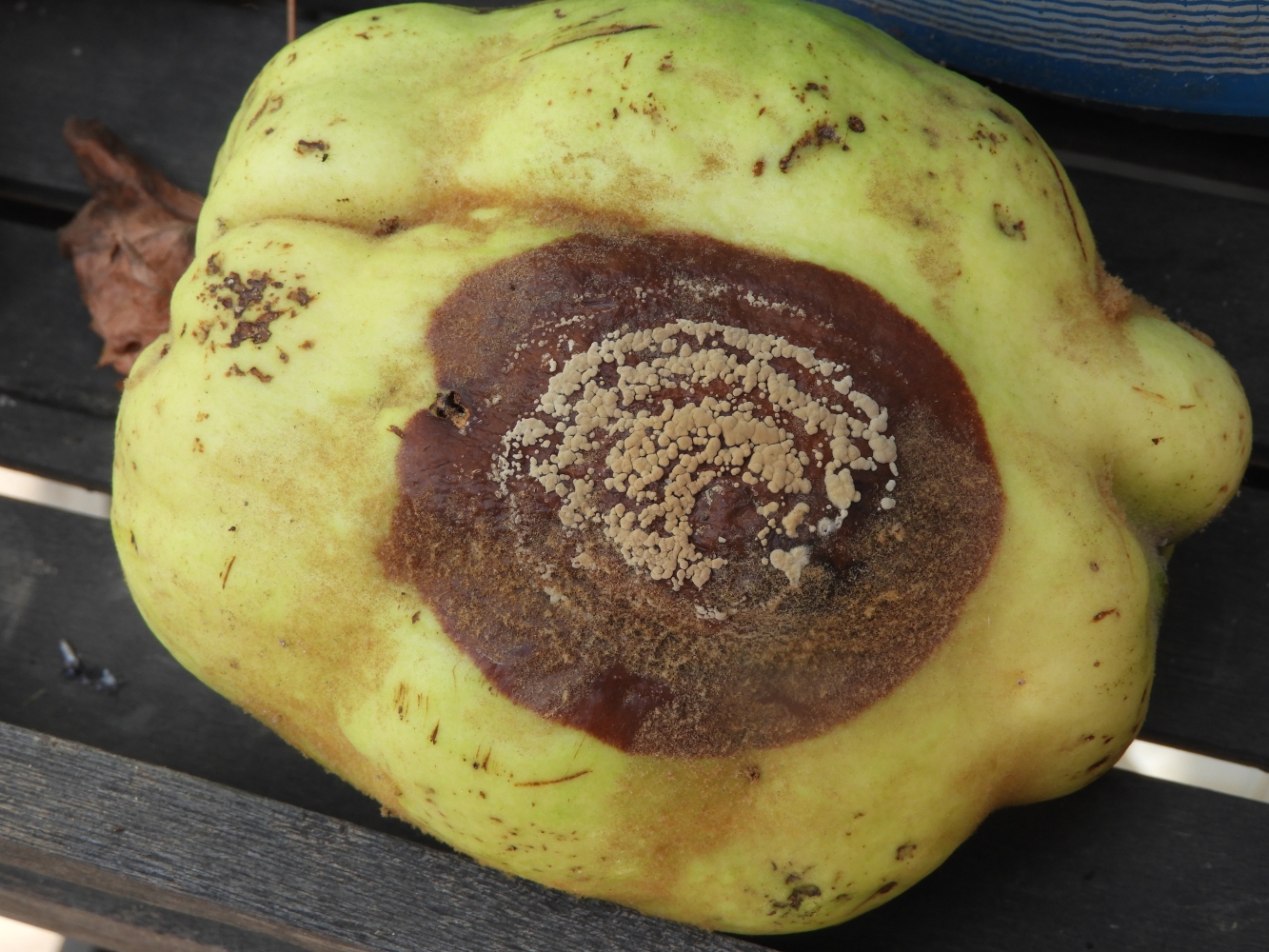

DESCRIPTION
WHO CAUSES IT?
Monilinia is a genus of phytopathogenic fungi responsible for brown rot or moniliosis, especially important in stone fruits such as peaches, nectarines, apricots, plums, and cherries, although different species can affect other fruit trees. The fungus can survive between seasons primarily in mummified fruit that remains on the tree or falls to the ground, as well as in infected plant tissues, cankers, and affected branches. During periods of favorable humidity and temperature, the fungus produces abundant conidia on infected tissues, which are one of the main structures responsible for the spread of the disease. These conidia can be transported by rain, sprinkler irrigation water, short-range wind, insects, and contact between plant tissues. Infection can occur through wounds, insect damage, bruising, abrasions, growth cracks, or any alteration of the fruit surface, although some species can also penetrate directly when environmental conditions are very favorable. Flowers are also a significant point of infection in certain Monilinia species, with the fungus colonizing floral structures and subsequently spreading to peduncles and branches. Once established in the tissues, the mycelium develops and causes the progressive destruction of plant cells, promoting lesions and the subsequent formation of new conidia-producing structures. Affected fruits can dehydrate and remain attached to the tree as mummified fruit, constituting a source of inoculum for further infections. The presence of wounds, frequent rain, prolonged surface moisture, and moderate temperatures particularly favor conidia germination and infection. The disease can exhibit several infection cycles during a single growing season when environmental conditions remain favorable; therefore, eliminating sources of inoculum and providing preventative protection to susceptible tissues are essential to limiting its spread.
SYMPTOMS
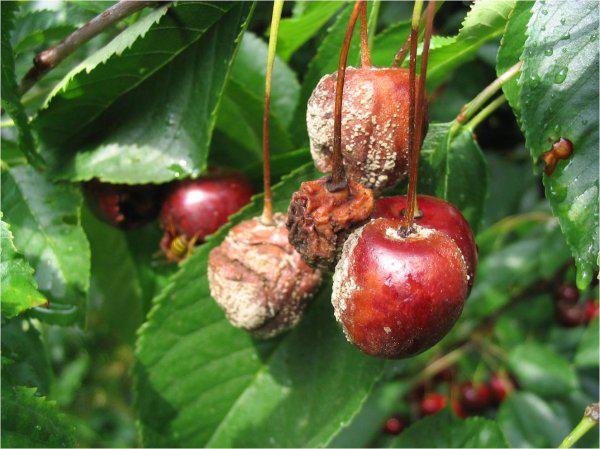
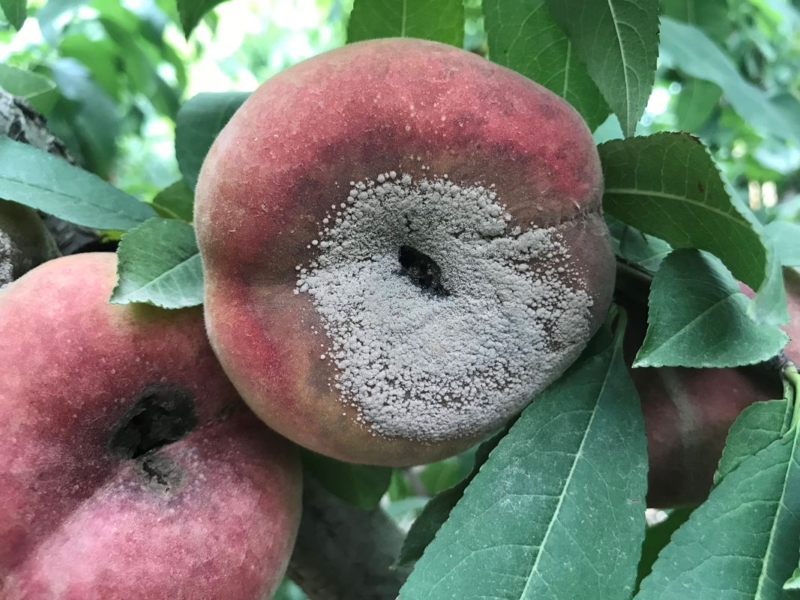
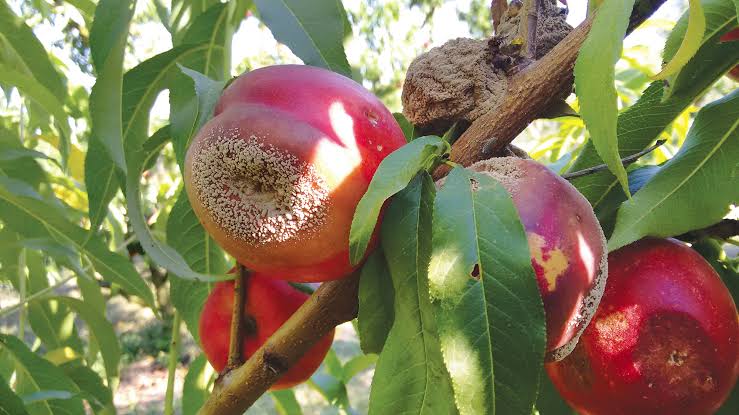
Moniliosis causes rapid fruit rot, especially when the fruit is nearing maturity or has wounds or superficial damage. The infection usually begins with small brown or water-soaked areas that gradually increase in size. Subsequently, the affected tissue softens and turns brown, while circular clusters of fungal reproductive structures, generally cream, beige, or grayish in color, may appear on the surface. As the infection progresses, much or all of the fruit may rot and eventually dehydrate, becoming mummified and potentially remaining attached to the plant. In humid conditions, the disease can advance very rapidly and cause significant losses both before harvest and during handling, transport, and storage. Infections can also affect flowers and young tissues, causing necrosis and, in some cases, branch lesions and canker formation. The presence of infected fruit also promotes the emergence of new sources of inoculum within the orchard. Among the most common manifestations are:
• Appearance of small, brown, circular or irregular spots that gradually increase in size.
• Softening and decomposition of fruit tissues.
• Brown rot that can spread rapidly across the entire surface.
• Formation of cream, beige, or grayish sporulation masses or circles on the affected fruit.
• Progressive dehydration of the infected fruit.
• Formation of mummified fruit that may remain attached to the tree or fall to the ground.
• Infection and necrosis of flowers, especially during flowering periods with high humidity.
• Drying of flowers and young shoots as a result of established infections in the floral tissues.
• Appearance of lesions or cankers on branches and twigs under certain conditions.
• Premature fruit loss and a considerable reduction in the marketable harvest.
• Development of secondary rots during transport or storage of fruit with latent infections or minor lesions. • Rapid spread between fruits when they remain in direct contact and there is high humidity.

TEMPERATURE AND HUMIDITY
15-25 °C
90-100 %

HOW IS IT SPREAD?
Conidia transported by rain, Rainwater, Irrigation water, Wind, Insects, Contact between fruits, Contact between plant tissues, Contaminated tools and equipment, Infected plant material, Mummified fruits

HOW TO REMOVE IT?
Home remedies
There are no home treatments
Chemical treatments
• CAPTAN 47.5% [SC] P/V
• CIPRODINIL 37.5% + FLUDIOXONIL 25% [WG] P/P
• DIFENOCONAZOLE 1.67% [EC] P/V
• PHENHEXAMIDE 50% [SC] P/V
• PHENHEXAMIDE 50% [WG] P/P
• POTASSIUM HYDROGEN CARBONATE 0.425% [AL] P/V
• POTASSIUM HYDROGEN CARBONATE 85% [SP] P/P
• CUPRIC HYDROXIDE 25% (EXPR. IN CU) [WG] P/P
• CUPRIC HYDROXIDE 50% (EXPR. IN CU) [WP] P/P
• METIRAM 70% [WG] P/P
• COPPER OXYCHLORIDE 30% (EXPR. IN CU) [WP] P/P
• COPPER OXYCHLORIDE 35% (exp. in Cu) [WG] P/P
• COPPER OXYCHLORIDE 35% (EXPR. IN CU) [WG] P/P
• COPPER OXYCHLORIDE 38% (EXPR. IN CU) [SC] P/V
• COPPER OXYCHLORIDE 50% (EXPR. IN CU) [WP] P/P
• COPPER OXYCHLORIDE 52% (EXPR. IN CU) [SC] P/V
• CUPROUS OXIDE 50% (EXPR. IN CU) [WP] P/P
• PIRACLOSTROBIN 6.7% + BOSCALIDE 26.7% ( ) [WG] P/P
• PIRACLOSTROBIN 6.7% + BOSCALIDE 26.7% (I) [WG] P/P
• CUPROCALCIC SULFATE 20% (EXPR. IN CU) [WG] P/P
• CUPROCALCIC SULFATE 20% (EXPR. IN CU) [WP] P/P
Authorized treatments in organic farming
• POTASSIUM HYDROGEN CARBONATE 0.425% [AL] P/V
• POTASSIUM HYDROGEN CARBONATE 85% [SP] P/P
• CUPRIC HYDROXIDE 25% (EXPR. IN CU) [WG] P/P
• CUPRIC HYDROXIDE 50% (EXPR. IN CU) [WP] P/P
• COPPER OXYCHLORIDE 30% (EXPR. IN CU) [WP] P/P
• COPPER OXYCHLORIDE 35% (exp. in Cu) [WG] P/P
• COPPER OXYCHLORIDE 35% (EXPR. IN CU) [WG] P/P
• COPPER OXYCHLORIDE 38% (EXPR. IN CU) [SC] P/V
• COPPER OXYCHLORIDE 50% (EXPR. IN CU) [WP] P/P
• COPPER OXYCHLORIDE 52% (EXPR. IN CU) [SC] P/V
• CUPROUS OXIDE 50% (EXPR. IN CU) [WP] P/P
• CUPROCALCIC SULFATE 20% (EXPR. IN CU) [WG] P/P
• CUPROCALCIC SULFATE 20% (EXPR. IN CU) [WP] P/P
Insect allies
PREDATORY MITES
LADYBUGS
LACEWINGS
PARASITIC WASPS
HOVERFLIES OR PARASITIC FLIES
PREDATORY BUGS
There are no natural allies
Mycodiplosis oidii (predatory mosquito)
EFFECTIVE PRODUCTS TO ELIMINATE THIS DISEASE
Sponsored link

Sponsored link
Sponsored link
Sponsored link
Sponsored link
Sponsored link
Sponsored link
Sponsored link
Sponsored link
Sponsored link


Sponsored link
Sponsored link
Effective against all types of fungi

Sponsored link
Sponsored link
Sponsored link
Sponsored link
Sponsored link
Sponsored link
Sponsored link
Sponsored link


Sponsored link
Sponsored link

Sponsored link
Sponsored link
Sponsored link
Sponsored link
Sponsored link
Sponsored link
Sponsored link
Sponsored link


Sponsored link
Sponsored link
Sponsored link
Sponsored link
Sponsored link
Sponsored link
Sponsored link
Sponsored link
Sponsored link
Sponsored link


Sponsored link
• Remove and destroy any mummified fruit remaining on the tree after harvest, preventing them from becoming a source of inoculum for the following season.
• Collect and dispose of any affected fruit that has fallen to the ground, especially those showing signs of rot or mummification.
• Prune away branches and twigs with cankers, lesions, or other obvious signs of infection, using clean tools.
• Remove infected plant debris from the orchard and prevent it from accumulating near the trees.
• Prune appropriately to promote good air circulation and reduce the duration of moisture on flowers, leaves, and fruit.
• Avoid excessive vegetation density that creates a humid microclimate within the canopy.
• Manage irrigation correctly, especially avoiding sprinkler irrigation when it could prolong the presence of free water on flowers and fruit.
• Avoid wounds and mechanical damage during cultivation, as injuries facilitate pathogen penetration. • Monitor and control insects that can cause punctures or wounds on the fruit and facilitate the entry of Monilinia sp.
• Maintain particularly close monitoring during flowering, fruit development, and ripening, as well as after rainfall.
• Remove any fruit that begins to show symptoms as soon as possible to reduce the production of new inoculum.
• Prevent infected fruit from coming into contact with healthy fruit during harvesting and handling.
• Handle fruit carefully during harvesting to minimize bruising, abrasions, and wounds.
• Select and use healthy plant material adapted to the growing conditions.
• Apply preventative fungicide treatments during periods of highest risk, especially during phenological stages and weather conditions that increase susceptibility.
• Adapt phytosanitary treatments to the crop, the Monilinia species present, environmental conditions, and products authorized for the corresponding use. • Alternate fungicides with different mechanisms of action when repeated treatments are necessary, avoiding consecutive applications based exclusively on the same action group.
• Respect the doses, maximum number of applications, intervals, and other conditions established on the label of each plant protection product.
• Do not carry out systematic applications when there is no epidemiological risk, prioritizing a strategy based on surveillance and conditions favorable for infection.
• Combine plant protection applications with cultural and sanitary measures, since chemical control alone may be insufficient when there is a high level of inoculum.
• Pay special attention to the periods close to harvest, when the fruit is especially susceptible and wounds can promote rapid infection.
• Maintain proper hygiene of the facilities and equipment used for harvesting and handling, avoiding the transfer of infected fruit debris to healthy material.
Recommendations

Enjoy idMicrobe TOTALLY FREE, with no trial periods.


