

Mosca blanca
White Fly
Bemisia Tabaci
Pathogen:
Insect
Type:
Risk to the plant:
INTERMEDIATE


DESCRIPTION
WHO CAUSES IT?
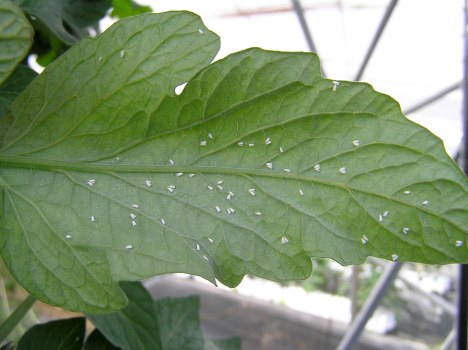
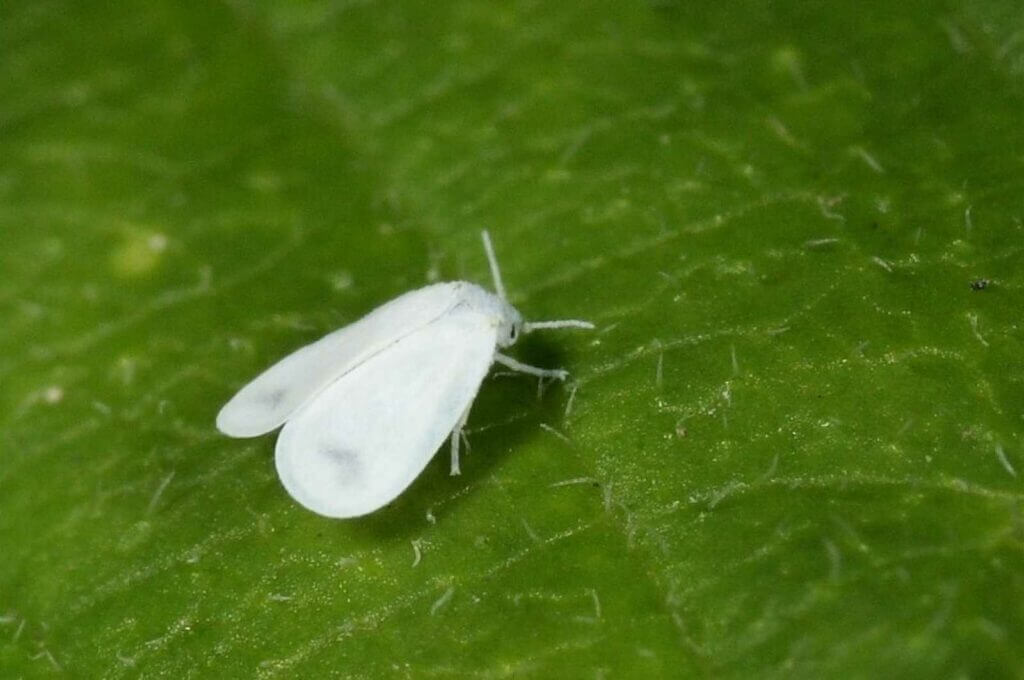
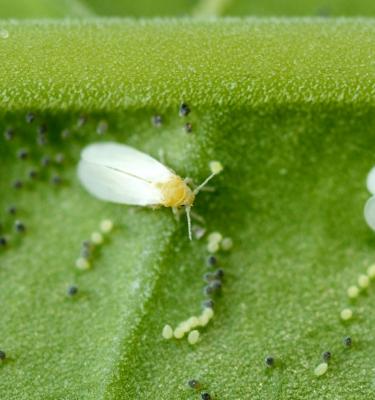
Bemisia tabaci, known as whitefly, is an insect belonging to the Aleyrodidae family. It is a pathogen that affects tomato and a wide variety of host crops. The life cycle of Bemisia tabaci consists of several stages: egg, nymph and adult. Females deposit their eggs on the underside of the leaves of the host plants, where they hatch and give way to nymphs. The nymphs feed on the phloem of plants and go through four instars before becoming adults. The adults, white in color with powdery white wings, feed on phloem and can produce large numbers of offspring under favorable conditions.
SYMPTOMS
The disease caused by Bemisia tabaci in tomatoes is characterized by the presence of adult insects and nymphs on the underside of the leaves, as well as the damage caused by their feeding. General symptoms include yellowing, wilting and deformation of leaves, and can lead to reduced yield and fruit quality. The main symptoms are:
- Yellowing of the leaves.
- Wilting and leaf deformation.
- Presence of adult insects and nymphs on the underside of the leaves.



TEMPERATURE AND HUMIDITY
25°C - 35°C
50% - 70%

HOW IS IT SPREAD?
Direct contact, Wind, Vertical transmission (plant to plant), Mechanical transmission

HOW TO REMOVE IT?
Home remedies
There are no home treatments
Chemical treatments
• RAPESEAL OIL 0.825% + PYRETHRINS 0.018% [AL] P/V
• RAPE OIL 1.53% [AL] P/V
• RAPE OIL 1.69% ( ) [AL] P/V
• RAPE OIL 70% + PYRETHRINS 0.7% [EC] P/V
• RAPE OIL 77.7% [EC] P/V
• RAPE OIL 82.53% + PYRETHRINS 0.459% [EC] P/V
• RAPE OIL 848.24 g/l [EC] P/V
• ORANGE OIL 6% [SL] P/V
• ORANGE OIL 60g/L [ME] P/S
• PARAFFIN OIL (CAS [64742-46-7]) 79% [EC] P/V
• PARAFFIN OIL (CAS [8042-47-5]) 54.6% [EW] P/V
• PARAFFIN OIL (CAS [8042-47-5]) 79% [EC] P/V
• PARAFFIN OIL (CAS [8042-47-5]) 83% [EC] P/V
• Paraffin oil 65.4% [EW] P/V
• PARAFFIN OIL 81.7% [EC] P/V
• PARAFFIN OIL 83% [EC] P/V
• ACETAMIPRID 0.5% [SL] P/V
• ACETAMIPRID 20% [SG] P/P
• ACETAMIPRID 20% [SL] P/V
• ACETAMIPRID 20% [SP] P/P
• AZADIRACTIN 1% (AS AZADIRACTIN A) [EC] P/V
• Azadirachtin 2.6% (AS AZADIRACTIN A) [EC] P/V
• CYPERMETHRIN 0.5% [DP] P/P
• CYPERMETHRIN 10% [EC] P/V
• CYPERMETHRIN 10% [EW] P/V
• CYPERMETHRIN 5% [EC] P/V
• CYANTRANILIPROL 10% + ACIBENZOLAR-S-METHYL 1.25% [SC] P/V
• DELTAMETHRIN 1.5% [EW] P/V
• DELTAMETHRIN 1.57% [SC] P/V
• DELTAMETHRIN 10% [EC] P/V
• DELTAMETHRIN 2.5% [EC] P/V
• DELTAMETHRIN 2.5% [EW] P/V
• PHENPIROXIMATE 5.12% [SC] P/V
• FLUPIRADIFURONE 0.008% [AL] P/V
• FLUPYRADIFURONE 20% [SL] P/V
• LAMBDA CYHALOTHRIN 0.0015% [ME] P/V
• LAMBDA CYHALOTHRIN 1.5% [CS] P/V
• LAMBDA CYHALOTHRIN 10% [CS] P/V
• LAMBDA CYHALOTHRIN 2.5% [WG] P/P
• LAMBDA CYHALOTHRIN 5% [EG] P/P
• PYRETHRINS 0.12% [AE] P/P
• PYRETHRINS 1.9% [EC] P/V
• Pyrethrins 12.9 g/l [EC] P/V
• PYRETHRINS 2% (PYRETHRE EXTR.) [EC] P/V
• PYRETHRINS 2% [EC] P/V
• PYRETHRINS 4.65% (as pyrethrum extract) [EC] P/V
• PYRETHRINS 4% (PYRETHHRINE EXTR.) [EC] P/V
• PYRETHRINS 4% [EC] P/V
• PYRIPROXIFEN 10% [EC] P/V
• POTASSIUM SALTS OF FATTY ACIDS C14-C20 48% [EW] P/V
• POTASSIUM SALTS OF VEGETABLE FATTY ACIDS 13.04% [SL] P/V
• POTASSIUM SALTS OF VEGETABLE FATTY ACIDS 15% [SL] P/V
• POTASSIUM SALTS OF VEGETABLE FATTY ACIDS 41.6% [SL] P/V
• SPIROMESIFEN 24% [SC] P/V
• SPIROTETRAMAT 10% [SC] P/V
• SPIROTETRAMAT 15% [OD] P/V
• SULFOXAFLOR 12% [SC] P/V
• ADHESIVE TRAPS
• CHROMATIC TRAPS
Authorized treatments in organic farming
• RAPESEAL OIL 0.825% + PYRETHRINS 0.018% [AL] P/V
• RAPE OIL 1.53% [AL] P/V
• RAPE OIL 1.69% ( ) [AL] P/V
• RAPE OIL 70% + PYRETHRINS 0.7% [EC] P/V
• RAPE OIL 77.7% [EC] P/V
• RAPE OIL 82.53% + PYRETHRINS 0.459% [EC] P/V
• RAPE OIL 848.24 g/l [EC] P/V
• ORANGE OIL 6% [SL] P/V
• ORANGE OIL 60g/L [ME] P/S
• PARAFFIN OIL (CAS [64742-46-7]) 79% [EC] P/V
• PARAFFIN OIL (CAS [8042-47-5]) 54.6% [EW] P/V
• PARAFFIN OIL (CAS [8042-47-5]) 79% [EC] P/V
• PARAFFIN OIL (CAS [8042-47-5]) 83% [EC] P/V
• Paraffin oil 65.4% [EW] P/V
• PARAFFIN OIL 81.7% [EC] P/V
• PARAFFIN OIL 83% [EC] P/V
• AZADIRACTIN 1% (AS AZADIRACTIN A) [EC] P/V
• Azadirachtin 2.6% (AS AZADIRACTIN A) [EC] P/V
• LAMBDA CYHALOTHRIN 0.0015% [ME] P/V
• LAMBDA CYHALOTHRIN 1.5% [CS] P/V
• LAMBDA CYHALOTHRIN 10% [CS] P/V
• LAMBDA CYHALOTHRIN 2.5% [WG] P/P
• LAMBDA CYHALOTHRIN 5% [EG] P/P
• PYRETHRINS 0.12% [AE] P/P
• PYRETHRINS 1.9% [EC] P/V
• Pyrethrins 12.9 g/l [EC] P/V
• PYRETHRINS 2% (PYRETHRE EXTR.) [EC] P/V
• PYRETHRINS 2% [EC] P/V
• PYRETHRINS 4.65% (as pyrethrum extract) [EC] P/V
• PYRETHRINS 4% (PYRETHHRINE EXTR.) [EC] P/V
• PYRETHRINS 4% [EC] P/V
• POTASSIUM SALTS OF FATTY ACIDS C14-C20 48% [EW] P/V
• POTASSIUM SALTS OF VEGETABLE FATTY ACIDS 13.04% [SL] P/V
• POTASSIUM SALTS OF VEGETABLE FATTY ACIDS 15% [SL] P/V
• POTASSIUM SALTS OF VEGETABLE FATTY ACIDS 41.6% [SL] P/V
• ADHESIVE TRAPS
• CHROMATIC TRAPS
Insect allies
PREDATORY MITES
LADYBUGS
LACEWINGS
PARASITIC WASPS
HOVERFLIES OR PARASITIC FLIES
PREDATORY BUGS
There are no natural allies
Mycodiplosis oidii (predatory mosquito)
EFFECTIVE PRODUCTS TO ELIMINATE THIS DISEASE
Sponsored link

Sponsored link
Sponsored link


Sponsored link
Sponsored link
Sponsored link
Sponsored link


Sponsored link
Sponsored link
Effective against all types of fungi

Sponsored link
Sponsored link


Sponsored link
Sponsored link

Sponsored link
Sponsored link


Sponsored link
- Use anti-insect meshes in greenhouses and protected cultivation structures.
- Implement crop rotation to reduce the accumulation of Bemisia tabaci populations.
- Employ integrated pest management practices, such as the introduction of natural enemies and the conservation of biodiversity.
- Apply selective chemical treatments and follow the recommendations for use to control insect populations.
- Remove and destroy infested plants to prevent the spread of the pest.
Recommendations

Enjoy idMicrobe TOTALLY FREE, with no trial periods.


