

Minadores
Celery Fly
Phylophylla Heraclei
Pathogen:
Insect
Type:
Risk to the plant:
HIGH

DESCRIPTION
WHO CAUSES IT?
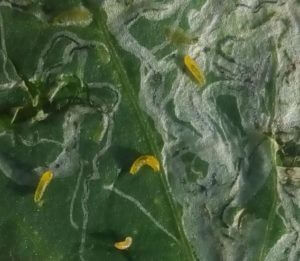
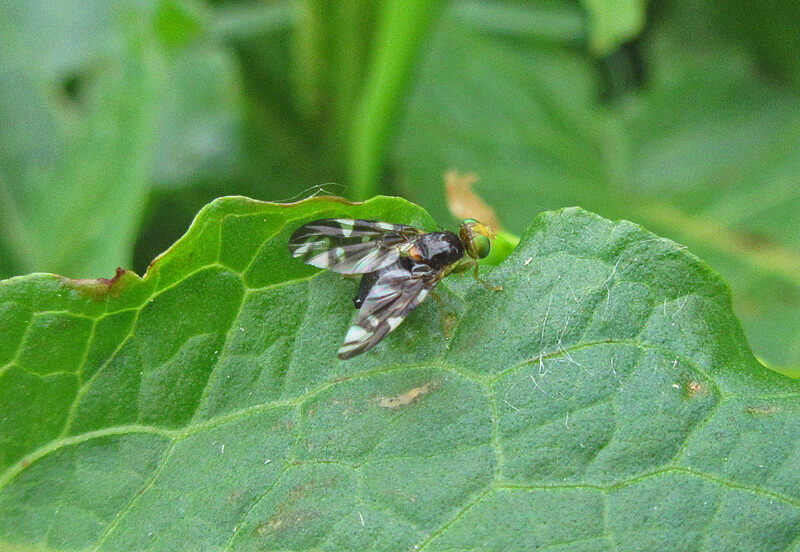
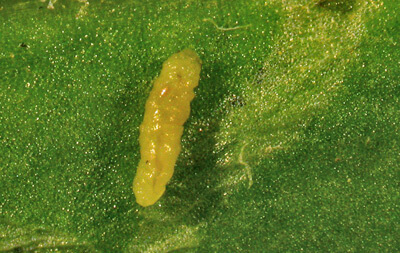
Phylophylla heraclei, commonly known as the celery fly, is a dipteran of the Agromyzidae family. This insect is characterized by its small size, with adults measuring around 3 to 4 mm long. They have a black body with metallic reflections and transparent wings. Females lay their eggs in the tissue of celery leaves, where the larvae emerge after a few days. The larvae are cream colored and feed on leaf tissue, creating galleries or mines as they develop through three larval stages. After about two weeks, the mature larvae drop to the ground to pupate. The pupal stage lasts one to two weeks, after which adults emerge ready to start a new cycle. Under favorable conditions, there can be several generations per year, which increases pressure on celery crops.
SYMPTOMS
The celery fly causes a disease in celery that is mainly manifested by foliar damage caused by the feeding larvae. This damage reduces the photosynthetic capacity of plants, weakening them and reducing their growth and yield. The galleries created by the larvae can also serve as an entrance for secondary pathogens, aggravating symptoms.
- Meandering galleries in the leaves.
- Discolored and deformed leaves.
- Reduction in the growth rate.
- General weakening of plants.
- Loss of vigor.
- Greater susceptibility to secondary infections.


TEMPERATURE AND HUMIDITY
15-25°C
60-80%

HOW IS IT SPREAD?
Direct contact, Wind, Contaminated plant material, Agricultural machinery, Transport of infected plants, Soil movement

HOW TO REMOVE IT?
Home remedies
There are no home treatments
Chemical treatments
• DELTAMETHRIN 1.57% [SC] P/V
• DELTAMETHRIN 2.5% [EC] P/V
Authorized treatments in organic farming
-
Insect allies
PREDATORY MITES
LADYBUGS
LACEWINGS
PARASITIC WASPS
HOVERFLIES OR PARASITIC FLIES
PREDATORY BUGS
There are no natural allies
Mycodiplosis oidii (predatory mosquito)
EFFECTIVE PRODUCTS TO ELIMINATE THIS DISEASE
Sponsored link
Sponsored link


Sponsored link
Sponsored link
Sponsored link


Sponsored link
Sponsored link
Effective against all types of fungi

Sponsored link


Sponsored link
Sponsored link

Sponsored link


Sponsored link
- Regularly monitor crops for early signs of infestation.
- Use yellow sticky traps to capture and monitor the adult population.
- Implement crop rotation to interrupt the insect cycle.
- Apply protective covers such as fine mesh on crops to prevent oviposition.
- Encourage the presence of natural predators and parasitoids that attack larvae and pupae.
- Maintain adequate field hygiene, eliminating crop residues and weeds that may harbor larvae.
- Avoid excess nitrogen fertilization that can make plants more attractive to flies.
- Carry out phytosanitary treatments with specific insecticides at key moments in the insect cycle.
Recommendations

Enjoy idMicrobe TOTALLY FREE, with no trial periods.


