


Escamas
Fruit lice or scale insects: what they are, how they develop, and how to effectively eliminate them from fruit
Lice or scales
Different species
Pathogen:
Insect
Type:
Risk to the plant:
HIGH
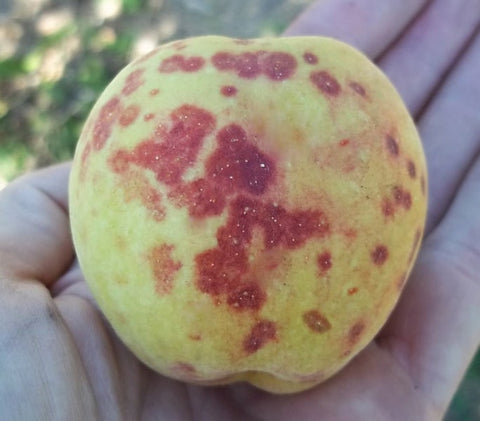
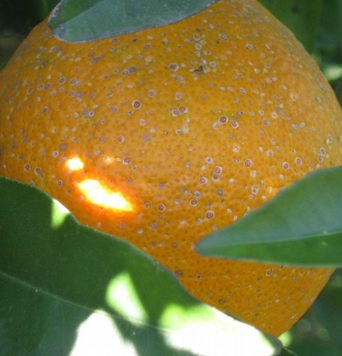

DESCRIPTION
WHO CAUSES IT?
Lice, or scale insects, are insects belonging primarily to the order Hemiptera, which includes numerous species from the families Diaspididae, Coccidae, Pseudococcidae, and other scale insect families. They are small, phytophagous insects that feed by sucking sap from plant tissues using specialized mouthparts. Depending on the group, adult females may remain practically immobile and be protected by a waxy covering, a hardened scale, or cottony secretions, while adult males are usually small and mobile, with a primarily reproductive function. Females may lay eggs under their protective covering or directly produce juvenile forms. After hatching, nymphs emerge, which are especially mobile during the first instar, known in many groups as dispersal stages. These nymphs seek suitable tissues to feed on and subsequently settle, passing through different stages until reaching maturity. In some species, several generations can occur per year, especially under warm conditions. Populations can persist on the plant for extended periods and increase progressively, while forms protected by shields, waxes, or secretions are more difficult to reach with phytosanitary treatments. Dispersal can occur through mobile individuals, wind, contact between plants, and the transport of infested plant material.
SYMPTOMS
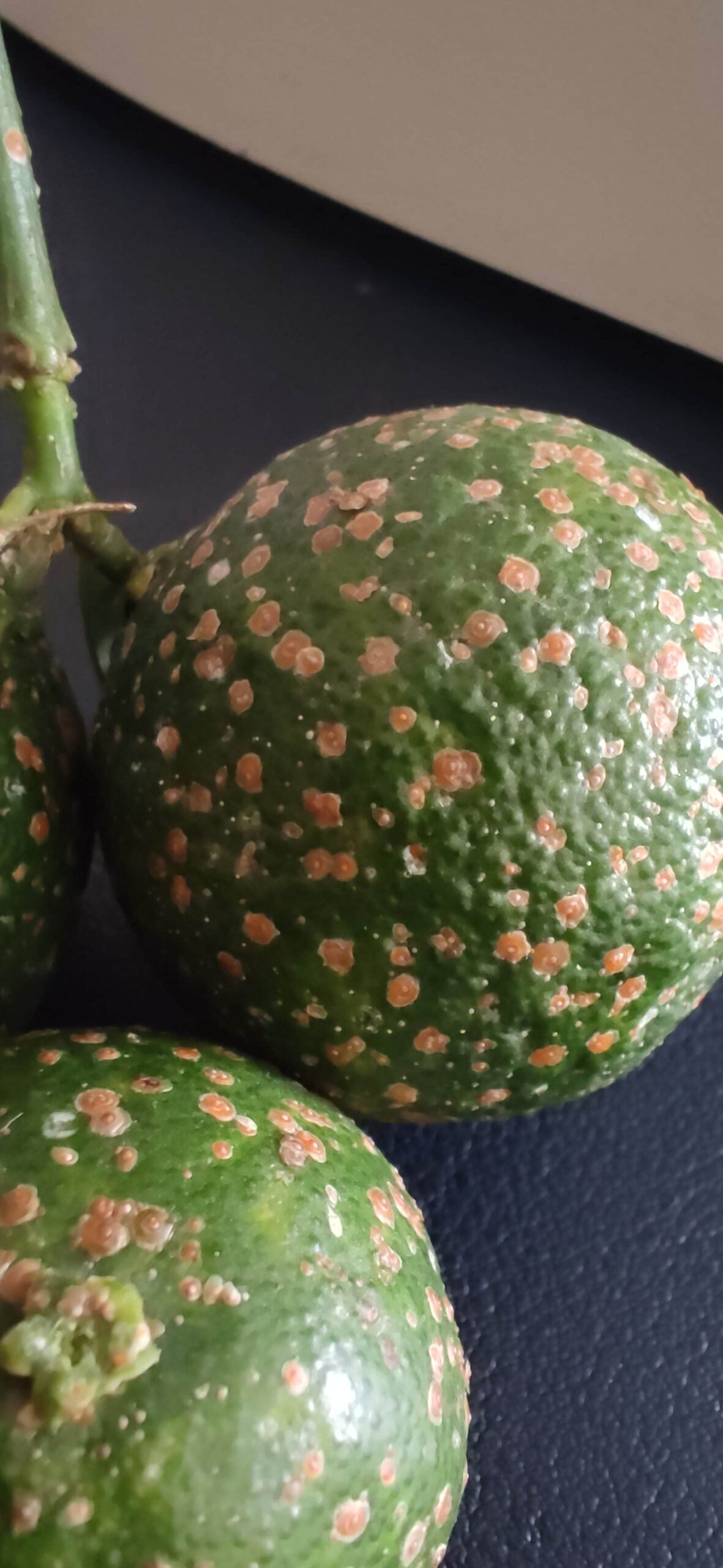
In fruit, scale insects feed directly on plant tissues, causing sap loss and surface damage that can significantly reduce commercial quality. Some species establish themselves on the fruit surface and form visible colonies, while others produce small lesions around the feeding points. Prolonged feeding can weaken the plant and lead to reduced growth and fruit development. Some species also produce honeydew, a sugary substance that promotes the development of sooty mold on the surface and causes dark spots. In severe infestations, the fruit can become covered with numerous scale insects and suffer considerable commercial depreciation.
• Presence of scale insects, mealybugs, or small insects on the fruit surface
• Punctures and small lesions around feeding sites
• Yellowish, brownish, or reddish discoloration
• Surface spots and necrotic areas in heavy infestations
• Presence of honeydew on the surface
• Appearance of sooty mold or black deposits on the fruit
• Dirty, sticky, or blackened appearance of the surface
• Reduction in aesthetic and commercial quality
• Deformities or developmental abnormalities of the fruit
• General weakening of the plant in heavy infestations
• Presence of nymphs and adults clustered in sheltered areas
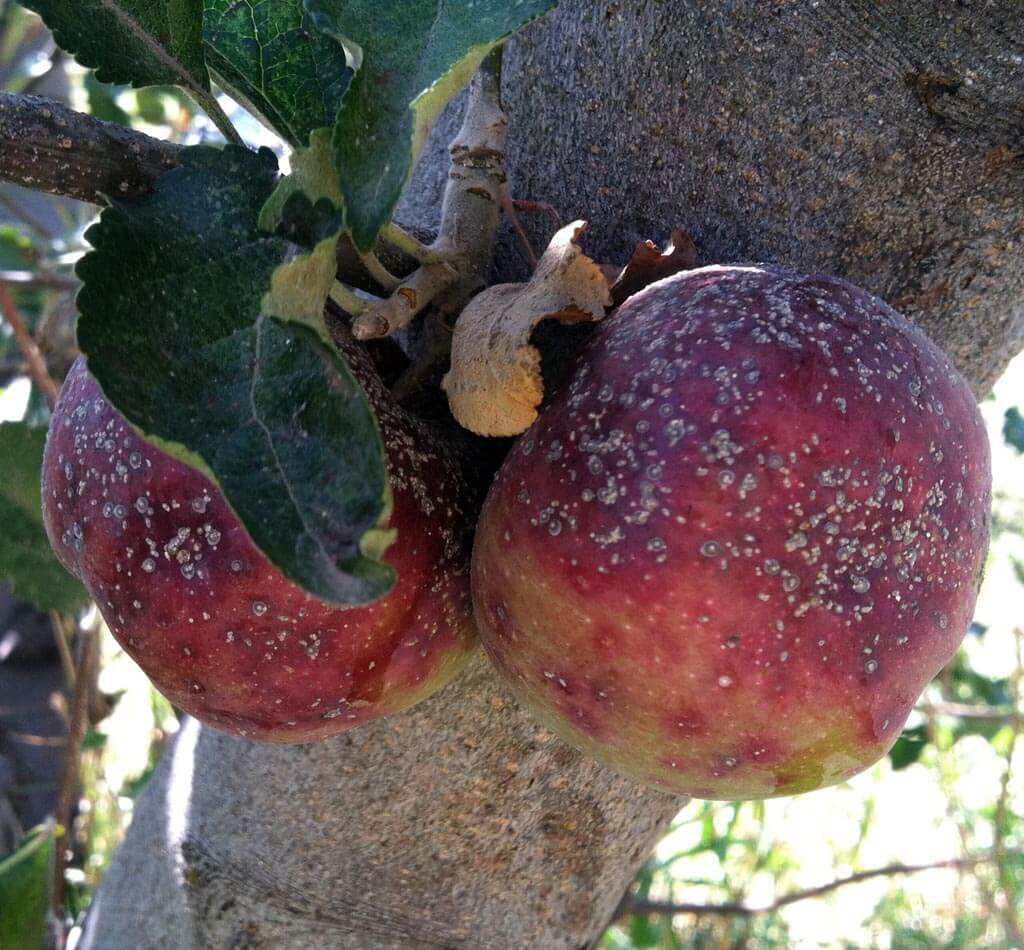
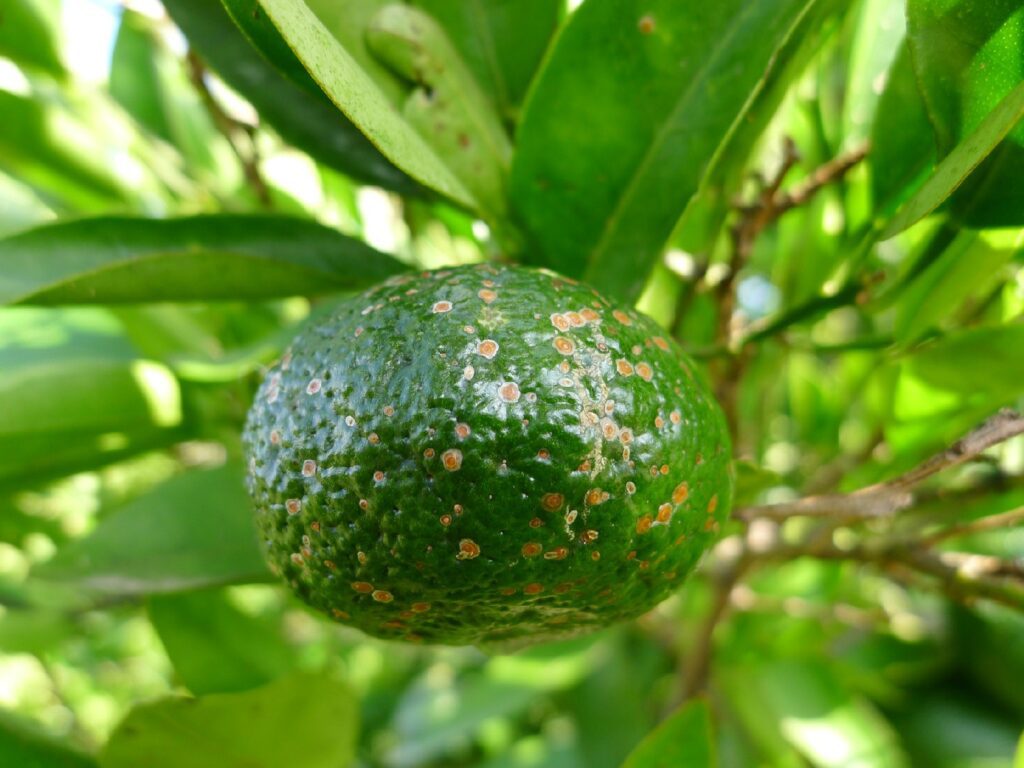

TEMPERATURE AND HUMIDITY
20–30 °C
60–90 %

HOW IS IT SPREAD?
Contact between plants, dispersal of nymphs, wind, transport of infested plant material, transport of infested fruit, contaminated tools, agricultural machinery, animals, movement of workers

HOW TO REMOVE IT?
Home remedies
There are no home treatments
Chemical treatments
• ABAMECTIN 0.0015% + PYRETHRINS 0.02% [AL] P/V
• RAPESEAL OIL 0.825% + PYRETHRINS 0.018% [AL] P/V
• RAPE OIL 1.53% [AL] P/V
• RAPE OIL 1.69% ( ) [AL] P/V
• RAPE OIL 77.7% [EC] P/V
• RAPE OIL 848.24 g/l [EC] P/V
• ORANGE OIL 60g/L [ME] P/S
• PARAFFIN OIL (CAS [97862-82-3]) 40% [EW] P/V
• PARAFFIN OIL (CAS [97862-82-3]) 80% [EC] P/V
• ACETAMIPRID 0.005% [AL] P/V
• ACETAMIPRID 20% [SG] P/P
• ACETAMIPRID 20% [SP] P/P
• AZADIRACTIN 1% (AS AZADIRACTIN A) [EC] P/V
• Azadirachtin 2.6% (AS AZADIRACTIN A) [EC] P/V
• CYPERMETHRIN 5% [EC] P/V
• CYPERMETHRIN 50% [EC] P/V
• DELTAMETHRIN 1.57% [SC] P/V
• DELTAMETHRIN 2.5% [EC] P/V
• FLUPIRADIFURONE 0.008% [AL] P/V
• LAMBDA CYHALOTHRIN 5% [EG] P/P
• PYRIPROXIFEN 10% [EC] P/V
• POTASSIUM SALTS OF FATTY ACIDS Unsaturated C7-C18 & C18 Fatty Acids (CAS [67701-09-1]) 515 g/L [SL] w/v
• Potassium Salts of Unsaturated C7-C18 & C18 Fatty Acids 10.2 g/L [AL] w/v
• Potassium Salts of C14-C20 Fatty Acids 48% [EW] w/v
• Potassium Salts of Vegetable Fatty Acids 13.04% [SL] w/v
• Spiromesifen 24% [SC] w/v
• Taufluvalinate 24% [EW] w/v
Authorized treatments in organic farming
• RAPESEAL OIL 0.825% + PYRETHRINS 0.018% [AL] P/V
• RAPE OIL 1.53% [AL] P/V
• RAPE OIL 1.69% ( ) [AL] P/V
• RAPE OIL 77.7% [EC] P/V
• RAPE OIL 848.24 g/l [EC] P/V
• ORANGE OIL 60g/L [ME] P/S
• PARAFFIN OIL (CAS [97862-82-3]) 40% [EW] P/V
• PARAFFIN OIL (CAS [97862-82-3]) 80% [EC] P/V
• AZADIRACTIN 1% (AS AZADIRACTIN A) [EC] P/V
• Azadirachtin 2.6% (AS AZADIRACHTIN A) [EC] w/v
• LAMBDA CYHALOTHRIN 5% [EG] w/w
• POTASSIUM SALTS OF C7-C18 & C18 UNSATURATED FATTY ACIDS (CAS [67701-09-1]) 515 g/L [SL] w/v
• POTASSIUM SALTS OF C7-C18 & C18 UNSATURATED FATTY ACIDS 10.2 g/L [AL] w/v
• POTASSIUM SALTS OF C14-C20 FATTY ACIDS 48% [EW] w/v
• POTASSIUM SALTS OF VEGETABLE FATTY ACIDS 13.04% [SL] w/v
Insect allies
PREDATORY MITES
LADYBUGS
LACEWINGS
PARASITIC WASPS
HOVERFLIES OR PARASITIC FLIES
PREDATORY BUGS
There are no natural allies
Mycodiplosis oidii (predatory mosquito)
EFFECTIVE PRODUCTS TO ELIMINATE THIS DISEASE





• Regularly monitor fruits, leaves, shoots, and branches for the first colonies.
• Use visual inspections and traps or monitoring methods when appropriate for the species.
• Manually remove or prune heavily infested parts when possible.
• Remove plant debris and severely affected material from the crop.
• Control weeds that may serve as a refuge or source of re-infestation.
• Encourage the presence of natural enemies such as parasitoids and predators.
• Avoid excessive nitrogen fertilization, which promotes excessively tender plant growth.
• Apply treatments during mobile juvenile stages, when the protective scales are not yet fully developed.
• Ensure good coverage of the plant surface during treatments.
• Use mineral oils or other authorized products when appropriate for the species and crop.
• Alternate active ingredients with different modes of action to reduce the risk of resistance. • Respect the dosage, maximum number of applications, and conditions of use established in the product authorization.
• Avoid unnecessary treatments that may affect natural enemies and promote new infestations.
Recommendations



Explore more tools
Services
Contact
Legal
©2026 by ZERIMAR S.A.R.L. All rights reserved