

Bacteriosis
Watery pseudostem rot or soft rot: what it is, how it occurs, and how to effectively eliminate it.
Watery pseudostem rot or soft rot
Erwinia sp. / Dickeya sp.
Pathogen:
Bacterium
Type:
Risk to the plant:
CRITICAL
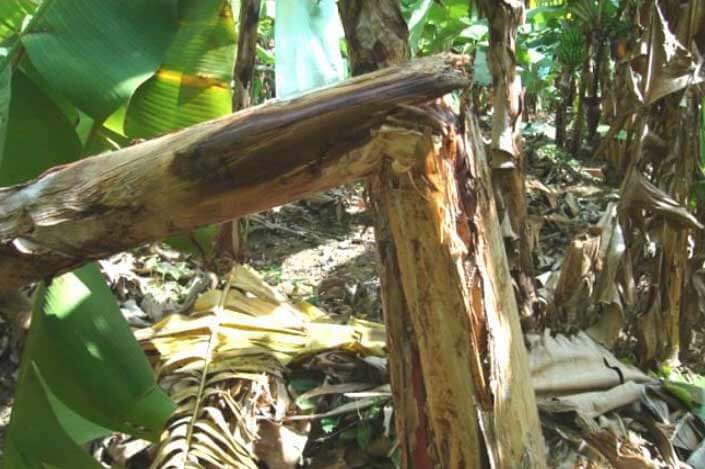
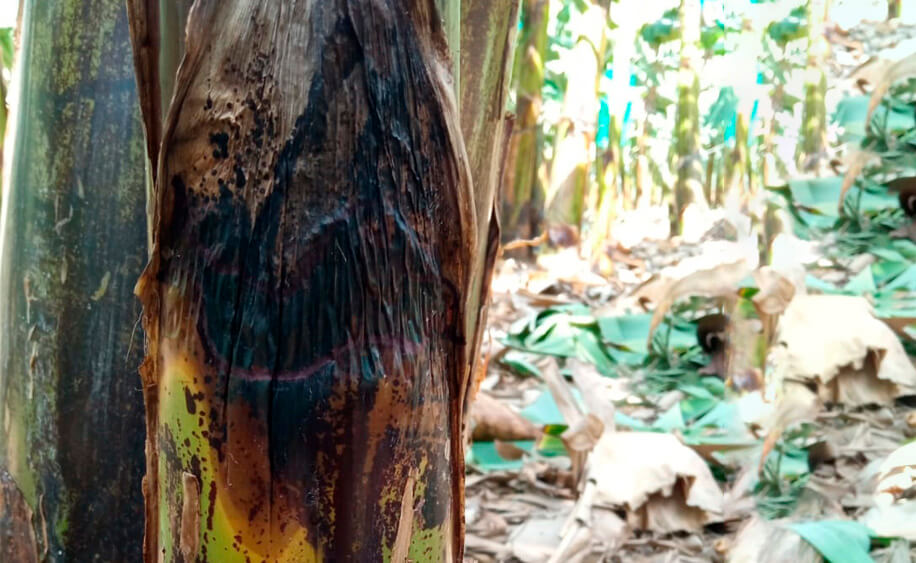

DESCRIPTION
WHO CAUSES IT?
Erwinia sp. and Dickeya sp. They are phytopathogenic bacteria that affect a wide variety of crops, including bananas. These bacteria are opportunistic and enter the plant through wounds, stomata or damaged tissues. Once inside, they colonize the vascular system and internal tissues, releasing pectinolytic enzymes that degrade cell walls and cause tissue breakdown. The multiplication of these bacteria is favored by conditions of high humidity and moderate to high temperatures, which accelerates the process of necrosis and rot. These bacteria can survive in plant debris, soil and water, persisting in the environment until they find a new suitable host. The infection intensifies when there are predisposing factors such as water stress, waterlogged soils or the presence of wounds on the plant.
SYMPTOMS
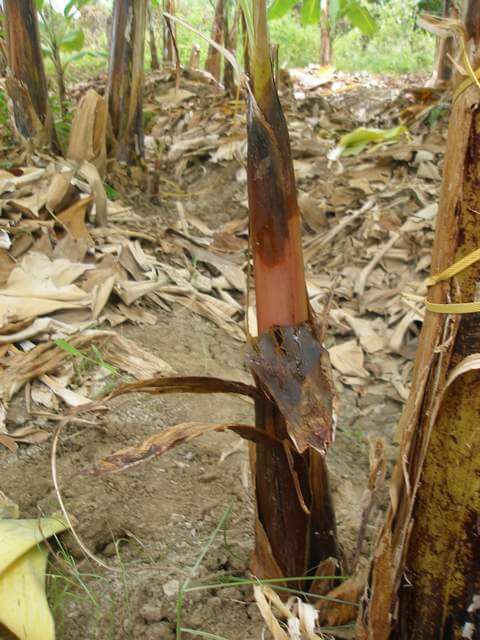
Watery pseudostem rot or soft rot seriously affects the structure of the banana tree, weakening its support capacity and causing its collapse. The disease begins with bacterial infiltration into the internal tissues, where a progressive degradation of the pseudostem occurs. As the infection progresses, the tissues decompose into a viscous mass with an unpleasant odor, compromising the functionality of the plant and its production.
- Appearance of watery areas at the base of the pseudostem.
- Progressive softening of internal tissues.
- Emission of a characteristic foul odor due to bacterial decomposition.
- Wilting and collapse of the pseudostem.
- Secretion of bacterial exudates in the affected area.
- Internal rot that advances to affect the corm.
- Loss of structure and fall of the plant in advanced stages.


TEMPERATURE AND HUMIDITY
25°C - 35°C
85% - 100%

HOW IS IT SPREAD?
Contaminated water, agricultural tools, infected plant remains, contact between plants, vector insects, contaminated soil

HOW TO REMOVE IT?
Home remedies
There are no home treatments
Chemical treatments
• OXYCHLORURE DE CUIVRE 37,5% (EXPR. EN CU) [WG] P/P
• OXYCHLORURE DE CUIVRE 38% (EXPR. EN CU) [SC] P/V
Authorized treatments in organic farming
• OXYCHLORURE DE CUIVRE 37,5% (EXPR. EN CU) [WG] P/P
• OXYCHLORURE DE CUIVRE 38% (EXPR. EN CU) [SC] P/V
Insect allies
PREDATORY MITES
LADYBUGS
LACEWINGS
PARASITIC WASPS
HOVERFLIES OR PARASITIC FLIES
PREDATORY BUGS
There are no natural allies
Mycodiplosis oidii (predatory mosquito)
EFFECTIVE PRODUCTS TO ELIMINATE THIS DISEASE
Sponsored link
Sponsored link


Sponsored link
Sponsored link
Sponsored link


Sponsored link
Sponsored link
Effective against all types of fungi

Sponsored link


Sponsored link
Sponsored link

Sponsored link


Sponsored link
- Use pathogen-free propagation material to avoid the introduction of bacteria into the culture.
- Implement disinfection practices on pruning and cutting tools to reduce transmission.
- Avoid waterlogging of the soil through good drainage, since high humidity favors infection.
- Apply crop rotations in areas with a history of the disease to reduce the bacterial load.
- Remove and destroy infected plants to minimize the spread of the pathogen.
- Regulate nitrogen fertilization, since excess nitrogen can make plants more susceptible.
- Promote adequate irrigation management, avoiding excesses that favor bacterial proliferation.
- Periodically monitor the crop to detect early symptoms and act quickly.
- Apply biological products or copper-based treatments to reduce the bacterial load.
Recommendations

Enjoy idMicrobe TOTALLY FREE, with no trial periods.


