

Royas
Violet Rust
Phragmidium Violaceum
Pathogen:
Fungus
Type:
Risk to the plant:
HIGH

DESCRIPTION
WHO CAUSES IT?
The pathogen Phragmidium violaceum is a fungus that causes the disease known as violet rust in blackberries. This fungus belongs to the Phragmidiaceae family and is characterized by its complexity and diversity in terms of spore formation and infection of its host. In the spring, the spores germinate and produce specialized structures called uridiniums on young blackberry leaves. These uridiniums release uridiniospore spores that are capable of infecting other leaves and spreading the disease. During the summer, the fungus continues to develop and produces telia, which are durable structures containing teliospores. These teliospores are able to survive adverse environmental conditions and, when the following spring arrives, they germinate to release basidiospores that initiate new infections. The infection cycle is completed when these basidiospores infect the blackberry leaves, allowing the fungus to perpetuate its presence in the crop.
SYMPTOMS
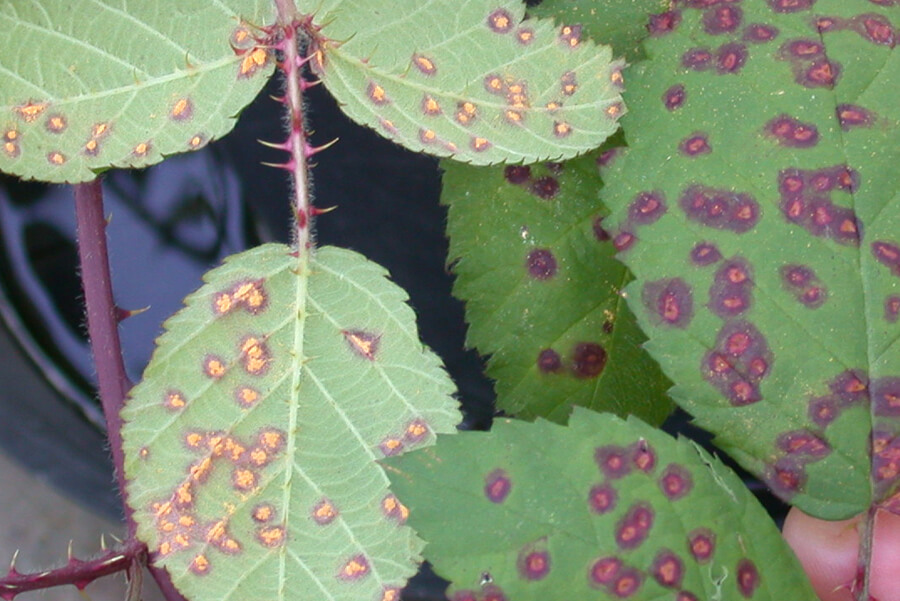
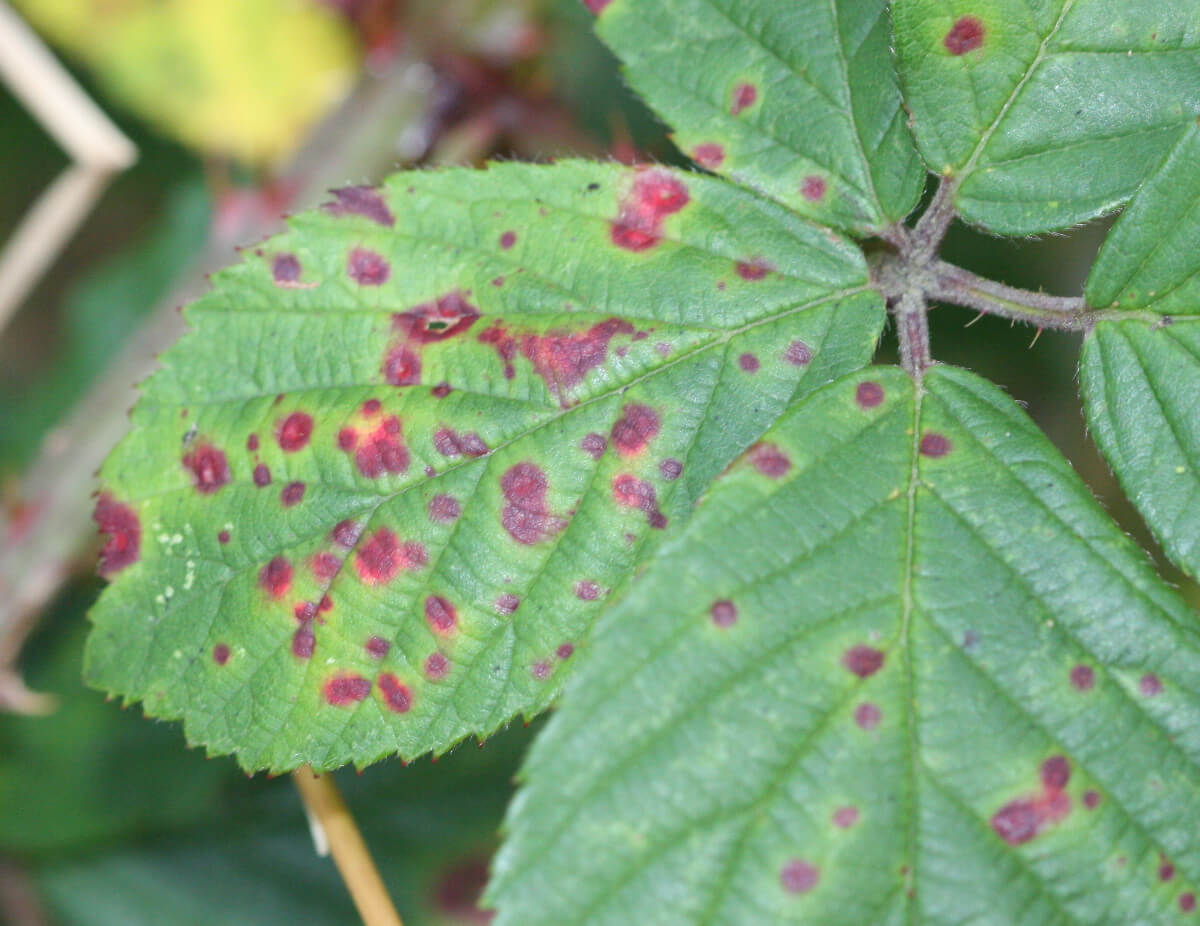
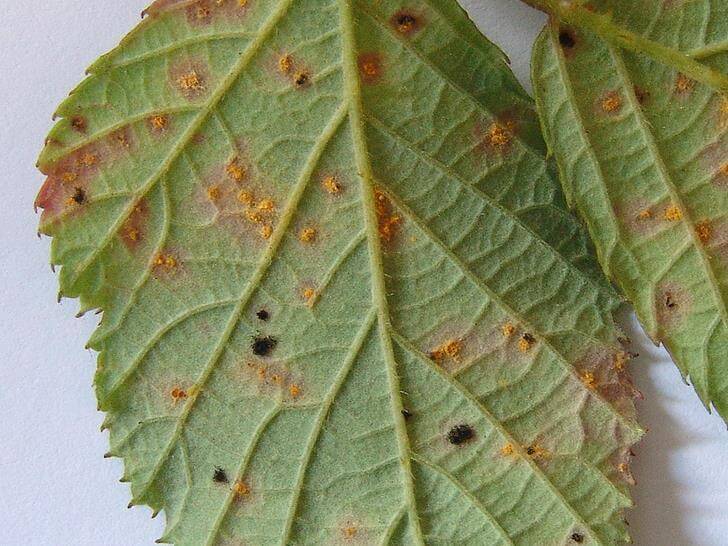
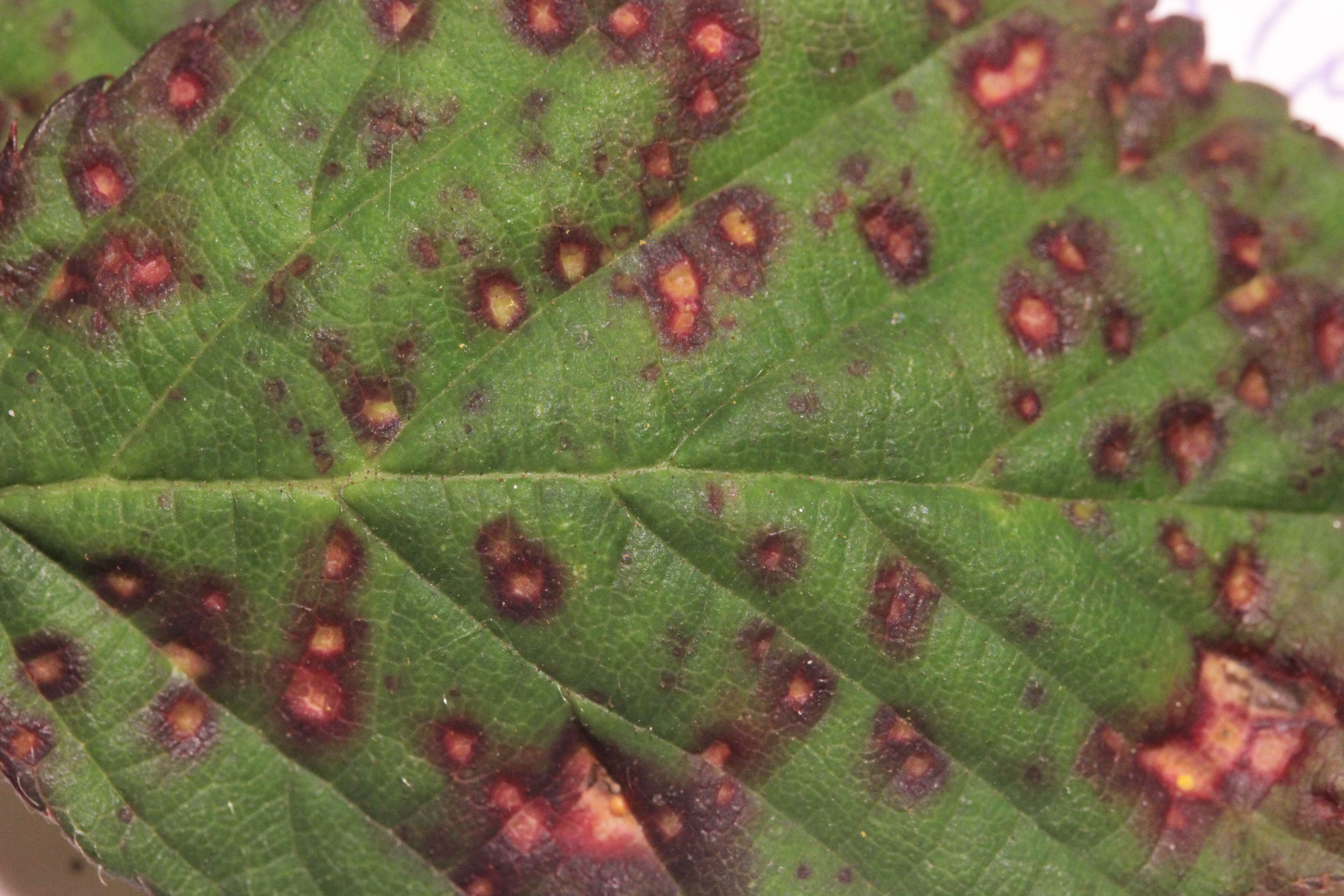
Violet rust affects blackberries, causing several symptoms that can seriously compromise the health and productivity of the plant. The initial infection manifests itself as small yellow Taches on the surface of the leaves, which later develop into dark purple pustules on the underside of the leaves. These pustules are masses of fungal spores that can be spread by wind and rain. Over time, infected leaves may show signs of chlorosis, turning brown and dropping prematurely, reducing the plant's ability to photosynthesize and negatively affecting fruit development. Symptoms include:
- Yellow Taches on the surface of the leaves.
- Dark violet pustules on the underside of the leaves.
- Chlorosis and yellowing of the leaves.
- Withering and premature fall of leaves.
- Reduction in plant vigor and growth.
- Decrease in the production and quality of the fruits.


TEMPERATURE AND HUMIDITY
15°C - 25°C
80% - 100%

HOW IS IT SPREAD?
Wind, rainwater, contaminated tools, contact between plants, spores carried by insects

HOW TO REMOVE IT?
Home remedies
There are no home treatments
Chemical treatments
• ORANGE OIL 60g/L [ME] P/S
• DIFENOCONAZOLE 25% [EC] P/V
Authorized treatments in organic farming
• ORANGE OIL 60g/L [ME] P/S
Insect allies
PREDATORY MITES
LADYBUGS
LACEWINGS
PARASITIC WASPS
HOVERFLIES OR PARASITIC FLIES
PREDATORY BUGS
There are no natural allies
Mycodiplosis oidii (predatory mosquito)
EFFECTIVE PRODUCTS TO ELIMINATE THIS DISEASE
Sponsored link
Sponsored link


Sponsored link
Sponsored link
Sponsored link


Sponsored link
Sponsored link
Effective against all types of fungi

Sponsored link


Sponsored link
Sponsored link

Sponsored link


Sponsored link
- Regularly monitor blackberry plants for early signs of violet rust.
- Implement crop rotation practices to reduce the accumulation of inoculum in the soil.
- Avoid overhead irrigation and opt for drip irrigation methods to minimize moisture on the foliage.
- Remove and destroy infected leaves and branches to reduce the source of spores.
- Use blackberry varieties that are resistant to violet rust when possible.
- Apply specific fungicides against rust preventively or at the first sign of the disease, following the manufacturer's instructions.
- Improve air circulation in the crop through adequate plant spacing and regular pruning.
- Maintain a balanced fertilization program to strengthen plants and increase their resistance to diseases.
- Implement integrated pest management (IPM) practices that include the use of biological and chemical controls in a sustainable manner.
Recommendations

Enjoy idMicrobe TOTALLY FREE, with no trial periods.


