

Septoriosis
Septoria
Septoria Lactucae
Pathogen:
Fungus
Type:
Risk to the plant:
INTERMEDIATE

DESCRIPTION
WHO CAUSES IT?
Septoria lactucae is a phytopathogenic fungus that mainly affects lettuce and similar plants. This organism produces spores known as conidia, which are dispersed through wind, rain or irrigation. These spores germinate on the surface of the leaves when they find optimal humidity and temperature conditions. Upon germination, the fungus penetrates the leaf tissue and begins to develop reproductive structures, such as pycnidia, on the affected leaves. Within the pycnidia, new conidia are produced that are released to continue infecting other areas of the plant or nearby plants. This process can be repeated several times during the growing season, facilitating the spread of the disease, especially in prolonged wet conditions. In severe cases, it can survive in the remains of infected plants or in the soil, which makes its eradication difficult and favors reinfection in successive cycles.
SYMPTOMS
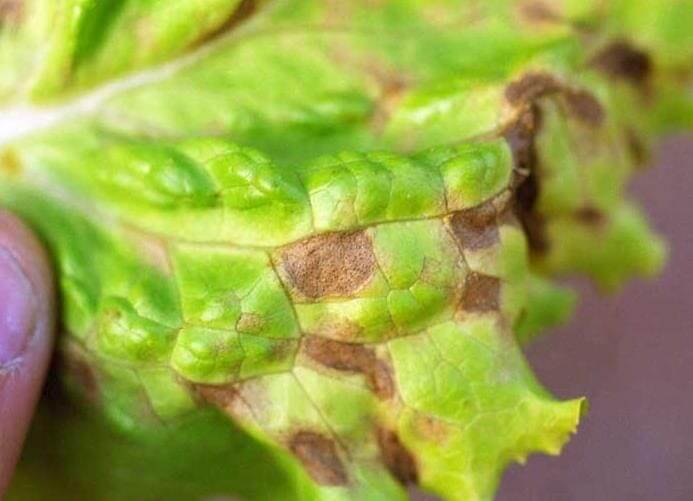
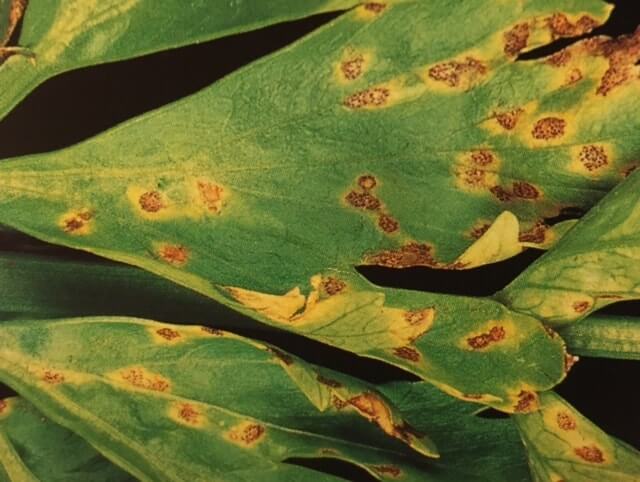
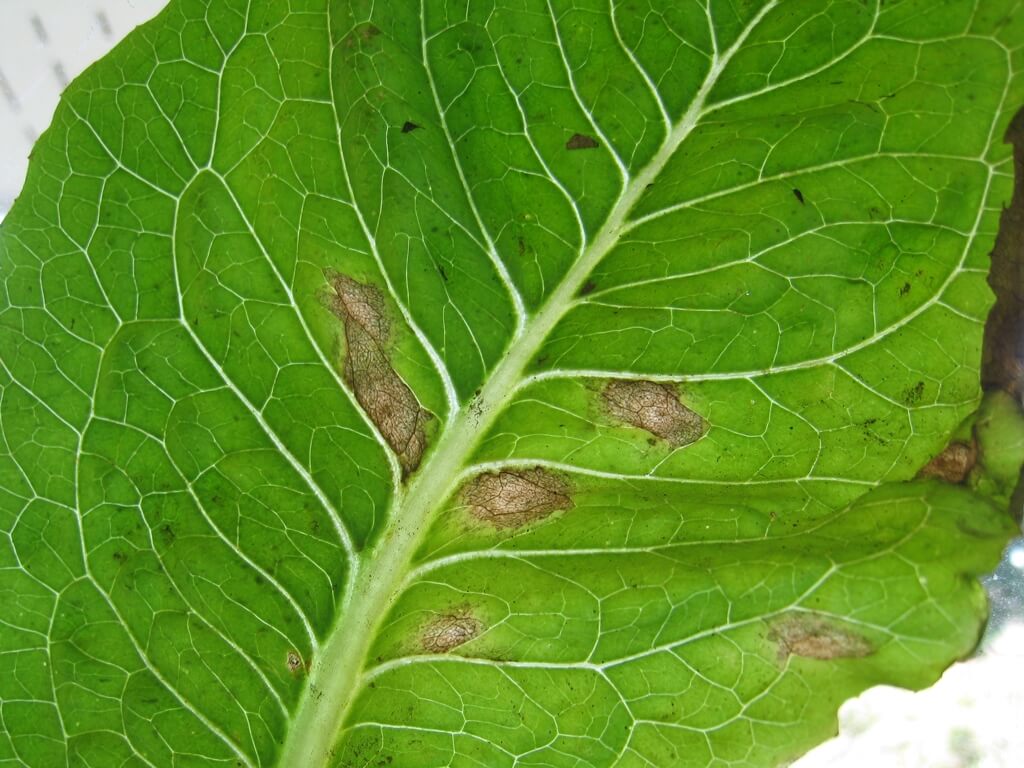
Septoria affects lettuce causing leaf lesions that compromise its health and quality. These lesions begin as small chlorotic Taches that expand rapidly, becoming necrotic in the center and presenting darker edges. Over time, the leaves deteriorate and the photosynthetic capacity of the plant is reduced, which impacts its growth and production.
- Small circular light brown Taches on the leaves, with dark edges.
- Lesions that expand progressively, becoming necrotic in the center.
- Premature defoliation in severe cases, weakening the plant.
- Decrease in the commercial quality of the crop due to the visual deterioration of the leaves.
- Reduction in general plant growth due to the loss of functional leaf tissue.


TEMPERATURE AND HUMIDITY
15-25°C
80-100%

HOW IS IT SPREAD?
Aerial spores, raindrops, overhead irrigation, infected plant debris, contaminated tools

HOW TO REMOVE IT?
Home remedies
There are no home treatments
Chemical treatments
• AZOXISTROBIN 20% + DIFENOCONAZOLE 12.5% [SC] P/V
• AZOXISTROBIN 25% [SC] P/V
• DIFENOCONAZOLE 25% [EC] P/V
• CUPRIC HYDROXIDE 25% (EXPR. IN CU) [WG] P/P
• COPPER OXYCHLORIDE 35% (EXPR. IN CU) [WG] P/P
• COPPER OXYCHLORIDE 38% (EXPR. IN CU) [SC] P/V
• COPPER OXYCHLORIDE 50% (EXPR. IN CU) [WP] P/P
• CUPROUS OXIDE 50% (EXPR. IN CU) [WP] P/P
• PIRACLOSTROBIN 6.7% + BOSCALIDE 26.7% ( ) [WG] P/P
• CUPROCALCIC SULFATE 20% (EXPR. IN CU) [WG] P/P
• CUPROCALCIC SULFATE 20% (EXPR. IN CU) [WP] P/P
• CUPROCALCIC SULFATE 20% (EXPR. IN CU) [WG] P/P
• CUPROCALCIC SULFATE 20% [WP] P/P
Authorized treatments in organic farming
• CUPRIC HYDROXIDE 25% (EXPR. IN CU) [WG] P/P
• COPPER OXYCHLORIDE 35% (EXPR. IN CU) [WG] P/P
• COPPER OXYCHLORIDE 38% (EXPR. IN CU) [SC] P/V
• COPPER OXYCHLORIDE 50% (EXPR. IN CU) [WP] P/P
• CUPROUS OXIDE 50% (EXPR. IN CU) [WP] P/P
• CUPROCALCIC SULFATE 20% (EXPR. IN CU) [WG] P/P
• CUPROCALCIC SULFATE 20% (EXPR. IN CU) [WP] P/P
• CUPROCALCIC SULFATE 20% (EXPR. IN CU) [WG] P/P
• CUPROCALCIC SULFATE 20% [WP] P/P
Insect allies
PREDATORY MITES
LADYBUGS
LACEWINGS
PARASITIC WASPS
HOVERFLIES OR PARASITIC FLIES
PREDATORY BUGS
There are no natural allies
Mycodiplosis oidii (predatory mosquito)
EFFECTIVE PRODUCTS TO ELIMINATE THIS DISEASE
Sponsored link
Sponsored link


Sponsored link
Sponsored link
Sponsored link


Sponsored link
Sponsored link
Effective against all types of fungi

Sponsored link


Sponsored link
Sponsored link

Sponsored link


Sponsored link
- Use lettuce varieties resistant or tolerant to Septoria lactucae when available.
- Implement crop rotations to avoid the accumulation of inoculum in the soil and in the remains of previous crops.
- Remove and destroy the remains of infected plants after harvest to reduce the presence of spores in the next season.
- Avoid sprinkler irrigation, as this favors the dispersion of spores through water droplets.
- Apply preventive fungicides when environmental conditions are favorable for the development of the pathogen, following the recommendations for use to avoid resistance.
- Maintain good spacing between plants to promote air circulation and reduce humidity on the surface of the leaves.
- Regularly monitor the crop to detect the first signs of the disease and take immediate measures to limit its spread.
- Implement integrated control programs that include cultural, genetic and chemical practices to effectively manage the disease.
Recommendations

Enjoy idMicrobe TOTALLY FREE, with no trial periods.


