

Trips
Thrips
Thrips
Pathogen:
Insect
Type:
Risk to the plant:
INTERMEDIATE

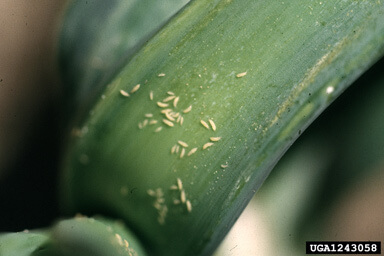

DESCRIPTION
WHO CAUSES IT?
Thrips are tiny insects belonging to the order Thysanoptera, with various species that can affect garlic. These insects have a life cycle that includes several stages: egg, larva, prepupa, pupa and adult. Females lay eggs in plant tissue, where larvae emerge and begin feeding immediately. The larvae go through two larval stages before entering the prepupal and later pupal stages, which can occur in the soil or on the plant. Adults emerge from the pupae and disperse to search for new host plants. Thrips feed by scraping the surface of leaves and sucking out cellular contents, causing damage to plants. Additionally, some thrips can act as virus vectors, transmitting diseases from one plant to another. Their ability to reproduce quickly and their resistance to various insecticides make thrips a difficult pest to control.
SYMPTOMS
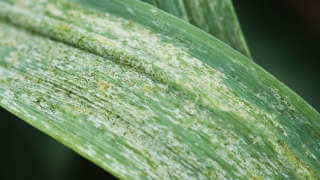
In garlic, thrips can cause serious damage by feeding on leaves and other plant tissues. The feeding activity of thrips causes the appearance of silvery Taches and discolored areas on the leaves, reducing photosynthesis and, therefore, the vitality of the plant. In severe infestations, the plant can be considerably weakened, which affects the development and size of the bulbs.
- Silver Taches on the leaves
- Discolored areas on foliage
- Reduction in photosynthesis
- General weakening of the plant
- Smaller size and quality of the bulbs
- Paper-like or scarred leaves.


TEMPERATURE AND HUMIDITY
20-30°C
40-70%

HOW IS IT SPREAD?
Wind, infected plants, contaminated tools, agricultural clothing and equipment, direct contact between plants

HOW TO REMOVE IT?
Home remedies
There are no home treatments
Chemical treatments
• ORANGE OIL 6% [SL] P/V
• ORANGE OIL 60g/L [ME] P/S
• PARAFFIN OIL (CAS [8042-47-5]) 54.6% [EW] P/V
• AZADIRACTIN 1% (AS AZADIRACTIN A) [EC] P/V
• Azadirachtin 2.6% (AS AZADIRACTIN A) [EC] P/V
• CYPERMETHRIN 5% [EC] P/V
• DELTAMETHRIN 1.5% [EW] P/V
• DELTAMETHRIN 1.57% [SC] P/V
• DELTAMETHRIN 10% [EC] P/V
• DELTAMETHRIN 2.5% [EC] P/V
• DELTAMETHRIN 2.5% [EW] P/V
• LAMBDA CYHALOTHRIN 1.5% [CS] P/V
• LAMBDA CYHALOTHRIN 10% [CS] P/V
• POTASSIUM SALTS OF FATTY ACIDS C14-C20 48% [EW] P/V
• POTASSIUM SALTS OF VEGETABLE FATTY ACIDS 13.04% [SL] P/V
• SPINOSAD 48% [SC] P/V
• SPIROTETRAMAT 10% [SC] P/V
Authorized treatments in organic farming
• ORANGE OIL 6% [SL] P/V
• ORANGE OIL 60g/L [ME] P/S
• PARAFFIN OIL (CAS [8042-47-5]) 54.6% [EW] P/V
• AZADIRACTIN 1% (AS AZADIRACTIN A) [EC] P/V
• Azadirachtin 2.6% (AS AZADIRACTIN A) [EC] P/V
• LAMBDA CYHALOTHRIN 1.5% [CS] P/V
• LAMBDA CYHALOTHRIN 10% [CS] P/V
• POTASSIUM SALTS OF FATTY ACIDS C14-C20 48% [EW] P/V
• POTASSIUM SALTS OF VEGETABLE FATTY ACIDS 13.04% [SL] P/V
• SPINOSAD 48% [SC] P/V
Insect allies
PREDATORY MITES
LADYBUGS
LACEWINGS
PARASITIC WASPS
HOVERFLIES OR PARASITIC FLIES
PREDATORY BUGS
There are no natural allies
Mycodiplosis oidii (predatory mosquito)
EFFECTIVE PRODUCTS TO ELIMINATE THIS DISEASE
Sponsored link
Sponsored link


Sponsored link
Sponsored link
Sponsored link


Sponsored link
Sponsored link
Effective against all types of fungi

Sponsored link


Sponsored link
Sponsored link

Sponsored link


Sponsored link
- Regular monitoring of crops for early detection of infestations.
- Use of yellow sticky traps to capture adult thrips.
- Crop rotation to interrupt the life cycle of thrips.
- Implementation of physical barriers such as anti-insect meshes.
- Application of specific and biological insecticides according to local recommendations.
- Maintain good crop hygiene, eliminating plant debris that may harbor thrips.
- Use of garlic varieties that are resistant or less susceptible to thrips.
- Promotion of natural enemies, such as predatory mites and lacewings, which can control the thrips population.
- Avoid excessive use of insecticides to prevent resistance and preserve natural enemies.
Recommendations

Enjoy idMicrobe TOTALLY FREE, with no trial periods.


