


Symptoms, treatments and recommendations for treating whiteflies
White Fly
Bemisia Tabaci
Pathogen:
Type:
Insect
Risk:
HIGH
Espinacas y similares
Mosca blanca

WHO CAUSES IT?
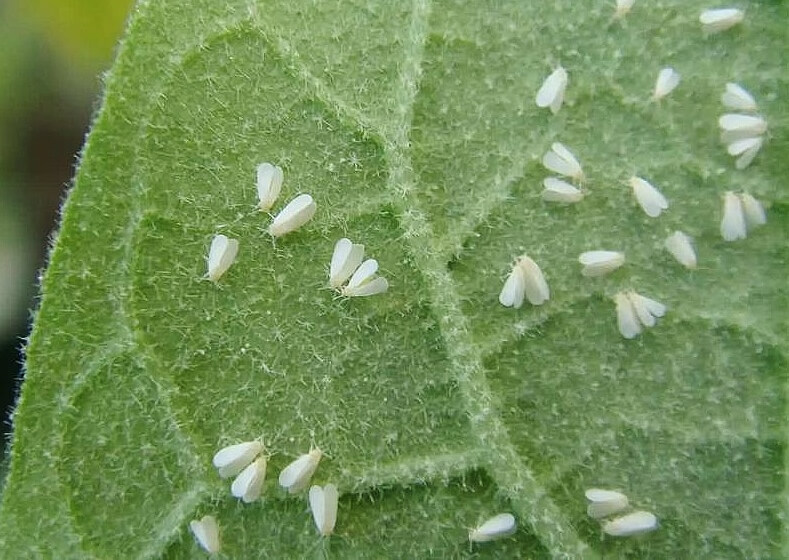
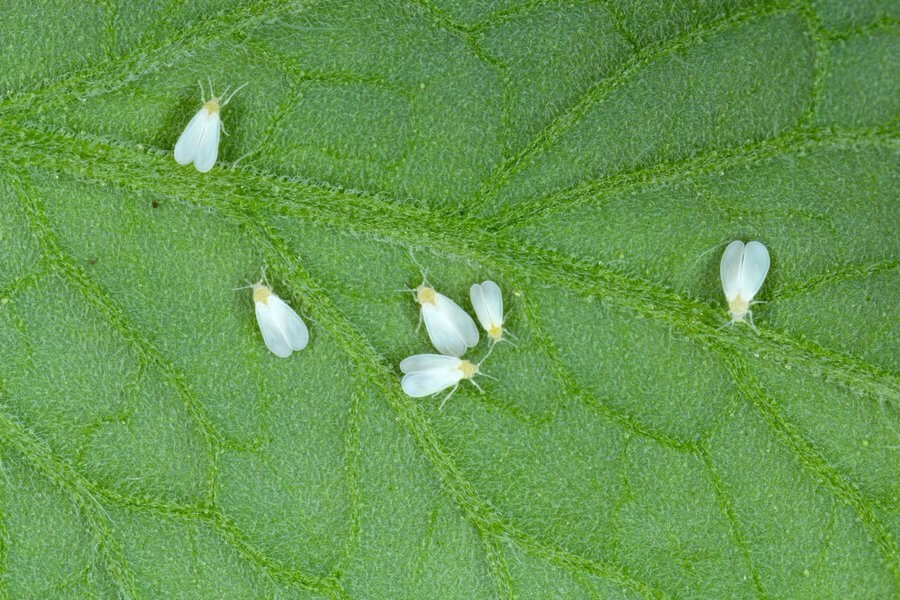
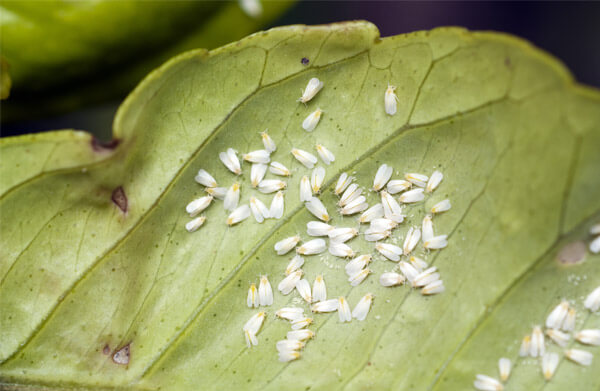
Bemisia tabaci, commonly known as the whitefly, is a small insect that affects a wide variety of plants, including spinach and similar crops. The cycle of this insect includes several stages that begin when adult females deposit their eggs on the underside of the leaves. These eggs are light yellow and, after several days, they hatch, releasing nymphs. The nymphs go through four instars, during which they feed by sucking plant sap. Upon reaching the fourth stage, they become immobilized and enter the pupa phase, from which the winged adult finally emerges. Adults are small and white, with wings covered in a waxy substance. They can live between 15 and 30 days and, under favorable conditions, populations can increase rapidly, with several generations per year, making Bemisia tabaci a persistent and difficult to control pest.

SYMPTOMS
Bemisia tabaci causes significant damage to spinach and the like, mainly due to its continuous feeding and its ability to transmit viral diseases. The nymphs and adults feed on the sap of the leaves, which weakens the plant and causes chlorosis, wilting and stunted growth. Additionally, whiteflies excrete a sugary substance known as honeydew, which promotes the growth of sooty mold fungi on the surface of the leaves, further reducing the photosynthetic capacity of the plant and the quality of the crop.
- Chlorosis in the leaves.
- Withering and general weakening of the plant.
- Delayed growth.
- Presence of honeydew on the leaves, which promotes the development of sooty mold.
- Loss of commercial quality due to dark Taches and deformations on the leaves.


TEMPERATURE AND HUMIDITY
20-30°C
60-80%

TRANSMISSION ROUTES
Flying adults, nymphs on leaves, infected plants, remains of affected plants
Do you want to remove this disease? Choose how you want to treat it.

TREATMENTS
Chemical treatments
• ORANGE OIL 6% [SL] P/V
• ORANGE OIL 60g/L [ME] P/S
• PARAFFIN OIL (CAS [64742-46-7]) 79% [EC] P/V
• PARAFFIN OIL (CAS [8042-47-5]) 54.6% [EW] P/V
• Azadirachtin 2.6% (AS AZADIRACTIN A) [EC] P/V
• DELTAMETHRIN 2.5% [EW] P/V
• LAMBDA CYHALOTHRIN 10% [CS] P/V
• MALTODEXTRIN 47.6% [SL] P/V
• PYRETHRINS 2% (PYRETHRE EXTR.) [EC] P/V
• PYRETHRINS 4% [EC] P/V
• ADHESIVE TRAPS
• CHROMATIC TRAPS
Authorized treatments in organic farming
• ORANGE OIL 6% [SL] P/V
• ORANGE OIL 60g/L [ME] P/S
• PARAFFIN OIL (CAS [64742-46-7]) 79% [EC] P/V
• PARAFFIN OIL (CAS [8042-47-5]) 54.6% [EW] P/V
• Azadirachtin 2.6% (AS AZADIRACTIN A) [EC] P/V
• LAMBDA CYHALOTHRIN 10% [CS] P/V
• PYRETHRINS 2% (PYRETHRE EXTR.) [EC] P/V
• PYRETHRINS 4% [EC] P/V
• ADHESIVE TRAPS
• CHROMATIC TRAPS
Biological control
• AKANTHOMYCES MUSCARIUS (strain Ve6) 14.8%
• AMBLYDROMALUS LIMONICUS
• AMBLYSEIUS SWIRSKII
• BEAUVERIA BASSIANA (STRAIN ATCC 74040) 2.3% (2.3X10E7 VIABLE SPORES/ML) [OD] P/V
• BEAUVERIA BASSIANA (GHA STRAIN) 10.7% (2.26X10E13 CONIDIAS/L) [OD] P/V
• BEAUVERIA BASSIANA (GHA STRAIN) 22% (4.4 x 10E10 CONIDIAS/G) [WP] P/P
• BEAUVERIA BASSIANA strain PPRI 5339 8% (8 X 10E12 CFU/L) [OD] P/P
• CHRYSOPERLA CARNEA
• CORDYCEPS FUMOSOROSEA (strain FE 9901) 18%
• DELPHASTUS CATALINAE
• ENCARSIA FORMOSA
• ERETMOCERUS EREMICUS
• HETERORHABDITIS BACTERIOPHORA
• ISARIA FUMOSOROSEA (Apopka 97 strain) 20% [WG] P/P
• Lecanicillium muscarium (Strain Ve6) (1x10E10 spores/g) 14.8% [WG] P/P
• METARHIZIUM BRUNNEUM strain Ma 43 10.5% [OD] P/V
• PAECILOMYCES FUMOSOROSEUS (STRAIN FE 9901) 18% (2 X 10 E9 CFU/G) [WP] P/P
• TRANSEIUS MONTDORIENSIS
Recommendations
- Implement physical barriers such as mesh to prevent adult access to young plants.
- Use yellow adhesive chromatic traps to detect and reduce the adult whitefly population.
- Encourage the presence of natural enemies such as parasitoid wasps and ladybugs, which feed on Bemisia tabaci.
- Avoid excessive use of insecticides, as it can reduce the effectiveness of biological controllers.
- Carry out crop rotation to avoid the accumulation of the pest in the plots.
- Apply mineral oils or insecticidal soaps to the leaves to make it difficult for the nymphs to adhere and reduce their feeding capacity.
- In severe cases, use specific insecticides for Bemisia tabaci, but alternate the products to avoid the development of resistance.
- Maintain good hygiene in the field, removing plant debris and weeds that may harbor residual whitefly populations.





*The recommended treatments are recommendations based on the authorities' databases and do not replace in any way the guidelines established by the legislation of each country.
*Products shown are recommendations and not our own products. As Amazon Associates, we earn revenue from purchases of recommended products.

TREATMENTS
Homemade remedies
There are no home treatments
Natural allies
Chemical treatments
There are no treatments for this disease. Treatments are directed at the insect vectors that transmit it. See insect treatments.

RECOMMENDATIONS

REPELLENT PLANTS
EFFECTIVE PRODUCTS TO ELIMINATE THIS DISEASE
*The recommended treatments are recommendations based on the authorities' databases and do not replace in any way the guidelines established by the legislation of each country.
*Products shown are recommendations and not our own products. As Amazon Associates, we earn revenue from purchases of recommended products.



Explore more tools
Services
Contact
Legal
©2026 by ZERIMAR S.A.R.L. All rights reserved