


Symptoms, treatments and recommendations for treating fruit flies
Fruit Fly
Ceratitis Capitata
Pathogen:
Type:
Insect
Risk:
HIGH
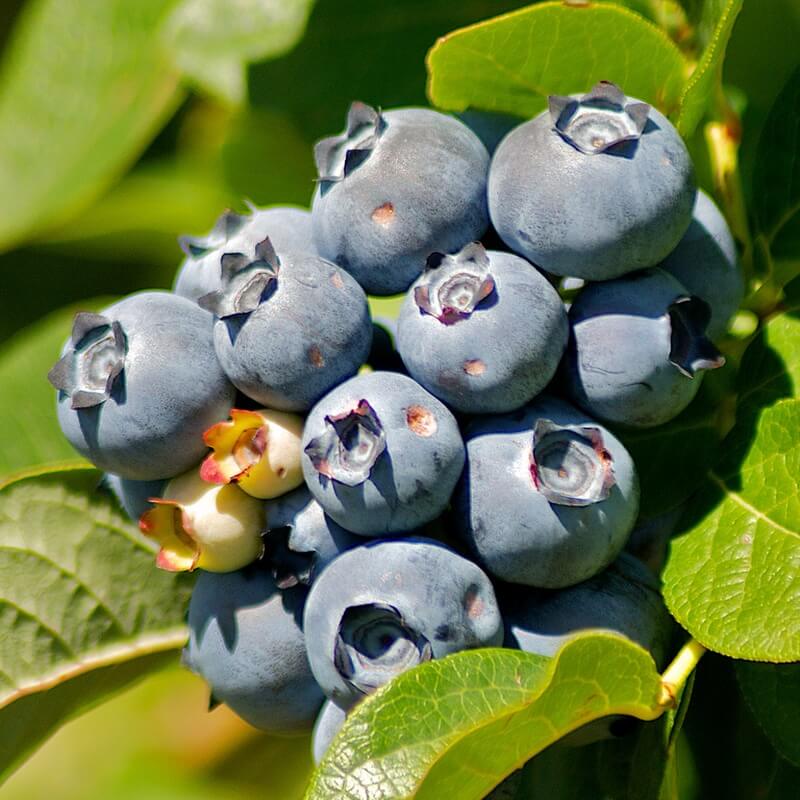
Arándano
Moscas de la fruta

WHO CAUSES IT?
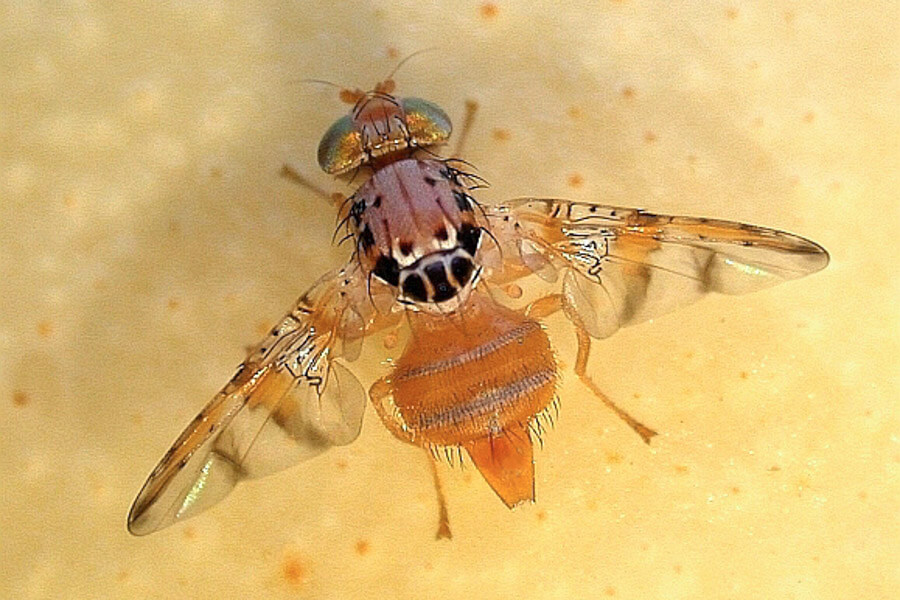
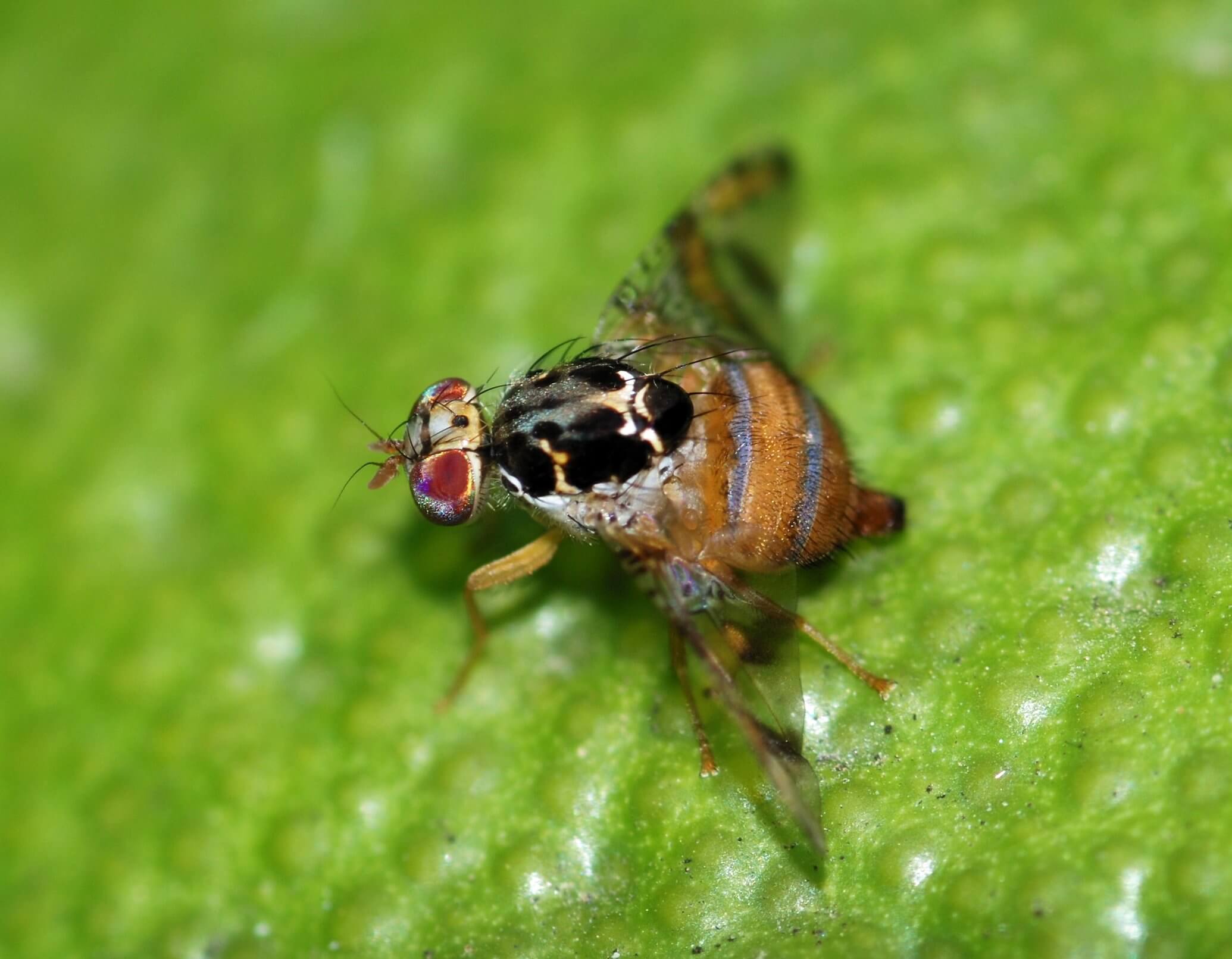
Ceratitis capitata, known as the fruit fly, is an insect of great agricultural importance due to its ability to damage a wide variety of fruit crops, including blueberries. This insect goes through four main stages: egg, larva, pupa and adult. Adult females deposit their eggs in the pulp of ripe or almost ripe fruits, using their ovipositor. The eggs hatch within a few days, releasing larvae that feed on the fruit tissue, causing it to deteriorate. After several weeks, the larvae become pupae in the soil, where they remain until they emerge as adults. The adults emerge from the ground and are capable of reproducing in a few days, starting the cycle again. Adult longevity can vary, but under favorable conditions they can live for several weeks, allowing for multiple generations per year. The flight capacity of adults and their adaptation to different climates makes Ceratitis capitata a difficult pathogen to control.

SYMPTOMS
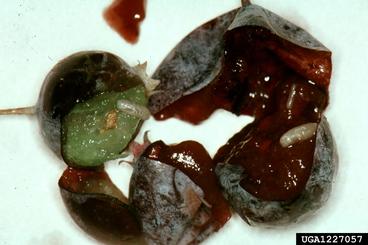
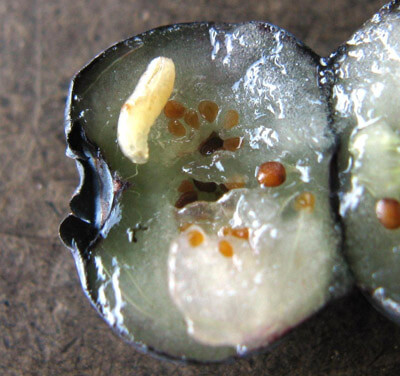
The fruit fly, Ceratitis capitata, causes significant disease in blueberries, compromising both the quality and quantity of the crop. The larvae that develop inside the fruits feed on their pulp, causing physical damage and favoring the entry of secondary pathogens that accelerate the decomposition of the fruit. This internal damage often goes unnoticed until the fruit begins to show signs of deterioration.
- Soft and discolored Taches on the surface of the fruits.
- Entry holes left by females when laying eggs.
- Presence of larvae inside the fruits.
- Premature fall of affected fruits.
- Rot and bad smell in damaged fruits.
- Decrease in the commercial quality of the harvest.


TEMPERATURE AND HUMIDITY
20°C - 30°C
60% - 80%

TRANSMISSION ROUTES
Wind, movement of infested fruits, workers' clothing and footwear, contaminated harvesting tools, transportation of infected soil
Do you want to remove this disease? Choose how you want to treat it.

TREATMENTS
Chemical treatments
• AZADIRACTIN 1% (AS AZADIRACTIN A) [EC] P/V
• Azadirachtin 2.6% (AS AZADIRACTIN A) [EC] P/V
• Ceratitis capitata (Pheromone)
• DELTAMETHRIN 0.015g/trap [RB] P/P
• DELTAMETHRIN 0.03% (10 mg s.a./dispenser) [RB] P/P
• HYDROLYZED PROTEINS 30% [SL] P/V
• TRAPS
• TRAPS FOR DIPTERANS
• FRUIT FLY TRAPS
Authorized treatments in organic farming
• AZADIRACTIN 1% (AS AZADIRACTIN A) [EC] P/V
• Azadirachtin 2.6% (AS AZADIRACTIN A) [EC] P/V
• Ceratitis capitata (Pheromone)
• DELTAMETHRIN 0.015g/trap [RB] P/P
• HYDROLYZED PROTEINS 30% [SL] P/V
• TRAPS
• TRAPS FOR DIPTERANS
• FRUIT FLY TRAPS
Biological control
• BEAUVERIA BASSIANA (STRAIN ATCC 74040) 2.3% (2.3X10E7 VIABLE SPORES/ML) [OD] P/V
Recommendations
- Carry out periodic monitoring using traps baited with pheromones to detect the presence of adults.
- Implement practices for collecting and destroying fallen or damaged fruits to eliminate possible sources of larvae.
- Use ground covers to reduce the emergence of pupae from the ground.
- Introduce natural enemies, such as parasitoids and predators, to keep fruit fly populations under control.
- Apply treatments with specific insecticides during the critical stages of insect development.
- Implement sterile insect release programs to reduce populations through mating competition.
- Maintain good hygiene in crops and surrounding areas to eliminate sources of infestation.
- Use exclusion meshes to protect crops from the entry of adults.
- Practice crop rotation and avoid the proximity of alternative hosts that may favor the proliferation of fruit flies.
- Implement integrated pest management techniques to combine biological, cultural and chemical methods effectively.





*The recommended treatments are recommendations based on the authorities' databases and do not replace in any way the guidelines established by the legislation of each country.
*Products shown are recommendations and not our own products. As Amazon Associates, we earn revenue from purchases of recommended products.

TREATMENTS
Homemade remedies
There are no home treatments
Natural allies
Chemical treatments
There are no treatments for this disease. Treatments are directed at the insect vectors that transmit it. See insect treatments.

RECOMMENDATIONS

REPELLENT PLANTS
EFFECTIVE PRODUCTS TO ELIMINATE THIS DISEASE
*The recommended treatments are recommendations based on the authorities' databases and do not replace in any way the guidelines established by the legislation of each country.
*Products shown are recommendations and not our own products. As Amazon Associates, we earn revenue from purchases of recommended products.



Explore more tools
Services
Contact
Legal
©2026 by ZERIMAR S.A.R.L. All rights reserved