


Symptoms, treatments, and recommendations for treating earworm
Earworm
Helicoverpa Armigera
Pathogen:
Type:
Insect
Risk:
HIGH
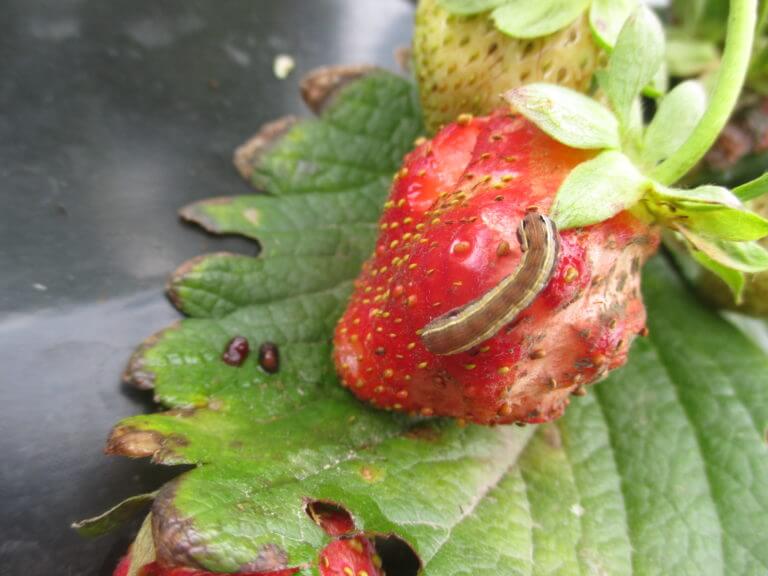
Berries
Orugas o gusanos

WHO CAUSES IT?
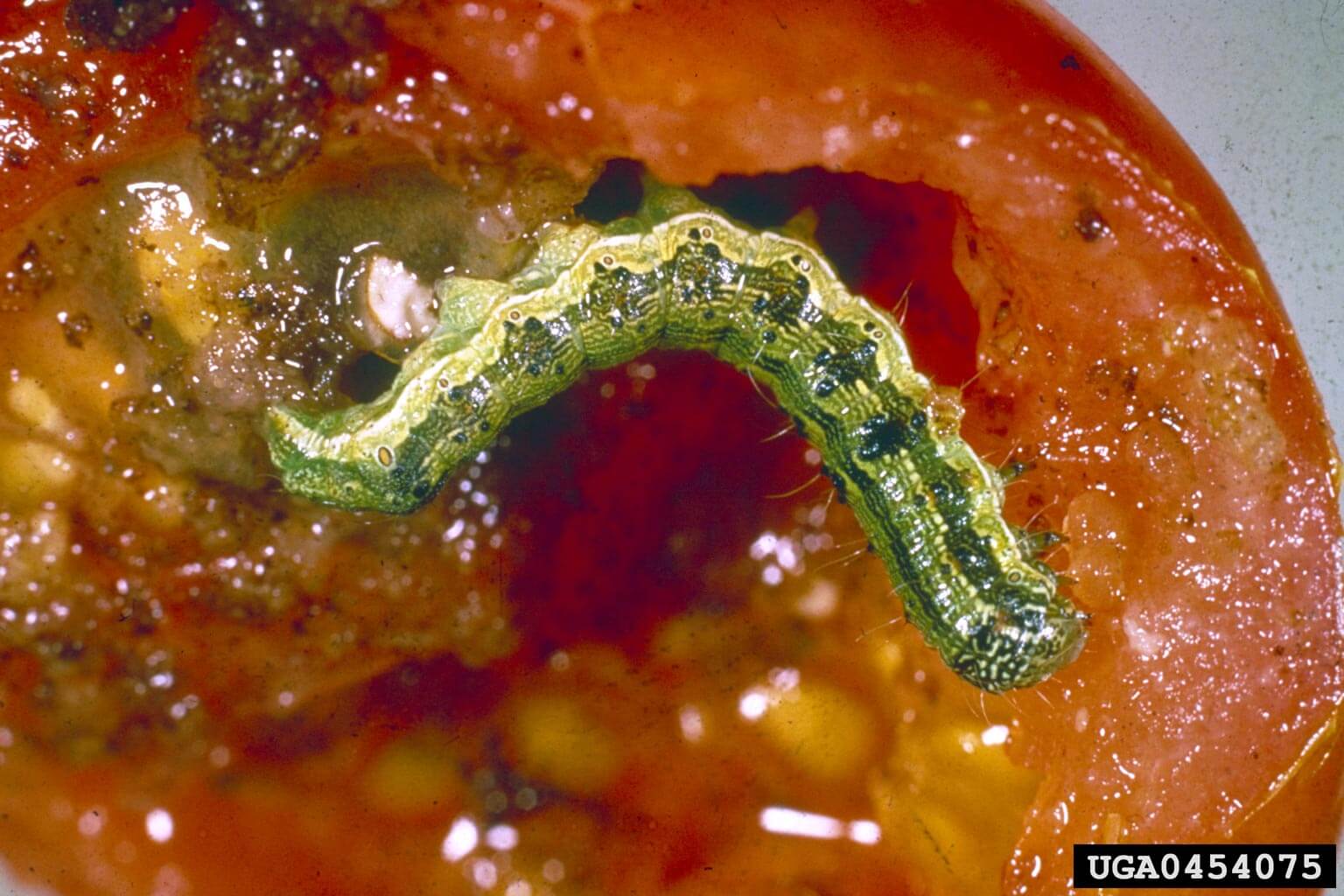
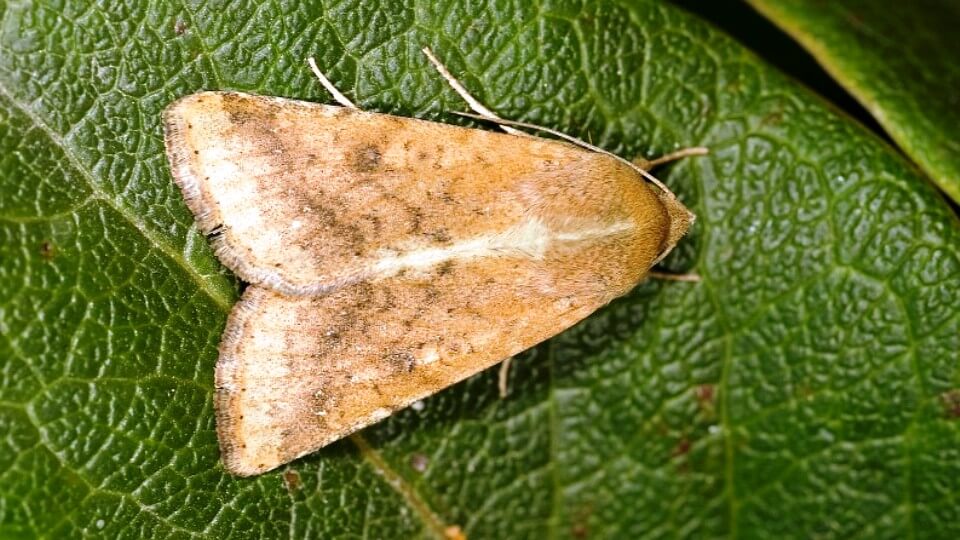
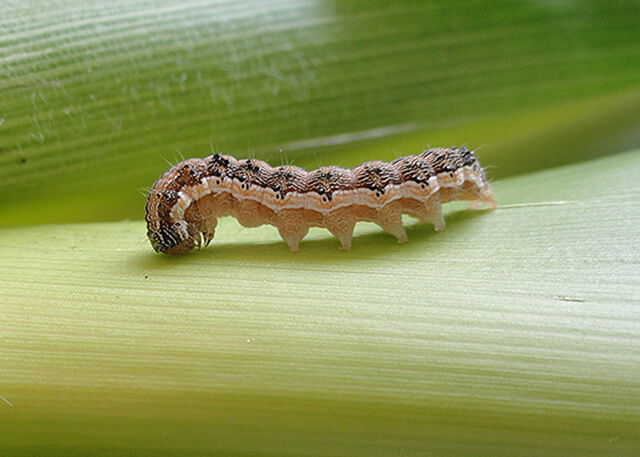
Helicoverpa armigera, known as the earworm, is a lepidopteran of the family Noctuidae. This insect goes through several stages: egg, larva, pupa and adult. Females lay their eggs individually in the flowers or fruits of host plants. After a few days, the eggs hatch and the larvae emerge, which go through several molts before reaching maturity. The larvae, of variable color ranging from green to brown, are highly polyphagous and feed voraciously on plant tissues. After completing their larval development, they burrow into the ground to pupate. The pupation phase lasts about two weeks, depending on environmental conditions, after which the adults emerge. Adults are light brown moths with Taches on their wings.

SYMPTOMS
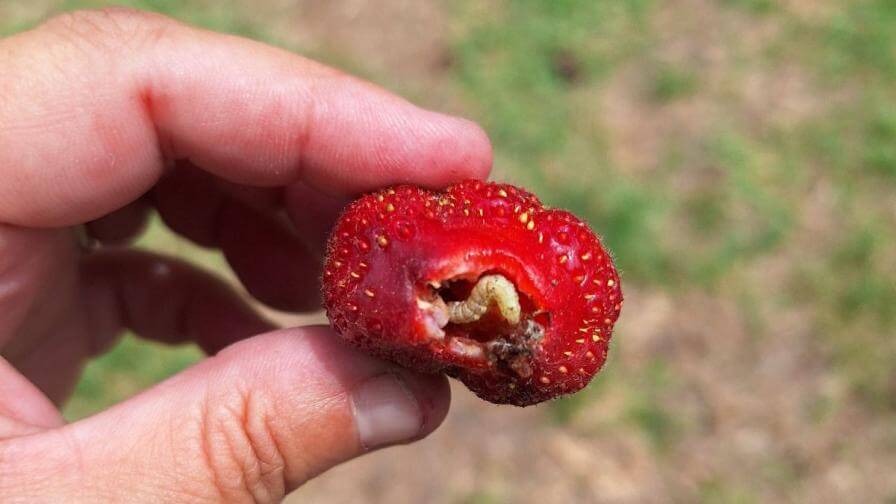
In berries, Helicoverpa armigera causes significant damage by feeding on flowers and fruits, leading to loss of yield and quality.
- Perforations in fruits and flowers.
- Presence of excrement on fruits and leaves.
- Deformed or scarred fruits.
- Premature fall of flowers and fruits.
- Secondary rot due to wounds caused by larvae.
- Decrease in plant vigor.
- Reduction in the commercial quality of the affected fruits.


TEMPERATURE AND HUMIDITY
20°C - 30°C
60% - 80%

TRANSMISSION ROUTES
Direct contact between plants, wind, insect vectors, contaminated growing tools, new infested plants
Do you want to remove this disease? Choose how you want to treat it.

TREATMENTS
Chemical treatments
• LAMBDA CYHALOTHRIN 1.5% [CS] P/V
• LAMBDA CYHALOTHRIN 10% [CS] P/V
• LAMBDA CYHALOTHRIN 2.5% [WG] P/P
• SPINETORAM 2.5% [SC] P/V
Authorized treatments in organic farming
• LAMBDA CYHALOTHRIN 1.5% [CS] P/V
• LAMBDA CYHALOTHRIN 10% [CS] P/V
• LAMBDA CYHALOTHRIN 2.5% [WG] P/P
Biological control
• BACILLUS THURINGIENSIS AIZAWAI (ABTS-1857 strain, 540 g/kg) (15 million CLU/g) 54% [WG] P/P
• BACILLUS THURINGIENSIS KURSTAKI (Strain EG 2348) 22.6% (24 x 10E6 UI/g) [SC] P/V
• BACILLUS THURINGIENSIS KURSTAKI (STRAIN PB 54) 32% (32 MILLION IU/G) [WP] P/P
• BACILLUS THURINGIENSIS KURSTAKI (EG 2348) (24x106 I.U./G) 18.3% [SC] P/V
• BACILLUS THURINGIENSIS KURSTAKI (EG 2348) 37.5% [WP] P/P
• HELICOVERPA ARMIGERA NUCLEOPOLYEDROVIRUS (7.5 X 10E12 OBs/L) 52% [SC] P/V. DSMZ strain: BV-0003
Recommendations
- Regularly monitor plants for early signs of infestation.
- Use pheromone traps to capture and monitor adult populations.
- Implement crop rotations to interrupt the life cycle of the insect.
- Apply biological insecticides such as Bacillus thuringiensis (Bt) to control larvae in early stages.
- Introduce natural enemies such as Trichogramma spp. to parasitize the eggs.
- Keep growing areas clean and free of plant residues.
- Promote biodiversity in the crop environment to favor natural enemies.
- Apply chemical insecticides only when populations reach levels of economic damage.
- Practice soil tillage to expose and remove buried pupae.
- Implement physical barriers such as mesh to protect crops from adult moths.





*The recommended treatments are recommendations based on the authorities' databases and do not replace in any way the guidelines established by the legislation of each country.
*Products shown are recommendations and not our own products. As Amazon Associates, we earn revenue from purchases of recommended products.

TREATMENTS
Homemade remedies
There are no home treatments
Natural allies
Chemical treatments
There are no treatments for this disease. Treatments are directed at the insect vectors that transmit it. See insect treatments.

RECOMMENDATIONS

REPELLENT PLANTS
EFFECTIVE PRODUCTS TO ELIMINATE THIS DISEASE
*The recommended treatments are recommendations based on the authorities' databases and do not replace in any way the guidelines established by the legislation of each country.
*Products shown are recommendations and not our own products. As Amazon Associates, we earn revenue from purchases of recommended products.



Explore more tools
Services
Contact
Legal
©2026 by ZERIMAR S.A.R.L. All rights reserved