

Laurel Wilt
Raffaelea Lauricola
Pathogen:
Type:
Fungus
Risk:
CRITICAL
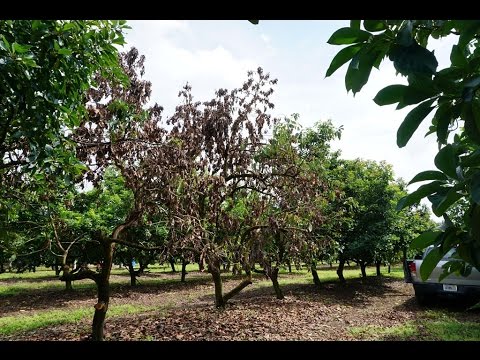
Aguacate
Seca de ramas y brotes

WHO CAUSES IT?
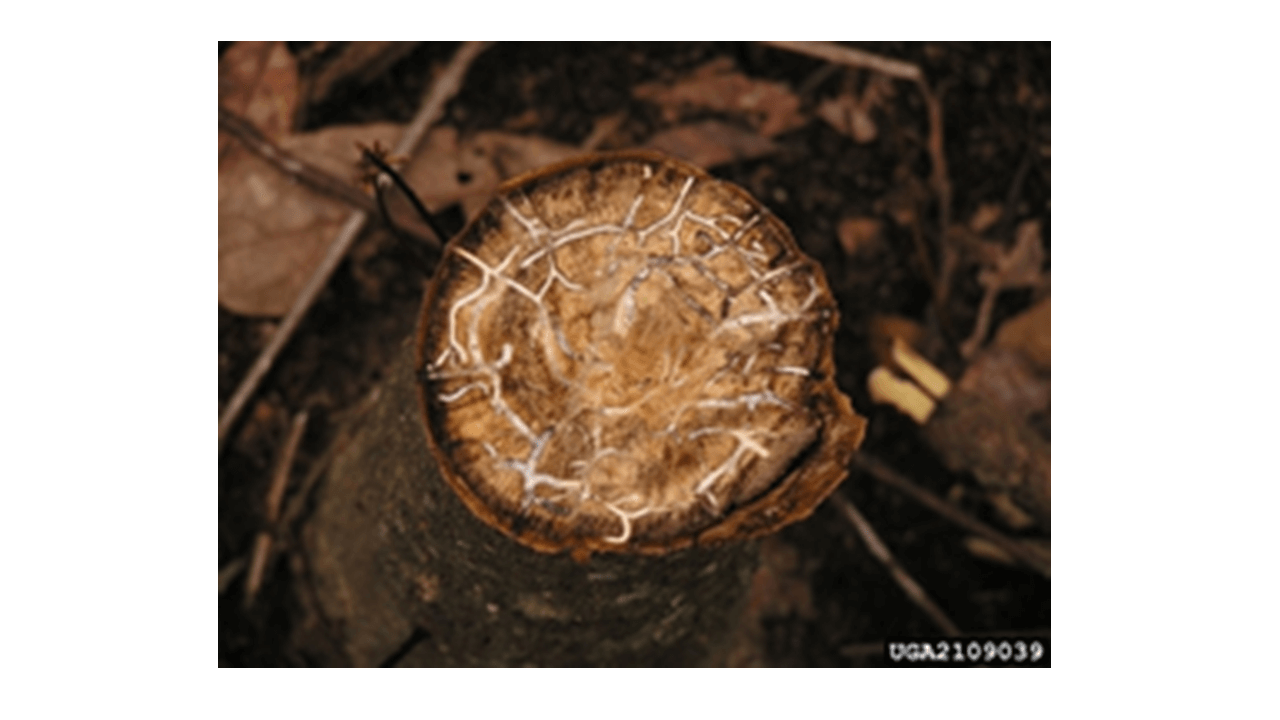
Raffaelea lauricola is a phytopathogenic fungus that causes the disease known as bay wilt in avocados. This fungus is mainly transmitted by the ambrosia beetle (Xyleborus glabratus). Infected beetles bore into the trunk and branches of trees, introducing spores of the fungus into the plant's vascular system. Once inside, the spores germinate and the fungus establishes itself in the xylem vessels, where it multiplies rapidly. The fungus produces hyphae that invade vascular tissues, blocking the flow of water and nutrients and causing wilting symptoms. Conditions of high humidity and warm temperatures favor the development of the fungus. The rapid proliferation of the fungus within the vascular system of the tree leads to obstruction of the vessels, resulting in the death of the affected tissues. This process can be extremely rapid, especially in young or weakened trees.
.png)
SYMPTOMS
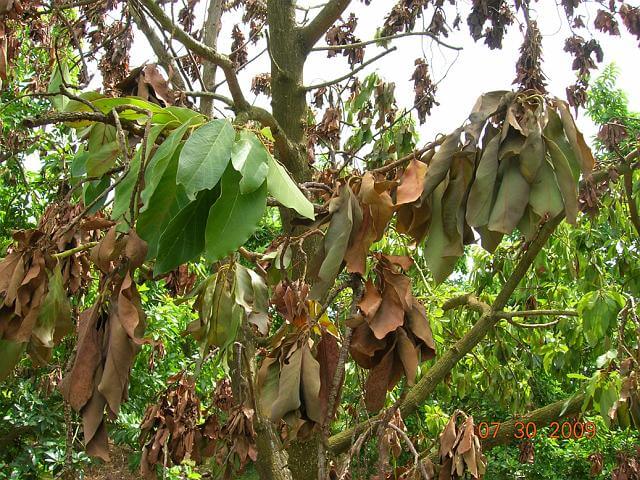
Bay wilt disease in avocado, caused by Raffaelea lauricola, is characterized by symptoms that severely affect the health and productivity of the tree. The fungus blocks conductive vessels, preventing the transport of water and nutrients, leading to rapid decline of the plant.
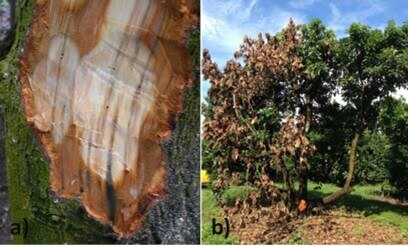
- Sudden wilting of branches and foliage.
- Leaves with a burnt and discolored appearance.
- Rapid and premature defoliation.
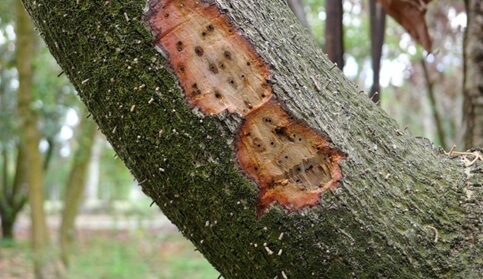
- Necrosis of vascular tissue in the trunk and branches.
- Presence of small holes in the trunk, a sign of ambrosia beetle activity.
- Rapid death of young or severely infected trees.

TEMPERATURE AND HUMIDITY
25°C - 30°C
60% - 80%

TRANSMISSION ROUTES
Ragweed beetles, movement of infected wood, contaminated tools, contact with infected plant material
Do you want to remove this disease? Choose how you want to treat it.

TREATMENTS
Chemical treatments
No effective fungicides have been found for the control and prevention of this disease. The treatment is focused on controlling the insect vector, the beetle Xyleborus glabratus. This insect is the main species that transmits the fungus that causes this disease, since the adults and larvae of the insect feed on the hyphae and conidia of the fungus, which is why they inoculate the pathogen in the galleries that they form in the xylem of the tree. It is recommended to look for treatments for the insect vector.
Authorized treatments in organic farming
No effective fungicides have been found for the control and prevention of this disease. The treatment is focused on controlling the insect vector, the beetle Xyleborus glabratus. This insect is the main species that transmits the fungus that causes this disease, since the adults and larvae of the insect feed on the hyphae and conidia of the fungus, which is why they inoculate the pathogen in the galleries that they form in the xylem of the tree. It is recommended to look for treatments for the insect vector.
Biological control
-
Recommendations
- Constantly monitor the presence of the ambrosia beetle and apply biological controls to keep its population low.
- Implement integrated pest management programs that include pheromonal traps to detect and control beetles.
- Avoid movement of infected wood or avocado products from infested areas to prevent the spread of the fungus.
- Carry out sanitary pruning and eliminate dead or infected branches to reduce sources of inoculum.
- Maintain good hygiene in orchards and destroy infected plant material safely.
- Improve soil drainage and avoid waterlogging, since excess moisture can encourage infection.
- Apply specific systemic fungicides in the initial stages of infection to limit the advance of the fungus.
- Use resistant avocado varieties, if available, to reduce the impact of the disease.
Sponsored link

Sponsored link
Sponsored link


Sponsored link
Sponsored link
Sponsored link
Sponsored link


Sponsored link
Sponsored link
Effective against all types of fungi

Sponsored link
Sponsored link


Sponsored link
Sponsored link

Sponsored link
Sponsored link


Sponsored link
*The recommended treatments are recommendations based on the authorities' databases and do not replace in any way the guidelines established by the legislation of each country.
*Products shown are recommendations and not our own products. As Amazon Associates, we earn revenue from purchases of recommended products.

TREATMENTS
Homemade remedies
There are no home treatments
Natural allies
Chemical treatments
There are no treatments for this disease. Treatments are directed at the insect vectors that transmit it. See insect treatments.

RECOMMENDATIONS

REPELLENT PLANTS
EFFECTIVE PRODUCTS TO ELIMINATE THIS DISEASE
Sponsored link
Sponsored link
Sponsored link
Sponsored link
Sponsored link
Sponsored link
Sponsored link
Sponsored link
Sponsored link
Effective against all types of fungi
Sponsored link
Sponsored link
Sponsored link
Sponsored link
Sponsored link
Sponsored link
Sponsored link
*The recommended treatments are recommendations based on the authorities' databases and do not replace in any way the guidelines established by the legislation of each country.
*Products shown are recommendations and not our own products. As Amazon Associates, we earn revenue from purchases of recommended products.

Enjoy idMicrobe TOTALLY FREE, with no trial periods.


