


Symptoms, treatments and recommendations for treating mildew
Mildew
Plasmopara Viticola
Pathogen:
Type:
Oomycete
Risk:
HIGH
Vid de mesa
Mildiu

WHO CAUSES IT?
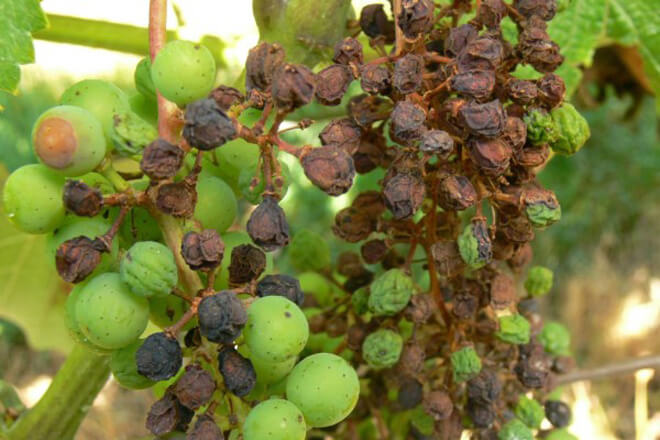
Plasmopara viticola is a fungal pathogen that causes the disease known as downy mildew on grapevines. This microorganism belongs to the group of oomycetes and is responsible for significant damage to vineyards around the world. The presence of Plasmopara viticola can be devastating for the production of grapes intended for winemaking or fresh consumption, affecting both the quality and quantity of the harvest.

SYMPTOMS
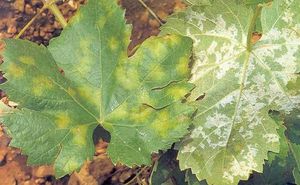
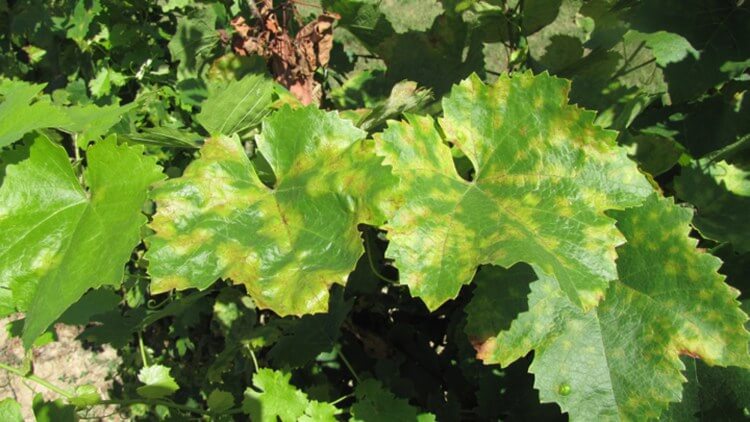
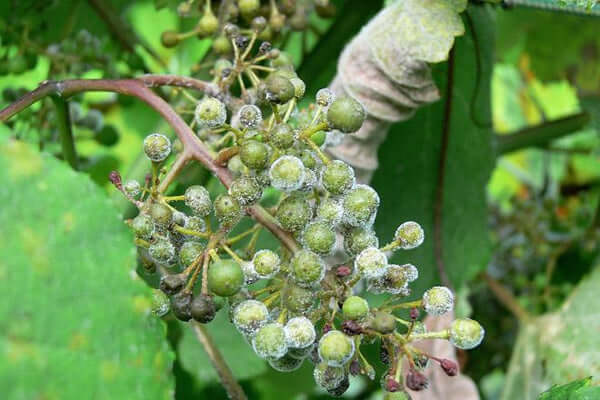
On the vine, downy mildew causes oily, wet Taches to appear on the leaves, shoots and clusters, which subsequently turn dark brown. These lesions can spread rapidly through the plant, causing premature defoliation and weakening the structure of the vine. Additionally, downy mildew can negatively affect fruit development, reducing their size and quality.



TEMPERATURE AND HUMIDITY
15°C - 25°C
80% - 100%

TRANSMISSION ROUTES
Rain, wind, direct contact with infected plants.
Do you want to remove this disease? Choose how you want to treat it.

TREATMENTS
Chemical treatments
• ABE-IT 56 (lysate components of Saccharomyces cerevisiae strain DDSF623) 32.56% [SC] P/V
• ORANGE OIL 6% [SL] P/V
• ORANGE OIL 60g/L [ME] P/S
• AMETOCTRADIN 20% [SC] P/V
• AMISULBROM 20% [SC] P/V
• AZOXISTROBIN 25% [SC] P/V
• AZOXISTROBIN 9.35% + FOLPET 50% [SC] P/V
• BENALAXIL-M 5% + COPPER OXYCHLORIDE 15% (exp. in Cu) + CUPRIC HYDROXIDE 15% (exp. in Cu) [WG] P/P
• CIAZOFAMIDE 10% [SC] P/V
• CYMOXANIL 33% + ZOXAMIDE 33% [WG] P/P
• CYMOXANIL 4% + FOLPET 33.4% [SC] P/V
• CYMOXANIL 45% [WG] P/P
• CYMOXANILE 8% + FOLPET 66% [WG] P/P
• COS-OGA 1.25% [SL] P/V
• FLUOPICOLIDE 4.44% + FOSETIL-AL 66.67% [WG] P/P
• FOLPET 40% + MANDIPROPAMID 5% [WG] P/P
• FOLPET 40% + METALAXIL 10% [WP] P/P
• FOLPET 40% + METALAXIL-M 4.8% [WG] P/P
• FOLPET 40% + METALAXIL-M 5% [WG] P/P
• FOLPET 48% + VALIFENALATE 6% [WG] P/P
• FOLPET 50% [SC] P/V
• FOLPET 50% + OXATIAPIPROLIN 1% [SC] P/V
• FOLPET 80% [WG] P/P
• FOSETIL-AL 50% + FOLPET 25% + CYMOXANIL 4% [WP] P/P
• FOSETIL-AL 80% [WG] P/P
• FOSETIL-AL 80% [WP] P/P
• DISODIUM PHOSPHONATE 50% [SL] P/V
• POTASSIUM PHOSPHONATES 25.5% (Exp. as phosphorous acid) + AZOXYSTROBIN 6.25% [SC] P/V
• POTASSIUM PHOSPHONATES 50.4% (exp. as phosphorous acid) [SL] P/V
• POTASSIUM PHOSPHONATES 51% (Exp. as phosphorous acid) [SL] P/V
• CUPRIC HYDROXIDE 13.6% (EXPR. IN CU) + COPPER OXYCHLORIDE 13.6% (EXPR. IN CU) [SC] P/V
• CUPRIC HYDROXIDE 20% (EXPR. IN CU) [WG] P/P
• CUPRIC HYDROXIDE 25% (EXPR. IN CU) [WG] P/P
• CUPRIC HYDROXIDE 40% (EXPR. IN CU) [WG] P/P
• CUPRIC HYDROXIDE 50% (EXPR. IN CU) [WP] P/P
• LAMINARIN 4.5% [SL] P/S
• MANDIPROPAMID 25% [SC] P/V
• MANDIPROPAMID 25% + OXATIAPIPROLIN 3% [SC] P/V
• Mandipropamide 25% + ZOXAMIDE 24% [WG] P/P
• METALAXIL 25% [WP] P/P
• OXATIAPIPROLIN 10% [OD] P/V
• OXATIAPIPROLIN 4% + ZOXAMIDE 30% [SE] P/V
• COPPER OXYCHLORIDE 13.95% (EXPR. IN CU) + MANDIPROPAMID 2.5% [WG] P/P
• COPPER OXYCHLORIDE 14% (exp. in Cu) + CUPRIC HYDROXIDE 14% (exp. in Cu) [WG] P/P
• COPPER OXYCHLORIDE 25% (EXPR. IN CU) [WG] P/P
• COPPER OXYCHLORIDE 30% (EXPR. IN CU) [WP] P/P
• COPPER OXYCHLORIDE 35% (exp. in Cu) [WG] P/P
• COPPER OXYCHLORIDE 35% (exp. in Cu) [WP] P/P
• COPPER OXYCHLORIDE 38% (EXPR. IN CU) [SC] P/V
• COPPER OXYCHLORIDE 50% (EXPR. IN CU) [WP] P/P
• COPPER OXYCHLORIDE 52% (EXPR. IN CU) [SC] P/V
• COPPER OXYCHLORIDE 70% (EXPR. IN CU) [SC] P/V
• COPPER OXYCHLORIDE 70% [SC] P/V
• CUPROSUS OXIDE 45% (exp. in Cu) [WG] P/P
• CUPROUS OXIDE 50% (EXPR. IN CU) [WP] P/P
• CUPROUS OXIDE 75% (EXPR. IN CU) [WG] P/P
• CUPROCALCIC SULFATE 12.4% (EXPR. IN CU) [SC] P/V
• CUPROCALCIC SULFATE 20% (EXPR. IN CU) [WG] P/P
• CUPROCALCIC SULFATE 20% (EXPR. IN CU) [WP] P/P
• TRIBASIC COPPER SULFATE 8% (expressed in copper) + SULFUR 64% [SC] P/V
• ZOXAMIDE 3.6% + FOSETIL-AL 35% + CYMOXANIL 2.8% [WG] P/P
Authorized treatments in organic farming
• ORANGE OIL 6% [SL] P/V
• ORANGE OIL 60g/L [ME] P/S
• COS-OGA 1.25% [SL] P/V
• DISODIUM PHOSPHONATE 50% [SL] P/V
• CUPRIC HYDROXIDE 13.6% (EXPR. IN CU) + COPPER OXYCHLORIDE 13.6% (EXPR. IN CU) [SC] P/V
• CUPRIC HYDROXIDE 20% (EXPR. IN CU) [WG] P/P
• CUPRIC HYDROXIDE 25% (EXPR. IN CU) [WG] P/P
• CUPRIC HYDROXIDE 40% (EXPR. IN CU) [WG] P/P
• CUPRIC HYDROXIDE 50% (EXPR. IN CU) [WP] P/P
• LAMINARIN 4.5% [SL] P/S
• COPPER OXYCHLORIDE 14% (exp. in Cu) + CUPRIC HYDROXIDE 14% (exp. in Cu) [WG] P/P
• COPPER OXYCHLORIDE 25% (EXPR. IN CU) [WG] P/P
• COPPER OXYCHLORIDE 30% (EXPR. IN CU) [WP] P/P
• COPPER OXYCHLORIDE 35% (exp. in Cu) [WG] P/P
• COPPER OXYCHLORIDE 35% (exp. in Cu) [WP] P/P
• COPPER OXYCHLORIDE 38% (EXPR. IN CU) [SC] P/V
• COPPER OXYCHLORIDE 50% (EXPR. IN CU) [WP] P/P
• COPPER OXYCHLORIDE 52% (EXPR. IN CU) [SC] P/V
• COPPER OXYCHLORIDE 70% (EXPR. IN CU) [SC] P/V
• COPPER OXYCHLORIDE 70% [SC] P/V
• CUPROSUS OXIDE 45% (exp. in Cu) [WG] P/P
• CUPROUS OXIDE 50% (EXPR. IN CU) [WP] P/P
• CUPROUS OXIDE 75% (EXPR. IN CU) [WG] P/P
• CUPROCALCIC SULFATE 12.4% (EXPR. IN CU) [SC] P/V
• CUPROCALCIC SULFATE 20% (EXPR. IN CU) [WG] P/P
• CUPROCALCIC SULFATE 20% (EXPR. IN CU) [WP] P/P
• TRIBASIC COPPER SULFATE 8% (expressed in copper) + SULFUR 64% [SC] P/V
Biological control
-
Recommendations
To prevent and control downy mildew in vineyards, it is recommended to implement integrated pest management practices. This includes the use of resistant vine varieties, proper management of the dosage and timing of fungicide application, pruning and elimination of infected parts of the plant, and constant monitoring of climatic conditions to anticipate possible outbreaks of the disease.





*The recommended treatments are recommendations based on the authorities' databases and do not replace in any way the guidelines established by the legislation of each country.
*Products shown are recommendations and not our own products. As Amazon Associates, we earn revenue from purchases of recommended products.

TREATMENTS
Homemade remedies
There are no home treatments
Natural allies
Chemical treatments
There are no treatments for this disease. Treatments are directed at the insect vectors that transmit it. See insect treatments.

RECOMMENDATIONS

REPELLENT PLANTS
EFFECTIVE PRODUCTS TO ELIMINATE THIS DISEASE
*The recommended treatments are recommendations based on the authorities' databases and do not replace in any way the guidelines established by the legislation of each country.
*Products shown are recommendations and not our own products. As Amazon Associates, we earn revenue from purchases of recommended products.



Explore more tools
Services
Contact
Legal
©2026 by ZERIMAR S.A.R.L. All rights reserved