


Mediterranean fruit fly (Ceratitis capitata) in fruit: symptoms, prevention and treatment
Mediterranean fruit fly
Ceratitis capitata
Pathogen:
Type:
Insect
Risk:
CRITICAL
Frutos
Moscas de la fruta

WHO CAUSES IT?
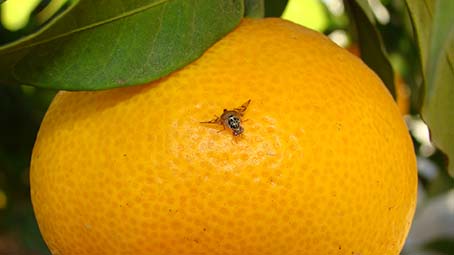
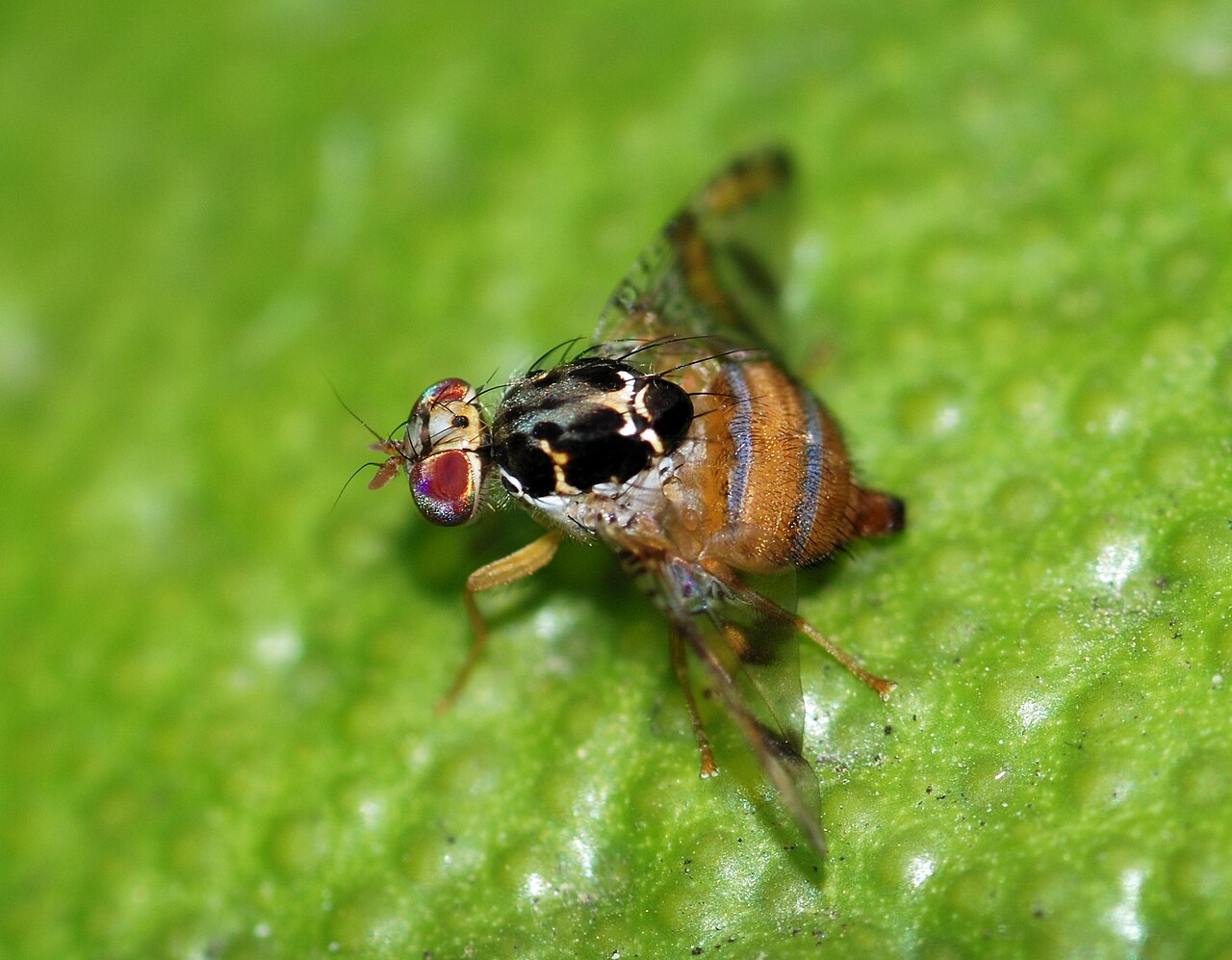
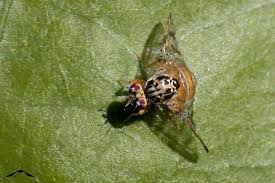
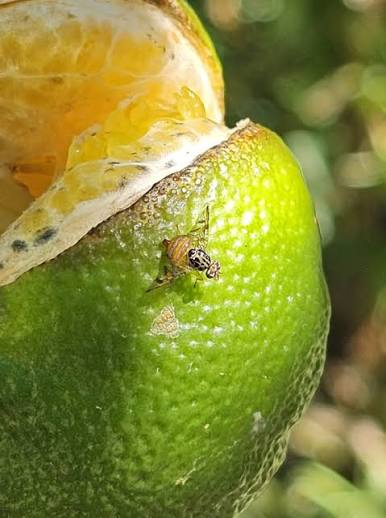
The Mediterranean fruit fly (Ceratitis capitata) is a species of fly in the family Tephritidae and one of the main fruit pests in Mediterranean, subtropical, and warm climates. It is a highly polyphagous species, capable of developing on numerous fruit crops and various wild plant species that can act as reservoirs. Adults are highly mobile, and females seek out ripening fruit to lay their eggs. Using their ovipositor, they pierce the epidermis and deposit the eggs below the surface, generally in small groups. After hatching, the larvae remain inside the fruit and feed on the pulp, going through three larval stages. This feeding causes the progressive destruction of the tissues and creates favorable conditions for the entry and multiplication of secondary microorganisms. When they complete their development, the larvae leave the fruit and may fall to the ground, where they burrow shallowly and pupate. After metamorphosis, the adult emerges and resumes feeding, mating, and reproducing. The duration of each stage depends primarily on temperature, food availability, and humidity. Under favorable conditions, several generations can be completed during a single growing season, and generations can overlap when susceptible fruit are present for extended periods. Adults feed on sugary substances, plant secretions, and other available sources before reaching sexual maturity and beginning egg-laying. A particularly important characteristic of this species is its high dispersal capacity, as adults can move between plants, plots, crops, and areas of spontaneous vegetation that produce susceptible fruit. The pest can also be introduced into new areas by the transport of infested fruit containing eggs or larvae. Wild fruit and fruit left in the crop can sustain populations during periods when there is no significant commercial production. When temperatures rise within favorable limits and fruit is continuously available, populations can increase rapidly. Females typically select fruit nearing maturity, although susceptibility depends on the plant species, variety, stage of ripeness, and epidermal characteristics. The development of larvae within the fruit significantly hinders control through treatments targeting only the internal stages. For this reason, management strategies focus primarily on reducing adult populations, preventing egg-laying, removing infested fruit, and minimizing breeding grounds.

SYMPTOMS
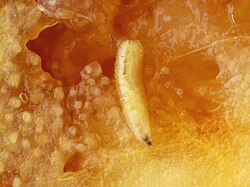
The Mediterranean fruit fly (Ceratitis capitata) causes direct damage to fruit primarily through egg-laying punctures by females and subsequent feeding by larvae within the pulp. Females pierce the epidermis to deposit eggs, and these perforations can provide entry points for fungi and bacteria. After hatching, the larvae feed on the internal tissues, causing progressive pulp degradation. Initially, the external damage may be subtle, limited to small marks or oviposition spots, but later the affected area may begin to soften, change color, and sag. Larval activity and secondary colonization by microorganisms can significantly accelerate decomposition. In ripe fruit, the progression can be particularly rapid, leading to a substantial loss of commercial quality within a few days. Affected fruit may fall prematurely to the ground, where the larvae can leave the fruit and complete their decomposition in the soil. The presence of infested fruit in the orchard therefore constitutes a source of new generations and can favor a rapid increase in the population. The pest may manifest itself through:
• Small punctures or oviposition points on the epidermis.
• Circular marks or slightly discolored areas around the oviposition points.
• Presence of eggs under the epidermis.
• Presence of whitish larvae inside the fruit.
• Galleries and feeding areas within the pulp.
• Progressive softening of the tissues.
• Sunken area in the affected zone.
• Changes in color around the infestation points.
• Exudation of fluids from the perforated areas.
• Appearance of secondary rots caused by fungi and bacteria.
• Progressive decomposition of the pulp.
• Loss of firmness and alteration of texture. • Premature fruit drop in severely affected areas.
• Presence of larvae leaving the fruit to pupate in the soil.
• Loss of commercial quality and rejection of fruit during sorting and marketing.


TEMPERATURE AND HUMIDITY
20–30 °C
60–90 %

TRANSMISSION ROUTES
Adult flight, movement between plants, movement between plots, infested fruit, eggs present in fruit, larvae present in fruit, pupae present in the soil, transport of contaminated fruit, contaminated harvesting boxes, infested plant material, agricultural machinery, contaminated tools, transport of infested materials.
Do you want to remove this disease? Choose how you want to treat it.

TREATMENTS
Chemical treatments
• AZADIRACTIN 1% (AS AZADIRACTIN A) [EC] P/V
• Azadirachtin 2.6% (AS AZADIRACTIN A) [EC] P/V
• DELTAMETHRIN 1.5% [EW] P/V
• DELTAMETHRIN 1.57% [SC] P/V
• DELTAMETHRIN 10% [EC] P/V
• DELTAMETHRIN 2.5% [EC] P/V
• LAMBDA CYHALOTHRIN 1.5% [CS] P/V
• LAMBDA CYHALOTHRIN 10% [CS] P/V
• LAMBDA CYHALOTHRIN 2.5% [WG] P/P
• LAMBDA CYHALOTHRIN 5% [EG] P/P
• Ceratitis capitata (Pheromone)
• TRAPS FOR DIPTERANS
• FRUIT FLY TRAPS
Authorized treatments in organic farming
• AZADIRACTIN 1% (AS AZADIRACTIN A) [EC] P/V
• Azadirachtin 2.6% (AS AZADIRACTIN A) [EC] P/V
• LAMBDA CYHALOTHRIN 1.5% [CS] P/V
• LAMBDA CYHALOTHRIN 10% [CS] P/V
• LAMBDA CYHALOTHRIN 2.5% [WG] P/P
• LAMBDA CYHALOTHRIN 5% [EG] P/P
• Ceratitis capitata (Pheromone)
• TRAPS FOR DIPTERANS
• FRUIT FLY TRAPS
Biological control
• BEAUVERIA BASSIANA (STRAIN ATCC 74040) 2.3% (2.3X10E7 VIABLE SPORES/ML)
Recommendations
• Conduct regular monitoring of adult populations using traps specifically designed for Ceratitis capitata.
• Install monitoring traps before the ripening periods of susceptible fruits.
• Regularly review the captures to detect population increases and determine periods of peak activity.
• Use appropriate monitoring systems to establish the optimal time for intervention.
• Regularly inspect the fruit for egg punctures, larvae, softening, and early signs of deterioration.
• Promptly remove affected, overripe, or fallen fruit.
• Do not leave infested fruit on the plant or on the ground.
• Remove fallen fruit before the larvae can complete their development and leave the fruit.
• Destroy or properly manage infested fruit using methods that prevent larval survival.
• Avoid accumulating discarded fruit near production plots. • Harvest frequently to reduce the availability of suitable fruit for egg-laying.
• Avoid leaving overripe fruit on the plants for extended periods.
• Remove abandoned or unharvested fruit at the end of the harvest.
• Control wild plants and alternative fruits near the crop when they may act as a reservoir for the pest.
• Coordinate control measures with neighboring plots when there is a risk of re-infestation from crops or nearby vegetation.
• Use mass trapping when authorized and appropriate for the crop and infestation level.
• Use attraction and killing systems or authorized biotechnical control methods when appropriate.
• Apply adult attraction and elimination techniques to reduce the breeding population before new egg-laying occurs.
• Use authorized insecticidal baits when appropriate for the crop and control strategy.
• Promote the conservation of natural enemies through integrated pest management that reduces unnecessary applications. • Use physical barriers or exclusion netting when crop characteristics allow for their installation.
• Keep greenhouses, tunnels, and other protected structures properly closed when in use.
• Avoid transporting infested fruit to plots, warehouses, or areas free of the pest.
• Inspect and properly clean boxes, containers, and materials used for harvesting.
• Apply only insecticides authorized for the crop and for Ceratitis capitata, strictly adhering to the usage instructions on the label.
• Target adults primarily before egg-laying, as eggs and larvae remain protected inside the fruit.
• Base treatments on population monitoring and the intervention thresholds established for each crop.
• Avoid systematic applications when the population level does not justify intervention.
• Alternate active ingredients belonging to different IRAC mode of action groups. • Avoid consecutive applications of insecticides belonging to the same IRAC group.
• Strictly adhere to authorized doses and avoid doses lower than recommended.
• Limit the number of applications for each mode of action group during the season.
• Integrate chemical control with mass trapping, monitoring, fruit removal, physical exclusion, and biotechnical methods.
• Pay particular attention to fruit ripening periods and phases of increased adult activity.
• Maintain post-treatment monitoring to verify efficacy and detect potential control failures.
• Remove any fruit that continues to show signs of infestation after treatment.
• Adapt the control strategy to pest pressure and the availability of susceptible fruit throughout the season.





*The recommended treatments are recommendations based on the authorities' databases and do not replace in any way the guidelines established by the legislation of each country.
*Products shown are recommendations and not our own products. As Amazon Associates, we earn revenue from purchases of recommended products.

TREATMENTS
Homemade remedies
There are no home treatments
Natural allies
Chemical treatments
There are no treatments for this disease. Treatments are directed at the insect vectors that transmit it. See insect treatments.

RECOMMENDATIONS

REPELLENT PLANTS
EFFECTIVE PRODUCTS TO ELIMINATE THIS DISEASE
*The recommended treatments are recommendations based on the authorities' databases and do not replace in any way the guidelines established by the legislation of each country.
*Products shown are recommendations and not our own products. As Amazon Associates, we earn revenue from purchases of recommended products.



Explore more tools
Services
Contact
Legal
©2026 by ZERIMAR S.A.R.L. All rights reserved